
The Appian Way is often considered the world’s first highway, and now it is officially listed as a UNESCO World Heritage Site.
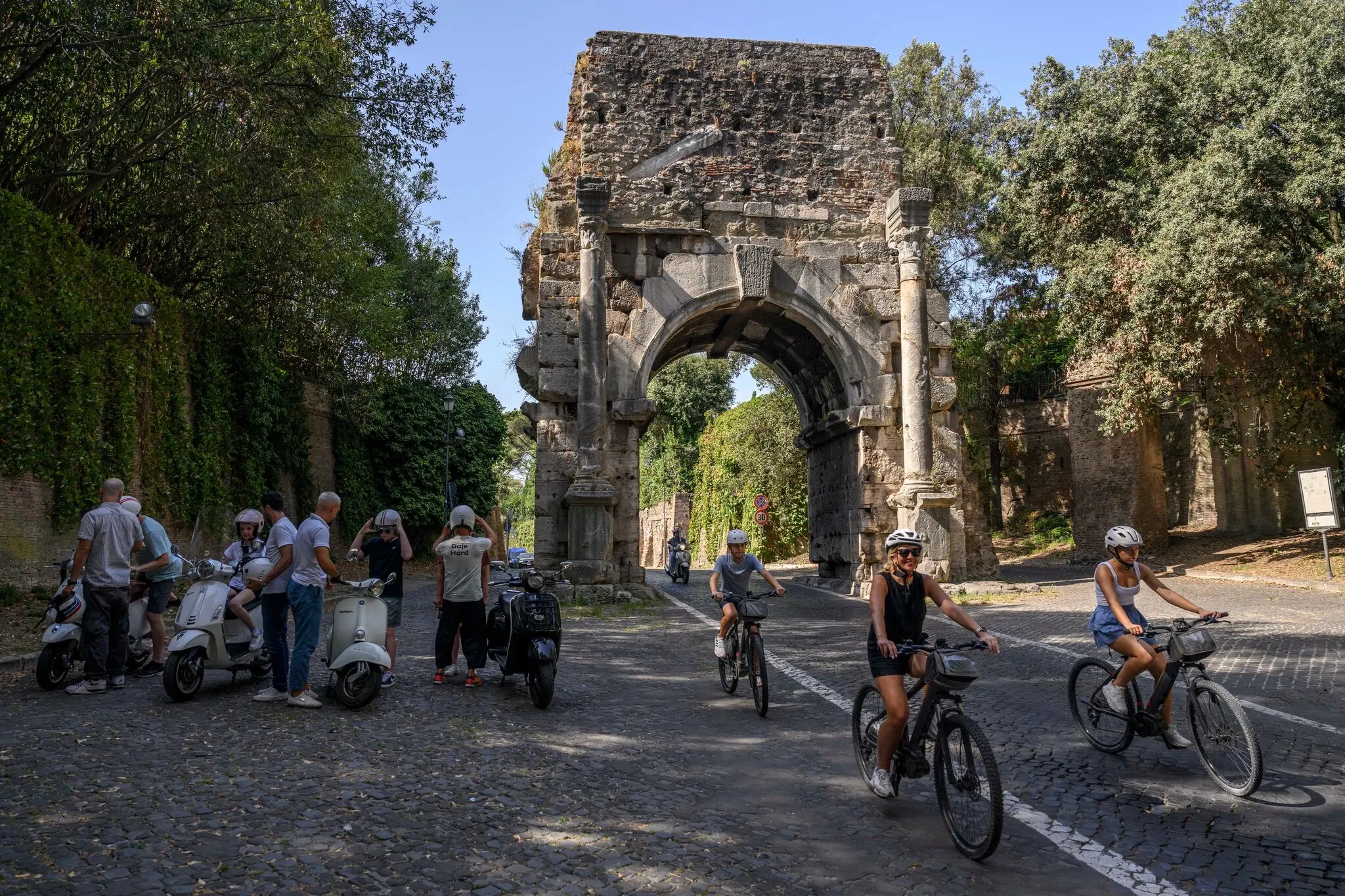
The New York Times reports: “Known as the “regina viarum,” or the queen of roads, the Appia was built by the Romans starting in 312 B.C. to allow them to move efficiently and to conquer the south of what is modern-day Italy. Finished about 400 years later and extending to Brindisi, the road became an important trade route and an example of the excellence of Roman engineering. Many sections are still used today, running through fields, sheep tracks and towns. Some sections still have the original ancient cobblestones. Others have been paved over, including a long, straight tract of road, about 25 pine-tree-lined miles that run from near Cisterna to the coast, that was used to break 20th century speed records.”
Yet, not all the sections of the Appian Way have been included in the UNESCO listing, prompting disappointment in some Italian communities.
The New York Times reports on the controversy.
Students in HIST 110 History of the Western World I and graduate students working on historical memory of the ancient world will be interested in this article.


 Brian Sandberg: Historical Perspectives