
Massive and coordinated communication device attacks on Hezbollah members and civilians in Lebanon this week have killed at least 36 people and injured over 3,000. The attacks were carried out by detonating explosives hidden in pagers and hand-held radios in two waves of simultaneous explosions. Israeli military and/or security services are widely suspected to have orchestrated the attacks.
Many Lebanese civilians were injured and killed in the attacks, including a 9-year old girl who was killed in her family’s kitchen. A video of the explosion of a pager worn by a man shopping in a supermarket shows how everyday civilian sites across Lebanon have been turned into bombing sites. The massive scale and indiscriminate nature of the attacks have shocked Lebanese communities and disturbed outside observers.

News reports rightly describe the attacks as unprecedented, since this form of attack seems as novel and disturbing as the use of commercial airlines as flying bombs during the 11 September 2001 attacks on the World Trade Center and Pentagon. Indeed, the attacks could potentially be classified as acts of terrorism, despite the effective state of war between the state of Israel and Hezbollah.
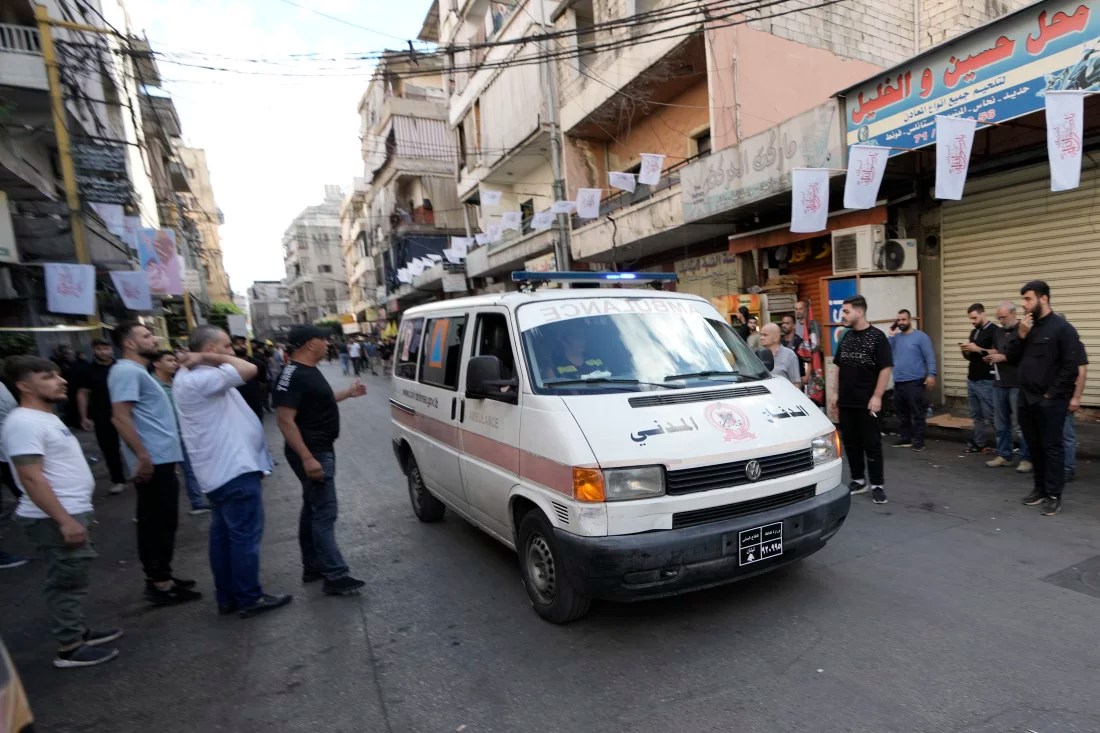
International lawyers, political scientists, and historians of war, and violence studies scholars are already considering the pager attacks and their significance.
Legal expert Brian Finucane has written an initial analysis of the pager attacks in Lebanon, focusing on their legal implications. Finucane is a senior adviser with the U.S. Program at the International Crisis Group and a Non-Resident Senior Fellow at the Reiss Center on Law and Security at NYU School of Law. His article explores how various aspects of the attacks may be considered under the laws of war and international law.
Finucane argues that “the attacks raise concerns about civilian harm and whether further escalation in the hostilities between Israel and Hezbollah is likely to ensue. Alongside those concerns, the exploding pagers in Lebanon raise a number of factual and legal questions related to the law of armed conflict, or international humanitarian law (IHL), given that Israel and Hezbollah are engaged in an ongoing armed conflict.”
The legal issues related to the laws of war include questions of civilian targeting, proportionality, precautions, and prohibitions on weapons. Brian Finucane provides an overview of some of these issues in his analysis. Historians of war and violence studies scholars will certainly work to set these attacks into broader historical contexts of massacres, atrocities and war crimes.
Brian Finucane’s analysis appears in Just Security (18 September 2024). He was interviewed today (20 September 2024) on NPR. Axios reports using anonymous sources on Israel’s planning of the attacks. The BBC and other news organizations have posted the video of a pager exploding in a supermarket. The New York Times reports on the funeral of a 9-year old girl killed in the attacks.
Update: since the publication of this essay, Michael Walzer, a noted scholar of just war issues has published an op-ed on the pager attacks in the New York Times.


 Brian Sandberg: Historical Perspectives