
New DNA studies have been done the remains of residents of Pompeii who were killed in the disastrous eruption of Mount Vesuvius in 79 Common Era (CE). The findings challenge previous interpretations about the identities of many of the victims.
The Washington Post reports that “Plaster casts of Pompeii’s victims preserve moments of human connection as the A.D. 79 eruption of Mount Vesuvius buried the city in ash. There’s a family of four — including a mother holding a child on her hip. Two sisters are caught in an eternal embrace. The poignant figures, frozen in time, humanize an ancient natural disaster.”
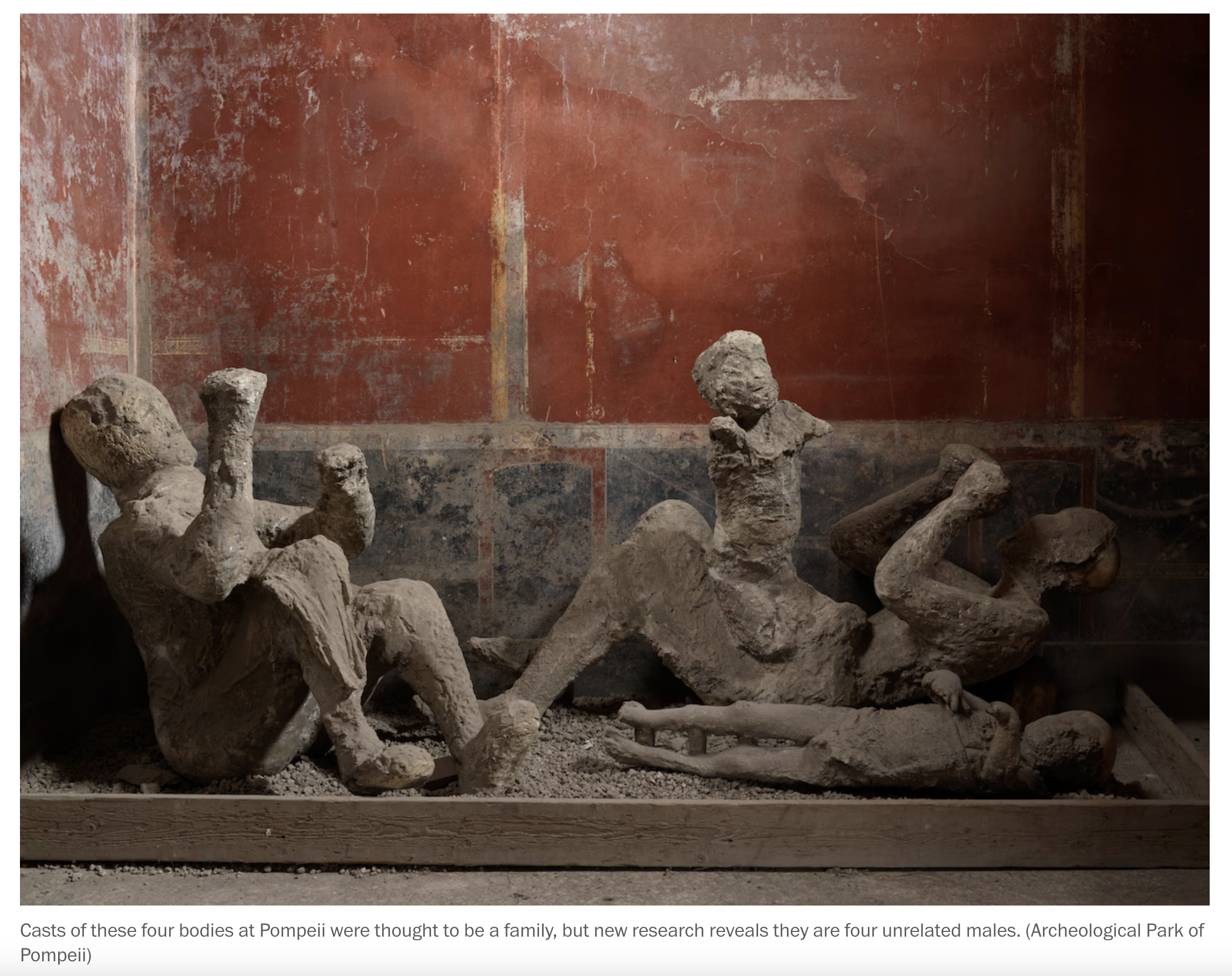
However, “a provocative new study published Thursday in Current Biology reveals that long-standing interpretations of these scenes are wrong.”
A number of the identifications that had previously been made simply by reading death poses based on cultural or art history tropes, but the DNA evidence questions such identifications. “The long-presumed family buried at one house turn out to be four unrelated males. And one of the two sisters locked in a hug turns out to be a male,” according to The Washington Post.
The Washington Post reports on the Pompeii victims. The New York Times also provides a report. The research findings are available at Current Biology.


 Brian Sandberg: Historical Perspectives