
President Trump’s inauguration ceremonies in Washington, D.C., have been filled with royal rhetoric and regal symbolism, promoting the new President as a would-be king.
The New York Times reports that “At a late-night inaugural ball on Monday, President Trump, flush with his restoration to power, began waving a ceremonial sword he had been given almost as if it were a scepter and he were a king.”
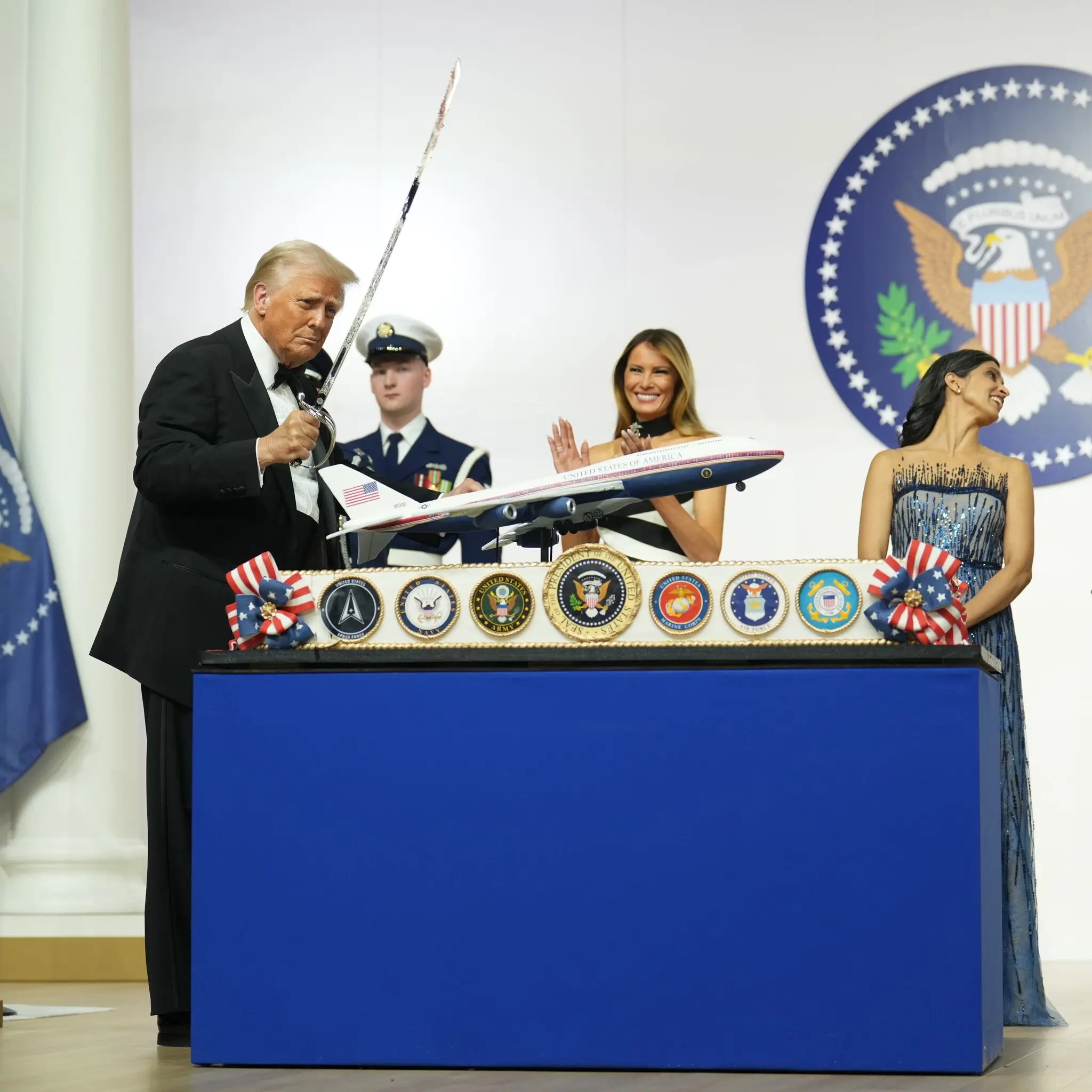
“Perhaps it is a fitting metaphor as Mr. Trump takes control in Washington again this week with royal flourishes and monarchical claims to religious legitimacy. His return to the White House has been as much a coronation as an inauguration, a reflection of his own view of power and the fear it has instilled in his adversaries.”
According to The New York Times, ” His inaugural events have been suffused with regal themes. In his Inaugural Address, he claimed that when a gunman opened fire on him last summer, he ‘was saved by God to make America great again,’ an echo of the divine right of kings. He invoked the imperialist phrase ‘manifest destiny,’ declared that he would unilaterally rename mountains and seas as he sees fit and even claimed the right to take over territory belonging to other nations.”
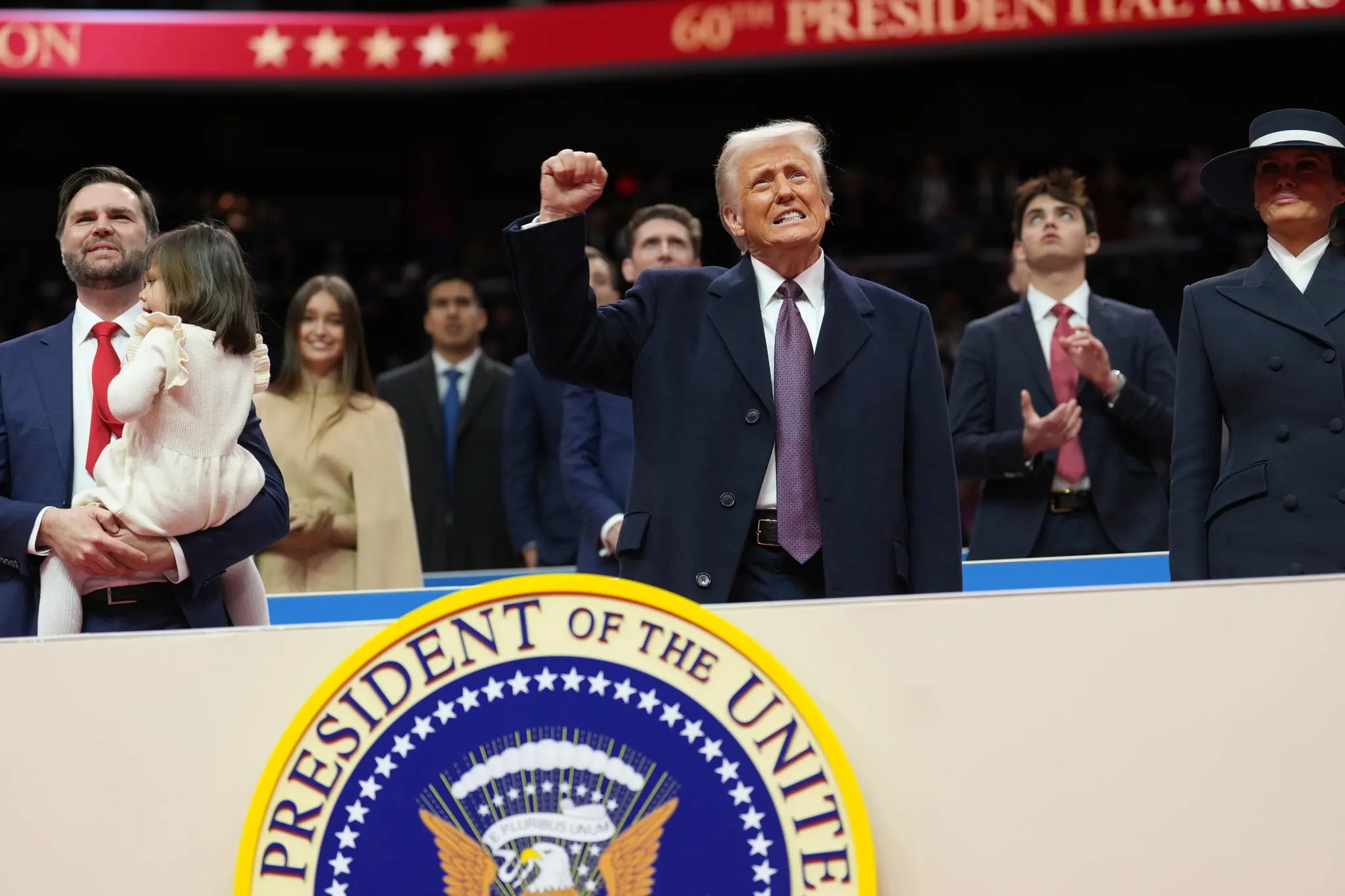
American Revolutionaries overthrew King George III, separated from Great Britain, and rejected monarchy altogether. Presidents of the United States have often gone to great length to avoid any perception of association with monarchy. Meanwhile, critics of Presidents have often castigated them by calling them “king.”
“‘But in the annals of presidential history, one struggles to find a leader who wouldn’t have found the term ‘king’ at least somewhat insulting,’ said Jeffrey A. Engel, the director of the Center for Presidential History at Southern Methodist University. Not Mr. Trump, it seems. ‘In highlighting his family to such a degree during his swearing-in, President Trump furthers the notion that he and they are special, removed from regular society.'”
Historians of early modern monarchy, royal households, political patronage, and court culture have much to contribute to the analysis of modern presidential political culture in the age of Trump.
Here are a few works on the history of monarchy that provide frameworks for examining modern uses of royal symbolism and claims to monarchical power:
Adamson, J. S. A. The Princely Courts of Europe: Ritual, Politics and Culture Under the Ancien Régime, 1500-1750. London: Weidenfeld & Nicolson, 1999.
Asch, Ronald G. and Adolf M. Birke, eds. Princes, Patronage, and the Nobility: The Court at the Beginning of the Modern Age, c. 1450-1650. London: Oxford University Press, 1991.
Collins, James B. The State in Early Modern France. 2nd ed. Cambridge: Cambridge University Press, 2009.
Duindam, Jeroen Frans Jozef. Vienna and Versailles: The Courts of Europe’s Major Dynastic Rivals, 1550-1780. Cambridge ; Cambridge University Press, 2003.
Duindam, Jeroen Frans Jozef, Tulay Artan, and Metin Kunt, eds. Royal Courts in Dynastic States and Empires : A Global Perspective. Leiden: Brill, 2011.
Elliott, J. H. and L. W. B. Brockliss, eds. The World of the Favourite. New Haven, CT: Yale University Press, 1999.
Elias, Norbert Elias. The Civilizing Process, trans. Edmund Jephcott. Oxford: Blackwell, 1997.
Friedeburg, Robert von, and J. S. (John Stephen) Morrill, eds. Monarchy Transformed : Princes and Their Elites in Early Modern Western Europe. Cambridge, Cambridge University Press, 2017.
Henshall, Nicholas. The Myth of Absolutism: Change and Continuity in Early Modern Monarchy. London: Longman, 1992.
Jouanna, Arlette. Le devoir de révolte: la noblesse française et la gestation de l’Etat moderne, 1559-1661. Paris: Fayard, 1989.
Kettering, Sharon. Patrons, Brokers, and Clients in Seventeenth-Century France. Oxford: Oxford University Press, 1986.
Major, J. Russell. From Renaissance Monarchy to Absolute Monarchy: French Kings, Nobles and Estates. Baltimore: Johns Hopkins University Press, 1994.
Zmora, Hillay. Monarchy, Aristocracy, and the State in Europe, 1300-1800 / Hillay Zmora. London ; Routledge, 2001.
The New York Times report on “‘The Return of the King’: Trump Embraces Trappings of the Throne,” is available online.


 Brian Sandberg: Historical Perspectives