
Ninety years ago a democratically elected leader dismantled a constitutional republic in record time.
This is a good reminder of how constitutional mechanisms can be used to undermine constitutional systems.
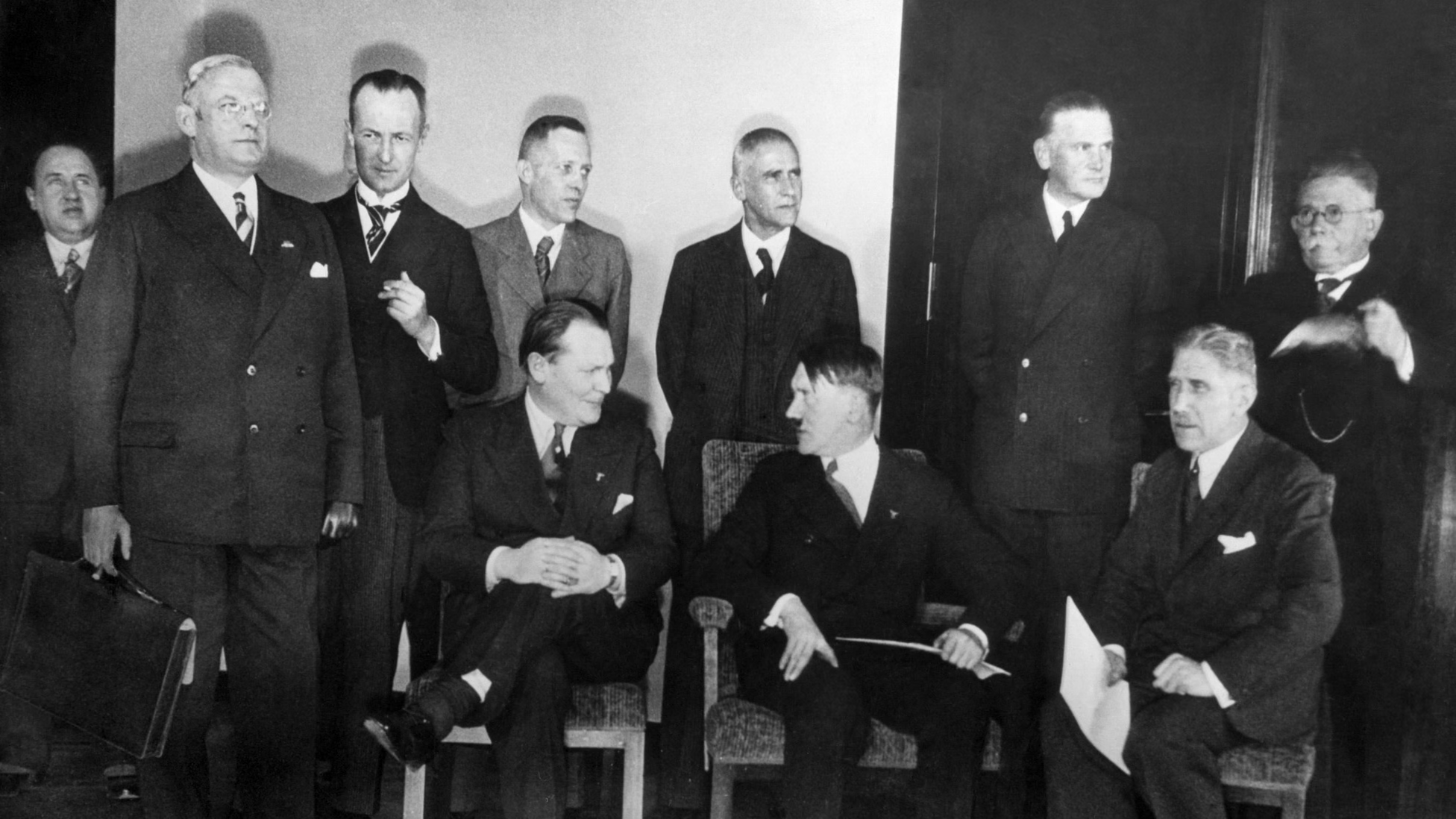
On 30 January 1933, “Adolf Hitler was appointed the 15th chancellor of the Weimar Republic. In one of the most astonishing political transformations in the history of democracy, Hitler set about destroying a constitutional republic through constitutional means. What follows is a step-by-step account of how Hitler systematically disabled and then dismantled his country’s democratic structures and processes in less than two months’ time,” according to historian Timothy W. Ryback, who is director of the Institute for Historical Justice and Reconciliation in The Hague.
Hitler had long been working to subvert the democratic system of Germany’s Weimar Republic. Ryback examines evidence of Hitler’s political methods: “Hans Frank served as Hitler’s private attorney and chief legal strategist in the early years of the Nazi movement. While later awaiting execution at Nuremberg for his complicity in Nazi atrocities, Frank commented on his client’s uncanny capacity for sensing ‘the potential weakness inherent in every formal form of law’ and then ruthlessly exploiting that weakness. Following his failed Beer Hall Putsch of November 1923, Hitler had renounced trying to overthrow the Weimar Republic by violent means but not his commitment to destroying the country’s democratic system, a determination he reiterated in a Legalitätseid—’legality oath’—before the Constitutional Court in September 1930. Invoking Article 1 of the Weimar constitution, which stated that the government was an expression of the will of the people, Hitler informed the court that once he had achieved power through legal means, he intended to mold the government as he saw fit. It was an astonishingly brazen statement. ‘So, through constitutional means?’ the presiding judge asked. ‘Jawohl!‘ Hitler replied.”
Ryback describes the gradual erosion of democratic norms in Weimar Germany: “By January 1933, the fallibilities of the Weimar Republic—whose 181-article constitution framed the structures and processes for its 18 federated states—were as obvious as they were abundant. Having spent a decade in opposition politics, Hitler knew firsthand how easily an ambitious political agenda could be scuttled. He had been co-opting or crushing right-wing competitors and paralyzing legislative processes for years, and for the previous eight months, he had played obstructionist politics, helping to bring down three chancellors and twice forcing the president to dissolve the Reichstag and call for new elections.”
“When he became chancellor himself, Hitler wanted to prevent others from doing unto him what he had done unto them. … Hitler had campaigned on the promise of draining the ‘parliamentarian swamp’—den parlamentarischen Sumpf—only to find himself now foundering in a quagmire of partisan politics and banging up against constitutional guardrails. He responded as he invariably did when confronted with dissenting opinions or inconvenient truths: He ignored them and doubled down.”
Hitler acted swiftly. “The next day, Hitler announced new Reichstag elections, to be held in early March, and issued a memorandum to his party leaders. ‘After a thirteen-year struggle the National Socialist movement has succeeded in breaking through into the government, but the struggle to win the German nation is only beginning,’ Hitler proclaimed, and then added venomously: ‘The National Socialist party knows that the new government is not a National Socialist government, even though it is conscious that it bears the name of its leader, Adolf Hitler.’ He was declaring war on his own government.”
As Germany prepared for another election, a massive fire destroyed the Reichstag building on 27 February 1933. Hitler’s government blamed the Communist arsonists for the fire and banned the Communist Party. The National Socialists declared a national emergency and President Paul von Hindenburg signed the emergency provisions into law.
The National Socialists won the election, but only with 44 percent of the vote. It was enough to allow Hitler to form a coalition government and prepare to pass an enabling law.
Hitler’s empowered government acted immediately to take over all state agencies. “The next day, the National Socialists stormed state-government offices across the country. Swastika banners were hung from public buildings. Opposition politicians fled for their lives. Otto Wels, the Social Democratic leader, departed for Switzerland. So did Heinrich Held, the minister-president of Bavaria. Tens of thousands of political opponents were taken into Schutzhaft (‘protective custody’), a form of detention in which an individual could be held without cause indefinitely. … Hindenburg remained silent.”
“On Thursday, March 23, the Reichstag delegates assembled in the Kroll Opera House, just opposite the charred ruins of the Reichstag. … Hitler, dressed now in a brown storm trooper uniform with a swastika armband, arrived to pitch his proposed enabling law, now formally titled the ‘Law to Remedy the Distress of the People and the Reich.'”

Many centrist and moderate delegates joined with the National Socialists and their allies to pass this enabling law, granting Hitler extraordinary dictatorial powers and effectively ending the Weimar Republic.
“Joseph Goebbels, who was present that day as a National Socialist Reichstag delegate, would later marvel that the National Socialists had succeeded in dismantling a federated constitutional republic entirely through constitutional means. … ‘The big joke on democracy,’ he observed, ‘is that it gives its mortal enemies the means to its own destruction.'”
Historian Timothy W. Ryback’s, “How Hitler Dismantled a Democracy in 53 Days,” is published in The Atlantic. Ryback is historian and director of the Institute for Historical Justice and Reconciliation in The Hague.
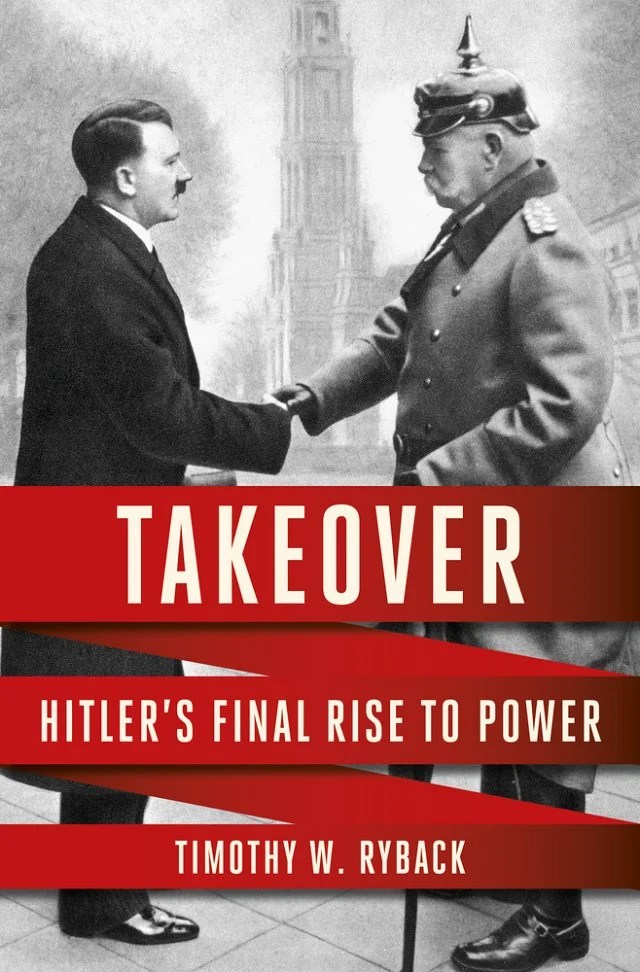
For an extended analysis, see Timothy W. Ryback, Takeover: Hitler’s Final Rise to Power (Knopf 2024).


 Brian Sandberg: Historical Perspectives