
The foreign policy of the United States is being seriously harmed by the Trump administration’s political imperatives and vendettas.
In the latest move, the State Department is banning access for diplomats and staff to fundamental news and information sources.
“The State Department has ordered the cancellation of all news subscriptions deemed ‘non-mission critical,’ according to internal email guidance viewed by The Washington Post. The move aligns with the Trump administration’s crackdown on media companies that count the U.S. government as paying customers.”
This policy clearly undermines the ability of U.S. ambassadors, embassy staff, and other State Department officials to carry out the diplomatic mission of the United States around the world.
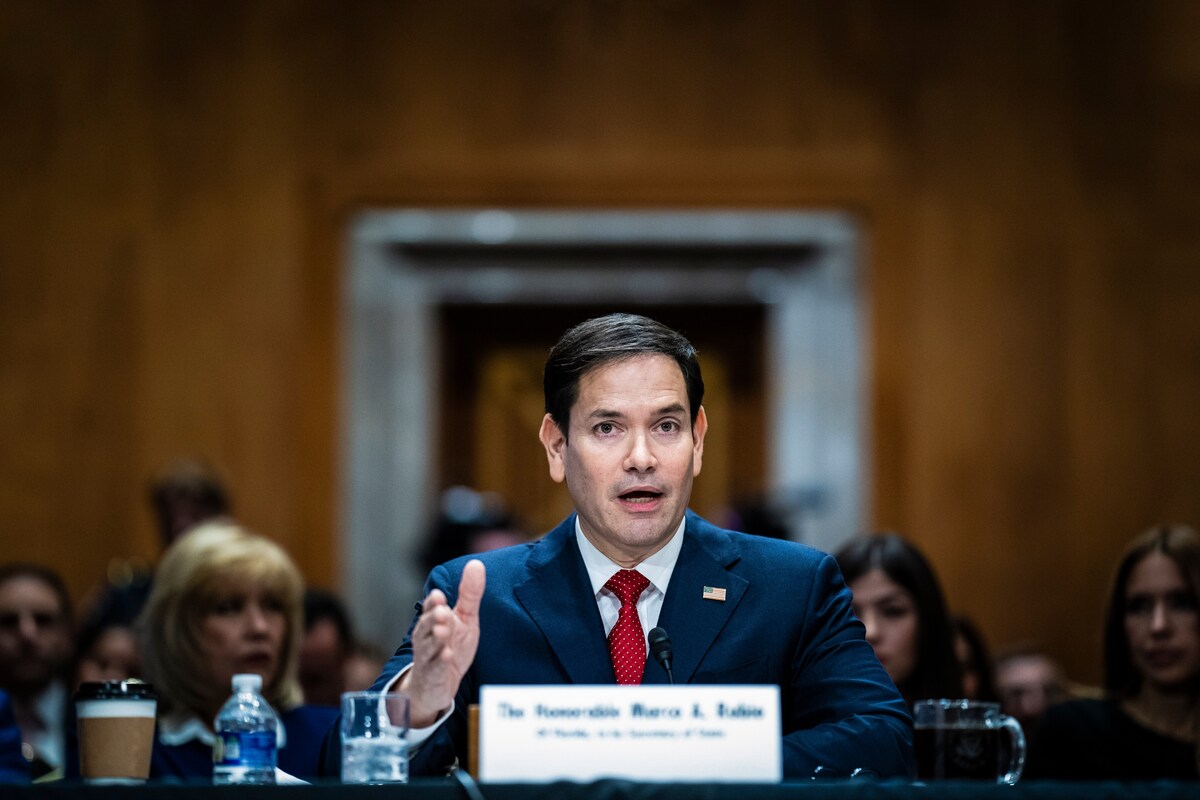
The Washington Post reports that “the mandate applies globally, to hundreds of U.S. embassies and consulates, according to a State Department official who spoke with The Post on Tuesday on the condition of anonymity to discuss internal matters. Embassy security teams rely on news coverage to prepare for diplomatic travel in conflict zones. Cancellation of subscriptions — including to local news outlets — could hinder their assessment of threats, the official said.”
This policy reflects a truly bizarre form of isolationism that must be unrecognizable to professional diplomats outside of authoritarian regimes. It will be interesting to see how political scientists and historians who work on U.S. foreign relations and international politics assess this development.
“A State Department employee who received the memos, and shared them with The Post, expressed concern that terminating news subscriptions — particularly to local outlets —would deprive embassies and consulates of information necessary to complete their mission. “This will endanger American lives overseas because we are being cut off from news sources that are needed on a daily basis,” said the employee, who spoke on the condition of anonymity because they are not authorized to comment to the press.”
It is ironic that my undergraduate and graduate students at Northern Illinois University were just considering the flow of news and information through embassies in the early modern period, and particularly through the Venetian bailate (embassy) in Istanbul.
Early modern states and their administrators understood very well that well-informed diplomats were essential to the conduct of international politics.
The Washington Post reports on the State Department’s news media crackdown.
On news and information in the early modern world, see:
De Vivo, Filippo. Information and Communication in Venice: Rethinking Early Modern Politics. Oxford: Oxford University Press, 2007.
Dooley, Brendan, ed. The Dissemination of News and the Emergence of Contemporaneity in Early Modern Europe. Farnham: Ashgate, 2010.
Dooley, Brendan and Sabrina A. Baron, eds. The Politics of Information in Early Modern Europe. New York: Routledge, 2001.
Dursteler, Eric R. Venetians in Constantinople: Nation, Identity, and Coexistence in the Early Modern Mediterranean. Baltimore, MD: Johns Hopkins University Press, 2006.
Eisenstein, Elizabeth L. The Printing Revolution in Early Modern Europe. Cambridge: Cambridge University Press, 1983.
Pettegree, Andrew. The Invention of News: How the World Came to Know about Itself. New Haven, CT: Yale University Press, 2014.


 Brian Sandberg: Historical Perspectives