
President Trump shocked the world this week by falsely blaming Ukraine for starting the current Russian-Ukrainian War.
The New York Times reports: “In comments that stunned America’s allies in Europe and angered Ukraine’s government, President Trump on Tuesday appeared to blame Ukraine’s leaders for Russia’s invasion.”
“He also suggested that they do not deserve a seat at the table for the peace talks that he has initiated with President Vladimir V. Putin of Russia.”
“‘You should have never started it,’ Mr. Trump said, referring to Ukraine’s leaders. ‘You could have made a deal.’ He followed up on Wednesday in a post on social media, calling Ukraine’s president, Volodymyr Zelensky, a ‘dictator without elections’ and saying he had ‘done a terrible job’ in office.”
President Trump is attempting to rewrite history, outrageously claiming that Ukraine instigated the current Russian-Ukrainian War (2022 to present).
All wars have complex causes and preconditions, but this war was quite clearly instigated by a major Russian military invasion of Ukraine.
“When Russian forces crashed over the borders into Ukraine in 2022 determined to wipe it off the map as an independent state, the United States rushed to aid the beleaguered nation and cast its president, Volodymyr Zelensky, as a hero of resistance,” according to The New York Times.
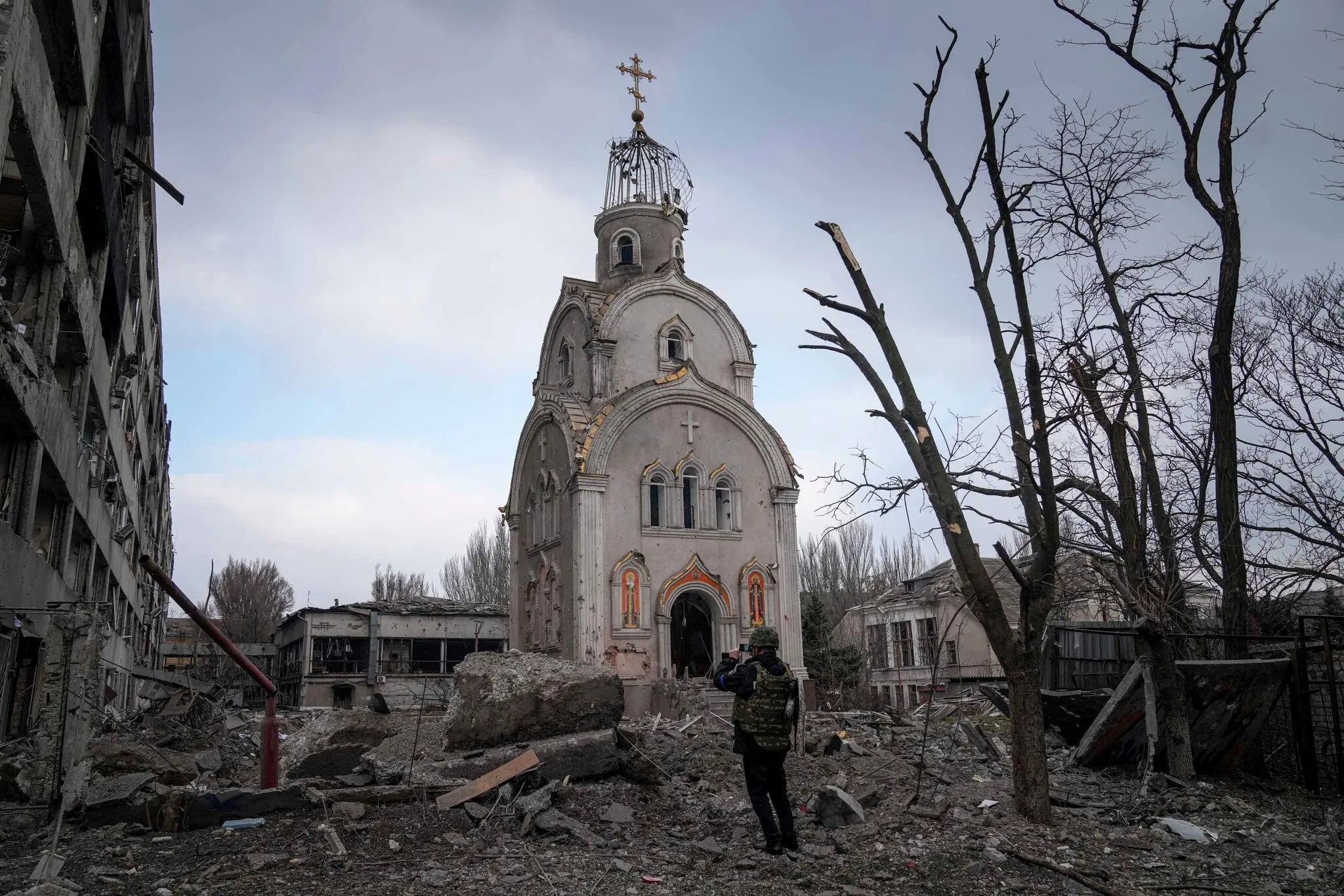
“Three years almost to the day later, President Trump is rewriting the history of Russia’s invasion of its smaller neighbor. Ukraine, in this version, is not a victim but a villain. And Mr. Zelensky is not a latter-day Winston Churchill, but a ‘dictator without elections’ who somehow started the war himself and conned America into helping.”
President Trump is putting the “squeeze” on President Zelensky, attempting to bully Ukraine into giving up half of its mineral wealth to the United States or capitulating to Russia.
President Zelenzky has responded by accusing Trump of “living in a disinformation space” and parroting Russian talking points.
Authoritarian regimes often rewrite historical accounts and distort historical records in order to promote their policies and political aims. This is a classic move by dictators and their regimes.
The New York Times argues that “Mr. Trump’s revisionism sets the stage for a geopolitical about-face unlike any in generations as the president embarks on negotiations with Russia that Ukraine fears could come at its own expense. By vilifying Mr. Zelensky and shifting blame for the war from Moscow to Kyiv, Mr. Trump seems to be laying a predicate for withdrawing support for an ally under attack.”
“The sharp exchange of words between Mr. Trump and Mr. Zelensky this week signaled how much has changed with the inauguration of a new president in Washington. Even for Mr. Trump, who has never been a fan of Ukraine and has long expressed admiration of President Vladimir V. Putin of Russia, the vitriol expressed toward Mr. Zelensky drew gasps of surprise on both sides of the Atlantic Ocean,” according to The New York Times.
The Trump administration has shockingly begun direct talks with Russia, without any Ukrainian participation.
President Trump’s statements and actions have purposefully created a severe diplomatic rift with Ukraine, but also with the United States’ closest military and political allies in Europe.
U.S. Defense Secretary Pete Hegseth angered NATO allies in Europe during his European trip this week. Vice President Vance’s anti-European comments at the Munich Security Conference have further alienated long-time U.S. allies. Trump has long been opposed to NATO and seems determined to destroy it entirely.
Stephen N. Walt, Robert and Renée Belfer Professor of International Relations (Harvard University), argues that “Yes, America Is Europe’s Enemy Now.”
Walt indicates hat “a few weeks ago, I warned that the second Trump administration might be squandering the tolerance and good will that Washington had long received from the world’s major democracies. Instead of seeing the United States as a mostly positive force in world affairs, these states might now ‘have to worry that the United States is actively malevolent.’ That column was written before Vice President J.D. Vance gave his confrontational speech at the Munich Security Conference, before President Donald Trump blamed Ukraine for starting the war with Russia, and before U.S. officials appeared to preemptively offer Russia almost everything it wants before negotiations on Ukraine were even underway. The reaction of mainstream European observers was neatly summed up by Gideon Rachman in the Financial Times: ‘[T]he Trump administration’s political ambitions for Europe mean that, for now, America is also an adversary.'”
The New York Times reports on “Trump Falsely Says Ukraine Started the War With Russia. Here Is What to Know.”
The New York Times also reports on President Trump’s foreign policy toward Ukraine.
The BBC fact checked President Trump’s comments on the Russian-Ukrainian War
Politico reports on the Munich Security Conference.
Stephen N. Walt’s article on “Yes, America Is Europe’s Enemy Now” is published by Foreign Affairs.


 Brian Sandberg: Historical Perspectives