
Information is power.
The so-called Department of Government Efficiency (DOGE) claims to be slashing bureaucratic waste and improving government efficiency, however the DOGE team is attempting to gain access to various sensitive digital information systems of the federal government of the United States.
Zeynep Tufekci argues that DOGE is actually re-engineering government information systems to access U.S. citizens’ personal information and use it to advance Elon Musk’s political and business agenda.
“Watching Elon Musk and his band of young acolytes slash their way through the federal government, many observers have struggled to understand how such a small group could do so much damage in so little time,” Tufekci writes.
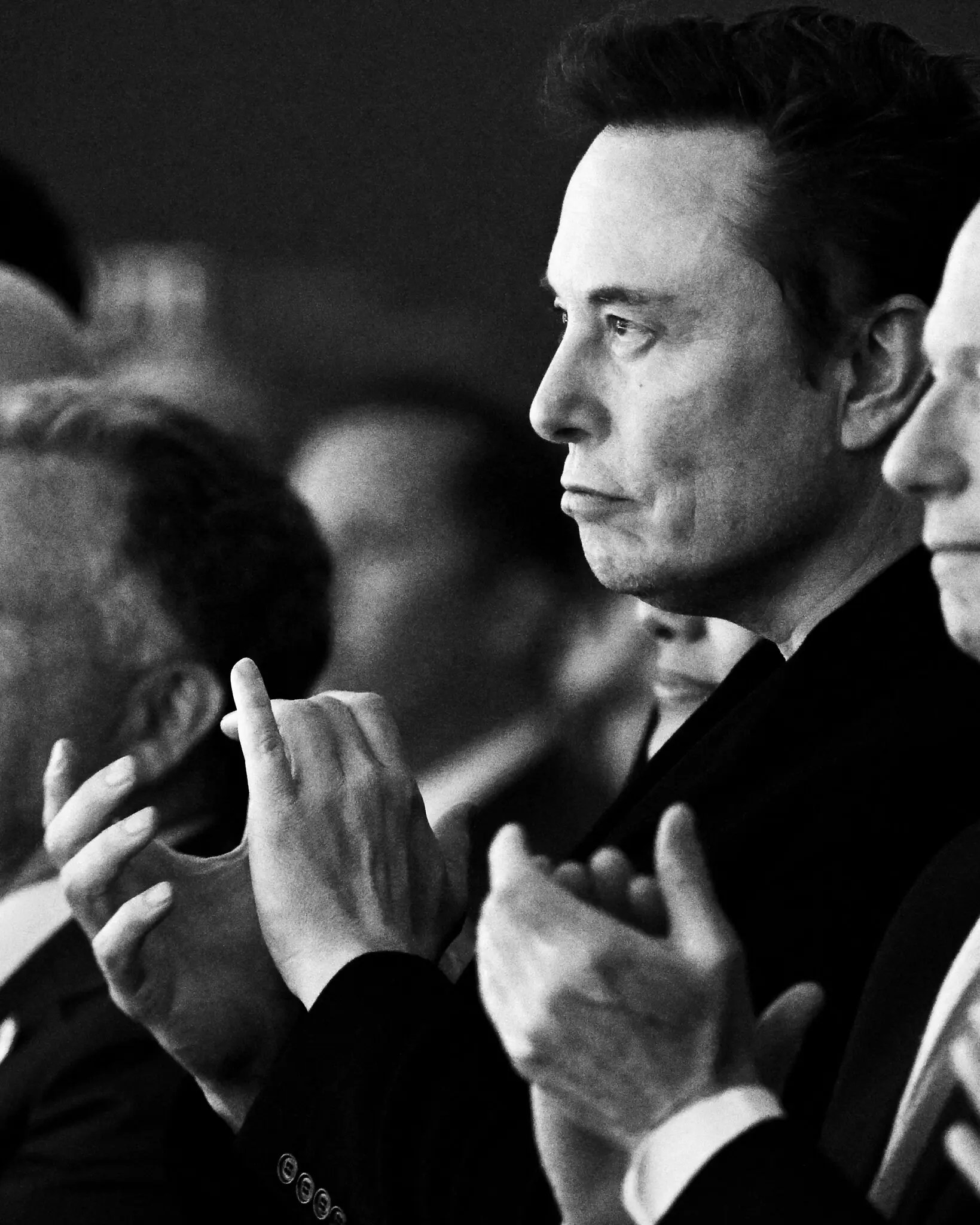
“The mistake is trying to situate Musk solely in the context of politics. He isn’t approaching this challenge like a budget-minded official. He’s approaching it like an engineer, exploiting vulnerabilities that are built into the nation’s technological systems, operating as what cybersecurity experts call an insider threat. We were warned about these vulnerabilities but no one listened, and the consequences — for the United States and the world — will be vast.”
Tufekci asserts that Elon Musk represents an “insider threat” to U.S. information systems.
“Insider threats have been around for a long time: the C.I.A. mole toiling quietly in the Soviet government office, the Boeing engineer who secretly ferried information about the space shuttle program to the Chinese government. Modern digital systems supercharge that threat by consolidating more and more information from many distinct realms.”
Tufekci points out that “Running integrated digital systems, however, requires endowing a few individuals with sweeping privileges. They’re the sysadmins, the systems administrators who manage the entire network, including its security. They have root privileges, the jargon for highest level of access. They get access to the God View, the name Uber gave its internal tool that allowed an outrageously large number of employees to see anyone’s Uber rides.”
Allowing Elon Musk and his DOGE team access to the “God View” of the U.S. Treasury’s payment system and other integrated digital systems of the federal government is unprecedented and dangerous.
Tufekci emphasizes: “That’s why when Edward Snowden was at the N.S.A. he was able to take so much information, including extensive databases that had little to do with the particular operations he wanted to expose as a whistle-blower. He was a sysadmin, the guy standing watch against users who abuse their access, but who has broad leeway to exercise his own.”
Data Scientists, Cyber Security experts, and AI researchers are closely monitoring these developments. Historians of Digital Humanities, information management, and information revolutions are considering the broader implications of DOGE’s potential use of sensitive information.
Tufekci, Zeynep “Here Are the Digital Clues to What Musk Is Really Up To.” The New York Times (21 February 2025).
Hartog, Frank den and Abu Barkat ullah. “Insider Threat: Cyber Security Experts on Giving Elon Musk and DOGE the Keys to US Government IT Systems.” The Conversation (19 February 2025).
On information revolutions and power, see:
Dooley, Brendan, ed. The Dissemination of News and the Emergence of Contemporaneity in Early Modern Europe. Farnham: Ashgate, 2010.
Dooley, Brendan Maurice and Sabrina A. Baron, eds. The Politics of Information in Early Modern Europe. London: Routledge, 2001.
Lamal, Nina, Jamies Bumby, and Helmer J. Helmers, eds. Print and Power in Early Modern Europe (1500–1800). Leiden: Brill, 2021.
Pettegree, Andrew. The Book in the Renaissance. New Haven, CT: Yale University Press, 2010.
Pettegree, Andrew. The Invention of News: How the World Came to Know about Itself. New Haven, CT: Yale University Press, 2014.
Wheeler, Tom. “Gutenberg’s Message to the AI Era,” Brookings (16 July 2024).


 Brian Sandberg: Historical Perspectives