
“Soon after the new administration arrived, things began to go missing from the White House website,” according to The New York Times.
“They weren’t just the partisan policy platforms that typically disappear during a presidential transition. Informational pages about the Constitution and past presidents, up in various forms since President George W. Bush was in office, all vanished.”
The New York Times reports that “Thousands of other government web pages had also been taken down or modified, including content about vaccines, hate crimes, low-income children, opioid addiction and veterans, before a court order temporarily blocked part of the sweeping erasure. A Justice Department database tracking criminal charges and convictions linked to the Jan. 6, 2021, attack on the Capitol was removed. Segments of data sets are gone, some of the experts who produced them were dismissed, and many mentions of words like ‘Black,’ ‘women’ and ‘discrimination’ have evaporated.”
These moves are part of the Trump administration’s attacks on Diversity, Equity, and Inclusion initiatives, but are also part of the much broader Culture Wars.
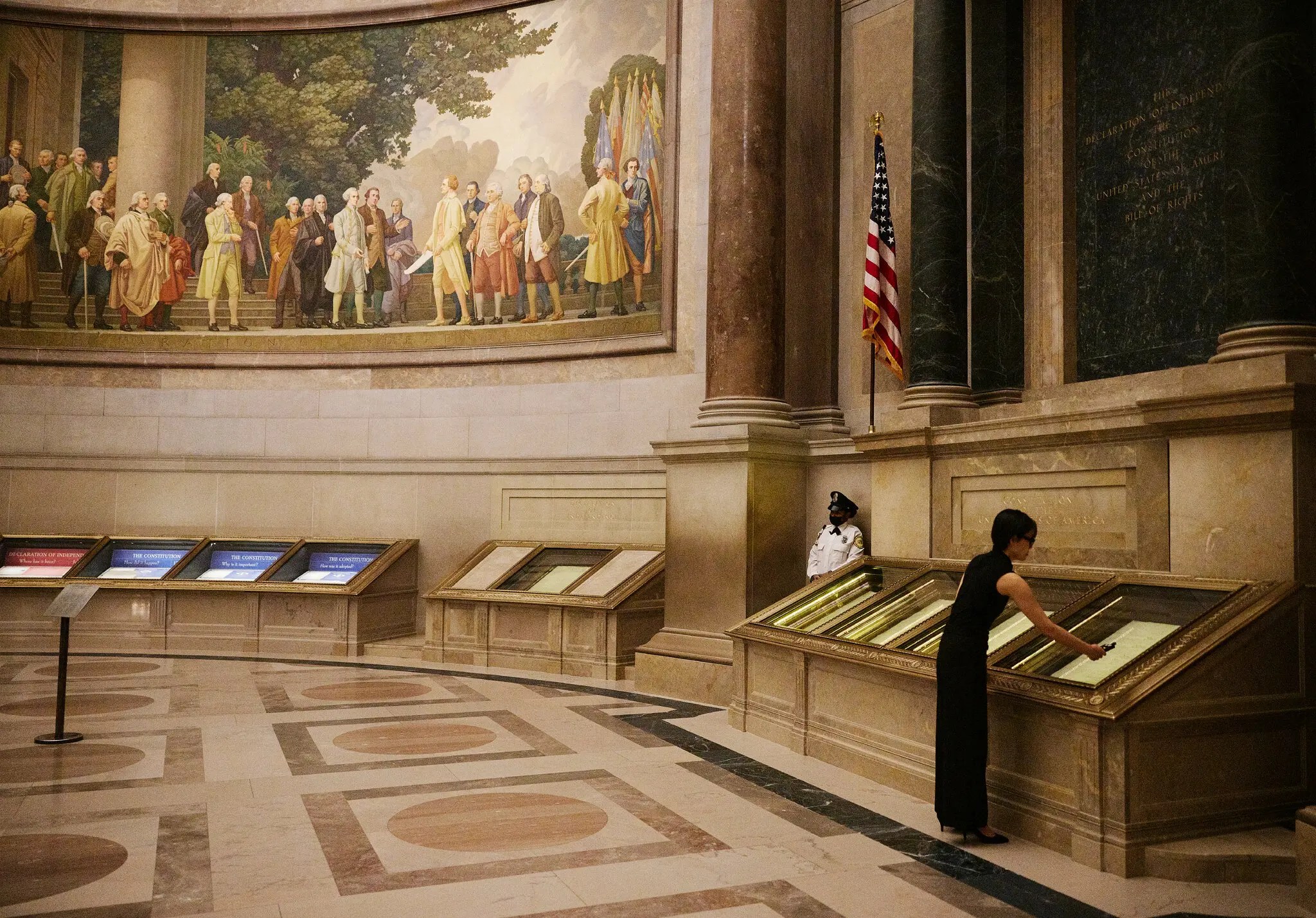
The Trump administration seeks to control current data and information, in addition to altering the historical record to suit its political aims. This is a major reason why the National Archives, Smithsonian Institute, Institute for Museum and Library Services, National Endowment for the Humanities, Fulbright Program, and research universities are under direct attack by Elon Musk’s so-called DOGE team and the entire Trump administration.
“President Trump’s team is selectively stripping away the public record, reconstructing his preferred vision of America in the negative space of purged history, archivists and historians said. As data and resources are deleted or altered, something foundational is also at risk: Americans’ ability to access and evaluate their past, and with it, their already shaky trust in facts.”
“‘This is not a cost-cutting mechanism,’ said Kenny Evans, who studies science and technology policy at Rice University’s Baker Institute for Public Policy and runs the White House Scientists Archive at the school. ‘This slide toward secrecy and lack of transparency is an erosion of democratic norms.'”
Non-governmental organizations are attempting to preserve government data that was previously available on the internet. The Data Rescue Project, Internet Archive, and other organizations are seekign to preserve data and information and make it accessible to the public.
The New York Times reports on these efforts to preserve data and information.
Hsu, Tiffany. “The White House Frames the Past by Erasing Parts of It.” The New York Times (5 April 2025).


 Brian Sandberg: Historical Perspectives