
The Trump administration’s limits on visa programs, suspension of student visas, and harassment of international students have already significantly reduced the number of international students applying to attend universities in the United States.
“Major international education search platforms, including IDP and Keystone Education Group, have detected a marked decline in student interest in American programs. Among academic administrators polled by the Institute for International Education this spring, more than usual reported drops in international applications for the coming year,” according to The New York Times.
The Institute for International Education (IIE) report from Spring 2025 indicates that “in the 2025/26 academic year, a higher proportion of U.S. respondent institutions anticipate a decline in their international student numbers across all academic levels.”
The New York Times points out that “these are not the first signs that American higher education is losing its dominant position. For years, countries in Asia have been strengthening their universities and marketing them to students around the world. With more appealing alternatives, the Trump administration’s hostile stance may hasten the decline in U.S. higher education pre-eminence.”
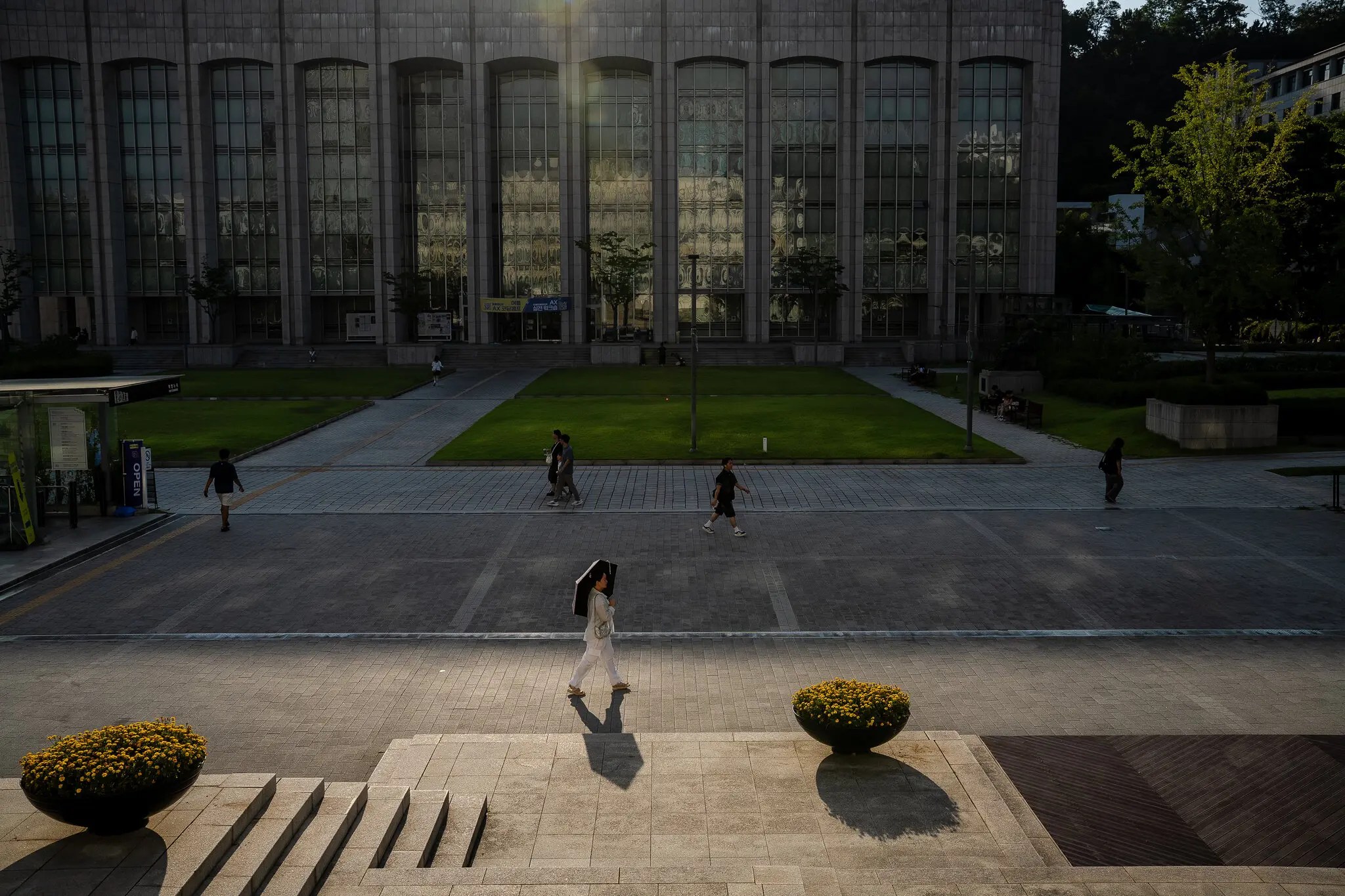
“‘We’re shifting from a world in which there were only a few primary target destination countries to a much more multipolar world,’ said Clay Harmon, the executive director of the Association of International Enrollment Management, which represents recruitment agencies.”
President Trump’s threats against international students and researchers align with his administration’s broader anti-immigration, anti-scientific, and anti-education policies.
The Trump administration’s coordinated assault on research and higher education has already seriously damaged American research universities’ reputations and positions within the worldwide higher education landscape. Academic freedom, research integrity, and international education are all threatened in the United States.
Many international students from Asian nations are looking elsewhere for undergraduate and graduate degree programs.
“For decades, in the English-speaking world, Oxford and Cambridge in Britain, the Ivy League in the United States, and other name-brand universities in Australia and Canada tended to top application checklists,” according to The New York Times.
However, the international academic landscape has been changing recently. The New York Times emphasizes that “gradually, schools in China, Japan, Taiwan and Singapore started showing up in annual rankings of the top universities — with lower price tags. Governments dispatched representatives to college fairs and set goals for the number of students they wanted to bring in every year.”
The Trump administration’s aggressive anti-immigrant and anti-education policies have now accelerated this trend.
The suspension of visas of international students who already studying in the United States has terrified international students at universities and colleges across the nation—not just at the elite Ivy League universities. The U.S. government’s threats toward international students are clearly discouraging many potential international students from applying.
“So when Mr. Trump, soon after starting his second term, began pushing international students away, Asian nations started welcoming students who couldn’t continue their studies at American schools,” according to The New York Times.
“In the spring, Korea University was among several institutions to offer relief measures as the U.S. government began canceling some student visas and terminating funding programs. Another South Korean school, Yonsei University, will open rolling admissions for undergraduate transfers year round starting in 2026 and is planning a customized visiting program for students whose coursework is interrupted in the United States.”
Universities around the world are now competing to assert their positions within a rapidly changing global order of higher education.
Meanwhile, universities and colleges in the United States will suffer declining international undergraduate student enrollments, forcing them to make further budget cuts or raise tuition for American students. The ability of research universities in the United States to conduct scientific, medical, social science, and arts and humanities research will also be greatly diminished, as many promising graduate students and postdoctoral researchers from around the world go elsewhere to pursue their research.
DePillis, Lydia and Jin Yu Young. “As Trump Pushes International Students Away, Asian Schools Scoop Them Up.” The New York Times (14 August 2025).
Baer, Julie and Nora Nemeth. “Spring 2025 Snapshot on International Educational Exchange.” Institute for International Education (July 2025).


 Brian Sandberg: Historical Perspectives