The United States has entered into the maelstrom of a constitutional crisis.
Constitutional lawyers and legal historians seem to agree that Elon Musk’s actions and the Trump administration’s broader attempts to disrupt federal agencies have created an unprecedented constitutional crisis in the nation.
The New York Times reports that “There is no universally accepted definition of a constitutional crisis, but legal scholars agree about some of its characteristics. It is generally the product of presidential defiance of laws and judicial rulings. It is not binary: It is a slope, not a switch. It can be cumulative, and once one starts, it can get much worse.”
“It can also be obvious, said Erwin Chemerinsky, dean of the law school at the University of California, Berkeley. ‘We are in the midst of a constitutional crisis right now,’ he said on Friday. ‘There have been so many unconstitutional and illegal actions in the first 18 days of the Trump presidency. We never have seen anything like this.'”
Professor Chemerinsky “ticked off examples of what he called President Trump’s lawless conduct: revoking birthright citizenship, freezing federal spending, shutting down an agency, removing leaders of other agencies, firing government employees subject to civil service protections and threatening to deport people based on their political views,” according to The New York Times.
“That is a partial list, Professor Chemerinsky said, and it grows by the day. ‘Systematic unconstitutional and illegal acts create a constitutional crisis,’ he said.”
Kate Shaw, Professor of Law (University of Pennsylvania) argues that “the administration’s early moves … also seem designed to demonstrate maximum contempt for core constitutional values — the separation of powers, the freedom of speech, equal justice under law.”
Adam Liptak, “Trump’s Actions have Created a Constitutional Crisis, Scholars Say,” The New York Times (10 February 2025).
Five former U.S. Secretaries of the Treasury are raising alarm about the unprecedented and unlawful changes made by the Trump administration and the so-called Department of Government Efficiency (DOGE) to the system of payments for the entire federal government of the United States.
Former Secretaries Robert E. Rubin, Lawrence H. Summers, Timothy F. Geithner, Jacob J. Lew, and Janet L. Yellen have published a collective opinion piece in TheNew York Times, stating: “We take the extraordinary step of writing this piece because we are alarmed about the risks of arbitrary and capricious political control of federal payments, which would be unlawful and corrosive to our democracy.”
They emphasize that “A key component of the rule of law is the executive branch’s commitment to respect Congress’s power of the purse: The legislative branch has the sole authority to pass laws that determine where and how federal dollars should be spent.”
The former Secretaries explain that “The role of the Treasury Department — and of the executive branch more broadly — is not to make determinations about which promises of federal funding made by Congress it will keep, and which it will not. As Justice Brett Kavanaugh of the Supreme Court previously wrote, ‘Even the president does not have unilateral authority to refuse to spend the funds.’ Chief Justice John Roberts agrees: He wrote that ‘no area seems more clearly the province of Congress than the power of the purse.'”
The payment system managed by the U.S. Department of the Treasury affect millions of American citizens directly. “Many people and entities depend on Treasury’s faithful disbursement of federal funds: Social Security checks arrive each month. Veterans receive their benefits. Medicare providers are reimbursed. Federal workers, members of the military and businesses that provide goods and services to the government are all paid on time and in full. Holders of outstanding federal debt receive interest payments.” All citizens should be concerned about the unprecedented changes in the payment systems of the U.S. federal government.
Unfortunately, this statement could have been stronger if some former Secretaries of the Treasury who had served in Republican administrations had joined the statement.
A federal judge has temporarily blocked DOGE from accessing the Treasury payment system. Nonetheless, the United States has clearly entered a constitutional crisis.
In addition, DOGE officials may have already committed an illegal breach of federal data on all American citizen’s private data held in government payment systems. “Bruce Schneier, a cybersecurity expert at Harvard and the author of a series of books on security vulnerabilities, including Click Here to Kill Everybody, called the entry of Mr. Musk’s force ‘the most consequential security breach’ in American history,” according to the New York Times.
We will see whether federal judges will be able to act effectively to preserve fundamental constitutional provisions and processes.
Constitutional lawyers, political scientists, legal historians, historians of the United States, and historians of state development are monitoring the situation.
Heather Cox Richardson, Professor of History (Boston College), has analyzed the illegal nature of the DOGE maneuvers, explaining that “Billionaire Elon Musk’s team yesterday took control of the Treasury’s payment system, thus essentially gaining access to the checkbook with which the United States handles about $6 trillion annually and to all the financial information of Americans and American businesses with it. Apparently, it did not stop there.”
Timothy Snyder, Professor of History (Yale University), argues that “the ongoing actions by Musk and his followers are a coup because the individuals seizing power have no right to it. Elon Musk was elected to no office and there is no office that would give him the authority to do what he is doing. It is all illegal. It is also a coup in its intended effects: to undo democratic practice and violate human rights.” Snyder emphasizes that “in gaining data about us all, Musk has trampled on any notion of privacy and dignity, as well as on the explicit and implicit agreements made with our government when we pay our taxes or our student loans. And the possession of that data enables blackmail and further crimes. In gaining the ability to stop payments by the Department of the Treasury, Musk would also make democracy meaningless. We vote for representatives in Congress, who pass laws that determine how our tax money is spent. If Musk has the power to halt this process at the level of payment, he can make laws meaningless. Which means, in turn, that Congress is meaningless, and our votes are meaningless, as is our citizenship.”
Seth Masket, Professor of Political Science and Director of the Center on American Politics (University of Denver) observes that “There are many disturbing aspects of this. But perhaps the most fundamental is that Elon Musk is not a federal employee, nor has he been appointed by the President nor approved by the Senate to have any leadership role in government. The ‘Department of Government Efficiency,’ announced by Trump in a January 20th executive order, is not truly any sort of government department or agency, and even the executive order uses quotes in the title. It’s perfectly fine to have a marketing gimmick like this, but DOGE does not have power over established government agencies, and Musk has no role in government. It does not matter that he is an ally of the President. Musk is a private citizen taking control of established government offices. That is not efficiency; that is a coup.”
I will update this post as additional historians and social scientists publish analyses.
The New York Times published the opinion piece by the former Secretaries of the Treasury. The Associated Press (AP) reports on the federal judge’s blocking of DOGE. The New York Times reports on privacy issues and the security breach.
President Trump’s outrageous suggestion that the United States annex Gaza and remove the Palestinian people from the territory would be blatantly illegal, constituting a crime against humanity.
President Trump yesterday proposed seizing Gaza, leveling its remaining buildings, clearing debris, and removing its entire population in order to make way for the development of a “Riviera of the Middle East.” He is advocating territorial imperialism, mass deportation, and ethnic cleansing.
Trump is channeling his admiration for President Andrew Jackson’s removal of Amerindians during the early nineteenth century and his love of real estate development into a criminal foreign policy for the twenty-first century. However, an enormous body of international law has developed over the past century and a half that challenges his criminal enterprise.
Trump’s proposed actions would clearly violate international law in multiple ways.
The New York Times reports that “President Trump’s proposal for the United States to take over Gaza, transfer its population to Egypt and Jordan and redevelop it into the ‘Riviera of the Middle East’ would unquestionably be a severe violation of international law, experts say.”
“Forced deportation or transfer of a civilian population is a violation of international humanitarian law, a war crime and a crime against humanity. The prohibition against forced deportations of civilians has been a part of the law of war since the Lieber Code, a set of rules on the conduct of hostilities, was promulgated by Union forces during the U.S. Civil War. It is prohibited by multiple provisions of the Geneva Conventions, and the Nuremberg Tribunal after World War II defined it as a war crime.”
Displaced Gazans. Photo: New York Times
“The Rome Statute of the International Criminal Court lists forcible population transfers as both a war crime and a crime against humanity. And if the displacement is focused on a particular group based on their ethnic, religious or national identity, then it is also persecution — an additional crime. (Because Palestine is a party to the International Criminal Court, the court has jurisdiction over those crimes if they take place within Gaza, even if they are committed by citizens of the United States, which is not a member of the court.) …
“Janina Dill, the co-director of the Oxford Institute for Ethics, Law and Armed Conflict, said in a statement that forcing Gazans to leave would be a crime: ‘The scale of such an undertaking, the level of coercion and force required, hence the gravity, make this a straightforward crime against humanity.’
“It would be a further, severe violation for the United States to permanently take over the territory of Gaza. …”
I teach courses on HIST 384 War in History since 1500, HIST 399 Civil Wars, and HIST 610 Religious Violence in Global Perspective at Northern Illinois University. Each of these courses considers cases of massacre, ethnic cleansing, and war crimes. Ethnic identities, racial ideologies, religious politics, and nationalist programs can all fuel mass violence.
Historians arguably need to work more closely with international lawyers on the problem of violence in order to address issues of war crimes and crimes against humanity. Historical examples from pre-modern periods may be useful in considering forms of mass violence and criminality that are not analogous to the twentieth-century examples that tend to dominate case studies in international law.
There is a massive body of historical and legal literature on ethnic cleansing, mass deportation, crimes against humanity, and war crimes. I have long bibliographies to support each of my undergraduate courses and graduate seminars. I will just signal two collective volumes as starting points on these issues:
Schabas, William A., ed. The Cambridge Companion to International Criminal Law. Cambridge: Cambridge University Press, 2016.
Heller, Kevin Jon, et al, eds. The Oxford Handbook of International Criminal Law. Oxford: Oxford University Press, 2020.
The International Criminal Court (ICC) provides definitions of the elements of crimes against humanity and war crimes.
The New York Times reports on the illegality of President Trump’s proposed Gaza annexation and removal of Palestinians. Peter Baker assesses reactions to the proposed annexation at The New York Times. Meanwhile, The Washington Post reports on U.S. allies’ rejections of Trump’s outrageous proposal.
The long-anticipated assault on the Department of Education is now beginning.
President Trump and his allies have long wanted to minimize or destroy the Department of Education, as well as broader public education systems in the United States. Educational institutions and issues represent a major battleground in today’s Culture Wars.
The Washington Post reports that “President Donald Trump is preparing an executive order aimed at eventually closing the Education Department and, in the short term, dismantling it from within, according to three people briefed on its contents.”
“The draft order acknowledges that only Congress can shut down the department and instead directs the agency to begin to diminish itself, these people said, speaking on the condition of anonymity because they were not authorized to speak publicly about internal issues,” according to the Washington Post. “That work is underway already. The new administration has been trying to reduce the workforce by putting scores of employees on administrative leave and pressuring staff to voluntarily quit.”
Many universities, state agencies, education advocacy organizations, parents’ groups, and students’ groups are mobilizing to oppose the cuts to the Department of Education.
The Washington Post indicates that “already, the National Student Legal Defense Network, an advocacy group, is exploring legal challenges to any effort to dismantle the agency. ‘Effectively shutting down the Department of Education through Executive Order or mass firings is a recipe for chaos that will disrupt the lives of students across the country,’ said Aaron Ament, a former Obama administration official who is president of the group. ‘Trying to do so without Congress is not only short-sighted but illegal and unconstitutional.'”
President Trump is aggressively acting to fulfill a long-held dream of many Republican party leaders. The Washington Post emphasizes that “Closing the department has been an off-and-on Republican goal since it was created in 1979. During his campaign, Trump repeatedly promised to ‘return’ responsibility for education to the states, a misleading sentiment echoed by many other GOP candidates. (States and school districts, not the federal government, operate public schools.)”
Anyone with a family member who attends public schools or universities should follow these developments closely. Similarly, anyone who aims to use federal student loans or Pell Grants to pay for college will be directly affected by any changes to the Department of Education’s management of those programs.
The assault on the Department of Education seems likely to have ripple effects on research funding, curricular programs, diversity programs, and academic freedom at universities and public school systems across the United States.
The Washington Post and Politico report on the Trump administration’s assault on the Department of Education.
The AI revolution is continuing to develop rapidly.
OpenAI has launched a new AI search engine called Deep Research, which can allegedly conducted more targeted research than previous AI tools.
The New York Times reports that “OpenAI unveiled the new tool, called Deep Research, with a demonstration on YouTube on Sunday, days after showing the technology to lawmakers, policymakers and other officials in Washington.”
OpenAI has focused on market research and job candidate research applications with its recent launches of AI tools (or agents). Deep Research seems targeted at managerial users in corporations and government agencies, rather than at students, academic researchers or scientific researchers.
“‘It [Deep Research] can do complex research tasks that might take a person anywhere from 30 minutes to 30 days,’ Kevin Weil, OpenAI’s chief product officer, said at the event in Washington. By contrast, Deep Research can accomplish such tasks in five to 30 minutes, depending on the complexity.”
The New York Times explains that “during the briefing on Capitol Hill, Mr. Weil showed the technology gathering information about Albert Einstein. He asked the tool to put together a detailed report about the physicist for a hypothetical Senate staff member preparing for a congressional hearing where Einstein is a nominee for U.S. secretary of energy. In addition to providing information about Einstein’s background and personality, it generated five questions that a senator could ask the physicist to determine whether he was the right person for the job.”
I have not tried out Deep Research, since it is available through ChatGPT Pro—which is a subscription service that costs $200 per month. I would invite comments from researchers who have tested this AI tool and considered its potential applications for academic research.
Elon Musk and his so-called DOGE team of unelected officials, who are mostly drawn from the tech business sector, now have access to the U.S. Department of Treasury system that handles payment of all federal government payments to individuals and organizations across the nation.
The potential for gross mismanagement of U.S. citizens’ personal data and the interruption of their federal benefits (Medicare, Medicaid, Social Security, Veteran’s benefits, and others) is staggering.
The New York Times reports that “Treasury Secretary Scott Bessent gave representatives of the so-called Department of Government Efficiency access to the federal payment system late on Friday, according to five people familiar with the change, handing Elon Musk and the team he is leading a powerful tool to monitor and potentially limit government spending.”
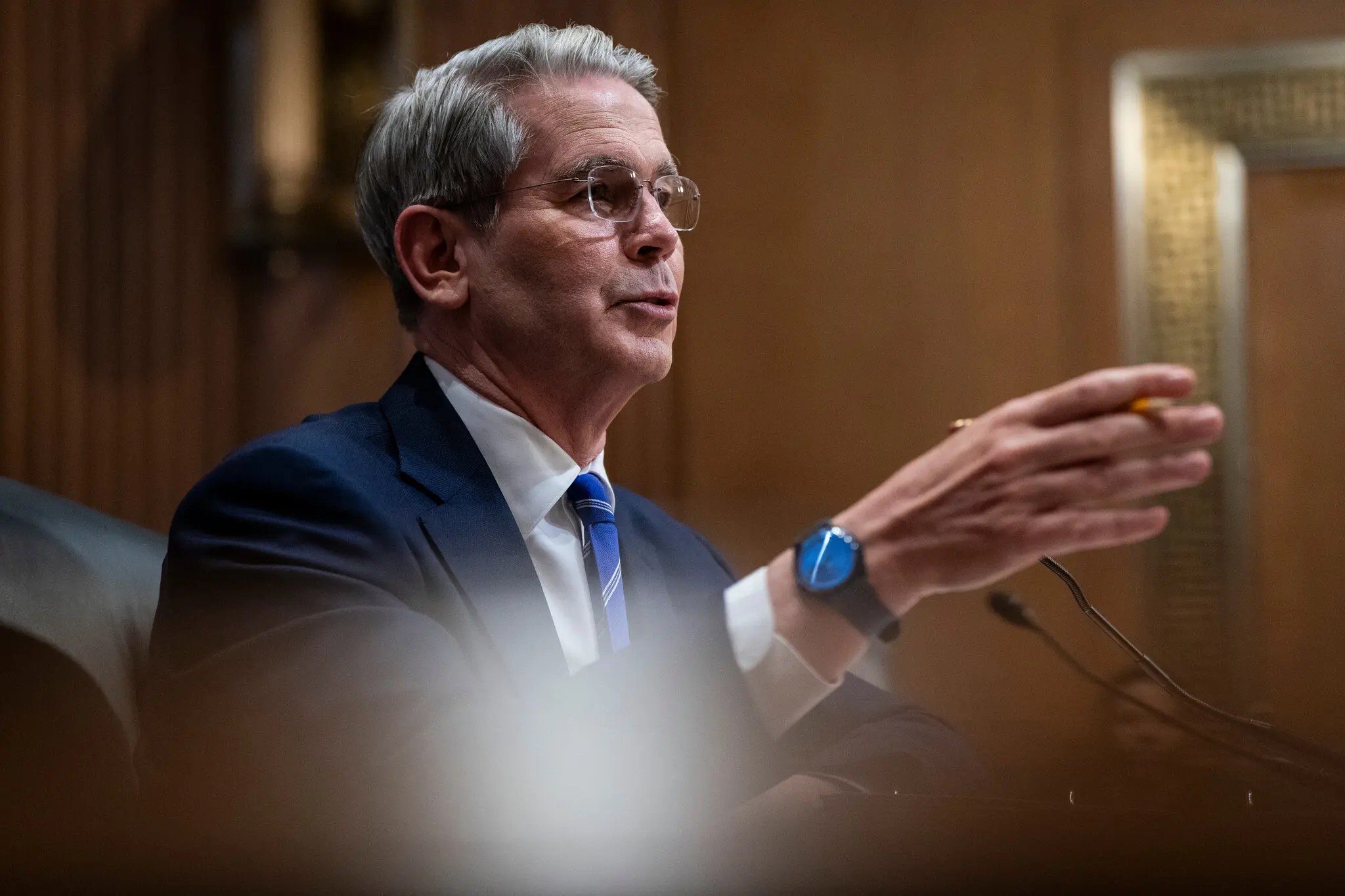
Treasury Secretary Scott Bessent
“The new authority follows a standoff this week with a top Treasury official who had resisted allowing Mr. Musk’s lieutenants into the department’s payment system, which sends out money on behalf of the entire federal government. The official, a career civil servant named David Lebryk, was put on leave and then suddenly retired on Friday after the dispute, according to people familiar with his exit.”
David Lebryk, a Department of Treasury official who protested the DOGE access to payment systems
“The system could give the Trump administration another mechanism to attempt to unilaterally restrict disbursement of money approved for specific purposes by Congress, a push that has faced legal roadblocks. …
“In a process typically run by civil servants, the Treasury Department carries out payments submitted by agencies across the government, disbursing more than $5 trillion in fiscal year 2023. Access to the system has historically been closely held because it includes sensitive personal information about the millions of Americans who receive Social Security checks, tax refunds and other payments from the federal government,” according to The New York Times.
This move represents an assault on the U.S. Constitution and a subversion of the U.S. Congress’s “power of the purse” and federal government in general, compounding the growing constitutional crisis in the first two weeks of President Trump’s second administration.
The Treasury Secretary’s actions have the potential to affect millions of Americans directly.
The Washington Post emphasizes that “The sensitive systems, run by the Bureau of the Fiscal Service, control the flow of more than $6 trillion annually. Tens of millions of people across the country rely on the systems. They are responsible for paying Social Security and Medicare benefits, salaries for federal personnel, payments to government contractors and grant recipients, and tax refunds, among tens of thousands of other functions.”
A separate article in The Washington Post discusses the implications of the outright politicization of the federal government’s payment system: “The possibility that government officials might try to use the federal payments system — which essentially functions as the nation’s checkbook — to enact a political agenda is unprecedented. said Mark Mazur, who served in senior Treasury Department roles during the Obama and Biden administrations. ‘This is a mechanical job — they pay Social Security benefits, they pay vendors, whatever. It’s not one where there’s a role for nonmechanical things, at least from the career standpoint. Your whole job is to pay the bills as they’re due,’ Mazur said. ‘It’s never been used in a way to execute a partisan agenda. … You have to really put bad intentions in place for that to be the case.'”
U.S. historians and legal scholars are following these moves closely, as are historians of state development patterns. Historians of state development always assess state institutions and state finances closely, as these are central to the policy formulation and government operations.
I will add assessments by historians as soon as they are available, but in the meantime, here are a few key works on state development and state finances:
Blockmans, Wim, André Holenstein, and Jon Mathieu, eds. Empowering Interactions: Political Cultures and the Emergence of the State in Europe, 1300-1900. Farnham, England: Ashgate, 2009.
Brewer, John. The Sinews of Power: War, Money and the English State, 1688-1783. Cambridge, MA: Harvard University Press, 1988.
Dincecco, Mark. “The Rise of Effective States in Europe.” The Journal of Economic History 75, no. 3 (2015): 901–18.
Glete, Jan. War and the State in Early Modern Europe. Spain, the Dutch Re- public and Sweden as Fiscal-Military States, 1500-1660. London, 2002.
Ogilvie, Sheilagh. “State Capacity and Economic Growth: Cautionary Tales from History.” National Institute Economic Review 262 (2022): 28–50.
Potter, Mark. Corps and Clienteles: Public Finance and Political Change in France, 1688–1715. Aldershot: Ashgate, 2003.
Steinmetz, George, ed. State/Culture: State-Formation after the Cultural Turn. Ithaca, NY: Cornell University Press, 1999.
Storrs, Christopher and P. G. M. Dickson, The Fiscal-Military State in Eighteenth-Century Europe: Essays in Honour of P.G.M. Dickson. Abingdon, 2009.
Tilly, Charles. Coercion, Capital, and European States, AD 990-1992. Oxford: Blackwell, 1992.
History professors, teachers, and students across the United States are celebrating Black History Month in a time of crisis.
“Feb. 1 is the beginning of Black History Month, which for decades has recognized the contributions of Black people to American civic life and culture with festive luncheons, serious lectures, profitable merchandise lines and staid White House receptions,” according to The New York Times.
“But a month that was officially recognized nearly five decades ago by a Republican president, Gerald R. Ford, is dawning this year with new significance amid President Trump’s furious assault on diversity programs inside and outside the federal government.
“Suddenly the study of Black history — or at least the dark corners of slavery, segregation and bigotry — appears to be an act of defiance.
“‘Black History Month existed long before presidents endorsed it, and it will continue, even if presidents do not,’ said Martha Jones, a professor of history and a presidential scholar at Johns Hopkins University. Nonetheless, she added, ‘there’s a great deal to lament and even to decry’ about the suppression of American history.”
Many state governments, municipal governments, and universities continue to celebrate Black History Month.
Black History Month banner from the Chicago Cultural Alliance
President Trump has signed a proclamation recognizing Black History Month, although his support seems very tentative.
However, the Trump administration is acting to dismantle recognition of Black History across the federal government.
The Department of Defense, the Defense Intelligence Agency, and some other federal agencies have reportedly barred their departments from recognizing Black History Month or other designated historical months.
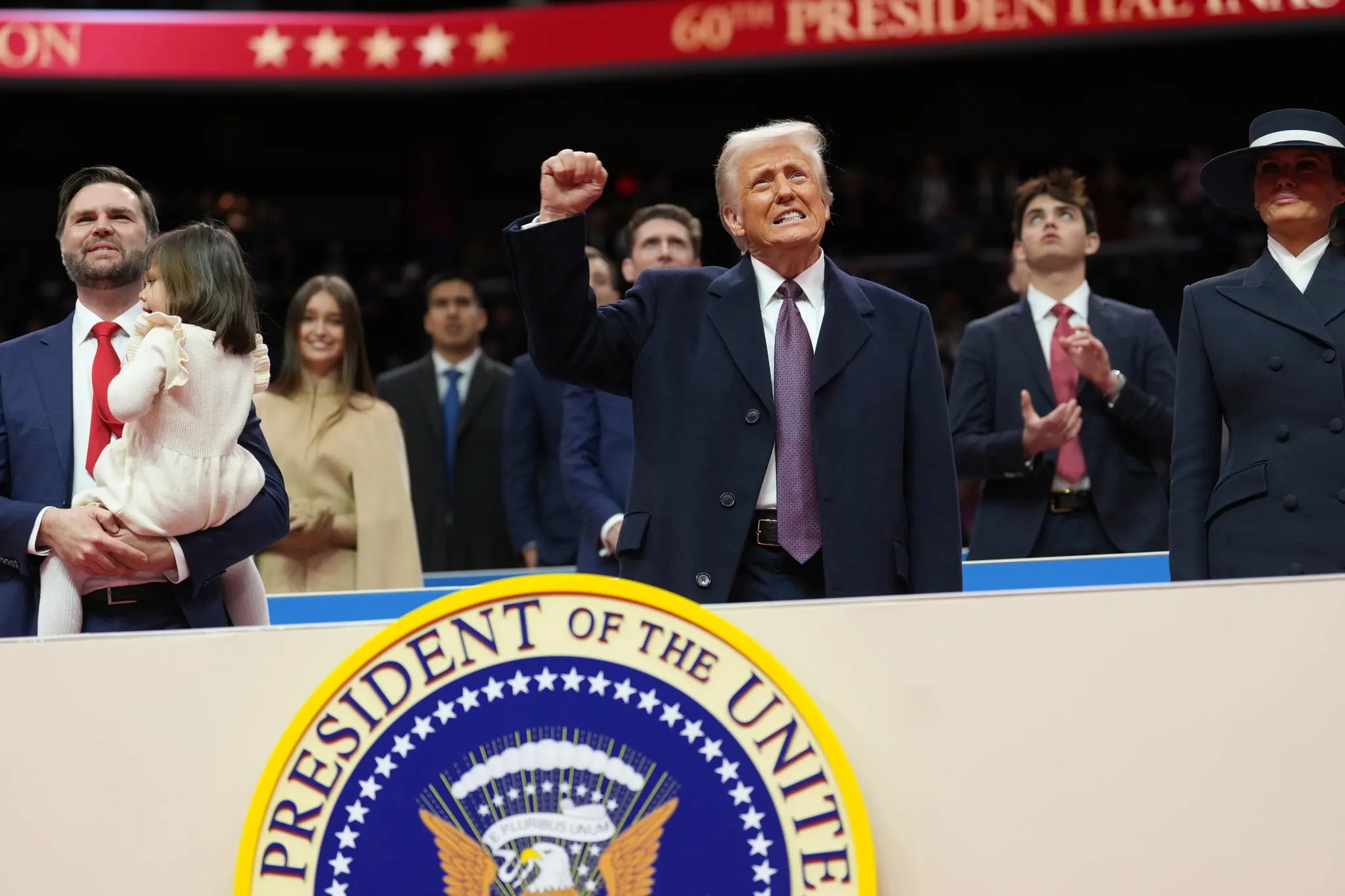
President Trump’s inauguration ceremonies in Washington, D.C., have been filled with royal rhetoric and regal symbolism, promoting the new President as a would-be king.
The New York Times reports that “At a late-night inaugural ball on Monday, President Trump, flush with his restoration to power, began waving a ceremonial sword he had been given almost as if it were a scepter and he were a king.”
“Perhaps it is a fitting metaphor as Mr. Trump takes control in Washington again this week with royal flourishes and monarchical claims to religious legitimacy. His return to the White House has been as much a coronation as an inauguration, a reflection of his own view of power and the fear it has instilled in his adversaries.”
According to The New York Times, ” His inaugural events have been suffused with regal themes. In his Inaugural Address, he claimed that when a gunman opened fire on him last summer, he ‘was saved by God to make America great again,’ an echo of the divine right of kings. He invoked the imperialist phrase ‘manifest destiny,’ declared that he would unilaterally rename mountains and seas as he sees fit and even claimed the right to take over territory belonging to other nations.”
American Revolutionaries overthrew King George III, separated from Great Britain, and rejected monarchy altogether. Presidents of the United States have often gone to great length to avoid any perception of association with monarchy. Meanwhile, critics of Presidents have often castigated them by calling them “king.”
“‘But in the annals of presidential history, one struggles to find a leader who wouldn’t have found the term ‘king’ at least somewhat insulting,’ said Jeffrey A. Engel, the director of the Center for Presidential History at Southern Methodist University. Not Mr. Trump, it seems. ‘In highlighting his family to such a degree during his swearing-in, President Trump furthers the notion that he and they are special, removed from regular society.'”
Historians of early modern monarchy, royal households, political patronage, and court culture have much to contribute to the analysis of modern presidential political culture in the age of Trump.
Here are a few works on the history of monarchy that provide frameworks for examining modern uses of royal symbolism and claims to monarchical power:
Adamson, J. S. A. The Princely Courts of Europe: Ritual, Politics and Culture Under the Ancien Régime, 1500-1750. London: Weidenfeld & Nicolson, 1999.
Asch, Ronald G. and Adolf M. Birke, eds. Princes, Patronage, and the Nobility: The Court at the Beginning of the Modern Age, c. 1450-1650. London: Oxford University Press, 1991.
Collins, James B. The State in Early Modern France. 2nd ed. Cambridge: Cambridge University Press, 2009.
Duindam, Jeroen Frans Jozef. Vienna and Versailles: The Courts of Europe’s Major Dynastic Rivals, 1550-1780. Cambridge ; Cambridge University Press, 2003.
Duindam, Jeroen Frans Jozef, Tulay Artan, and Metin Kunt, eds. Royal Courts in Dynastic States and Empires : A Global Perspective. Leiden: Brill, 2011.
Elliott, J. H. and L. W. B. Brockliss, eds. The World of the Favourite. New Haven, CT: Yale University Press, 1999.
Elias, Norbert Elias. The Civilizing Process, trans. Edmund Jephcott. Oxford: Blackwell, 1997.
Friedeburg, Robert von, and J. S. (John Stephen) Morrill, eds. Monarchy Transformed : Princes and Their Elites in Early Modern Western Europe. Cambridge, Cambridge University Press, 2017.
Henshall, Nicholas. The Myth of Absolutism: Change and Continuity in Early Modern Monarchy. London: Longman, 1992.
Jouanna, Arlette. Le devoir de révolte: la noblesse française et la gestation de l’Etat moderne, 1559-1661. Paris: Fayard, 1989.
Kettering, Sharon. Patrons, Brokers, and Clients in Seventeenth-Century France. Oxford: Oxford University Press, 1986.
Major, J. Russell. From Renaissance Monarchy to Absolute Monarchy: French Kings, Nobles and Estates. Baltimore: Johns Hopkins University Press, 1994.
Zmora, Hillay. Monarchy, Aristocracy, and the State in Europe, 1300-1800 / Hillay Zmora. London ; Routledge, 2001.
The New York Times report on “‘The Return of the King’: Trump Embraces Trappings of the Throne,” is available online.
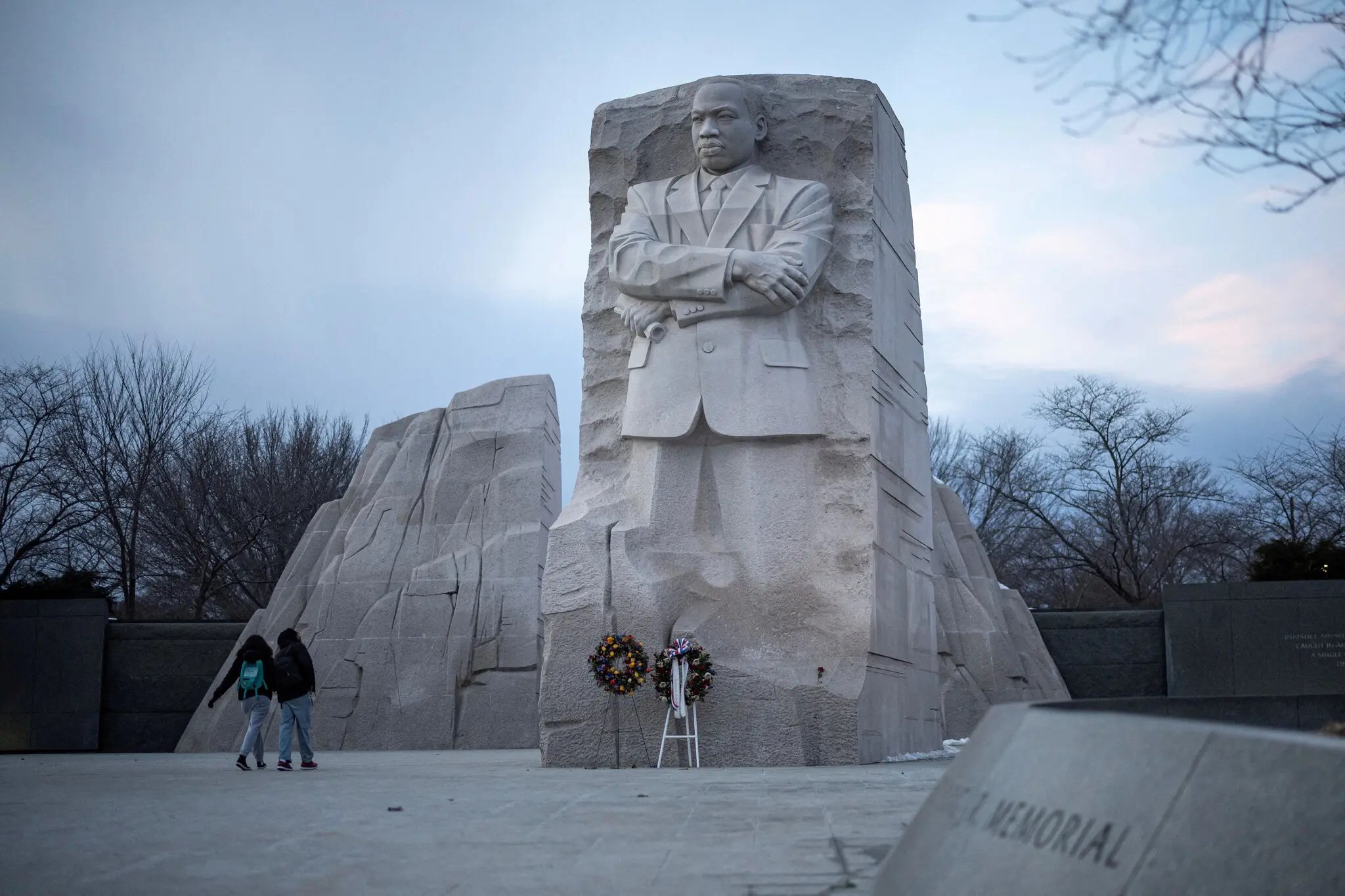
Historians across the United States are remembering Martin Luther King, Jr., today (20 January 2025) and interpreting the significance of the Civil Rights Movement. University professors and high school teacher are confronting politicized debates about how Martin Luther King, Jr., and the Civil Rights Movement are remembered and taught.
The New York Times reports on the coincidence of Inauguration Day falling on the same day as Martin Luther King, Jr. Day in 2025.
The Washington Post reports on remembrances of Martin Luther King, Jr. in Washington, D.C.
ABC 7 Chicago reports on the commemorations of Martin Luther King, Jr. Day are being held in the Chicago area.
WBEZ (Chicago’s NPR station) is rebroadcasting Studs Terkel’s famous recordings of interviews with Civil Rights activists heading from Chicago to Washington, D.C., to participate in the March on Washington in 1963, where Martin Luther King, Jr., delivered his “I Have a Dream” speech.
Historian David Ikard (Vanderbilt University) was interviewed in 2023 on NPR concerning the political battle over the creation of the Martin Luther King, Jr. Day Holiday, which was established in 1983.
Historian Peniel Joseph (University of Texas at Austin) commented on interpreting Martin Luther King’s message and legacy on NPR.
Time Magazine published an article on teaching Civil Rights in the climate of the current “History Wars.”
Northern Illinois University published an article on the history of the Martin Luther King, Jr., Commons on campus.
On President-elect Trump’s glaring conflicts of interest….
“During his first administration, President-elect Donald J. Trump’s global business empire created an unprecedented number of conflicts of interest for a sitting president. Ethics experts worried that opportunists could try to curry favor by booking stays at Mr. Trump’s network of hotels, golf clubs and other properties,” according to The New York Times.
“Their predictions bore out: Foreign governments and lobbyists spent lavishly at his Washington hotel, which has since been sold, as well as at his Mar-a-Lago resort and other properties. The federal government itself also became an awkward customer by renting millions of dollars’ worth of rooms at his hotels and clubs.”
“Those concerns now seem almost quaint in light of some of Mr. Trump’s more recent business ventures. They include a publicly traded company, a cryptocurrency venture, new overseas real estate deals involving state-affiliated entities and numerous branding and licensing deals.”
Historians of early modern royalty, nobility, and state development will recognize many of the patterns of favor, corruption, patronage, and political influence described here. Here are a few key studies dealing with early modern political patronage and court culture:
Elias, Norbert. The Court Society. Trans. Edmund Jephcott. New York, NY: Pantheon Books, 1983.
Mulryne, J. R., and Elizabeth Goldring. Court Festivals of the European Renaissance: Art, Politics, and Performance. Aldershot: Ashgate, 2002.
Fenlon, Iain. The Ceremonial City: History, Memory and Myth in Renaissance Venice. New Haven, CT: Yale University Press, 2007.
Cochrane, Eric. Florence in the Forgotten Centuries, 1527-1800. Chicago, IL: University of Chicago Press, 1973.
Zorach, Rebecca. Blood, Milk, Ink, Gold: Abundance and Excess in the French Renaissance. Chicago, IL: University of Chicago Press, 2005.
Van Orden, Kate. Music, Discipline and Arms in Early Modern France. Chicago, IL: University of Chicago Press, 2005.
Watanabe-O’Kelly, Helen. Court Culture in Dresden: From Renaissance to Baroque. Houndmills: Palgrave, 2002.
Frieder, Braden K. Chivalry ad the Perfect Prince: Tournaments, Art, and Armor at the Spanish Habsburg Court. Kirksville, MO: Truman State University Press, 2008.
Strong, Roy. The Cult of Elizabeth: Elizabeth Portraiture and Pageantry. Berkeley, CA: University of California Press, 1977.
Peck, Linda Levy. Court Patronage and Corruption in Early Stuart England. New York, NY: Routledge, 1990.
Duindam, Jeroen. Vienna and Versailles: The Courts of Europe’s Dynastic Rivals, 1550-1780. Cambridge: Cambridge University Press, 2003.
Mukerji, Chandra. Territorial Ambitions and the Gardens of Versailles. Cambridge: Cambridge University Press, 1997.
Subrahmanyam, Sanjay. Courtly Encounters: Translating Courtliness and Violence in Early Modern Eurasia. Cambridge, MA: Harvard University Press, 2012.
Additional studies of court culture, political patronage, and state development in early modern France by Kristen Neuschel, Sharon Kettering, James B. Collins, Jonathan Dewald, and other historians are also relevant.
The New York Times reports on President-elect Trump’s conflicts of interest.












 Brian Sandberg: Historical Perspectives