Remembering the victims of the Charlie Hebdo Attacks on 7 January 2015 in Paris.
I was living nearby in the Marais at the time and remember that terrible day and its aftermath vividly.
It is hard to believe that 10 years have passed….
Parisian Mayor Anne Hidalgo and President Emmanuel Macron commemorated the attacks today at the site of the former Charlie Hebdo offices.
Le Mondehas published an article on “Dix ans après les attentats de 2015, la France toujours sous le choc,” and a series of pieces on the transformations of Parisian life and security since the attacks.
Reuters and the BBC report in English on the commemorations in Paris.
Le Monde has a profile of the cartoonist Riss, who survived the attacks: “Riss, dix années pour garder « Charlie » en vie.”
A brief video documentary by Le Monde recaps the Charlie Hebdo Attacks and flight of the killers.
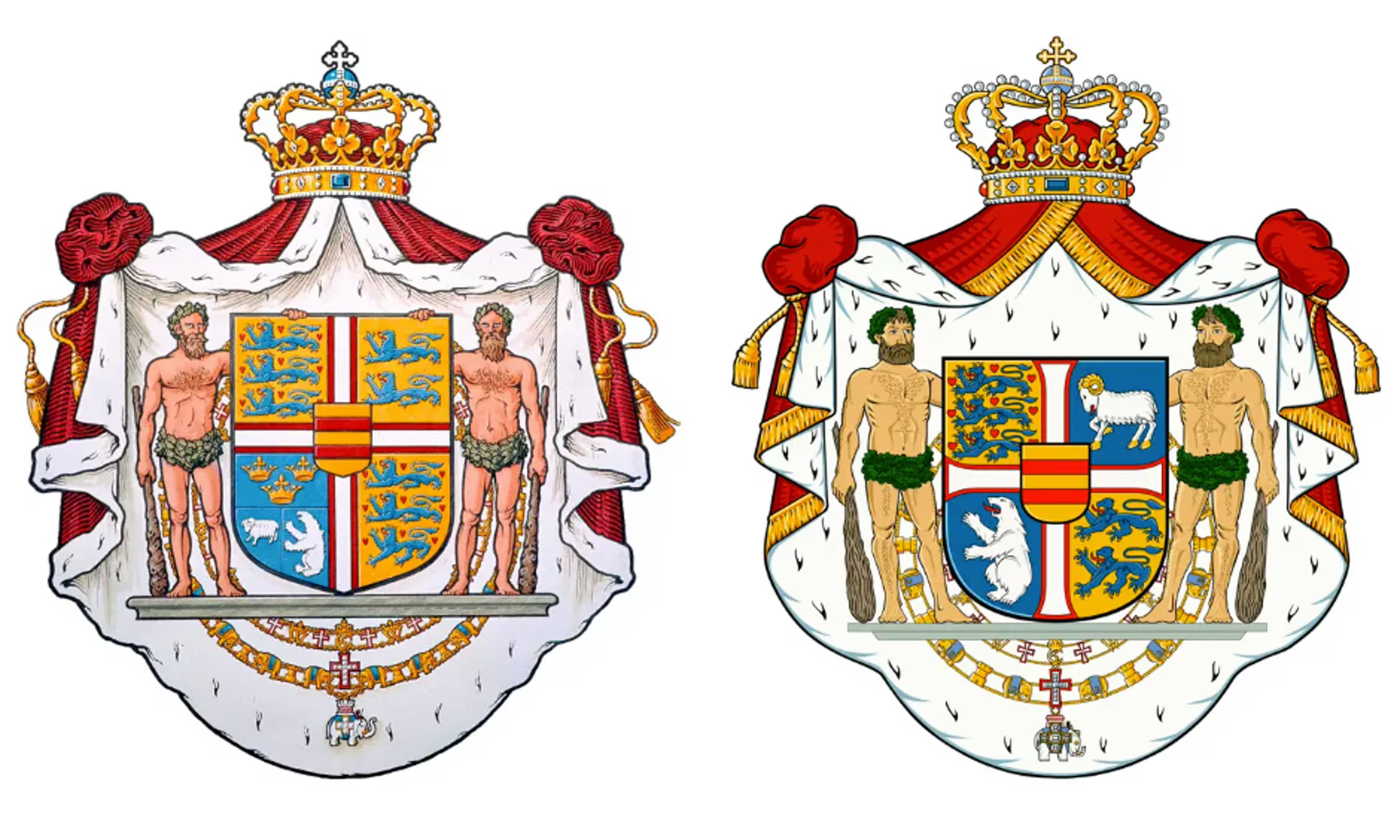
Early modern issues of royal heraldry and territorial claims have reemerged in contemporary international politics. The King of Denmark is changing his coat of arms, provoking surprise among European political analysts and historians.
The Guardian reports that “The Danish king has shocked some historians by changing the royal coat of arms to more prominently feature Greenland and the Faroe Islands – in what has also been seen as a rebuke to Donald Trump.”
The new coat of arms foregrounds symbols of Greenland and the Faroe Islands, in a direct response to President-elect Donald Trump’s recent statements suggesting that the United States purchase Greenland.
“Less than a year since succeeding his mother, Queen Margrethe, after she stood down on New Year’s Eve 2023, King Frederik has made a clear statement of intent to keep the autonomous Danish territory and former colony within the kingdom of Denmark.”
The new design removes the symbol of three crowns from the Danish royal coats of arms, a perceived shift in Scandinavia political culture.
“Ever since the peace treaty of Knäred in 1613, which ended the Kalmar war, Sweden was ‘forced to accept the Danish king’s rights to use the Swedish symbol of the three crowns,’ said Dick Harrison, a history professor at the Swedish University of Lund, making its removal from the Danish coat of arms now ‘a sensation.'”
According to The Guardian, “The [three crowns] symbol survived the huge defeats in the wars against Sweden in the 1640s and the 1650s, the loss of Norway in 1814, the loss of Schleswig to Germany in 1864, the transition to modernity, the loss of Iceland and the German occupation in world war II,” he said. “Thus, from the point of view of history, the fact that King Frederik X has decided to remove the symbol is a sensation.”
Royal politics and monarchical states continue to shape modern international relations in many ways. We need to understand the long history of royal politics and territorial claims to decipher aspects of contemporary international politics.
The Guardian reports on the King of Denmark’s new coat of arms.
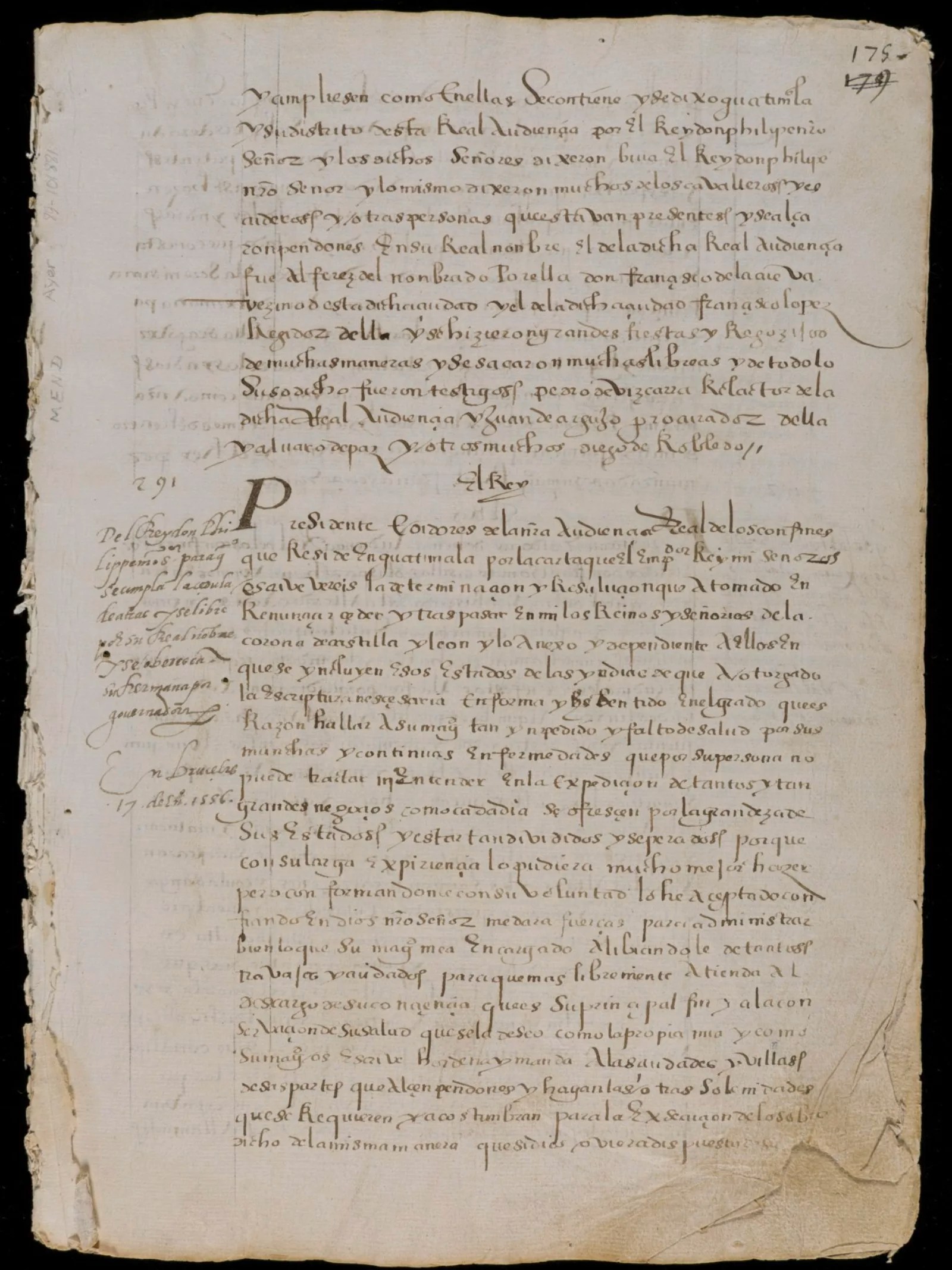
The Center for Renaissance Studies at the Newberry Library will be offering Summer Institutes in Spanish Paleography and/or Nahuatl/Nawat during Summer 2025.
Northern Illinois University graduate students in History and the Humanities are encouraged to apply to participate in a paleography institute. Northern Illinois University is a member of the Center for Renaissance Studies Consortium, providing support for participation in Newberry Library events and activities.
The Center for Renaissance Studies’ announcement reads:
2025 Newberry CRS Summer Institutes in Spanish Paleography and/or Nahuatl/Nawat
Deadline: March 15, 2025
SPANISH PALEOGRAPHY (2 weeks: July 7-18, 2025)
Directed by J. Michael Francis (University of South Florida), the 2025 CRS Institute in Spanish Paleography will provide participants with practical training in reading and transcribing documents written in Spain and Spanish America from the late fifteenth to the early eighteenth centuries.
Prerequisite: This graduate-level institute will be taught in English; however, advanced language skills in Spanish (especially reading) required.
INTRODUCTION TO NAHUATL/NAWAT (2 weeks: July 21-August 1, 2025)
This week-long intensive will offer an introduction to Nahuatl/Nawat language study for scholars. The institute will be directed by Abelardo de la Cruz de la Cruz (University of Utah and University at Albany, SUNY) and Edward Polanco (Virginia Tech).
Prerequisite: Proficiency in Spanish would be helpful but is not required for Introduction to Nahuatl/Nawat. However, please do indicate your fluency level on this application.
*NOTE: Interested scholars are welcome and encouraged to apply for BOTH institutes. If you would like to apply for both, please address your interest in each institute in your essay. However, applications for both institutes will be considered separately by the respective instructors.*
Eligibility: Each institute will enroll 15 participants by competitive application. First consideration will be given to advanced graduate students and junior faculty in the Center for Renaissance Studies Consortium universities. Applications are accepted from advanced graduate students and junior faculty from universities, professional staff of libraries and museums, and from qualified independent scholars.
Your application should include:
An essay of no more than 500 words
Current curriculum vitae (CV) of no more than three pages
The Renaissance Society of America will be holding a professional development webinar on “Publishing Your First Article (and the Unspoken Rules of Publishing You Need to Know).”
This webinar will provide advice on how to prepare a research paper for publication with an academic journal. Examples may focus on the field of Renaissance studies, but the practical advice should be applicable in all fields of History and the Humanities.
Graduate students in History at Northern Illinois University are encouraged to participate in this webinar.
Note that the RSA indicates that registration is required: “If you are not an RSA member, you will need to register as a current member to attend this webinar. Membership rates are based on income, and start at just $20 per year.”
Here is the RSA’s announcement:
Ideal for first-time authors, learn the basics of scholarly publishing at the upcoming professional development webinar, “Publishing Your First Article (and the Unspoken Rules of Publishing You Need to Know).” Brett Rushforth, Editor in Chief of the Huntington Library Quarterly, will outline the submission, peer review, and editing process. Ruth Noyes, an educator with expertise in academic and grant writing, will provide actionable advice and share the “unspoken rules” of publishing.
Today, I am remembering the Storming of the U.S. Capitol on 6 January 2021.
The Storming of the U.S. Capitol was an organized paramilitary attack that represented a coup de force (or coup de majesté)—essentially an insurrection from above—carried out by then President Trump, members of his administration, and his supporters in conjunction with armed far-right militias.
More than 1,500 individuals have been charged with crimes relating to the Storming of the Capitol as of December 2024. Over 1,000 of those charged have already been found guilty or pled guilty to criminal actions, including serious violent crimes. The U.S. Department of Justice provided an overview of prosecutions and convictions in January 2024, reporting at that time that “approximately 452 defendants have been charged with assaulting, resisting, or impeding officers or employees, including approximately 123 individuals who have been charged with using a deadly or dangerous weapon or causing serious bodily injury to an officer.”
A number of the militia members who participated in the attack have been charged and convicted of was a seditious conspiracy or insurrection. The U.S. Department of Justice commented on the conviction of members of the Oath Keepers on seditious conspiracy. NPR News provides a running tracker of charges and convictions in the largest criminal prosecution in the history of the United States.
It is shocking how many American citizens have such warped misunderstandings of the Storming of the Capitol on 6 January. This is largely due to a massive ahistorical media and social media campaign orchestrated by ex-President Trump and his political supporters to rewrite contemporary history.
Anyone who has supported ex-President Trump’s political “rehabilitation” since 2021 or voted for him in 2024 is complicit in the complete distortion of the historical record of the Storming of the Capitol.
Prosecutors and historians will continue to document the brutal violence of the Storming of the Capitol for years to come. Historians are used to confronting historiographical debates, but there are new challenges in combating outright distortions of the historical record in the social media age.
The New York Times has published an analysis of ex-President Trump’s sustained campaign to rewrite the history of the Storming of the Capitol in an article on “‘A Day of Love’: How Trump Inverted the Violent History of Jan. 6.” The New York Times comments that “The president-elect and his allies have spent four years reinventing the Capitol attack — spreading conspiracy theories and weaving a tale of martyrdom to their ultimate political gain.”
NPR reports today on “As Trump rewrites history, victims of the Jan. 6 riot say they feel ‘betrayed.'”
Jonathan Alter has published an opinion piece on “Who Owns Jan.6” in the New York Times.
Aquilino Gonell, a former Sergeant of the U.S. Capitol Police, published an opinion piece today reflecting on the “insurrectionists” who participated in the Storming of the Capitol in The Hill. Gonell remarks that “Donald Trump ran for a second term to avoid accountability for his crimes. Republicans in Congress are complicit in his contempt for the rule of law. They don’t just want to move on from Jan. 6 — they want to suppress the indelible mark this blatant attack has left on American history. They can’t face the fact that their lies incited a fatal insurrection, and their negligence is a betrayal to the more than 140 police officers who were injured or died in the aftermath of the attack.”
Here is my commentary on “Siege Warfare and the Storming of the Capitol” from four years ago.
New DNA studies have been done the remains of residents of Pompeii who were killed in the disastrous eruption of Mount Vesuvius in 79 Common Era (CE). The findings challenge previous interpretations about the identities of many of the victims.
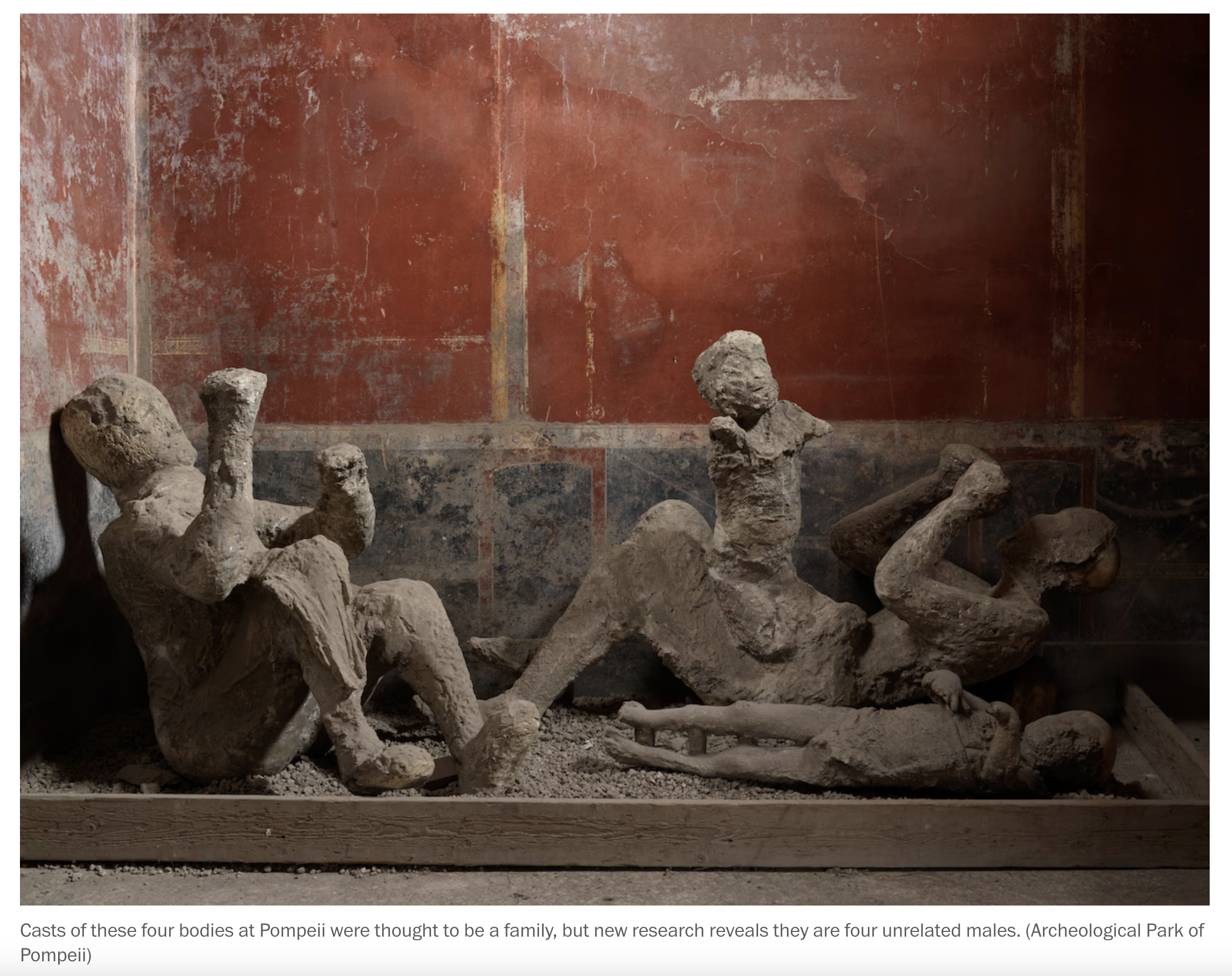
TheWashington Post reports that “Plaster casts of Pompeii’s victims preserve moments of human connection as the A.D. 79 eruption of Mount Vesuvius buried the city in ash. There’s a family of four — including a mother holding a child on her hip. Two sisters are caught in an eternal embrace. The poignant figures, frozen in time, humanize an ancient natural disaster.”
Source: The Washington Post.
However, “a provocative new study published Thursday in Current Biology reveals that long-standing interpretations of these scenes are wrong.”
A number of the identifications that had previously been made simply by reading death poses based on cultural or art history tropes, but the DNA evidence questions such identifications. “The long-presumed family buried at one house turn out to be four unrelated males. And one of the two sisters locked in a hug turns out to be a male,” according to The Washington Post.
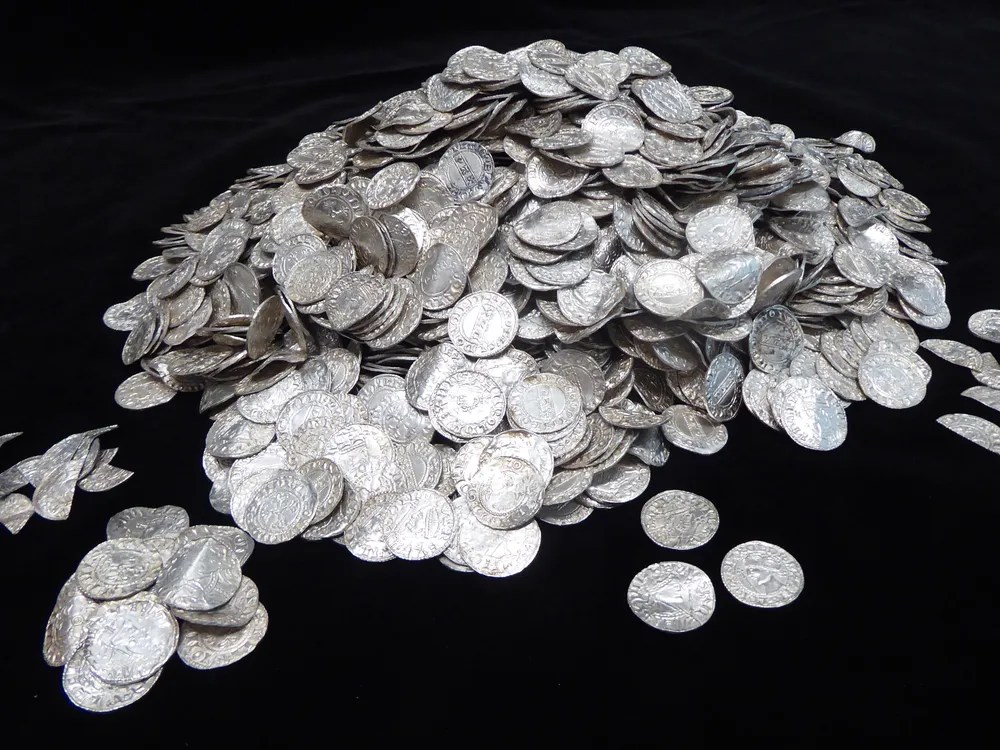
Metal detector enthusiasts recently discovered a hoard of coins from the era of the Norman Conquest of England in 1066-1068.
The New York Times reports that “the group huddled together in the farmer’s field, staring at the dozen or so medieval silver coins. They had found one, then two, and a third — Adam Staples knew, then, this was something special.”
Coins of William I the Conqueror, Edward the Confessor, and Harold II. Source: Smithsonian Magazine.
According to TheNew York Times, “Mr. Staples had gathered with six friends that day in 2019 to try out a new metal detector, part of a hobby in which he had indulged for years. But everyone realized, looking down at the pieces of old metal: This find could change their lives.”
Coins from the Chew Valley hoard. Source: Smithsonian Magazine.
“Five years later, the hoard of coins — known as the Chew Valley hoard, for the region of Somerset, England, in which they were found — has been confirmed as the most valuable treasure ever discovered in Britain. It was acquired by the South West Heritage Trust, an independent charity, for 4.3 million British pounds, or more than $5 million, which will be split among Mr. Staples, his friends, and the farmer.”
Northern Illinois University students in HIST 110 History of the Western World I will be interested in this new find.
The Newberry Library has digitized a major collection of early modern European and world maps printed in Italy.
“The Newberry has recently completed the digitization of over 750 maps printed in Italy during the sixteenth and seventeenth centuries. The Franco Novacco Map Collection, one of the strongest of its kind in the world, reflects Europeans’ evolving conceptions of the world during a time of widespread exploration and colonization.”
Gioseppe Rosaccio, Vniversale descritione di tvtto il mondo, 1647.
The high-resolution digitized images of these early modern maps will offer researchers the opportunity to examine the maps in greater detail than before.
Undergraduate and graduate students in History at Northern Illinois may be interested in utilizing these digitized maps in their research projects for courses in early modern European, Mediterranean world, Atlantic world, and global history.
For more information on the Franco Novacco Map Collection and the digitization project, see the Newberry Library website.
A “casual tip” led archaeologist Michael Frachetti to the discovery of “Tugunbulak, an enormous fortified city dating back to a medieval empire. He and his team would spend nearly a decade trying to map out the site, as well as the one he’d originally come to Uzbekistan to explore, known as Tashbulak.”
Frachetti is a Professor of Archaeology at Washington University in St. Louis and he has been leading a team of archaeologists working on urban sites in central Eurasia that were part of the caravan trading networks often referred to as the Silk Road.
The team has also used drones to produce aerial maps of these Eurasian cities on the Silk Road.
“The results of their research, published on Wednesday in the scientific journal Nature, describe the two sites as ‘the largest and most comprehensive urban plans of any medieval city’ in Central Asia situated at high altitude (defined here as about 6,500 feet above sea level).”
The size of the cities and the evidence of their robust commercial activity suggests that mountainous regions were integrated in the caravan trading networks of the Silk Road.
“The findings complicate the prevailing image of the Silk Road, which facilitated the exchange of goods and ideas between people from China to Venice between the second century B.C. and the 15th century A.D. Many experts had previously thought that the famous trade route passed only through the lowlands.”
Students in HIST 110 History of the Western World I at Northern Illinois University will be interested in this research.
The New York Times reports on the recent research on Eurasian cities and the Silk Road.
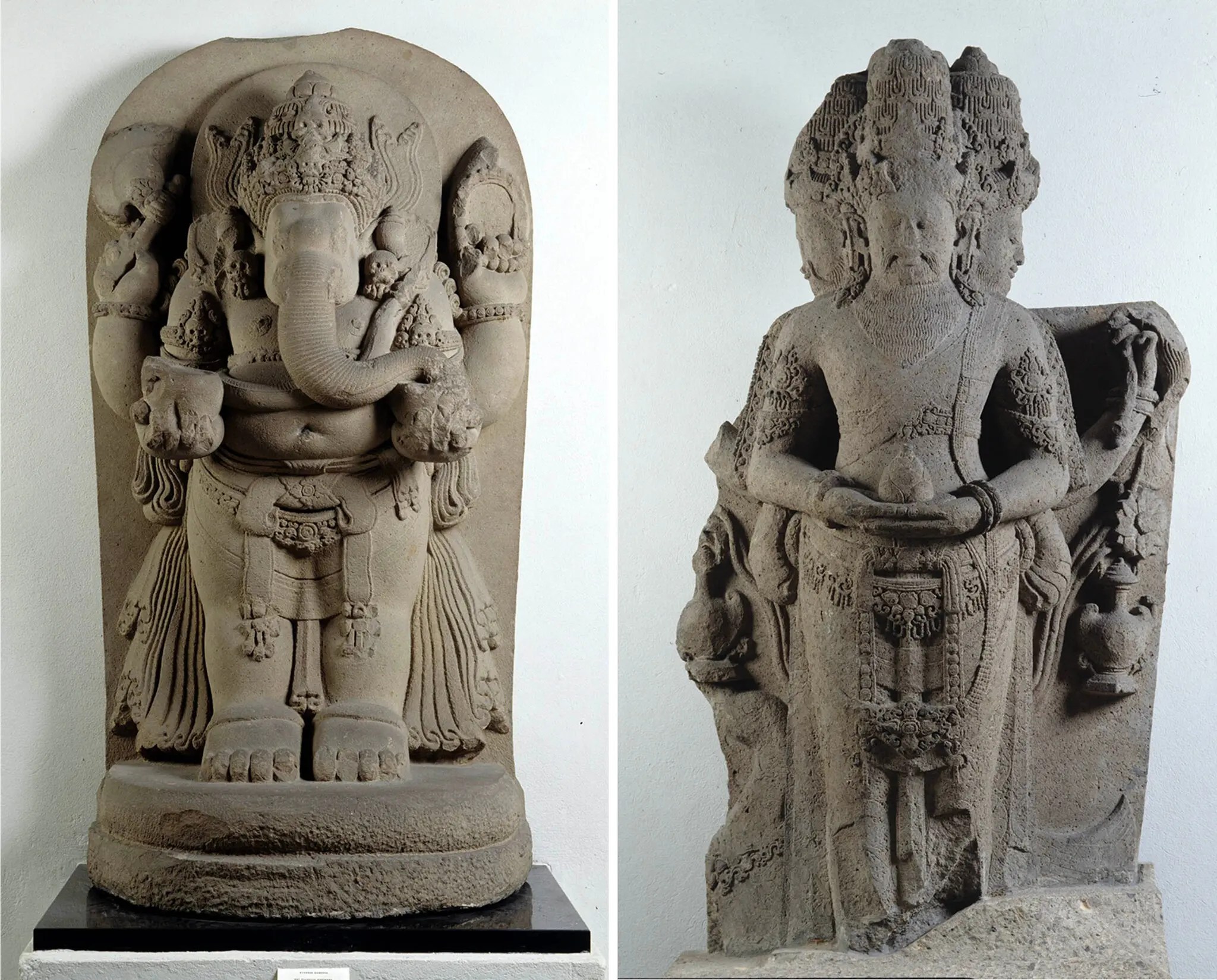
The Netherlands has returned numerous looted artifacts and art objects to Indonesia in a major repatriation. This move aims to make partial restitution for historical legacies of Dutch colonialism, imperialism, and slavery in Southeast Asia.
The New York Times reports that “the Dutch government returned centuries-old stone Buddhist statues, a bejeweled serpentine armband and other looted artifacts to its former colony Indonesia on Friday, a rare example of cultural objects taken during colonialism making their way back home.”
Statues of Ganesha and Brahma that were repatriated to Indonesia. Source: New York Times.
“The Netherlands returned 288 items in a ceremony at the World Museum in Amsterdam, where the artifacts had been held. The repatriation is only the second by the Dutch since a 2020 report by a government advisory committee recommended returning art and other objects taken during four centuries of the country’s colonial era.”









 Brian Sandberg: Historical Perspectives