King’s College London is offering a position as Research Associate in the Department of War Studies.
The short description of the position reads: “The post holder will work alongside the Research and Knowledge Transfer Manager of the Centre for Science and Security Studies to support and coordinate aspects of research and knowledge transfer in the field of non-proliferation, with an emphasis on nuclear politics, safeguards, illicit trade and technology transfer controls (i.e. preventing the transfer of proliferation-sensitive technologies to proliferator organisations). The role will also involve the provision of reasonable support and subject matter expertise to others in the Centre and wider Department of War Studies, and benefit from exposure to a range of research activities across both groupings. This will include a combination of project coordination, research and knowledge transfer work tied to a number of different government-funded projects.”
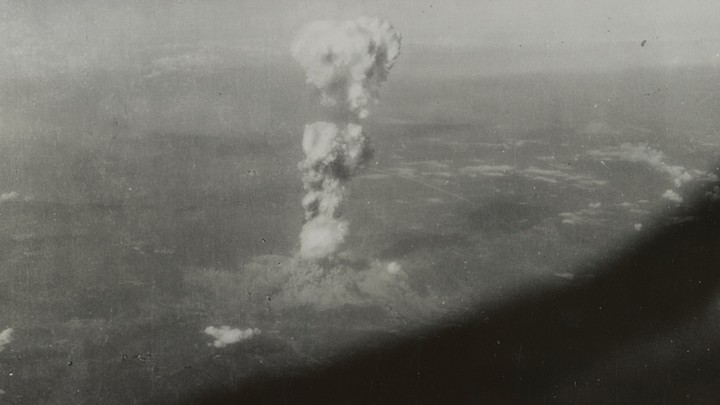
Atomic Bombing of Hiroshima, 1945.
Recent M.A.s and Ph.D. candidates in History at Northern Illinois University may be interested in this research opportunity.
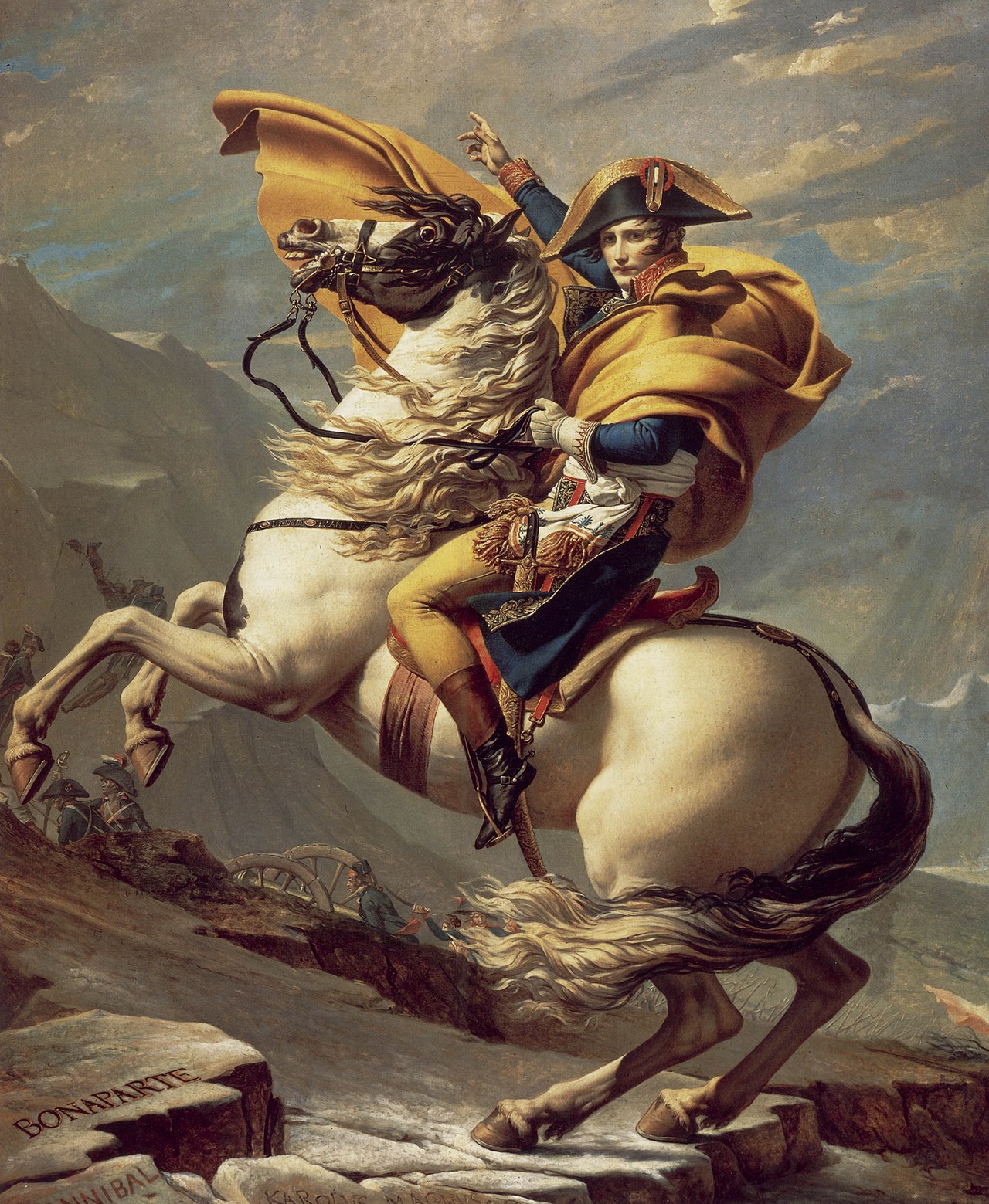
Commemorations of the Bicentennial of the death of Napoléon Bonaparte this year have become the latest battleground in France’s ongoing “culture wars.”
The figure of Napoléon remains powerful in French popular culture through television series, documentaries, films, and video games.
The historical memory of Napoléon is prominent in French political culture, since politicians and journalists often evoke his legacies in policy debates and electoral campaigns.
Napoléon’s image is especially popular in far-right politics in France, but with notable variations. Some monarchists celebrate Napoléon for his restoration of law and order following the chaos of the French Revolution (1789-1799), while others deplore his dictatorial rule and usurpation of royal political culture. Bonapartists, military supporters, and neo-imperialists celebrate Napoléon’s conquests and empire-building (1798-1814) as the beginning of France’s imperial project. Neo-fascists extol Napoléon’s authoritarian First Empire and its centralized approaches to policing and administration.
Politicians of center and left-wing parties tend to have more ambivalent or outright negative views of Napoléon as an authoritarian politician and military dictator who committed political crimes, human rights violations, and war crimes in France, Europe, and the Caribbean.
So, it is perplexing that French President Emmanuel Macron has chosen to celebrate the 200th anniversary of Napoléon’s death in a very public way.
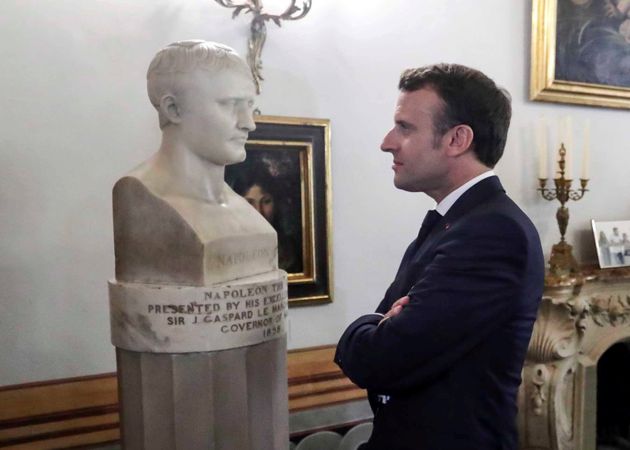
President Emmanuel Macron views a bust of Napoléon I in Malta.
New York Times columnist Roger Cohen observes that “Jacques Chirac couldn’t stand him. Nicolas Sarkozy kept his distance. François Hollande shunned him. But on the 200th anniversary this week of Napoleon Bonaparte’s death, Emmanuel Macron has chosen to do what most recent presidents of France have avoided: honor the man who in 1799 destroyed the nascent French Republic in a putsch. By choosing to lay a wreath Wednesday at Napoleon’s tomb under the golden dome of Les Invalides, Mr. Macron is stepping into the heart of France’s culture wars. Napoleon, always a contested figure, has become a Rorschach test for the French at a moment of tense cultural confrontation.”
Roger Cohen’s column on “France Battles Over Whether to Cancel or Celebrate Napoleon,” is in The New York Times.
A previous post on 2021: The Year of Napoleon on this blog earlier this spring discussed the growing political debate in France over Napoléon’s legacy.
Le Monde reports on the bicentennial of Napoléon’s death. France 24 has a series of articles and videos on the bicentennial. BBC News has published an article on “Napoleon’s Incendiary Legacy Divides France 200 Years On.”
Conservative legislators in Texas are waging a new fight in the so-called “culture wars” over historical memory and public education in the State of Texas.
Jim Grossman, Executive Director of the American Historical Association, writes: “The Texas legislature is scheduled to vote today on ‘An Act relating to the social studies curriculum in public schools.’ AHA members will no doubt be pleased to see a state legislature taking an interest in social studies education; we are well aware that in part because history is tested less regularly than some other subjects it often receives fewer resources and less classroom time.”
Politicians and educators have repeatedly battled over the Texas state standards for history and social science education in public schools for decades. Recently, some Texas Republicans have been pushing for an “1836 project” to promote a patriotic (and conservative) vision of Texas history. The Texas legislative initiative is part of a broader movement by conservatives against curricula that incorporate multicultural perspectives, critical race theories, and anti-racist stances.
University of Texas at Austin
The Texas debate thus fits into a broader national debate over historical memory and public education. Jim Grossman explains that “unfortunately this legislation is part of a national agenda to diminish the quality of history instruction in the United States. Legislators in Idaho, Iowa, Louisiana, Missouri, New Hampshire, Oklahoma, Rhode Island, and West Virginia have introduced bills that generally purport to protect academic freedom and eliminate discrimination but actually make it difficult for teachers to discuss racism and other structures of inequality important to our nation’s history. A careful reading of much of this legislation indicates that teachers would be taking a serious risk if their class took a deep dive into the AHA’s Statement on the History of Racist Violence in the United States, endorsed by 97 scholarly organizations.”
Conservatives across the United States have been vocal in their opposition to the inclusion of anti-racist perspectives on American history, especially through the 1619 Project, published by The New York Times.
The American Historical Association (AHA) has expressed concerns about conservative legislation that seeks to impose curricula on history teachers nationwide. Conservative legislators are seeking to constrict the ability of trained high school and middle school history and social science teachers to do their jobs professionally.
Grossman emphasizes that “nearly all of these bills seek to eliminate ‘divisive concepts’ from classrooms, drawing directly on a tendentious 2020 executive order that the AHA declared‘ neither necessary nor useful.’ The goal clearly is to heal division by denying its history, to inculcate patriotism by celebrating the nation’s past rather than understanding it. We stand by our vigorous insistence on teaching the complex textures of that history, rather than whitewashing it.”
The AHA Statement on the History of Racist Violence in the United States asserts that: “Division has a history, both in the United States and across the world. Denying this history cannot erase it. Rather than banning the ‘divisive concepts’ from any educational venue—whether a classroom, a museum, a national park, or a workplace training session—historians seek to draw public attention to these concepts so that they can be discussed, debated, and ultimately challenged. Unity is not achieved by pushing division under the rug; it can be won even in the face of difference.”
The Dallas Morning News reports on the debates over history and social science teaching in Texas. The AHA Statement on the History of Racist Violence in the United States is available on the website of the American Historical Association.
New archaeological excavations at Cahokia, Illinois, have been investigating evidence of deforestation and flooding at the site of a major indigenous urban center.
The New York Times reports that “A thousand years ago, a city rose on the banks of the Mississippi River, near what eventually became the city of St. Louis. Sprawling over miles of rich farms, public plazas and earthen mounds, the city — known today as Cahokia — was a thriving hub of immigrants, lavish feasting and religious ceremony. At its peak in the 1100s, Cahokia housed 20,000 people, greater than contemporaneous Paris. By 1350, Cahokia had largely been abandoned, and why people left the city is one of the greatest mysteries of North American archaeology.”
The medieval history of urban development in North America is not well known, but we are finding out more about the Mississippian peoples and their cities, thanks to research at the Cahokia site.
“Recent excavations at Cahokia led by Caitlin Rankin, an archaeologist at the University of Illinois at Urbana-Champaign, show that there is no evidence at the site of human-caused erosion or flooding in the city,” according to The New York Times.
History students at Northern Illinois University should visit this important historic site, which is located only a few hours’ drive away from campus. The remaining mounds are pretty impressive!
A virtual conference on Enemies in the Early Modern World, 1453-1789: Conflict, Culture and Control, hosted by University of Edinburgh, was recently held in March 2021.
The conference call for papers reads: “From Luther’s insistence that the Pope is the antichrist, to Cortes’s justification of the conquest of Mexico on the grounds of Aztec human sacrifice, from the expulsion of Jewish people from the Iberian peninsula following the Reconquista to the subjugation and enslavement of human lives to fuel the trans-Atlantic slave trade, from Dutch trials for homosexuality in the 1730s, to accusations of witchcraft during the British Civil Wars, the conflicts and exploitations of the Early Modern World were often fueled and ‘justified’ by a belief in an enemy. Such belief systems would inspire textual, visual and auditory polemic, and propel physical action, thereby ‘othering’ people of a different religion, ethnicity, culture, dynastic allegiance, gender and sexuality into imagined enemies, justifying the need to control and inflict violence upon them. This conference, open to researchers of history, literature, visual culture, politics, theology, philosophy and archaeology etc, will explore the processes by which individuals, communities, and countries were fashioned into the role of the enemy, as well as the dreadful consequences, such as war and persecution. By moving from the local to the national, from the national to the global, and through an interdisciplinary vantage point, we aim to reconstruct the construction of enemies in the Early Modern World. We invite papers from researchers at every stage of their academic journeys, and PhD students and Early Career Researchers are particularly encouraged to apply.”
I presented a paper on “Cosmic War and Global Empire: Religious Constructions of Enemies in the Early Modern World,” at the conference and enjoyed participating in the discussions.
The Enemies in the Early Modern World conference webpage is on the University of Edinburgh website.
Here is the job announcement from Interlochen Center for the Arts:
A global destination for artists and arts enthusiasts, Interlochen Center for the Arts nurtures creativity through five dynamic platforms: Interlochen Arts Camp, the renowned summer arts program; Interlochen Arts Academy, the nation’s premier fine arts boarding high school; Interlochen Presents, a producer of more than 600 annual performances by internationally celebrated guest artists, Interlochen students, and faculty; Interlochen Public Radio, two listener-supported, 24-hour public radio stations (classical music and news); and Interlochen College of Creative Arts, a convener for lifelong learning in the arts. The Humanities Instructor will teach a course load of five sections, either in History or Literature and Composition. Special consideration will be given to candidates able to teach courses in African American Studies, Asian Studies, or English as a Language. Additional consideration will also be given to candidates with demonstrated skill and interest in teaching students at all levels, grades 9-12.
Essential Duties & Responsibilities
Creates course curriculum, course handouts, lectures, labs, presentations, and other course materials required to deliver course information in an understandable and interesting manner to ensure students are engaged with the course material in order to achieve the course learning outcomes Teaches a full load of classes in a variety of humanities subjects Develops and maintains a course page through Canvas learning management software. Maintains up-to-date attendance and gradebook records. Completes timely and thorough interim and grade reports. Writes letters of recommendation for college admissions. Serves as a mentor for an advisory group. Collaborates and builds relationships with fellow faculty members. Provides office hours 4 days a week for students (minimum of 30 minutes per session) and holds scheduled evening tutorials when needed. Attends department, division, faculty, community and other meetings as necessary. Participates in mission oriented events like all-school events and student performances.
Experience and Skills
Bachelor’s degree in Social Studies, Social Sciences, English as a Language, History, Political Science, Literature, Composition or related field required. Master’s degree a plus. Recent high school teaching experience preferred. Experience teaching all levels of high school (or desire to do so) preferred. Ability to demonstrate effectiveness in creating course materials (syllabus, handouts, presentations, etc) which enhance student interest and engagement. Ability to use technology to introduce new materials. Background or interest in the arts is a valuable asset.
Application Materials Required
Resume Cover Letter Transcript Teaching Philosophy
The Illinois Mathematics and Science Academy is searching for a new History teacher to teach American and World History to its students.
The Academy is a state-supported high school that focuses on preparing talented students for university studies in the sciences.
Graduate students in History at Northern Illinois University may be particularly interested in this job position, which would be ideal for a graduating MA student, recent MA, or PhD candidate in History.
The IMSA position description reads:
“The History Department at the Illinois Mathematics and Science Academy is seeking a History Teacher to teach university level surveys and seminars in American History to talented high school students. The selected candidate will be responsible for curriculum delivery as well as ongoing development and revision of existing classes. Candidates for the position should have at least a Master’s Degree in History or a related field (PhD preferred). Specializations in History of any STEM-related topic preferred. The successful candidate must be able to teach courses in American History and potentially World in the 20th Century.”
“The internationally recognized Illinois Mathematics and Science Academy (IMSA) develops creative, ethical leaders in science, technology, engineering and mathematics. As a teaching and learning laboratory created by the State of Illinois, IMSA enrolls academically talented Illinois students (grades 10–12) in its advanced, residential college preparatory program. It also serves thousands of educators and students in Illinois and beyond through innovative instructional programs that foster imagination and inquiry.”
Undergraduate students who have studied ancient, medieval, and early modern history will be especially well positioned for this teaching position. For more information on the pre-modern history programs at Northern Illinois University, see the Department of History website and especially the webpage on the History Major.
Here (below) is the full position announcement:
Teaching Associate – Social Studies
University Laboratory High School
University of Illinois at Urbana-Champaign
The University of Illinois at Urbana-Champaign invites applications for the position of Teaching Associate in Social Studies at the University Laboratory High School. This is a 9-month, renewable, non-tenure track academic staff appointment at the University of Illinois. Salary is commensurate with degree and experience. This position would begin August 12, 2021 after the successful completion of a criminal background check.
University Laboratory High School is a 5-year public school for 325 select students—including a subfreshman class with students entering from either sixth or seventh grade. A laboratory mission of innovative curriculum development, outreach to other schools and the community, and/or involvement with professional organizations and University of Illinois programs are part of the overall job responsibilities.
The University of Illinois is an Equal Opportunity, Affirmative Action employer that recruits and hires qualified candidates without regard to race, color, religion, sex, sexual orientation, gender identity, age, national origin, disability or veteran status. For more information, visit go.illinois.edu/EEO.
Duties and Responsibilities:
Teach 3 sections of 9th grade World History to academically talented students, with a focus on world history before 1500, including world religions, and two semester-long social studies electives at the 11/12th grade level.
Develop innovative curricula and teaching strategies, in support of the school’s “lab mission” which includes: o Development of innovative curriculum and its dissemination. o Advancement of pedagogical practice to academically talented students and its dissemination. o Engagement in professional service on and off the university campus. o Partnerships with the university on research opportunities. o Partnerships with other schools and community entities.
Sponsor/supervise students doing extracurricular projects, experiential learning, competitions, or research.
Participate in school activities normally required of teachers, such as attendance at faculty, department, and grade-level meetings; committee membership; club sponsorship; and assistance with and support of school functions.
Required qualifications:
Bachelor’s degree in a Social Science or Humanities field.
Ability to teach both younger students in required 9th Grade classes as well as upper-level students in electives.
Evidence of effective and creative teaching experience.
A demonstrated commitment to diversity, inclusion, and equity with regard to race, gender, sexual orientation, and socioeconomic status.
Desirable qualifications:
Graduate degree in a social science discipline or education.
Significant experience in social studies education (previous teaching, degree, or educational research) and knowledge of best practices in social studies education.
Experience effectively teaching diverse groups of students and the ability to articulate strategies for supporting students with varied experiences and needs.
Evidence of effective and creative secondary teaching experience, evidence of integration of technology into instruction, experience in developing innovative instructional materials, experience with teaching research skills, project-based learning, community partnerships, and/or experiential learning.
Willingness to participate in interdisciplinary projects and willingness to coordinate intra-departmental curriculum to provide a cohesive five-year social studies education program.
Experience with alternative schedules, such as block scheduling.
Application Process:
Please complete your candidate profile at jobs.illinois.edu and upload a cover letter, resume, contact information for three professional references, and sample lesson plans, examples of innovative classroom activities or materials developed by the candidate, and relevant publications or presentations in science or engineering laboratory or educational research. To ensure full consideration, application materials must be received by May 3, 2021. Interviews may begin prior to the close of the search, however, no hiring decision will be made until after the close date. For further information about this position, please contact Jennifer Steiling at steiling@illinois.edu.
This is a security-sensitive position. The University of Illinois conducts criminal background checks on all job candidates upon acceptance of a contingent offer.
The University of Illinois System requires candidates selected for hire to disclose any documented finding of sexual misconduct or sexual harassment and to authorize inquiries to current and former employers regarding findings of sexual misconduct or sexual harassment. For more information, visit Policy on Consideration of Sexual Misconduct in Prior Employment.
High school teachers have been confronting the difficulties of teaching History and Social Sciences online over the past year due to the Covid-19 pandemic. These subjects are incredibly complicated, requiring the use of images and maps to teach teenage students about international cultures and societies across different periods of world history.
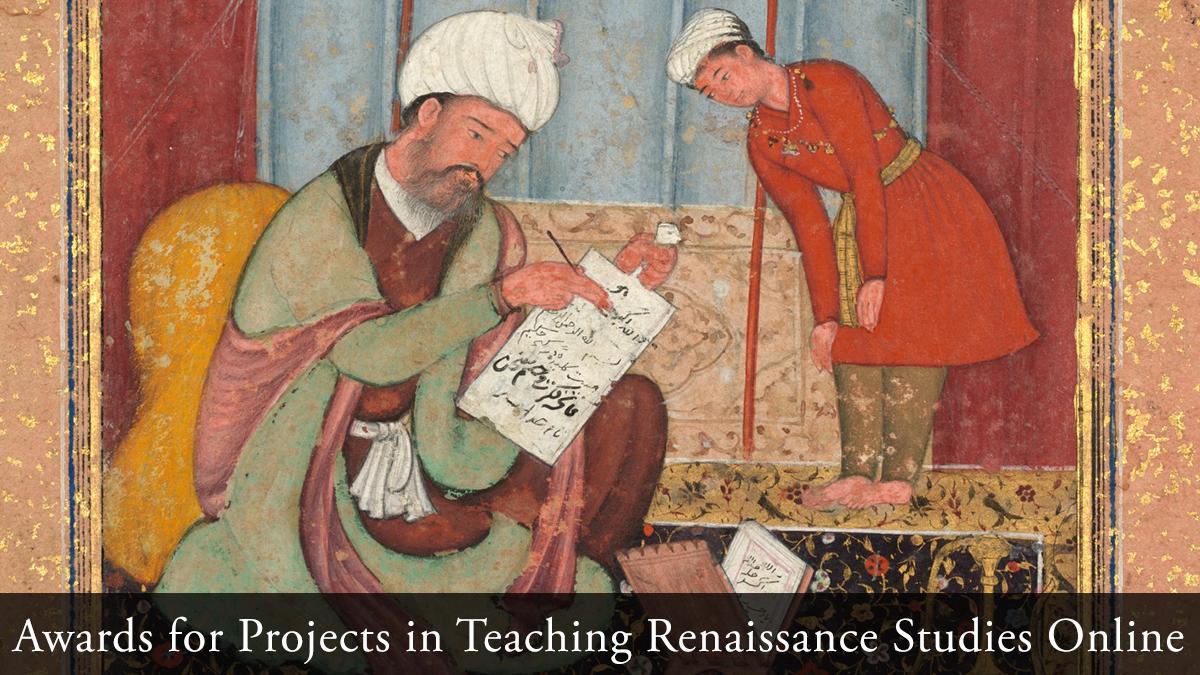
The Renaissance Society of America is offering a new award to recognize high school teachers’ efforts at teaching Renaissance studies online.
Here (below) is the Renaissance Society of America’s announcement:
In the wake of the COVID pandemic, high school teachers around the globe have been searching for and creating new ways to immerse their students in the experience of Renaissance culture. In an effort to recognize and share these innovative teaching methods, the RSA is delighted to announce a new competition for the best online teaching projects in secondary education.
The three winners of this competition will each receive an award of $1,000 and will present their projects at a Zoom conference that we plan to make available to a wide range of secondary school teachers, not only current members of the RSA but those who want to learn more about Renaissance studies. The conference will be held on Wednesday, June 30, 2021.
The competition is open to scholars actively engaged in teaching high school students: for instance, museum docents, library curators, and directors of education at theatre companies as well as high school teachers. Proposals from such fields as art history, drama, history, literature, languages, and music are all welcome. The project could include virtual tours of museums, architectural sites, or rare book libraries, or online performances of drama and music. The deadline for proposals is Monday, May 17, 2021. Please email us at rsa@rsa.org with any questions.
Sincerely,
The RSA Committee for Grants in Support of Innovative Teaching of Renaissance Studies to High School Students
Five hundred years ago this month, a monk and radical religious reformer confronted the powerful Holy Roman Emperor at the Imperial Diet held in the city of Worms in April 1521.
Martin Luther, an Augustinian monk and professor at the University of Wittenberg, in ducal Saxony, had written the Ninety-Five Theses almost four years earlier in 1517 and their publication had produced widespread religious controversy and debate throughout the German speaking lands of the Holy Roman Empire. Luther wrote further polemical texts and published them as religious pamphlets using printing presses, igniting fierce debate among Christians in Germany.
Ecclesiastic authorities of the Latin Christian Church responded to Luther’s polemical writings with criticism and accusations of heresy. In June 1520, Pope Leo X accused Martin Luther of deviating from Church teachings and ordered him to recant his ideas. Luther refused to conform to papal authority, leading the Pope to excommunicate him in January 1521.
The new Emperor Charles V von Habsburg was eager to resolve the escalating religious controversies in the Empire. Charles V had been elected Holy Roman Emperor in June 1519, following the death of Emperor Maximilian I von Habsburg, and then crowned King of the Romans in Aachen in October 1520. The young Emperor called for the Imperial Diet of the Holy Roman Empire to assemble in the city of Worms in order to consult on the religious controversy.
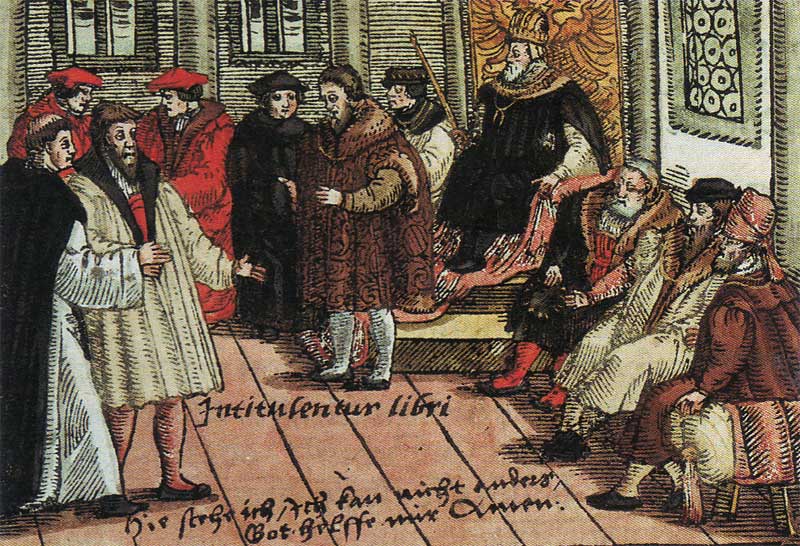
Diet of Worms, depicted in a woodcut print, 16th century
The clerical, noble, and urban elites who served as representatives of the Imperial Diet convened at Worms in January 1521. The Imperial Diet deliberated for several months on various political and social issues affecting the Holy Roman Empire. Emperor Charles V summoned Martin Luther to the Imperial Diet and granted him a safe conduct to attend the assembly. Luther appeared in the Diet chambers on 16-18 April 1521, and was confronted by theologians and lawyers, including Johann von Eck, who challenged Luther to acknowledged his authorship of polemical writings attributed to him and to renounce their heretical ideas.
Martin Luther acknowledged his authorship of his writings, but refused to recant any of his ideas unless they could be proved not to be based on Scripture. Luther concluded: “I cannot and will not recant, since it is difficult, unprofitable and dangerous indeed to do anything against one’s conscience. God help me. Amen.”
Following the dramatic confrontation, Luther departed Worms and went into hiding at the castle of Wartburg, under the protection of Friedrich III, Duke of Saxony. Emperor Charles V declared Luther a heretic and issued an arrest warrant for him: “After the impertinent reply which Luther gave yesterday in our presence, I declare that I now regret having delayed so long the proceedings against him and his false doctrines. I am resolved that I will never again hear him talk. He is to be taken back immediately according to the arrangements of the mandate with due regard for the stipulations of his safe-conduct. He is not to preach or seduce the people with his evil doctrine and is not to incite rebellion. As said above, I am resolved to act and proceed against him as against a notorious heretic, asking you to state your opinion as good Christians and to keep the vow given me.”
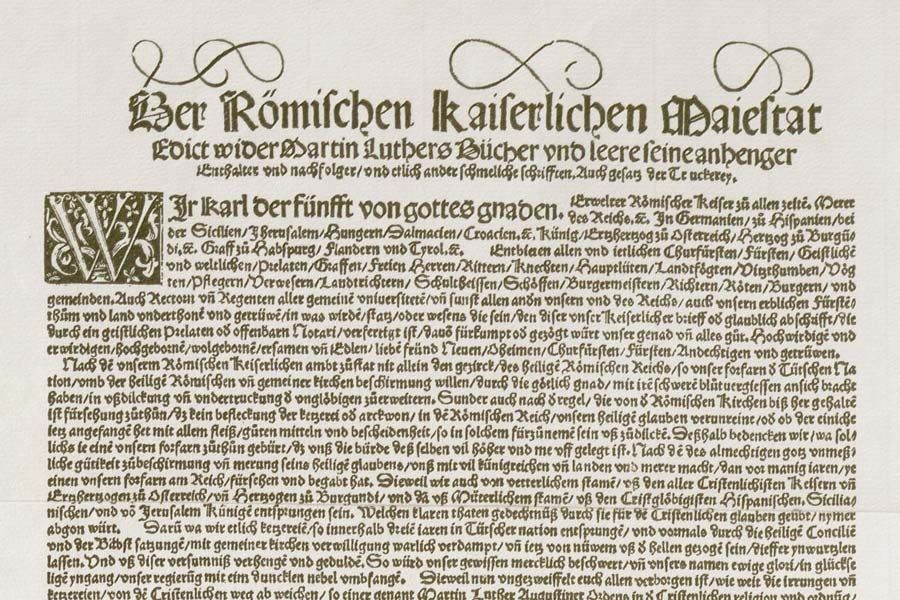
When the Diet of Worms concluded, Emperor Charles V issued the Edict of Worms (25 May 1521), declaring Martin Luther’s ideas heretical.
Edict of Worms, May 1521. Image: City of Worms Archive
News of the confrontation at the Diet of Worms spread rapidly due to accounts published in printed Flugschrift (news pamphlets) and distributed throughout the Holy Roman Empire. Luther continued to publish new theological and polemical works that challenging papal leadership and asserted new criticisms of official Church teachings.
The confrontation at the Diet of Worms had failed to resolve the religious controversies surrounding Luther’s writings and instead exposed the serious nature of his theological positions and his criticisms of ecclesiastical authority. The Diet of Worms thus the deepened the religious controversies within Germany and led to the fragmentation of the Latin Christian Church.
The city of Worms has prepared a series of events to commemorate the Diet of Worms of 1521, but the Covid-19 pandemic has disrupted or postponed many of those events.
DW reports on the 500th anniversary of the Diet of Worms. The German History in Documents and Images (GDHI) website has English translations of key documents about the Diet of Worms, including Martin Luther’s Declaration, Emperor Charles V’s Response, and the Edict of Worms.






 Brian Sandberg: Historical Perspectives