The Western Mediterranean and the World

Teófilo Ruiz, “The Western Mediterranean and the World”

FROM THE WESTERN MEDITERRANEAN TO THE ATLANTIC,  CA. 1300 – 1650

Friday, February 7
4:30 pm – 6:00 pm

University of Chicago

Classics Building, Room 110
1010 East 59th Street
Chicago, Illinois 60637

Co-hosted by the Medieval Studies Workshop and the Western Mediterranean Culture Workshop.

Light reception to follow the lecture

In this lecture, I would like to explore the complex reasons which led to a shift from the Mediterranean to the Atlantic. I contend that the opening of the Atlantic for exploration and the encounter with the New World, although having an impact on Mediterranean societies, was not the sole determinant for the slow demise of the former sea as the center of European civilization.

Teófilo F. Ruiz is an internationally recognized historian whose work focuses on medieval Spain and Europe. A student of Joseph R. Strayer, Ruiz received his Ph.D. from Princeton in 1974 and has taught at Brooklyn College, the CUNY Graduate Center, the University of Michigan, the Ecole des hautes Etudes en Sicences Sociales, and Princeton–as the 250th Anniversary Visiting Professor for Distinguished Teaching. Ruiz is currently a Professor of History at UCLA where he has taught since July 1998. In February 2012, President Barack Obama awarded Ruiz the 2011 National Humanities Medal at the White House. A scholar of the social and cultural (popular culture) of late medieval and early modern Castile, Ruiz has published many books as well as dozens of articles.


Posted in Atlantic World, Early Modern Europe, Early Modern World, European History, Globalization, Historiography and Social Theory, Lectures and Seminars, Maritime History, Mediterranean World | 1 Comment

Gender and Violence

briansandberg's avatarCluster for the Study of Religious Violence

A new issue of the Journal of International Affairs, entitled “The Gender Issue: Beyond Exclusion,” focuses on gender issues in global societies, including conflict zones.

An article by Christine Chinkin and Mary Kaldor examines “Gender and the New Wars.”  Contributions on “comfort women” in Japan and “girl power” also deal with dimensions of gender and violence. Other articles in this issue consider gender gaps, pay inequities, women’s work, and women’s land rights.

NIU students examining religious violence, civil conflict, gender history may be interested in this special issue.

The print issue of the journal has already been released and the electronic version should soon be available.

See the website for the Journal of International Affairs or your local university library to access the issue: Journal of International Affairs 67:1 (Fall/Winter 2013).

View original post

Posted in Uncategorized | Leave a comment

Taliban Attack on Taverna Restaurant in Kabul

briansandberg's avatarCluster for the Study of Religious Violence

The Taliban launched a well-coordinated attack on the Taverna di Liban restaurant, which is located in one of the most secure neighborhoods in Kabul, Afghanistan. Foreign nationals and aid workers have reportedly been principal clients of the restaurant, which had led to the Taverna di Liban being targeted by the Taliban.

TavernaAttack-Kabul-2014

The owner of the Taverna di Liban, Kamal Hamade, “made the best chocolate cake in Kabul, the best Lebanese food and, he thought, the best evacuation plan,” according to the BBC’s Lyse Doucet, who has dined at the restaurant and interviewed Hamade. “But the plan wasn’t good enough to save him and others who died with him when the Taliban attacked his Taverna du Liban restaurant tucked away in a quiet street of one of the Afghan capital’s oldest neighbourhoods. But his safety measures did save many lives.”

The attack on the Taverna di Liban began when an attacker blew…

View original post 163 more words

Posted in Civilians and Refugees in War, Religious Violence, Terrorism | Leave a comment

Hitchcock’s Documentary on the Holocaust

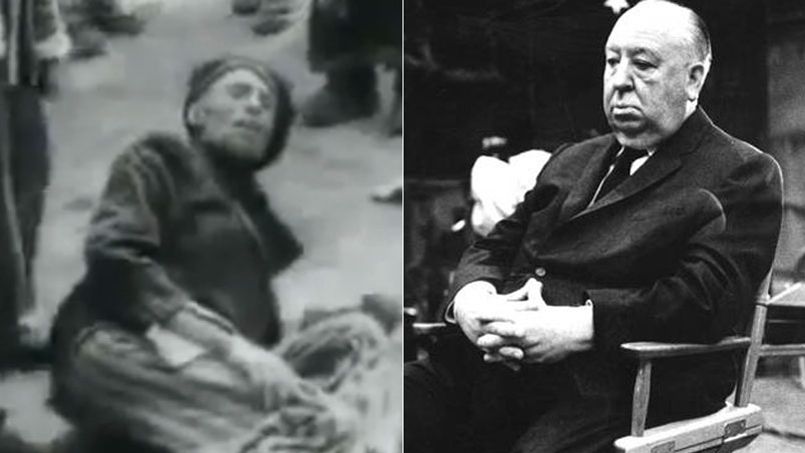
Director Alfred Hitchcock made a documentary, entitled Memory of the Camps, on the Holocaust in 1945. Hitchcock used the rushes of the British military film crews that had filmed the liberation of concentration camps, such as Bergen-Belsen, that year.

Hitchcock-MemoryoftheCamps

The documentary has recently been restored by the Imperial War Museum and will be screened in 2015 as part of the commemoration of the end of the Second World War.

In the meantime, the video of the restored film is available online on YouTube.

Le Figaro reports on the Hitchcock documentary.

Posted in Atrocities, Historical Film, History in the Media, History of Violence, War in Film, War, Culture, and Society | Leave a comment

Newberry Library Short-Term Fellowships

briansandberg's avatarCluster for the Study of Religious Violence

Newberry Center for Renaissance Studies Consortium Short-Term Fellowships

Application deadline for 2014-15 fellowships: January 15, 2014

The Newberry Library will award two short-term fellowships to support scholars at Center for Renaissance Studies consortium member institutions, one for a PhD candidate (ABD status) and one for a faculty member (with preference for non-tenured faculty) working in medieval, Renaissance, or early modern studies.

Each fellowship offers support for one month’s work in residence at the Newberry. Applicants must be graduate students or faculty members of Newberry Center for Renaissance Studies consortium institutions.

For application forms and instructions, see www.newberry.org/short-term-fellowships.

Questions? Please write to research@newberry.org.


View original post

Posted in Archival Research, Early Modern Europe, Early Modern World, European History, European Wars of Religion, Graduate Work in History, Grants and Fellowships, Italian History, Religious History, Renaissance Art and History | Leave a comment

French Paleography Workshop

Call for Applications

MIDDLE FRENCH PALEOGRAPHY WORKSHOP
COLUMBIA UNIVERSITY IN THE CITY OF NEW YORK

JUNE 9-27, 2014

This paleography workshop will provide intensive training in the accurate reading, editing,
and interpretation of a manuscript in Middle French, in this case a complex and intriguing
late-Renaissance compilation of a practical and proto-scientific nature. Participants will work on a collaborative transcription and translation of the manuscript using new digital tools and methods.

The manuscript, Bibliothèque nationale de France, fr. 640, written around 1580 by an
anonymous French-speaking craftsperson, covers some 170 fols. with detailed instructions, including first-hand observations and illustrations, for a number of processes that we would now classify as part of fine arts and technology, such as drawing-instruction, pigment-making, metal-coloring, counterfeit gem production, cannon-casting, tree-grafting, land-surveying, a practice of taxidermy to manufacture monstrous composite animals (kittens and bats), making paper mâché masks, and much more. The margins are filled with comments on experiments, an indication that the book was most likely a record of practice. The manuscript thus offers exceptional insight into how natural materials and art objects were made, collected, appreciated, and circulated in the late Renaissance. It also provides a rare view into attitudes to nature out of which modern science eventually emerged.

The workshop, directed by Prof. Marc H. Smith (École nationale des chartes/École
pratique des hautes études) and Prof. Pamela H. Smith (History, Columbia University) is part of a larger interdisciplinary research and pedagogical initiative that aims to support the transcription, translation, annotation, and experimental reconstruction of the technical processes described in the manuscript, with the final goal being the publication of an electronic critical edition of the manuscript.

The three-week course, held on the campus of Columbia University, will begin with
general instruction and bibliographical information concerning the historical context of the manuscript, French Renaissance paleography, Middle French, and principles for transcription and translation, as well as instruction in digital methods, such as collaborative editing, annotation and versioning methods. Then, for five days a week, morning sessions will be devoted to reading, annotating, and translating the text collectively. In the afternoons, students will be able to work in groups on selected sections of the text to be discussed on the following day.
Up to 15 participants will be enrolled from the U.S. and abroad. First consideration is
given to PhD students, but applications will also be accepted from professional staff of
libraries and museums, and from qualified independent scholars. Advanced French-language skills are required. PhD applicants selected for admission will receive a stipend to help defray the cost of attending the workshop. The workshop is offered tuition free.
Applicants should submit a CV containing names and addresses of two references, a 3-
page letter explaining their reason for application, and transcripts showing successful
completion of coursework or other evidence of competence in the French language.
Experience and interest in the digital humanities will be an advantage.
Applications, along with supporting documents, should be emailed to Claire Sabel
(ccs2137@columbia.edu) by February 21, 2014. Inquiries should be directed to the same
address. Successful applicants will be notified by the beginning of April.

Posted in Archival Research, Early Modern Europe, Early Modern World, European History, European Wars of Religion, French History, French Wars of Religion, Graduate Work in History, Grants and Fellowships, History of Science, Information Management, Lectures and Seminars, Reformation History, Renaissance Art and History | 1 Comment

The Future of Books

Authors, teachers, professors, publishers, and librarians have been debating the future of the book for a decade now. Some claim that the physical book will soon disappear, replaced by ebooks. Others see changes in book structure and marketing, but a continuation of printed books alongside emerging electronic formats.

Princeton historian Anthony Grafton comments on the future of books in a video interview on YouTube, and available through HNN.


Posted in Academic Publishing, Digital Humanities, Education Policy, History in the Media, History of the Book, Humanities Education, Information Management | 1 Comment

Italian Paleography Workshop

briansandberg's avatarCluster for the Study of Religious Violence

The Mellon Summer Institute in Italian Paleography at the Getty Research Institute

July 14–August 1, 2014

Application Deadline: February 24, 2014

This three-week intensive residential course offers an introduction to reading and transcription of handwritten Italian vernacular texts from the late medieval though the early modern periods. The course trains students in paleographical skills and offers an overview of materials and techniques. It also situates the history of scripts within the larger historical, literary, intellectual, and social contexts of Italy.

Students examine a wide range of documents including literary, personal, legal, notarial, official, and ecclesiastical works. The course also provides an orientation to the system of Italian archives and allows students to work with inventories, letters, diaries, and other primary source materials from the Getty Research Institute and other collections in the area.

For more information on the Institute and the application process, and to access the link to our…

View original post 5 more words

Posted in Uncategorized | Leave a comment

Humanities Under Attack

Many professors, researchers, practitioners, teachers, and students of humanities feel that their disciplines are under attack by politicians and business leaders who seek to strip funding from their programs or eliminate them entirely.

The United States Congress has repeatedly cut the budget of the National Endowment for the Humanities (NEH), the flagship national organization for the humanities in the U.S. “Financing for humanities research in the United States has fallen steadily since 2009, and in 2011 was less than half of one percent of the amount dedicated to science and engineering research and development,” according to a recent article in the New York Times. 

So, although American politicians routinely suggest that their cuts to the humanities are aimed at saving money, these claims are preposterous. How can cutting from humanities budgets that represent a mere 0.5% of the science and engineering budgets really save significant money?

Humanities programs are actually lean and efficient, producing an amazing amount of research for a very minimal investment. Humanities scholars produce vital research on political developments, electoral politics, warfare, peace and reconciliation processes, political theories, philosophies, news reporting, information management, legal reforms, social dynamics, demographic patterns, crime patterns, economic development, technological development, urbanization, globalization, communication patterns, human interactions, group dynamics, gender relations, art history, music history, film production and criticism, and literary forms. In short, researchers in the humanities study how humans think, act, and behave.

Humanities scholars and practitioners provide important services and training in critical reading, textual analysis, historical analysis, statistical analysis, economic analysis, visual analysis, narrative writing, analytical and expository writing, argumentative writing, technical writing, creative writing, grant writing, digital humanities, foreign language acquisition, translation, communication skills, and presentation skills.

Humanities organizations promote music festivals, art festivals, fairs, community theaters, traveling performers, farmers’ markets, community gardens, historical preservation, and local history projects everywhere—often with funding from the NEH or other humanities grantmakers.

Despite the valuable research and services provided by humanities researchers and practitioners, the United States unfortunately is not alone in slashing funding for the humanities. The New York Times reports that: “In the global marketplace of higher education, the humanities are increasingly threatened by decreased funding and political attacks.”

The current attacks on the humanities are about business and political interests seeking to corporatize higher education—to the short-term advantage of corporations and to the long-term disadvantage of university students and future graduates.

Business interests are trying to co-opt curricular programs at many universities, hoping to get universities and colleges to prepare students for specific jobs—rather than develop broader reading, writing, critical, and analytical skills.

The problem is that most people change jobs multiple times during their careers, often transitioning across fields and disciplines with markedly different job descriptions and skill sets. Corporations treat managers and workers as expendable, so most people can be expected to be forced to change jobs and be forced to develop new skills.

The humanities provide precisely the essential reading, writing, critical, and analytical skills that are necessary for transitioning between jobs and defining new career paths in an ever changing global marketplace.

Consider writing to your local, state, and national representatives to oppose cuts to the humanities.

The New York Times reports on attacks on the humanities around the world.


Posted in Careers in History, Digital Humanities, Education Policy, Globalization, History in the Media, Humanities Education | Tagged , | Leave a comment

Research on MOOCs

A recent conference held at the University of Texas at Arlington presented new research on student use of Massive Open Online Courses (MOOCs). Much of the research was funded through grants by the Bill and Melinda Gates Foundation, which champions MOOCs. Despite that funding, the research stressed the high costs of creating MOOCs and the limited usefulness of those courses for students.

A study by the University of Pennsylvania Graduate School of Education examined approximately a million students who enrolled in sixteen different MOOC courses offered through Coursera during 2012 and 2013, tracing their study habits.

According to this study, “Emerging data … show that massive open online courses (MOOCs) have relatively few active users, that user ‘engagement’ falls off dramatically especially after the first 1-2 weeks of a course, and that few users persist to the course end.”

These results mean that students enrolled in MOOCs are much less likely to complete a course than students in college and university classrooms. The finding that students exhibit a lack of “engagement” in the courses suggests that “attrition” is very high indeed—much worse than in classes held at brick-and-mortar institutions. This clearly means that MOOCs are simply not providing an effective education for students enrolled in the courses.

One conference participant stressed that “no one is rushing to embrace a teaching model that retains less than 10 percent of students,” according to Inside Higher Ed.

Far from replacing college and university classroom teaching, MOOCs seem to be failing to even offer effective educational support or remedial training—despite the enormous costs of creating MOOCs.

Inside Higher Ed reports that “Many speakers repeatedly pointed out that the cost of MOOC production — which can reach hundreds of thousands of dollars — has created classes of MOOC producing and MOOC consuming institutions.”

At a time of serious cuts in educational budgets, does it really make sense to invest so much money in producing MOOCs?

Inside Higher Ed reports on the recent research on MOOCs.


Posted in Digital Humanities, Education Policy, Humanities Education, Information Management, Undergraduate Work in History | Leave a comment