Doctoral and Post-Doctoral Grants in Early Modern Iberian History

The CORPI Project (Conversion, Overlapping Religiosities, Polemics, and Interaction: Early Modern Iberia and Beyond) is currently recruiting doctoral and post-doctoral research fellows for 2013-14.

The application deadline is 31 May 2013.

The Project
This project is concerned with questions of religious change and specifically of the change brought about by forced mass conversion in late medieval/early modern Iberia. It will study adversarial relationships reconceived as dependencies, against a complex backdrop of dramatic religious change.

It departs from two convictions: Firstly, that new Converts constituted complex groups, in dialogue both among themselves and with Old Christians, and were open to the transmission and translation of ideas, images, and religious emotions. It will bring under close analysis the existence in sixteenth-century Iberia of cross-currents common to different religious groups, areas of local religiosity in which different religions overlapped, and vague or hybrid sorts of religiosity which indicate the blurring of clear ascriptions, categories, and borders including confusion, doubt, unbelief. Secondly, that the desire to eradicate difference within the majority society was always combined with the fear of infiltration and contamination, and that the disappearance of differences exacerbated the search for allegedly essential characteristics in those with Jewish and Muslim ancestors, who were generally seen by Christians as crypto-Jews or crypto-Muslims.

The project is at the same time concerned with the impact that forced conversion had on intellectual life (including the substitution of memory and re-invention of the past), and with the emergence of shifting identities and new religious attitudes. It will recalibrate the traumatic transition that led to the birth of the Inquisition and a mono-confessional Spain, and will convey the incredulous reaction of those who had to live through it, establishing what they read and what solutions they proposed.

Both aspects of overlapping and redefinition will be viewed in connection with the increasingly intense polemical engagement that was taking place in Europe, and against the backdrop of the movements of proselytization, migration, and religious conflict stimulated by the Reformation and by the Ottoman invasions. This broader framework needs to be taken into account in order properly to assess the nature of many phenomena in late-medieval/early modern Iberian intellectual and social history, and which have been exclusively attributed to the existence of Jewish and Muslim minorities in the Peninsula.

The broad framework includes the Iberian works of Islamic thought and anti-Christian polemic that were translated into European languages (Latin or vernacular), and used as a tool with which dissident elements reinforced a radical critique of Christianity and the Christian world. In the seventeenth century Islam was once more the vehicle for criticizing an intolerant Christianity, and in this process the Moriscos and their writings played a role that this project will explore.

The multi-faceted analysis of these phenomena will involve unearthing new archival material, most notably Inquisition trials, as well as numerous sixteenth- and seventeenth-century texts (both manuscripts and early modern editions) ranging from new translations of the Qur’an and other Jewish and Islamic classics (in Arabic and Hebrew) to a rich polemical literature (disputes, controversies, apologies, polemical hagiographies), as well as theological treatises on new converts, both in Latin and Spanish.

CALL: Post-doctoral Researchers
Two Post-doctoral positions for a two-year period extendable to five years. Candidates must have a doctorate in Medieval or Early Modern History or/and Arabic and Islamic or Hebrew and Jewish Studies. Knowledge of Arabic, Hebrew, Turkish or Latin is necessary. The candidate must work on a topic of research included in the general themes and objectives of the project. He/she will carry out his own project, but also participate in teamwork. He/she will contribute to the research activities of CORPI (such as conferences and seminars) supervise PhD students and be included in all aspects of the project. Working languages will be Spanish and English.

Requisites:
. Official transcript or equivalent of the title that enables the candidate to apply for the fellowship (doctorate). It will be needed only when the candidate selected will begin his/her contract.
. CV
. Research project.
. Sample of work, such as published articles or book chapters or unpublished chapter of PhD thesis.
. References. Only names and emails of the proposed referees are needed.

Post-docs. will receive, in the first two year period, 26.733,28 euros divided in 14 payments of 1.909, 52 euros. If the contract is renewed for another three years, the increase in salary will be substantial.
The call is open from 15 April 2013 to 31 May 2013. Interviews will take place at the end of June or first days of July. The positions will start from October 2013.
Applications must be sent to corpi@cchs.csic.es
CALL: Doctoral Reseachers
Four five years PhD positions. Candidates must have a Master Degree in Medieval or Early Modern History or/and Arabic and Islamic or Hebrew and Jewish Studies. Knowledge of Arabic, Hebrew, Turkish or Latin is necessary. The candidate must work on a topic of research included in the general themes and objectives of the project. Working languages will be Spanish and English.

Requisites:
. Official transcript or equivalent of the title that enables the candidate to apply for the fellowship: Spanish “licenciatura”, Master degree or equivalent in your country. It will be needed only when the candidate selected will begin his/her contract.
. Candidates which do not have a Master will have to finish one (60 credits) in the first year of the grant
.CV
. PhD project statement.
. Sample of work, such as published articles or book chapters or unpublished work, such as Master thesis.
. References. Only names and emails of the proposed referees are needed.

PhD positions will receive 22.128, 96 per year in 14 payments of 1. 580,64 euros.
The call is open from 15 April 2013 to 31 May 2013. Interviews will take place at the end of June or first days of July. The positions will start from October 2013.
Applications must be sent to corpi@cchs.csic.es
Posted in Early Modern Europe, Early Modern World, European History, Graduate Work in History, Grants and Fellowships, Human Rights, Religious History, Religious Violence, Study Abroad | Leave a comment

Archives and Gun Tracking

Historians use archives extensively in their research and are increasingly using digitized archives and other digital humanities resources.

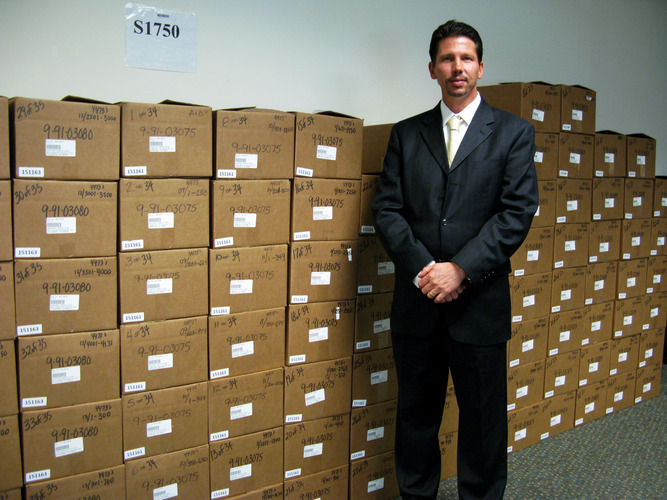
It is surprising, then, to discover that the United States government is still using low-tech archival methods to keep track of firearms purchases and track down guns that have been used in crimes.

guntracing_03

There is no federal database of firearms purchases, so connecting firearms with criminals is apparently a painstaking task, involving sifting by hand through mountains of paper records.

NPR reports on the methods used by federal officials who search for records of guns used in crimes.

Researchers and students working on digital archives and information techniques will be interested in this story.

Posted in Archival Research, Arms Control, Digital Humanities, History of Violence, Information Management | Leave a comment

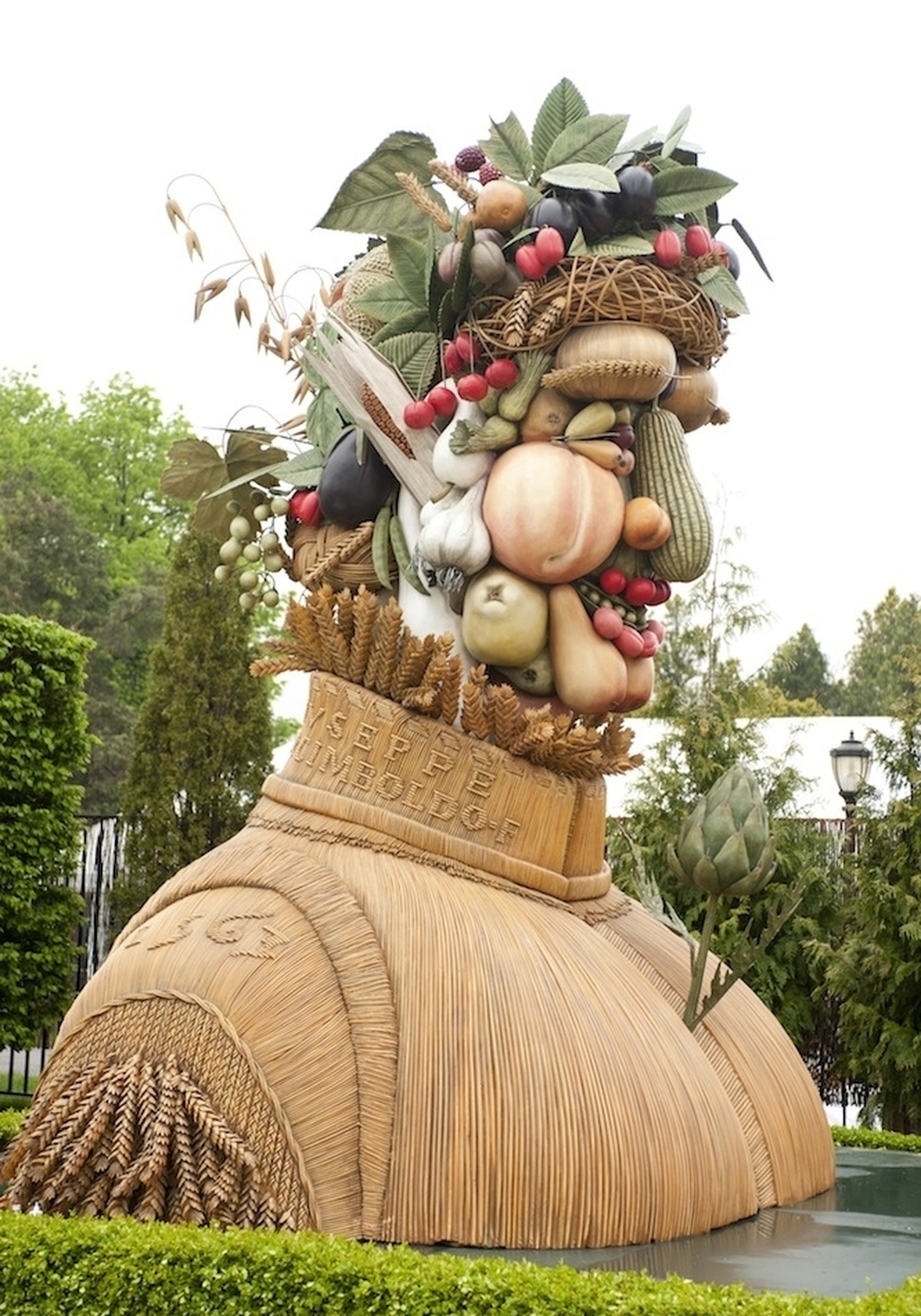
Arcimboldo’s Four Seasons in New York

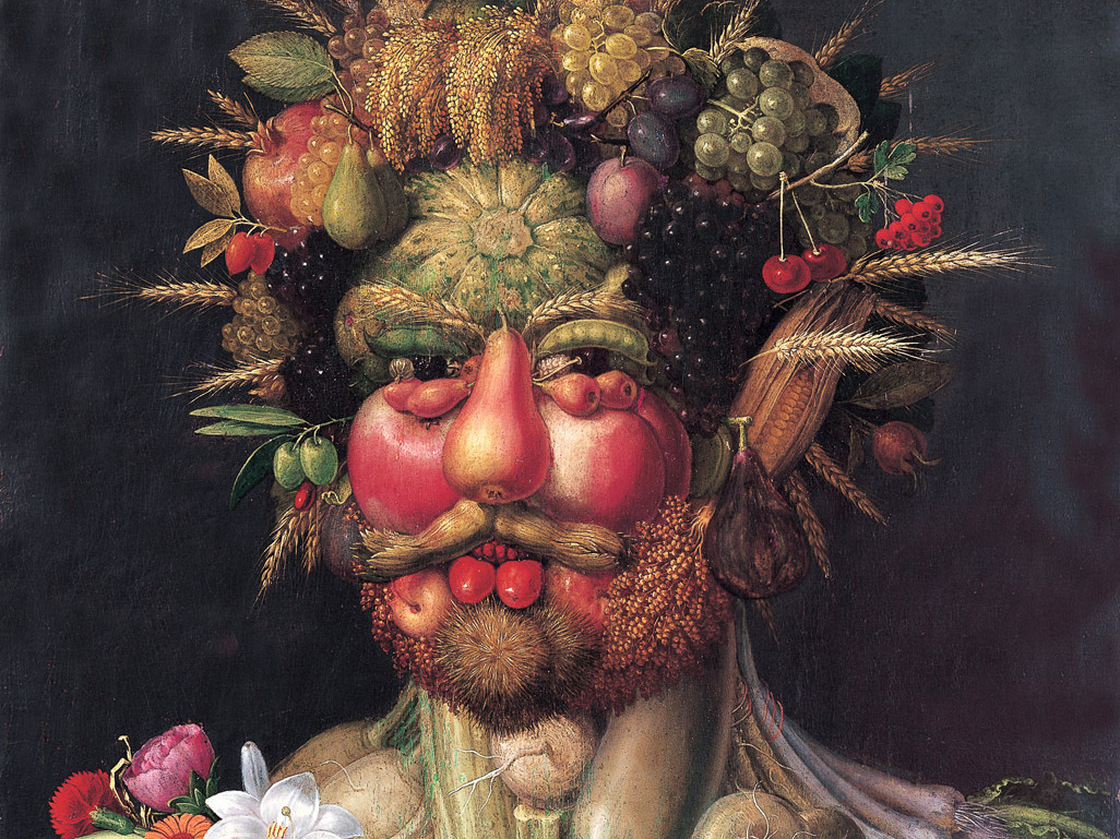
Renaissance artist Giuseppe Arcimboldo’s Four Seasons paintings have been transformed  into massive sculptures and are on display in New York. Philip Haas, a filmmaker and artist, has created a series of sculptures based on Arcimboldo’s paintings.

arcimboldovertemnus

According to NPR, “this weekend, the New York Botanical Garden opened a new exhibit featuring Haas’ giant, 15-foot-high fiberglass sculptures based on Arcimboldo’s “Four Seasons” — winter, spring, summer and fall personified as people, crafted of foods, trees and other natural elements.”

summer_ivo5588-3-

Students in HIST 420 The Renaissance will find this story curious, having discussed Renaissance food, markets, and paintings in detail.

Posted in Art History, Early Modern Europe, Early Modern World, European History, Food and Cuisine History, History in the Media, Italian History, Renaissance Art and History | Leave a comment

Teaching in English in France

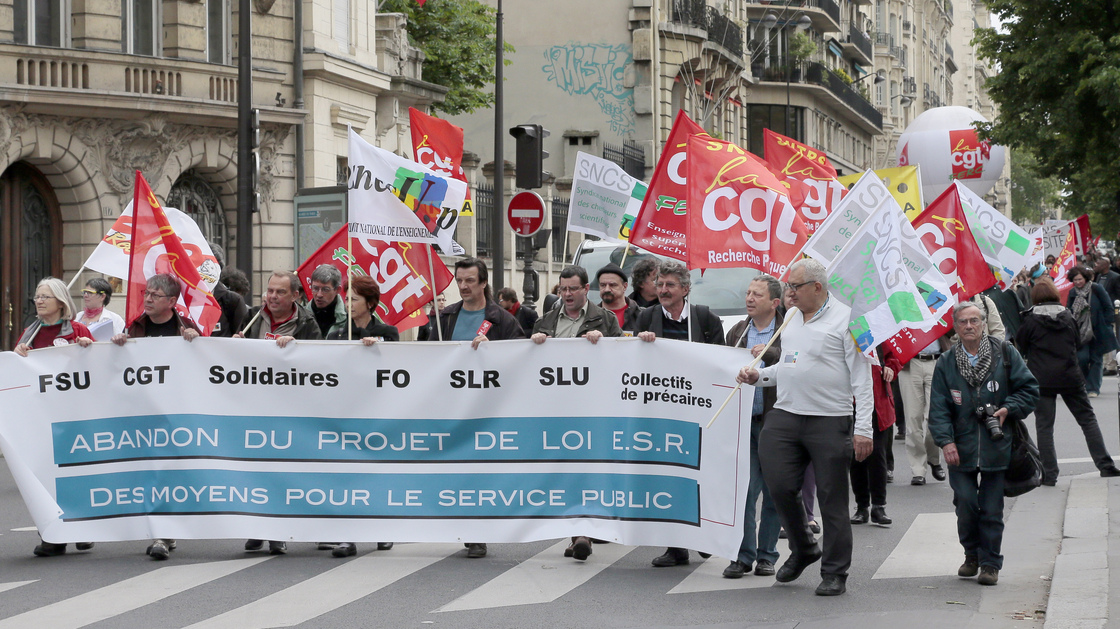
A newly proposed law in France would encourage English-language instruction at universities in France.

NPR asks “Will teaching in English at France’s universities undermine the French language? That’s up for debate in the country now, and the arguments are heated.”

protestESR

According to the Washington Post, “Higher Education Minister Genevieve Fioraso this week introduced a bill that would allow French universities to teach more courses in English, even when English is not the subject. The goal, she explained, is to attract more students from such countries as China, Brazil and India, where English is widely taught but French is reserved largely for literature lovers.”

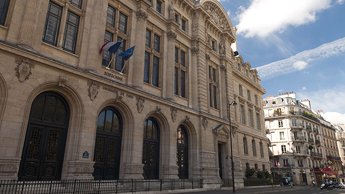
sorbonne

France has long utilized cultural patronage and official organizations such as the Alliance Française to promote French language abroad, while ensuring that educational institutions within France utilize French as their language of instruction.

The proposed law has outraged many professors and educational leaders. Jacques Attali, a cultural critic and former advisor to President Mitterand, has criticized the proposed law. Attali is quoted as arguing: “Not only would such a reform be contrary to the Constitution (which provides in its Article 2 ‘the language of the Republic is French’), but you cannot image an idea that is stupider, more counterproductive, more dangerous and more contrary to the interest of France.”

NPR and the Washington Post report on the proposed law. France 24 reports on the backlash to the proposed law.

Posted in Education Policy, European History, European Union, French History, Globalization, Humanities Education | Leave a comment

Santa Muerte and Violence in Mexico

The Vatican has launched a campaign to eradicate the cult of “Santa Muerte” (Saint Death) from Mexican Catholicism.

Vatican officials have “condemned Saint Death as an ‘infernal’ and ‘blasphemous’ figure worshiped by Mexican narcos,” according to R. Andrew Chesnut, a professor of Religious Studies at Virginia Commonwealth University. “Over the past month, the President of the Pontifical Council for Culture, Cardinal Gianfranco Ravasi, has denounced the mushrooming cult of the skeleton saint on four separate occasions.”

SantaMuertestatues

The cult of Santa Muerte raises intriguing questions about the role of religion in the atrocious violence of the drug wars in contemporary Mexico.

Chesnut argues that “theological concerns, religious competition, unprecedented Latin American influence at the Vatican, and media coverage have converged and laid the foundation for the Vatican’s condemnation of the cult of Santa Muerte as the poster child of Latin America’s ‘culture of death.'”

R. Andrew Chesnut’s article about Santa Muerte appears in the Huffington Post. He has also published a book entitled, Devoted to Death: Santa Muerte, the Skeleton Saint (2012).

Thanks to my colleague Kristin Huffine, a historian of Latin American history, for bringing this story to my attention.

NIU students in HIST 740 Religious Politics and Sectarian Violence will be interested in this story.

Posted in Civil Conflict, History of Violence, Religious History, Religious Violence, War, Culture, and Society | 2 Comments

Early Modern Historian’s Memoir

John H. Elliott, a noted historian of early modern Spain and its empire, has published a memoir of his career as a historian. His memoir is entitled History in the Making (New Haven, CT: Yale University Press, 2012).

Eliott is known above all for his landmark study of the seventeenth-century Spanish minister Olivares, who was architect of Spanish military policy during the Thirty Years’ War.

NPG 6518; Historians of 'Past and Present' by Stephen Frederick Godfrey Farthing

Elliott has long served on the editorial board of the influential historical journal, Past and Present, which is published in the United Kingdom.

A extended review of Elliott’s memoir appears in the Weekly Standard.

Posted in Careers in History, Early Modern Europe, Early Modern World, Empires and Imperialism, European History, European Wars of Religion, Historiography and Social Theory | Leave a comment

France Legalizes Gay Marriage

France has passed a law to allow gay marriages, becoming the ninth nation in Europe to legalize gay marriage. President Hollande signed the law today, 18 May, and the first legal marriages will be held on 28 May.

The French gay marriage law faced stiff opposition by the Catholic Church and by many conservative groups. Catholics and right-wing politicians held numerous anti-gay marriage rallies throughout France over the past several months.

mariagepourtous

Gay marriage advocates promoted the law with a campaign of “mariage pour tous” (marriage for all).  The law moved forward after the French Conseil constitutionnel approved the measure. Libération reports on the constitutional process.

Libération reports on the new gay marriage law. Le Monde reports on the law, calling it a “just reform.” The BBC reports in English on gay marriage in France.

VincentetBruno

Libération also reports on a gay couple in Montpellier that plans to marry as soon as the law takes effect.

Posted in European History, European Union, French History, Human Rights, Women and Gender History | Leave a comment

Buddhists and Religious Violence in Myanmar

Buddhist monks have been involved in several waves of anti-Muslim violence in Myanmar, and certain Buddhist leaders are accused of motivating and orchestrating recent attacks.

“In the Western stereotype, Buddhists are meditating pacifists who strive to keep their distance from worldly passions. But last month,” NPR reports, “more than 40 people were killed in fighting between Buddhists and Muslims in the central Burmese town of Meiktila. Witnesses say some Buddhist monks joined in the violence, while others tried to stop it.”

wirathu

NPR reports on Buddhists and religious violence in Myanmar.

The Buddhist violence in Myanmar can be examined in the context of comparative studies of Buddhist nationalism and violence in Sri Lanka, Thailand, and elsewhere by historians and anthropologists such as Stanley Tambiah.

NIU students in HIST 740 Religious Politics and Sectarian Violence will be interested in this story.

Posted in Civil Conflict, Civilians and Refugees in War, History of Violence, Religious Violence | 1 Comment

Continuing Sectarian Violence in Iraq

Sectarian violence continues in Iraq between Sunni and Shia militants. Amid a series of bombings and attacks there are some signs of connections between sectarian violence in Syria and neighboring Iraq.

sectarianismIraq

Sectarian violence became pervasive in Baghdad and other regions of Iraq during the most intensive phase of the Iraq War. Mainstream U.S. media has largely ignored sectarian conflict in Iraq since the withdrawal of American combat forces from the country, yet the violence continues.

Iraq has received a flood of refugees from the Syrian Civil War, perhaps contributing to the growing level of sectarian tensions in Iraq.

The Washington Post reports on sectarian violence in Iraq.

Posted in Civil Conflict, History of Violence, Religious Violence, War, Culture, and Society | Leave a comment

Italian Salumi in the USA!

Italian salumi are finally coming to the United States!

154740151-1-

Americans who have lived in Italy will be salivating, since the USDA is finally lifting its ban on cured meats from some regions of Italy.

“Starting May 28, a four-decades-old ban on the import of many Italian salumi,” according to a NPR article online. The NPR reporter comments: “No more stuffing your suitcases with delicacies bought in Italy, hoping the sniffer dogs at JFK or other American airports won’t detect the banned-in-the-USA foodstuffs inside your luggage,” like Sophia Loren in the film Lady Liberty (1971).

mortadella

“The U.S. Department of Agriculture has announced that the Italian regions of Lombardy, Emilia-Romagna, Veneto and Piedmont, and the provinces of Trento and Bolzano, are free of swine vesicular disease,” reports NPR. “Imports of pork products from those areas, says the USDA, present a low risk of introducing the disease into the U.S. The disease was first detected in the 1960s and can survive cooking and even long curing.”

NPR reports on this story.

Posted in European Union, Food and Cuisine History, Globalization, Italian History | Leave a comment