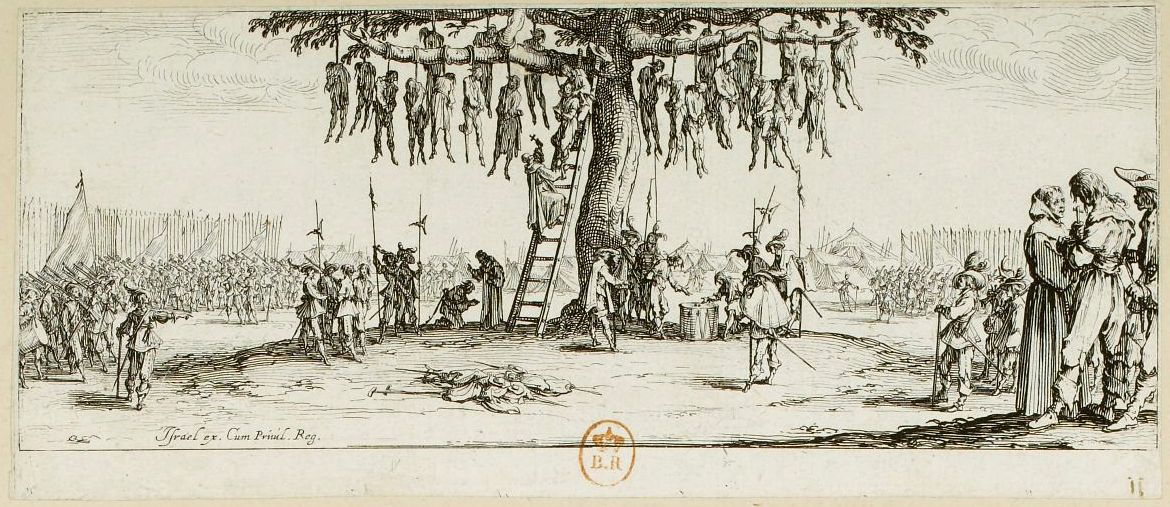
The Bibliothèque nationale de France (Paris) has organized an exhibition on Apocalypse Hier et Demain (Apocalypse, Yesterday and Tomorrow), which is on display from February through June 2025.
The exhibition explores the Book of Revelation and apocalyptic visions, before turning to examine crises and catastrophes in the pre-modern and modern world.
The BnF website provides a description the exhibition:
“La BnF propose la première grande exposition consacrée à l’apocalypse. L’apocalypse ? Un mot obscur, qui fait peur, un mot qui parle de la fin du monde. Il n’en finit pas de résonner depuis deux mille ans dans notre culture et nos sociétés occidentales quand survient une catastrophe majeure, et aujourd’hui encore, en fond de nos angoisses climatiques. Et pourtant… Ce mot signifie révélation, dévoilement. Dans sa source biblique, l’Apocalypse parle d’un voile se levant sur le royaume intemporel qui réunira les croyants dans la Jérusalem céleste. Un mot porteur d’espoir, fait pour déjouer nos peurs profondes ?”
“Du Moyen Âge à notre époque, l’exposition traverse cet imaginaire en montrant certains des plus prestigieux manuscrits de l’Apocalypse de Jean, des fragments rarement présentés de la célèbre tenture de tapisseries d’Angers, ou la fameuse suite de gravures de Dürer consacrées au texte, mais aussi de nombreux chefs-d’œuvre, tableaux, sculptures, photographies, installations, livres rares, extraits de films, venant des collections de la Bibliothèque comme des plus grandes collections françaises et européennes, publiques et privées (Centre Pompidou, musée d’Orsay, British Museum, Victoria and Albert Museum, etc.).”
The Presidents of France and the United States are sharply divided on the Russian-Ukrainian War. The future of Ukraine and the European Union seems to hang in the balance.
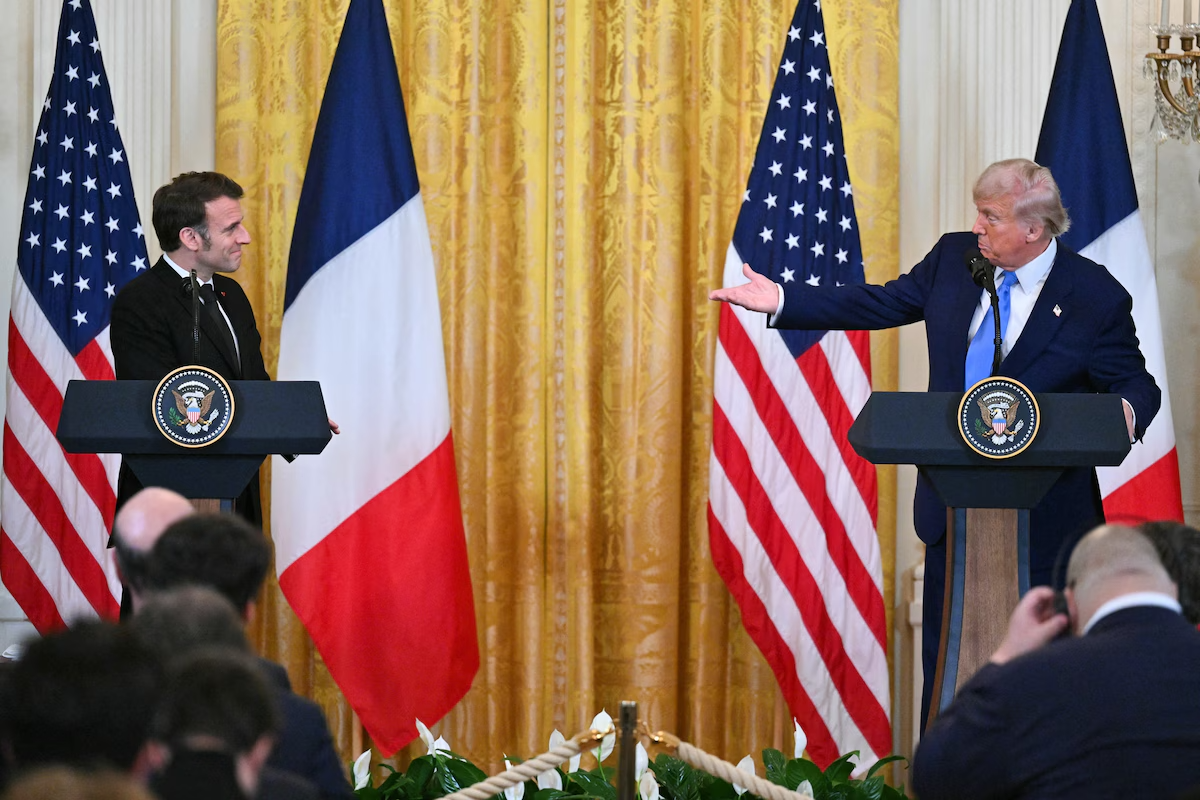
“President Trump and President Emmanuel Macron of France put on a show of friendship on Monday in their first meeting since last month’s inauguration, but for all the clubby hugs and handshakes they could not disguise the growing rift between the United States and Europe over the Ukraine war,” according to The New York Times.
“Meeting on the third anniversary of Russia’s full-scale invasion of Ukraine, the two leaders seemed intent on avoiding an open rupture as they traded compliments during a convivial White House meeting. But they diverged significantly over the causes of the war, each side’s role in the conflict and its possible resolution.”
“But even as Mr. Macron called the president ‘dear Donald’ and repeatedly used words like ‘friendship’ and ‘shared agenda,’ he gently and politely struck a different note from Mr. Trump’s on the war,” The New York Times observed.
“‘This peace must not mean a surrender of Ukraine,’ the French president said during a joint news conference in the East Room of the White House. ‘It must not mean a cease-fire without guarantees. This peace must allow for Ukrainian sovereignty.'”
“Mr. Trump made no mention of guarantees or Ukrainian sovereignty, refused to call Mr. Putin a dictator and falsely stated that the United States had spent three times as much on the war as Europe had. Mr. Macron, careful not to provoke Mr. Trump, made clear that Russia was to blame for the war, not Ukraine, and corrected the president’s assertions about European aid,” according to The New York Times.
“Speaking with reporters in the Oval Office before their news conference, Mr. Trump, who last week said that Ukraine had ‘started’ the war and called the country’s popularly elected president, Volodymyr Zelensky, a ‘dictator without elections,’ declined to use the term for Mr. Putin, who has ruled as an autocrat for a quarter-century. ‘I don’t use those words lightly,’ Mr. Trump said.”
“Mr. Macron, by contrast, gave voice to the consensus view in Europe and, until now, in the United States that Moscow is to blame for the war. ‘This is a responsibility of Russia because the aggressor is Russia,’ the French president said.”
Historians of France and the United States are observing the fraying relationship of one of the closest alliances in the international relations.
Baker, Peter. “Trump and Macron Display Old Friendship but Split on the Ukraine War.” The New York Times (24 February 2025).
“Macron Tries to Sway Trump as U.S. Backs Russia Over Ukraine in U.N. Vote.” The Washington Post (24 February 2025).
Defending academic freedom has become an essential daily task for professors and researchers in the United States.
The Center for the Defense of Academic Freedom (CDAF) at the American Association of University Professors (AAUP) has prepared resources and toolkits for defending academic freedom.
Professors, researchers, and educators across the nation will be interested in utilizing the legal tools available to resist the dismantling of key agencies and policies that support academic research and teaching, as well as scientific labs and higher education institutions.
Here is a letter from the Director of the Center for the Defense of Academic Freedom at the AAUP:
Dear Colleague,
The cruelty of the new administration’s attack on democracy and higher education has been staggering, from arbitrary cuts to research funding to the malicious misrepresentation of our work to Linda McMahon’s unwillingness to say that teaching African American history is still legal.
Fighting back requires understanding the threats we face as well as developing the tools necessary to convey the value of higher education to a wide audience. In this context, the AAUP’s Center for the Defense of Academic Freedom has recently published a number of resources that we hope will be useful in the fight ahead:
Academic Freedom on the Line is a weekly Substack edited by CDAF fellow John Warner. This newsletter examines questions around academic freedom, its role in a democratic society, and what is lost when academic communities face politicized attacks on institutional autonomy and shared governance. Check out posts on CDAF’s mission, the risks of obeying in advance, advice for college and university boards, and reflections on the recent “Dear Colleague” letter.
Executive Power Watch is a series of short handouts that offer analyses of education-related executive actions, including executive orders that target diversity, equity, and inclusion; weaponize antisemitism; and target transgender, intersex, and nonbinary people. These resources offer concrete suggestions about what you can do to fight back.
Action Reports are short studies that offer concrete analysis and guidance on how to respond to particular threats to academic freedom, such as
Future Action Reports will examine the American Council of Trustees and Alumni and strategies for using collective bargaining agreements to resist post-tenure review laws.
Review, use, and share these tools, and stay tuned for more resources and related webinars.
In solidarity,
Isaac Kamola, Director, AAUP Center for the Defense of Academic Freedom
Today, we are remembering the Russian invasion of Ukraine and marking the third anniversary of the start of the current Russian – Ukrainian War.
The war began with a major Russian invasion of Ukraine in February 2022 that sought to overwhelm Ukraine’s air and ground defenses. Ukraine resisted bravely and repelled the Russian forces around its capital, Kiev.
The Russian-Ukrainian War represents the most extensive war in Europe since the Second World War and has featured large tank battles, lengthy sieges, trench warfare, massive missile strikes, and pervasive drone attacks.
The new Trump administration has radically reshaped the war in Ukraine in the past four weeks by abandoning support for Ukraine and American allies in Europe.
“After three years of grinding warfare and isolation by the West, a world of new possibilities has opened up for Mr. Putin with a change of power in Washington,” observes Paul Sonne, reporter with The New York Times.
“Gone are the statements from the East Room of the White House about the United States standing up to bullies, supporting democracy over autocracy and ensuring freedom will prevail.
“Gone, too, is Washington’s united front against Russia with its European allies, many of whom have begun to wonder if the new American administration will protect them against a revanchist Moscow, or even keep troops in Europe at all.”
In a show of solidarity, the leaders of European nations and the European Union joined Ukrainian President Zelenzky in Kyiv to mark the grim three-year anniversary of the Russian invasion of Ukraine.
Lawrence Freedman, Professor Emeritus of War Studies (King’s College London) comments that “There is something very big going on at the moment. … This is not business as usual. This is a very different administration, and it’s very hard to see how trans-Atlantic relations will be the same at the end of this.” Freedman was quoted in Paul Sonne’s article.
Foreign Policy has published a series of essays on “Three Years On, What’s Next for Europe and Ukraine?” Nine policy analysts examine the status of the Russian-Ukrainian War and the radical changes international relations.
“Three Years On, What’s Next for Europe and Ukraine?” Foreign Policy (21 February 2025).
Sonne, Paul. “Three Years Into War in Ukraine, Trump Ushers in New World for Putin.” The New York Times (24 February 2025).
“World Leaders Reiterate Support on Third Anniversary of War as Zelenskyy Hails ‘Absolute Heroism of Ukrainians.'” The Guardian (24 February 2025).
“Western leaders visit Kyiv and pledge military support against Russia on the war’s 3rd anniversary.” AP (24 February 2025).
Note: this essay has been updated with additional references.
“Many who had hoped to tune out Trump this time realize they don’t have that luxury. It’s far more dangerous now,” writes political analyst and columnist Maureen Dowd.
News fatigue is a real problem when democratic institutions are under assault.
“There are frightening moments when our 236-year-old institutions don’t look up to the challenge. With flaccid Democrats and craven Republicans, King Donald can pretty much do whatever he wants to whomever he wants,” Dowd observes.
President Trump is increasingly presenting himself as a king in social media and official statements.
“After pillaging and gutting the U.S. government, the Western alliance and our relationship with Volodymyr Zelensky, Trump is thinking of himself as a king and cogitating on a third term. He basks in the magniloquent rhetoric of acolytes genuflecting to an instrument of divine providence.”
President Trump as a would-be king. Image: The New York Times.
Trump’s supporters have fully embraced the image and rhetoric of monarchy and dictatorhip.
Maureen Dowd indicates that “at the Conservative Political Action Conference this week, a group calling itself the ‘Third Term Project’ erected a sign depicting Trump as Caesar. A wag on X wondered if they knew what happened to Caesar.”
“Trump delights in reposting memes of himself as a king and as Napoleon, with a line attributed to the emperor: ‘He who saves his country does not violate any law.'”
Down emphasizes that “his [Trump’s] dictatorial impulses were clear when he refused to accept the results of the 2020 election and egged on a mob to disrupt the certification of the election, even if it meant that his own vice president might be hanged. And now he has added imperialistic impulses, musing about taking over the Panama Canal, Greenland, Canada, Gaza, D.C., and mineral rights in Ukraine.”
Dowd argues that “His [President Trump’s] megalomania has mushroomed. His derisive behavior toward Zelensky — how can a modestly talented reality show veteran mock Zelensky as ‘a modestly successful comedian’? — shows Trump can’t abide anyone saying he is doing anything wrong.”
Mauren Dowd’s opinion piece, “Fail, Caesar!” is available at The New York Times.
The so-called Department of Government Efficiency (DOGE) claims to be slashing bureaucratic waste and improving government efficiency, however the DOGE team is attempting to gain access to various sensitive digital information systems of the federal government of the United States.
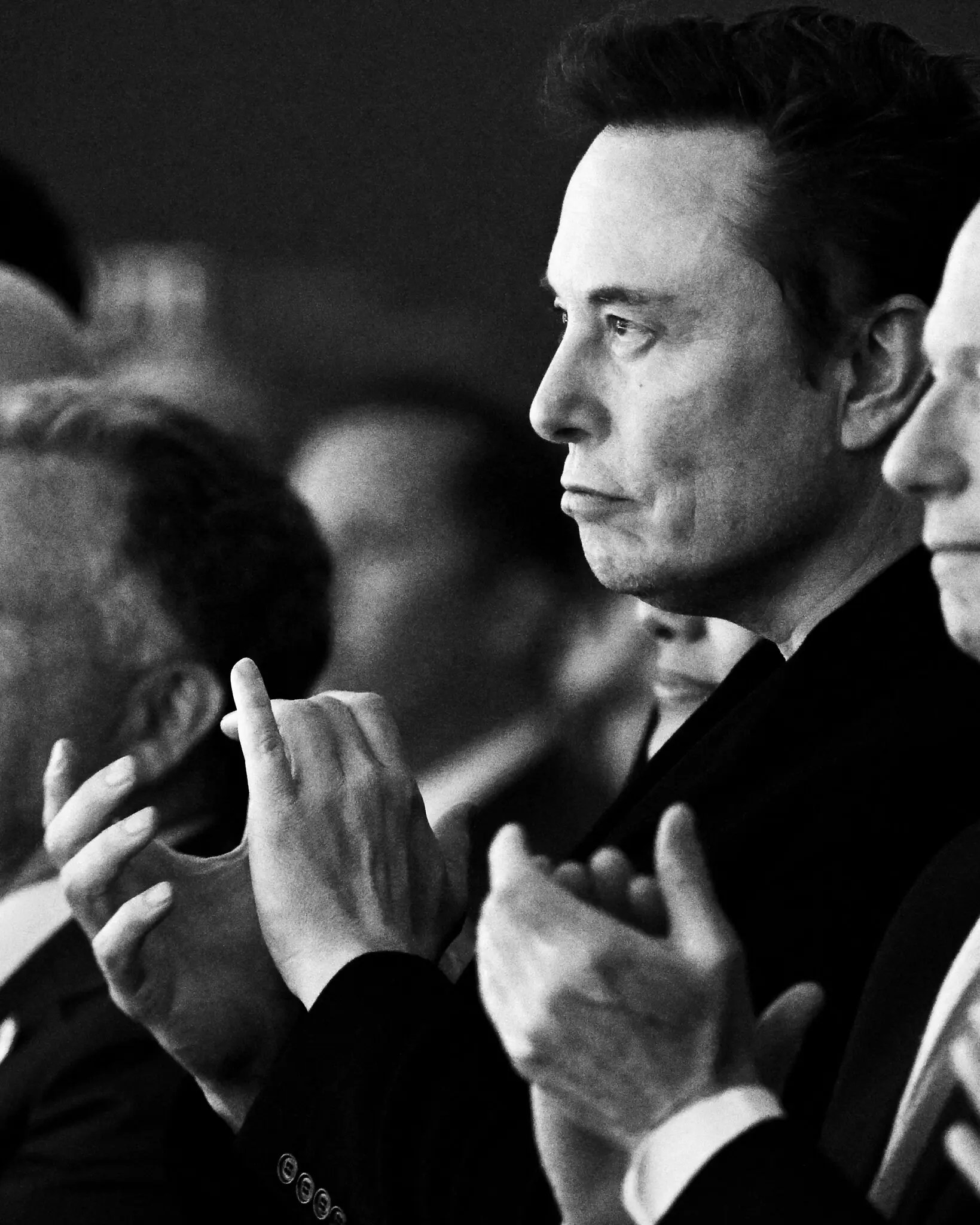
Zeynep Tufekci argues that DOGE is actually re-engineering government information systems to access U.S. citizens’ personal information and use it to advance Elon Musk’s political and business agenda.
“Watching Elon Musk and his band of young acolytes slash their way through the federal government, many observers have struggled to understand how such a small group could do so much damage in so little time,” Tufekci writes.
“The mistake is trying to situate Musk solely in the context of politics. He isn’t approaching this challenge like a budget-minded official. He’s approaching it like an engineer, exploiting vulnerabilities that are built into the nation’s technological systems, operating as what cybersecurity experts call an insider threat. We were warned about these vulnerabilities but no one listened, and the consequences — for the United States and the world — will be vast.”
Tufekci asserts that Elon Musk represents an “insider threat” to U.S. information systems.
“Insider threats have been around for a long time: the C.I.A. mole toiling quietly in the Soviet government office, the Boeing engineer who secretly ferried information about the space shuttle program to the Chinese government. Modern digital systems supercharge that threat by consolidating more and more information from many distinct realms.”
Tufekci points out that “Running integrated digital systems, however, requires endowing a few individuals with sweeping privileges. They’re the sysadmins, the systems administrators who manage the entire network, including its security. They have root privileges, the jargon for highest level of access. They get access to the God View, the name Uber gave its internal tool that allowed an outrageously large number of employees to see anyone’s Uber rides.”
Allowing Elon Musk and his DOGE team access to the “God View” of the U.S. Treasury’s payment system and other integrated digital systems of the federal government is unprecedented and dangerous.
Tufekci emphasizes: “That’s why when Edward Snowden was at the N.S.A. he was able to take so much information, including extensive databases that had little to do with the particular operations he wanted to expose as a whistle-blower. He was a sysadmin, the guy standing watch against users who abuse their access, but who has broad leeway to exercise his own.”
Data Scientists, Cyber Security experts, and AI researchers are closely monitoring these developments. Historians of Digital Humanities, information management, and information revolutions are considering the broader implications of DOGE’s potential use of sensitive information.
Tufekci, Zeynep “Here Are the Digital Clues to What Musk Is Really Up To.” The New York Times (21 February 2025).
Hartog, Frank den and Abu Barkat ullah. “Insider Threat: Cyber Security Experts on Giving Elon Musk and DOGE the Keys to US Government IT Systems.” The Conversation (19 February 2025).
On information revolutions and power, see:
Dooley, Brendan, ed. The Dissemination of News and the Emergence of Contemporaneity in Early Modern Europe. Farnham: Ashgate, 2010.
Dooley, Brendan Maurice and Sabrina A. Baron, eds. The Politics of Information in Early Modern Europe. London: Routledge, 2001.
Lamal, Nina, Jamies Bumby, and Helmer J. Helmers, eds. Print and Power in Early Modern Europe (1500–1800). Leiden: Brill, 2021.
Pettegree, Andrew. The Book in the Renaissance. New Haven, CT: Yale University Press, 2010.
Pettegree, Andrew. The Invention of News: How the World Came to Know about Itself. New Haven, CT: Yale University Press, 2014.
Wheeler, Tom. “Gutenberg’s Message to the AI Era,” Brookings (16 July 2024).
Brazil and the United States have both experienced recent coups d’état by their presidents, Jair Bolsonaro and Donald J. Trump.
The justice system of Brazil has successfully confronted Bolsonaro by charging him with coup d’état, while the U.S. justice system failed miserably to charge and prosecute Trump for election denial and insurrection.
Quico Toro assesses the similarities and differences in the cases of the coups d’état in Brazil and the United States in an article in The Atlantic.
“For years now, politics in Brazil have been the fun-house-mirror version of those in the United States. The dynamic was never plainer than it became last week, when Brazilian prosecutors formally charged the far-right former President Jair Bolsonaro, along with 33 co-conspirators, with crimes connected to a sprawling plan to overthrow the nation’s democracy and hang on to power after losing an election in October of 2022,” Toro writes.
“That the charges against Bolsonaro sound familiar to Americans is no coincidence. Bolsonaro consulted with figures in Donald Trump’s orbit in pursuit of his election-denial strategy. But the indictment against Bolsonaro suggests that the Brazilian leader went much further than Trump did, allegedly bringing high-ranking military officers into a coup plot and signing off on a plan to have prominent political opponents murdered,” according to Toro.
“Fewer than seven months after the attempted coup, Brazil’s Supreme Electoral Court ruled Bolsonaro ineligible to stand for office again until 2030. Interestingly, that decision wasn’t even handed down as a consequence of the attempted coup itself, but of Bolsonaro’s abuse of official acts to promote himself as a candidate, as well as his insistence on casting doubt, without evidence, on the fairness of the election.”
Toro laments: “I can’t help but wish that U.S. jurists had shown the nerve of their Brazilian counterparts. In their charging documents against Bolsonaro, Brazil’s prosecutors don’t mumble technicalities: They charge him with attempting a coup d’état, which is what he did.”
Toro points out the ineptness of Justices of the U.S. Supreme Court to bar Trump from the ballot. He points out the slow procedural response by Attorney General Merrick Garland and the Department of Justice, who failed to bring prosecutions and instead eventually established a Special Prosecutor. Toro emphasizes the failures of the U.S. Special Counsel Jack Smith in bringing charges decisively.
“Contrast that [the prosecution in Brazil] with the proceduralism at the core of the case against President Trump. After an interminable delay that ultimately rendered the entire exercise moot, Special Counsel Jack Smith charged Trump not for trying to overthrow the government but for ‘conspiring to obstruct the official proceeding’ (that would lead him to lose power) as well as ‘conspiring to defraud the United States’—a crime so abstract that only a constitutional lawyer knows what it actually means.”
The U.S. Department of Justice rightly prosecuted low-level participants in the Storming of the U.S. Capitol on 6 January 2021 for violent assaults and seditious conspiracy. This could have been an effective prosecutorial strategy had these prosecutions been built like anti-mafia prosecutions, leading to “foot soldiers” testifying against the mafia bosses of the conspiracy, but the Department of Justice took much too long to prosecute thousands of low-level participants without ever bringing charges against President Trump and his advisors who participated in the seditious conspiracy and instigated the coup d’état.
Now a newly reinstalled President Trump has pardoned or commuted sentences of all of his supporters who participated in the Storming of the U.S. Capitol, including members of the Proud Boys, Oath Keepers, and other militas who assaulted police officers and conspired to kill then Vice President Pence and Congressional representatives.
President Trump’s pardons have re-created and expanded a violent and seditious paramilitary force deeply loyal to him and willing to use coercion and intimidation to support his policies. Enrique Tarrio, a prominent leader of the Proud Boys, and the so-called Seditious 5 held a menacing rally with other pardoned insurrectionists in front of the U.S. Capitol on Friday.
“‘Whose house?’ Tarrio asked, turning toward the U.S. Capitol. ‘Our house!’ they bellowed,” according to The Washington Post.
“The event, an opportunity for Tarrio and other far-right leaders to amplify their telling of the attack, reflected a stunning reversal of fortunes for nearly 1,600 Capitol riot defendants and far-right leaders granted clemency. The men once firmly seen as fringe figures felt vindicated — even celebrated — in the city that once jailed and prosecuted them.”
Proud Boys have attended meetings of the Conservative Political Action Conference (CPAC) and have also openly harassed U.S. Capitol police officers this weekend.
The Washington Post emphasizes that “As Trump has sought to recast the official public narrative about one of the most divisive chapters of recent U.S. history, some of those involved have benefited from their elevated profiles, converting the embrace of his MAGA base into public appearances and podcast interviews while openly mulling government jobs or running for elected office.”
Tarrio bragged about his newfound power: “‘The Boys are back in town,’ Tarrio, who was convicted of seditious conspiracy, posted to X, alongside a photo of him with three of his co-defendants. ‘The Seditious 5 rides again!'”
The Washington Post reports: “‘It feels defiant,’ Tarrio said, in an interview, about returning to Washington. ‘Those three years that were taken from me unjustly were so f—ing worth it. The size of the bullhorn that was given to me is … huge.”
Tarrio and Trump are both emboldened and dangerous.
Why did the U.S. Department of Justice fail so spectacularly to prosecute President Trump’s coup d’état?
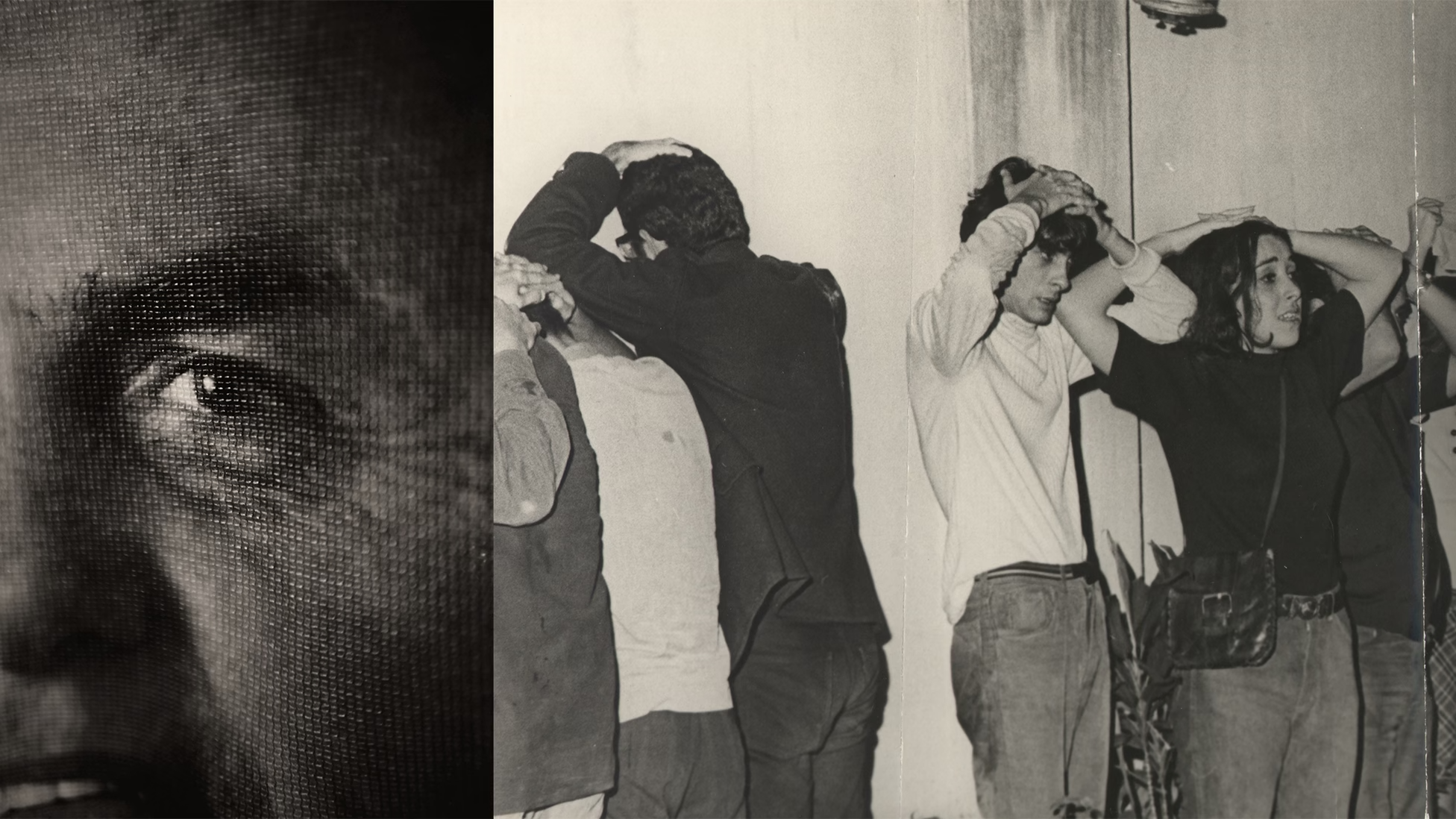
Toro offers this explanation: “the biggest difference is that dictatorship is a much more real menace in Brazil, a country that democratized only in the 1980s, than it is in a country that’s never experienced it. Older Brazilians carry the scars, in many cases literal ones, of their fight against dictatorship. This fight for them is visceral in a way it isn’t—yet—for Americans.”
“Brazil has demonstrated how democracies that value themselves defend themselves. America could have done the same.”
Toro, Quico. “Brazil Stood Up for Its Democracy. Why Didn’t the U.S.?” The Atlantic (23 February 2025.
In a Friday night purge, President Trump has fired the Chairman of the Joint Chiefs of Staff, the top military general in the United States, along with five other generals and military lawyers.
“President Trump fired the country’s senior military officer as part of an extraordinary Friday night purge at the Pentagon that injected politics into the selection of the nation’s top military leaders,” according to The New York Times.
“Gen. Charles Q. Brown Jr., a four-star fighter pilot known as C.Q. who became only the second African American to hold the chairman’s job, is to be replaced by a little-known retired three-star Air Force general, Dan Caine, who endeared himself to the president when they met in Iraq six years ago.”
General C.Q. Brown, Chairman of the Joint Chiefs of Staff. Photo: AP.
The New York Times reports that “In all, six Pentagon officials were fired, including Adm. Lisa Franchetti, the first woman to lead the Navy; Gen. James Slife, the vice chief of the Air Force; and the top lawyers for the Army, Navy and Air Force.”
“The decision to fire General Brown, which Mr. Trump announced in a message on Truth Social, reflects the president’s insistence that the military’s leadership is too mired in diversity issues, has lost sight of its role as a combat force to defend the country and is out of step with his ‘America First’ movement.”
This firing appears to have been made primarily based on General Brown’s status as an African-American, and thus violates anti-discrimination laws in the United States. I certainly hope that General Brown will file a lawsuit for wrongful termination.
The firing of the Chairman of the Joint Chiefs of Staff also violates precedents and norms of civil-military relations in the United States.
The New York Times point out that “Joint Chiefs chairmen traditionally remain in place as administrations change, regardless of the president’s political party. But current White House and Pentagon officials said they wanted to appoint their own top leaders.”
The Pentagon purge has been signaled for months. Ronald R. Krebs, Professor of Political Science (University of Minnesota), wrote prior to President Trump’s second inauguration that “During his successful 2024 reelection campaign, incoming U.S. President Donald Trump promised to purge the military of “woke” generals. Soon after his November victory, TheWall Street Journal reported that his transition team had drafted an executive order to establish a so-called warrior board of retired senior military officers tasked with identifying serving generals and admirals who ought to be dismissed. In the meantime, according to other media reports, Trump’s team has been drawing up its own list of generals to remove from their posts and perhaps even court-martial.”
Krebs argues: “That the Trump administration would put the military in its sights should not come as a surprise. … Nobody should be fooled by the Trump team’s claim that it aims, by culling top officers, to strengthen the U.S. military. The purpose would be precisely the opposite; weakening the professional military, in fact, is a move many populist leaders make as they consolidate power. If, like his fellow populists around the globe, Trump uses his second term to undermine the military’s independence and professionalism and transform it into a more politicized force, both American democracy and the U.S. armed forces’ war-fighting capacity will suffer.”
On the Pentagon purge, see the AP report and the following news articles:
Lamothe, Dan and Missy Ryan, “With Pentagon Purge, Trump Thrusts Military into Uncharted Territory.” The Washington Post (22 February 2025).
Krebs, Ronald R. “Trump vs. the Military.” Foreign Affairs (10 January 2025).
Schmitt, Eric, Helene Cooper, and Jonathan Swan, “Trump Fires Joint Chiefs Chairman Amid Flurry of Dismissals at Pentagon.” The New York Times(21 February 2025).
Historians of war and society and military institutions have long studied civil-military relations in the United States. For an introduction to these studies, see:
Bacevich, Andrew. Breach of Trust: How Americans Failed Their Soldiers and Their Country. New York: Metropolitan Books, 2013.
Bruneau, Thomas. “Civil-Military Relations.” Oxford Bibliographies in International Law. doi: 10.1093/obo/9780199796953-0184
Feaver, Peter D. Armed Servants: Agency, Oversight, and Civil-Military Relations. Cambridge, MA: Harvard University Press, 2003.
Feaver, Peter and Richard H. Kohn, eds. Soldiers and Civilians: The Civil-Military Gap and American National Security, BCSIA Studies in International Security. Cambridge, MA: MIT Press, 2001.
Huntington, Samuel P. The Soldier and the State: The Theory and Politics of Civil-Military Relations. Cambridge, MA: Belknap Press of Harvard University Press, 1957.
Janowitz, Morris. The Professional Soldier: A Social and Political Portrait, reissue edition. New York: Free Press, 2017.
Kohn, Richard H. “Building Trust: Civil-Military Behaviors for Effective National Security.” American Civil-Military Relations: The Soldier and the State in a New Era, ed. Suzanne Nielsen and Don Snider, 264-289. Baltimore, MD: Johns Hopkins University Press, 2009.
Kohn, Richard H. “The Constitution and National Security: The Intent of the Framers.” In The United States Military under the Constitution of the United States 1789–1989, ed. Richard H. Kohn, 61–94. New York, NY: New York University Press, 1991.
Kohn, Richard H. “Out of Control: The Crisis in Civil-Military Relations.” The National Interest 35 (Spring 1994), 3–17.
Note: This post has been updated to include a quote by Professor Krebs and to add references to additional news reports.
The American Association of University Professors (AAUP) and its allies have successfully blocked (at least temporarily) two key executive orders issued by President Trump on higher education issues.
The Democracy Forward lawsuit claims that the Trump executive orders are unconstitutional, violating both the First and Fifth Amendments of the U.S. Constitution, which are key provisions of the Bill of Rights.
In issuing an injunction on the Trump executive orders, a federal judge described the unconstitutional basis of Trump’s orders: “That is textbook viewpoint-based discrimination . . . . The government’s threat of enforcement is not just targeted towards enforcement of federal law. Rather, the provision expressly targets, and threatens, the expression of views supportive of equity, diversity and inclusion.”
The AAUP sent this letter out to members regarding the judicial decision of the US District Court for the District of Maryland:
“AAUP members have won a crucial victory. Last night, in a case in which the AAUP was a plaintiff, the US District Court for the District of Maryland granted a preliminary nationwide injunction on key parts of a pair of executive orders issued by President Trump. The orders broadly and in vague terms seek to end diversity, equity, inclusion, and accessibility mandates, policies, programs, preferences, and activities among federal government grantees and contractors, including virtually all colleges and universities.
“Members like you played an essential role in this win by sharing your stories about how the executive orders affected you. In its decision, the court explicitly cited the evidence provided by courageous AAUP members when it found that there were ‘concrete actual injuries suffered by Plaintiffs and their members’ as a result of the unlawful actions of the administration and that AAUP members and their institutions would ‘be forced to either restrict their legal activities and expression that are arguably related to DEI, or forgo federal funding altogether.’
“The decision was in response to a suit filed by Democracy Forward on behalf of four organizations representing different affected groups: the AAUP (representing faculty members), the National Association of Diversity Officers in Higher Education (representing their diversity officer members), the City of Baltimore (representing a public sector grantee), and Restaurant Opportunities Centers United (representing a private sector grantee). We sought this temporary restraining order to prevent the Trump administration from using federal grants and contracts as leverage to force colleges and universities to end all diversity, equity, and inclusion programs, whether federally funded or not, and from terminating any “equity-related” federal grants or contracts.
“As our brief explained, the orders are unconstitutional, usurping congressional power and violating First and Fifth Amendment rights. Absent preliminary relief, significant and irreparable harm would have been caused to our members, their students, and communities. Most importantly, the government could have used the threat of terminating billions of dollars of grants and contracts, as well as the threat of investigations and enforcement actions, to force faculty and universities to cease virtually all of their legally permissible work relating to diversity, equity, inclusion, and accessibility.
“The AAUP’s membership includes many potentially affected faculty: those whose work focuses on Black studies; Latino studies; Asian studies; gender or sexual orientation identities; diversity, equity, and inclusion specifically; environmental justice; and other subject matter targeted by the president’s anti-DEIA executive orders. We also represent a significant number of members who focus on medical and other scientific research related to whether and how race and ethnicity affect health outcomes. Beyond AAUP members, students and communities would be harmed by the termination of the higher education grants: work on female reproductive health would be curtailed; assistance to help students with disabilities and from underrepresented populations graduate and find careers would be undermined; and efforts to strengthen research capacity at historically Black colleges and universities would be set back.
“The judge noted that our lawsuit is likely to succeed on the claim that enforcement actions against companies and universities would violate constitutionally protected free speech and wrote: ‘That is textbook viewpoint-based discrimination . . . . The government’s threat of enforcement is not just targeted towards enforcement of federal law. Rather, the provision expressly targets, and threatens, the expression of views supportive of equity, diversity and inclusion.’
“This is one battle in a long fight but it’s an important win and a demonstration that when we work together, we can win.”
I am a member of the AAUP support its active defense of academic research, higher education, and academic freedom. For more on the lawsuit and the federal judicial decision, see the AAUP website.
Europeans are in shock after the recent Munich Security Conference, an annual meeting of European diplomats and international security officials in Germany.
Academic colleagues and friends across Europe have been contacting me to ask what exactly the Trump administration is doing and how it will affect the European Union and the rest of the world. European nations have long been committed to the North Atlantic Treaty Organization (NATO) alliance and the Trans-Atlantic relationship, as Europeans often describe it.
Many of my historian colleagues in the United States and I are trying to explain the rapid changes within the federal government of the United States and the sweeping changes in U.S. foreign policy to worried academic colleagues around the world.
I have lived in France, Italy, Belgium, and Spain while conducting archival research, participating in European research programs, and collaborating with European professors and researchers. So, I often find myself responding to questions about American politics, society, and culture from European colleagues.
Over the past two weeks, entirely new questions are flowing in, since the Trump administration’s actions and statements have radically altered relations between the United States and Europe.
One key question that is being posed is “After Munich, How Will Europe Handle Trump?”
This is the phrasing of Jonathan Martin, a political columnist with Politico, but the question is absolutely central for European policymakers and citizens. Martin explains that “It was the week European fears about Donald Trump’s America began to come true. … At every turn, the Trump administration seemed to confirm the dread Europe has about the new president: chaos, extremism, protectionism and, perhaps most of all, a softness toward Vladimir Putin.”
Professor Stephen M. Walt, Professor of International Relations (Harvard University), offers a telling answer to Europeans’ questions about how they should understand Trump and Trumpism: “Yes, America Is Europe’s Enemy Now.”
Defense Secretary Pete Hegseth has questioned the existence of NATO and the basis of the United States’ alliances with member nations in Europe. Hegseth also made comments suggesting that the United States would sell out Ukraine and accept granting part of its territory to Russia.
Vice President J.D. Vance lectured European diplomats at the Munich Security Conference about paying for their own defense. Vance also suggested that European nations support far-right (fascist) political parties such as the Alternative for Deutschland (Alternative for Germany, or AfD) in Germany, which is a self-avowed fascist party whose leaders minimize and sometimes deny the Holocaust. Vice President Vance’s comments were clearly calculated to meddle in the German elections to be held this weekend, in an attempt to alter the outcome and strengthen the AfD.
U.S. Vice President J.D. Vance delivering a speech at the Munich Security Conference in February 2025. Photo: Politico EU.
President Trump, Vice President Vance, advisor Elon Musk, and former advisor Steve Bannon are all on the record voicing loud support for the AfD and for far-right fascist parities in France, Italy, Hungary, and other European nations. The Trump Republican party has clearly asserted a White Christian Nationalist ideology with their own official statements and repeated tweets on X (formerly Twitter).
Trump and his close advisors have long coordinated closely with authoritarian rulers such as Russian President Vladimir Putin, but also with far-right leaders across Europe: Nigel Farage (United Kingdom) Marine Le Pen (France), Victor Orban (Hungary), Giorgia Meloni (Italy), and many others.
Some European politicians and policy analysts would like to think that this is a fundamentally American development. European observers of the United States often present Americans as overly capitalist, excessively religious, aggressive, gun-toting, violent, uneducated, and rather unworldly. Some of these characterizations may not be entirely incorrect.
However, the rise of Trumpism is clearly part of a broader international trend.
Old political parties have been disrupted in many democratic nations around the world in the past two decades, including in Europe. Many member nations of the European Union have seen the collapse of socialist and center-right parties, linked with the rise of far-right extremist parties. In France, for example, Le Parti Socialiste (PS) on the center-left and Les Républicains on the center-right have seen their support erode radically since the rise of the Front National, a far-right neo-fascist party that has rebranded itself as the Rassemblement National (National Rally) under Marine Le Pen’s leadership.
Many American citizens have similarly complained about the so-called two-party system for decades, longing for a third party. Well, we now have seen the rise and takeover of a third party in the United States.
The old Republican Party is dead. A third party, Trumpist, has completely taken over the old Republican Party and utterly transformed it. There are virtually no Reagan Republicans, Bush Republicans, George W. Bush Republicans, or even Tea Party Republicans left in the leadership or Congressional representatives of the Republican Party. The new Republicans are pure Trumpists. The old Republican Party is dead. Conservativism as a political ideology is done. The few remaining proponents of Conservative politics find themselves without a political party.
This represents a complete party realignment that is transforming the United States political system. Some Christian Evangelicals, older Conservatives, and Libertarians seem to think that they can control President Trump and channel Trumpism into directions that will advance their long-held goals, such as instituting a national ban on abortions in the United States.
The leaders of the new Trumpist Party are a mixture of neo-fascists, White Christian Nationalists, and technological futurists. They may have some populist support, but they are not “populists,” as they have often been described.
I will write more about this political party realignment later, but I want to focus now on the emergence of this new Trumpist (Republican) Party and what it means for European politics and international relations.
Trumpists assert a far-right White Supremacist ideology and a tech-based confidence that they can disrupt and transform the entire world.
I used to think that this was a pseudo-fascist movement, but it is increasingly clear that Trumpism is a powerful neo-fascism, a new international form of fascism with deep roots in Mussolini’s Italian fascism and Hitler’s German Nazism. However, Trumpist neo-fascism also has powerful influences from home-grown American political movements: KKK White Supremacist politics, 1930s American fascism, Jim Crow authoritarianism, and anti-Civil Rights Movement politics.
Some European politicians and analysts fail to understand the power of this international far-right extremist movement. European confidence in electoral “firewalls” in stopping the Rassemblement National or the AfD from gaining more power or actually seizing power may be misplaced. Two failed impeachments, several federal prosecutions, and several state prosecutions did not halt Trumpism’s rise to power. Americans used to talk about the “blue wall” in the Midwest, but it and a broader electoral “firewalls” against Trump were breached in the 2024 Elections. In his speech at the Munich Security Conference, J.D. Vance offered support for the AfD in the upcoming German election and warned Europeans that “There is no room for firewalls.”
The impact of this Trumpism on European politics and society will be enormous, since it is not limited to supporting ideological allies in far-right parties within European nations.
President Trump’s diplomatic rapprochement with Putin’s Russia and the total disruption of American—Ukrainian relations is stunning, but not unexpected. President Trump has repeatedly met with Russian officials and had phone calls with Putin. He did this before he was elected President the first time in 2016 and has done so ever since.
Many political analysts refer to President Trump as purely transactional, but his repeated connections with Russian officials and far-right political leaders display a pattern of communication and a fundamental agreement on basic ideological principles and authoritarian aims.
This week, President Trump falsely claimed that the Ukraine started the current Russian-Ukrainian War (2022 to present). Trump also falsely claimed that Ukrainian President Zelenzky was not elected as leader of Ukraine. Trump then insulted President Zelenzky and attempted to extort him into giving 50 percent of Ukraine’s mineral rights to the United States in exchange for U.S. support.
Secretary of State Marco Rubio tried to play damage control around the meeting of the Munich Security Conference, but it is clear that United States foreign policy has changed radically.
The United States of America’s relations with Europe is in tatters, and Europeans are discovering what it is like to live in Trumplandia.
Jonathan Martin’s column on “After Munich, How Will Europe Handle Trump?” is at Politico.
Stephen M. Walt, Robert and Renée Belfer Professor of International Relations (Harvard University), published “Yes, America Is Europe’s Enemy Now” in Foreign Policy.
The New York Times reports on J.D. Vance’s comments at the Munich Security Conference. Michael Hersh published an article on “The New Meaning of ‘Munich’” in Foreign Policy. An article on “JD Vance Stuns Munich Conference with Blistering Attack on Europe’s Leaders” is available in The Guardian. An article on “Vance Attack on Europe Overshadows Ukraine Talks at Security Conference” is in Reuters.
On European responses to Vance’s speech and U.S. foreign policy shifts, see an article on “Stunned Europeans Make Plans after US Announcements on Ukraine” is in EuroNews. On Europeans’ moves to create its own nuclear deterrent force, see “Europe Targets Homegrown Nuclear Deterrent as Trump Sides with Putin” in Politico EU. A discussion on “What Could Happen if the U.S. Abandons Europe” is in The New Yorker.
On the AfD and the German Elections this weekend, see an article on “German Election: Will the Far-Right AfD Break Through the Firewall and Take Power?” in Politico EU. An article on “From Migration to Economy: The High-Stakes German Elections” is published in DW.
On the radical shifts in U.S. foreign policy toward Ukraine, see “Trump Flips the Script on the Ukraine War, Blaming Zelensky Not Putin” in The New York Times.
There are many analyses of the current political realignment in the United States and Trump’s takeover of the Republican Party, as well as the death of Conservatism. For one perspective, see David Brook’s article on “Confessions of a Republican Exile” in The Atlantic. I plan to write a new post with information and references on Trumpism as a new neo-fascist ideology.
For European analyses of European Union politics and foreign policy, see the research affiliated with the Robert Schuman Centre, an inter-disciplinary research centre of the European University Institute (EUI).











 Brian Sandberg: Historical Perspectives