Samurai Boys in Italy

Italian archives continue to offer up wonderful evidence for historians of the early modern world. The rich records of Italian principalities, republics, merchants, and religious organizations offer some of the best sources for using World History approaches in the early modern period (1450-1800).

Harvard University’s Villa I Tatti recently showcased evidence of the “Boys’ Delegation” of young samurai who visited Italy in 1585. The boys had attended a Jesuit seminary in Japan and then traveled to Italy with Jesuits as part of a diplomatic delegation intended to win support for the Jesuit Mission in Japan.

Villa I Tatti provides more information about the research on the samurai boys in Italy at its website.

 

Posted in Archival Research, Early Modern Europe, Early Modern World, Globalization, Italian History, Noble Culture and History of Elites, Reformation History, Renaissance Art and History | Leave a comment

NEH Summer Institute on Mediterranean History

I am currently in Barcelona participating in a National Endowment for the Humanities (NEH) Summer Institute on Networks and Knowledge: Synthesis and Innovation in the Muslim-Christian-Jewish Medieval Mediterranean.

This month-long faculty seminar provides an opportunity for university and college professors to engage in extended discussions of common readings and current issues around a major thread in humanities research. This seminar focuses on the medieval and early modern Mediterranean studies, a topic that relates to my own HIST 458 course on the Mediterranean World, 1450-1750, at Northern Illinois University.

The NEH Seminar in Barcelona is organized by Brian A. Catlos and Sharon Kinoshita and sponsored by the Mediterranean Seminar at the University of California, Santa Cruz. Funding and support for the seminar has been provided by the NEH, the Institució Milà i Fontanals of the Consejo Superior de Investigaciones Científicas, and other organizations.


Posted in Conferences, Current Research, Early Modern World, Mediterranean World | Leave a comment

Cultural History of Violence

The cultural history of violence is finally being recognized as a major scholarly field. A sign of the growing prominence of violence studies is the recent announcement of the Penn Humanities Forum’s theme for 2013-2014 on Violence.

The Penn Humanities Forum is a major humanities research institute at the University of Pennsylvania in Philadelphia. The Forum is organized around a different theme each year and hosts a series of Penn and visiting scholars to engage in research and collaborate. The Andrew W. Mellon Foundation supports a number of fellowships for scholars participating in the programs, making the Penn Humanities Forum one of the most prestigious humanities research institutes in the United States.

Recent Ph.D.s in violence studies should consider applying for a fellowship at the Penn Humanities Forum for 2013-2014.


Posted in Gender and Warfare, Grants and Fellowships, History of Violence, Humanities Education, War, Culture, and Society | Leave a comment

Digital Mapping of Archival Materials

One of the biggest challenges of historical and humanities research is locating relevant documentary evidence. For scholars working with archival documents, this often means searching inventories and catalogues of many different archives—sometimes across several countries or even continents. Archival inventories are usually very rough guides to their materials, offering only vague chronological limits and basic descriptions of the documents in each volume or carton.

A new digital humanities initiative seeks to provide scholars with a digital guide to locating documents in diverse archival collections. The Social Networks and Archival Context Project (SNAC) has received National Endowment for the Humanities (NEH) and Andrew W. Mellon Foundation funding to develop an internet-based search engine to archival collections. SNAC is a collaboration between the IATH at the University of Virginia, the UC-Berkeley School of Information, and the California Digital Library.

The idea is to use digital mapping techniques to create ways of searching across different archives’ catalogues and inventories. The SNAC Prototype search engine is available online, but still seems pretty crude at this point. Some other archival search engines, such as the Medici Archive Project Database, offer much more detailed information, but often only for one single archive. [Full disclosure: I worked with the Medici Archive Project for three years as a NEH Fellow and continue to collaborate with the current staff and fellows at the Medici Archive Project.]

SNAC has negotiated to collaborate with the Library of Congress (US), British Library (UK), Archives Nationales (France), Bibliothèque Nationale de France (France), and other major archives. So, this project does have potential to grow significantly.

The Chronicle of Higher Education reports on the SNAC archival digital mapping initiative.

Posted in Archival Research, Digital Humanities, History in the Media, Humanities Education, Information Management | Leave a comment

GI Film Festival

The GI Film Festival will be held in Washington, DC next week, providing a venue for new war films.  The festival focuses especially on films presenting American soldiers’ perspectives on current and past wars.  Many of the films shown are independent films, including short films and documentaries.

The film festival’s directors are Brandon L. Millett and Army Reserve Maj. Laura Law-Millett, his wife.  According to the Washington Post: “We just had seen some films coming out that weren’t necessarily portraying GIs in the most favorable light,” Millett recalls. “We wanted to do something to address the situation. And we said, ‘We love movies, why not host a film festival?’ So that’s what we did.”

Historians and film scholars will question the choice of focusing so heavily on American perspectives on war, when multiple perspectives are crucial to understanding the complex experiences of warfare.

The Washington Post reports on the GI Film Festival.

NIU students in HIST 390 History and Film: War in Film will be interested in this article.


Posted in Historical Film, History in the Media, History of Violence, War in Film, War, Culture, and Society | Leave a comment

Basque Nationalism

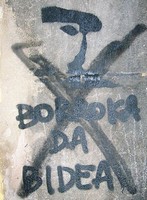
Basque nationalists have been seeking political recognition and cultural autonomy within France and Spain for decades.  Basque nationalist organizations, such as the ETA, have long sought outright independence through separatist violence, which has often been condemned as “terrorism” by the Spanish government.

Recent political shifts in Spain and France have led to changes in Basque nationalism, however.  The ETA separatists have pledged to end violence and several Basque nationalist parties now have political representation within Spain, leading to the possible end of civil conflict in the Basque region.

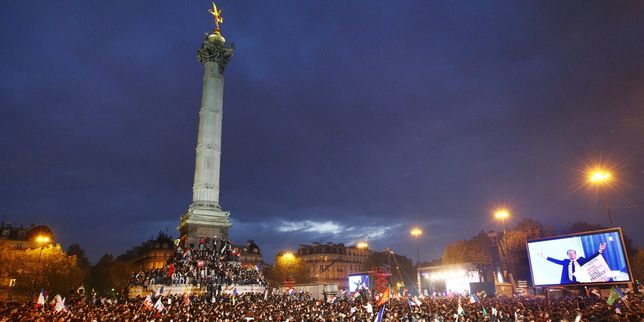
Meanwhile, mounting debts, economic weakness, and the Euro crisis have produced significant political changes within Spain. The Socialist François Hollande has just won the presidential election in France, promising changes in French politics and society.

Zoe Bray, who is an Assistant Professor at the Center for Basque Studies at the University of Nevada, Reno, has written a detailed analysis of the changing political landscape of Basque nationalism for World Politics Review.  Zoe is a friend and colleague of mine from the European University Institute in Florence, so I am pleased to read her most recent work.

Northern Illinois University students working on French and European history will be interested in Zoe Bray’s article.


Posted in Civil Conflict, European History, European Union, French History, History of Violence, Human Rights, Political Culture, Terrorism, War, Culture, and Society | Leave a comment

Human Trafficking in Europe

The European history of migration has yet to be written, but the European Union has undoubtedly created a new chapter in this complex history.  The Schengen Agreement has facilitated the free movement of peoples across borders between EU member nations and is one of the most popular aspects of the EU political structure.

Less well known is the massive increase in forced migration within the EU, as women and girls are trafficked and forced to work in the European sex industry.

Social scientists have been examining modern migration and human trafficking, but often using state-generated data. Historians are beginning to study the long-term history of migration (forced and voluntary) in new ways, so there should be new research emerging on patterns of European migration.

A new article in the EU Observer discusses the latest EU judicial report on human trafficking in Europe.

Posted in European History, European Union, Globalization, Human Rights, Women and Gender History | Leave a comment

Violence and Non-Violence in the Palestinian Conflict

Violence and non-violence have both been employed in the Palestianian conflict throughout all of the phases of the Palestinian struggle for national formation.

WBEZ’s Worldview interviews Wendy Pearlman, Assistant Professor of Political Science at Northwestern University and author of Violence, Nonviolence, and the Palestinian National Movement (Cambridge: Cambridge University Press, 2011).

Although Pearlman is a political scientist, she attempts to construct a historical analysis of violence in Palestine over the past century. Pearlman argues that Palestinians have historically utilized diverse political strategies that employ different mixtures of armed and unarmed resistance to Jewish nationalism and Israeli occupation.  Her study of non-violent resistance is relevant in analyzing the current wave of hunger strikes by Palestinians imprisoned in Israel.

Pearlman’s study also has broader implications for studying the history of violence beyond the Palestinian conflict.

Northern Illinois University students working on the history of violence, including those who have taken HIST 640 Religious Violence in Comparative Perspective will be interested in this interview and in Pearlman’s publications.

Update: NPR reports that non-violent protests such as hunger strikes are increasingly effective in the Palestinian conflict.

Posted in Civil Conflict, History of Violence, Political Culture, Religious Violence, Strategy and International Politics, War, Culture, and Society | Leave a comment

Anne Boleyn in Film

Anne Boleyn, and the Tudor English society that she lived in, continues to fascinate filmmakers and cinema audiences worldwide.

Anne was a key character in many historical films during the golden age of Hollywood. Films and television series on the Tudors have proliferated once again over the past decade.

Susan Bordo offers an analysis of portrayals of Anne Boleyn in film in the Chronicle of Higher Education. Her emphasis on “historical accuracy” and her conceptualization of “fact” and “fiction” are problematic, I think, but the article is interesting for its consideration of gender and representation in historical films depicting Tudor England.

Northern Illinois University students in HIST 390 History and Film and HIST 414 European Wars of Religion, 1520-1660 will be interested in this article, as well as Bordo’s forthcoming book.


Posted in Early Modern Europe, European History, European Wars of Religion, Historical Film, History in the Media, Noble Culture and History of Elites, Renaissance Art and History, Women and Gender History | Leave a comment

French and Greek Elections Shake up EU

This weekend’s French and Greek elections have shaken up European Union policy making, challenging the austerity measures that have been instituted in several EU member nations in an attempt to manage the Euro crisis.

NPR reports on the economic policy implications of the French and Greek elections.  NPR also has an article on the Greek elections.

Economist Paul Krugman argues in a New York Times op-ed that the elections should lead to a reversal in unproductive austerity policies across the EU.

Posted in European History, European Union, French History, Political Culture | Leave a comment