
Elon Musk and his so-called DOGE team of unelected officials, who are mostly drawn from the tech business sector, now have access to the U.S. Department of Treasury system that handles payment of all federal government payments to individuals and organizations across the nation.
The potential for gross mismanagement of U.S. citizens’ personal data and the interruption of their federal benefits (Medicare, Medicaid, Social Security, Veteran’s benefits, and others) is staggering.
The New York Times reports that “Treasury Secretary Scott Bessent gave representatives of the so-called Department of Government Efficiency access to the federal payment system late on Friday, according to five people familiar with the change, handing Elon Musk and the team he is leading a powerful tool to monitor and potentially limit government spending.”
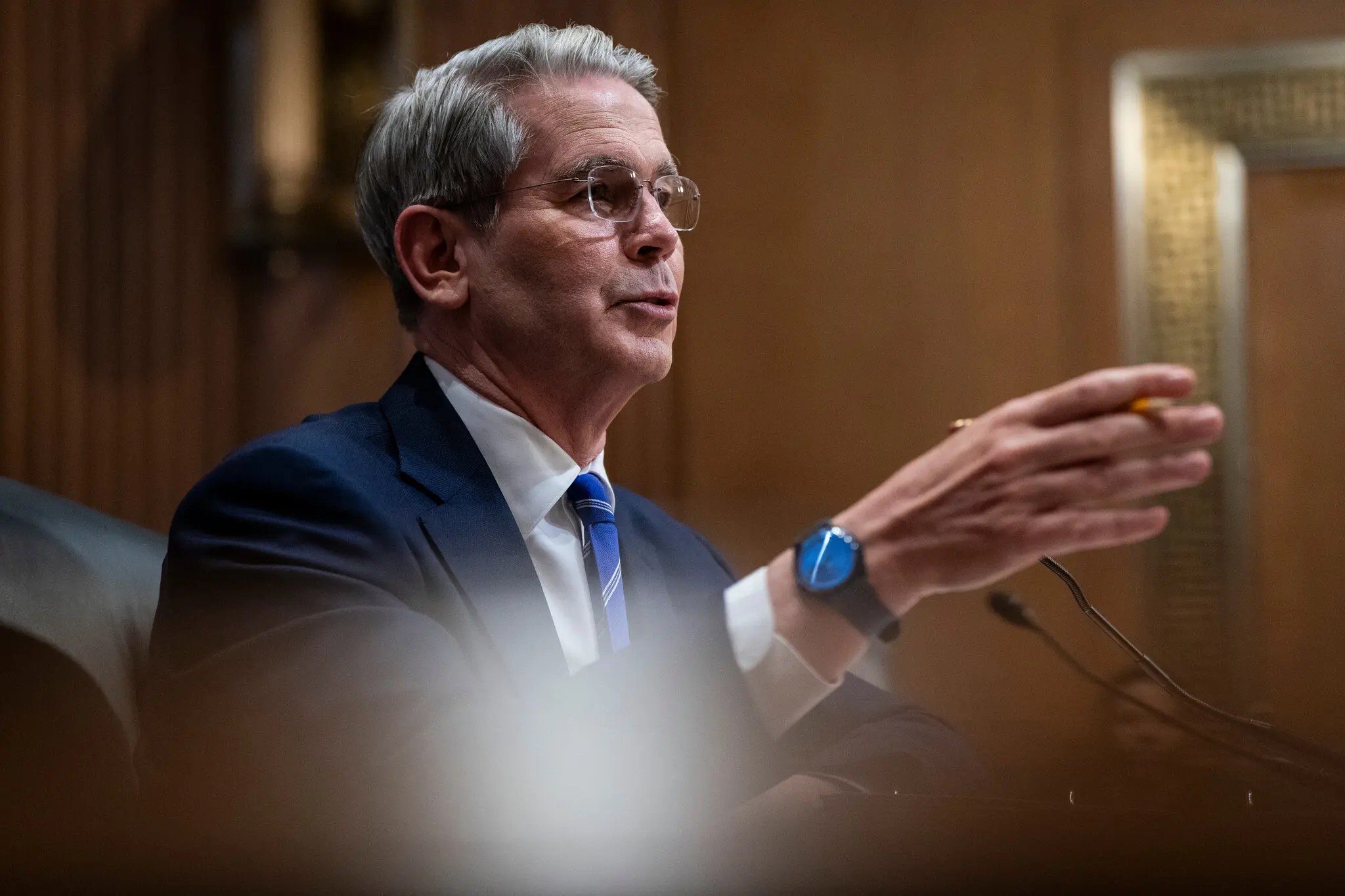
“The new authority follows a standoff this week with a top Treasury official who had resisted allowing Mr. Musk’s lieutenants into the department’s payment system, which sends out money on behalf of the entire federal government. The official, a career civil servant named David Lebryk, was put on leave and then suddenly retired on Friday after the dispute, according to people familiar with his exit.”

“The system could give the Trump administration another mechanism to attempt to unilaterally restrict disbursement of money approved for specific purposes by Congress, a push that has faced legal roadblocks. …
“In a process typically run by civil servants, the Treasury Department carries out payments submitted by agencies across the government, disbursing more than $5 trillion in fiscal year 2023. Access to the system has historically been closely held because it includes sensitive personal information about the millions of Americans who receive Social Security checks, tax refunds and other payments from the federal government,” according to The New York Times.
This move represents an assault on the U.S. Constitution and a subversion of the U.S. Congress’s “power of the purse” and federal government in general, compounding the growing constitutional crisis in the first two weeks of President Trump’s second administration.
The Treasury Secretary’s actions have the potential to affect millions of Americans directly.
The Washington Post emphasizes that “The sensitive systems, run by the Bureau of the Fiscal Service, control the flow of more than $6 trillion annually. Tens of millions of people across the country rely on the systems. They are responsible for paying Social Security and Medicare benefits, salaries for federal personnel, payments to government contractors and grant recipients, and tax refunds, among tens of thousands of other functions.”
A separate article in The Washington Post discusses the implications of the outright politicization of the federal government’s payment system: “The possibility that government officials might try to use the federal payments system — which essentially functions as the nation’s checkbook — to enact a political agenda is unprecedented. said Mark Mazur, who served in senior Treasury Department roles during the Obama and Biden administrations. ‘This is a mechanical job — they pay Social Security benefits, they pay vendors, whatever. It’s not one where there’s a role for nonmechanical things, at least from the career standpoint. Your whole job is to pay the bills as they’re due,’ Mazur said. ‘It’s never been used in a way to execute a partisan agenda. … You have to really put bad intentions in place for that to be the case.'”
U.S. historians and legal scholars are following these moves closely, as are historians of state development patterns. Historians of state development always assess state institutions and state finances closely, as these are central to the policy formulation and government operations.
I will add assessments by historians as soon as they are available, but in the meantime, here are a few key works on state development and state finances:
Blockmans, Wim, André Holenstein, and Jon Mathieu, eds. Empowering Interactions: Political Cultures and the Emergence of the State in Europe, 1300-1900. Farnham, England: Ashgate, 2009.
Brewer, John. The Sinews of Power: War, Money and the English State, 1688-1783. Cambridge, MA: Harvard University Press, 1988.
Dincecco, Mark. “The Rise of Effective States in Europe.” The Journal of Economic History 75, no. 3 (2015): 901–18.
Glete, Jan. War and the State in Early Modern Europe. Spain, the Dutch Re-
public and Sweden as Fiscal-Military States, 1500-1660. London, 2002.
Ogilvie, Sheilagh. “State Capacity and Economic Growth: Cautionary Tales from History.” National Institute Economic Review 262 (2022): 28–50.
Potter, Mark. Corps and Clienteles: Public Finance and Political Change in France, 1688–1715. Aldershot: Ashgate, 2003.
Steinmetz, George, ed. State/Culture: State-Formation after the Cultural Turn. Ithaca, NY: Cornell University Press, 1999.
Storrs, Christopher and P. G. M. Dickson, The Fiscal-Military State in Eighteenth-Century Europe: Essays in Honour of P.G.M. Dickson. Abingdon, 2009.
Tilly, Charles. Coercion, Capital, and European States, AD 990-1992. Oxford: Blackwell, 1992.
The New York Times and The Washington Post report on DOGE’s access to the Department of the Treasury’s payment system.
The Washington Post interviewed Mark Mazur for their article on the implications of the changes.


