
Paul Fussell’s The Great War and Modern Memory, a classic study of British soldiers’ writings about trench warfare on the Western Front during the First World War, is now 50 years old.
Dwight Garner, a book critic at The New York Times, offers an appreciation of Fussell’s award-winning book: “The Great War and Modern Memory turns 50 this year. It did not go unrecognized when it was published. It won a National Book Award and a National Book Critics Circle Award. In 1998, the Modern Library ranked it No. 75 on its list of the 100 best nonfiction books of the 20th century.”

Garner suggests that Fussell’s book “now seems distressingly neglected,” but this misses The Great War and Modern’s Memory’s enormous impact on studies of history and memory, which has become an entire subfield of historical studies.
Historian Jay Winter’s approach to history and memory of the First World War built on Fussell’s work, but provided a much broader base of archival sources from France and other nations and constructed a more sweeping analysis of the impact of the war on European societies.
Garner is certainly right to celebrate Paul Fussell’s powerful and evocative writing: “The Great War and Modern Memory is worth a revisit, and a new generation of readers. I would slide it forward, like a runaway checkers stone, at least 30 places on the Modern Library’s list, on writerly merit alone. It is filled with close and tragic perceptions, yet Fussell’s sentences crunch like tanks snapping woodland into twigs.”
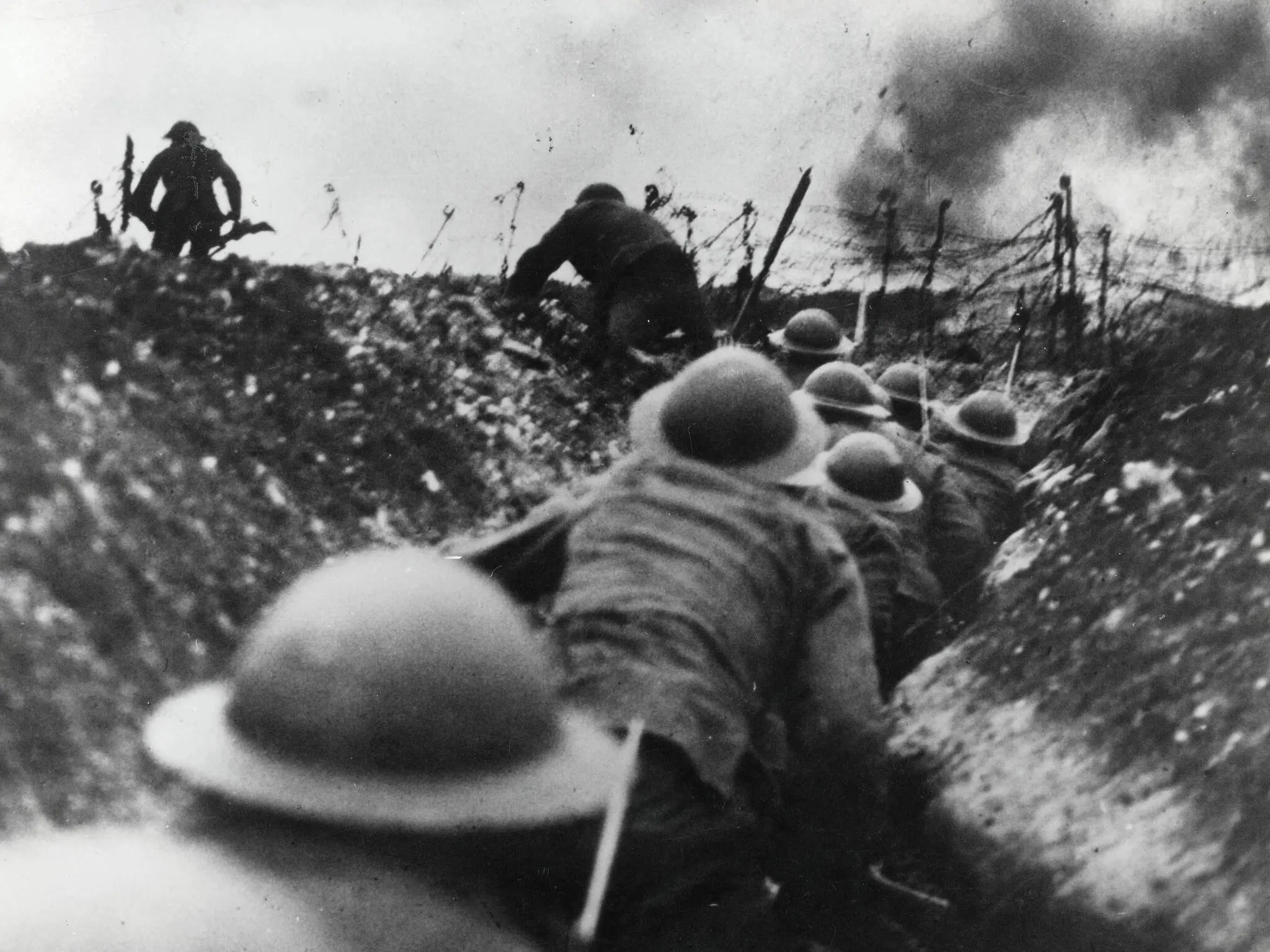
“‘Every war is ironic because every war is worse than expected,’ Fussell writes. ‘Every war constitutes an irony of situation because its means are so melodramatically disproportionate to its presumed ends.’ He stretches mortal ironies until they shiver.”
Dwight Garner’s appreciation is published in The New York Times (15 February 2025).
For an introduction to studies of history and memory of the First World War, see:
Winter, Jay. Remembering War: The Great War Between Memory and History in the Twentieth Century. New Haven, CT: Yale University Press, 2006.
Winter, Jay. Sites of Memory, Sites of Mourning: The Great War in European Cultural History. Cambridge: Cambridge University Press, 1995.
Winter, Jay and Antoine Prost. The Great War in History: Debates and Controversies, 1914 to the Present. Cambridge: Cambridge University Press, 2020.


 Brian Sandberg: Historical Perspectives
I agree Great War definitely jump-started an entire sub-branch of history, but as a work of history itself it has substantial flaws — irony was not really invented in WWI, and it brought much too strongly into the grey disillusionment mythos of the war that was largely an ex post facto creation. Fussell wrote amazingly well and I actually like his “Thank God for the Atomic Bomb” better because it connects his own lived experience to the larger point.