CIA’s Surveillance of Osama bin Laden

New details continue to emerge about the planning and execution of the raid on Osama bin Laden’s compound in Abbottabad, Pakistan.

United States government officials have now revealed that an extensive CIA team conducted surveillance of the bin Laden compound on the ground in Abbottabad for several months prior to the 1 May raid.

The Washington Postreports on this story.

Posted in History of Violence, Terrorism, War, Culture, and Society | Leave a comment

Assessing Post-Osama Transitions

Policy analysts, political strategists, and scholars continue to assess the significance of the death of Osama bin Laden for international and domestic politics around the world.

Michael Lind provides a sober assessment of the probable impact of the death of bin Laden on politics within the United States, suggesting that this event may not radically change domestic politics.  Lind believes that the formulation of a “war on terror” was “inappropriate” and misguided, but he thinks that this concept will outlive bin Laden and continue to shape American politics.

Lind’s article appears in Salon online.

Michael Lind is a co-founder of the New America Foundation and currently serves as Policy Director of New America’s Economic Growth Program.

Note: In the interest of full disclosure, Michael Lind is also a cousin of mine.

Posted in History of Violence, Terrorism, War, Culture, and Society | Leave a comment

Creating the “No 1. Public University in the U.S.”

The Board of Regents of the University of Texas system has a new plan to turn the University of Texas at Austin into “no. 1 public university in the U.S.”

The plan involves cutting tuition in half while simultaneously increasing undergraduate enrollments by approximately 18,000!

The increased enrollments would be accomplished by accepting 10% more students each year in 2013, 2014, 2015, and 2016.  The current undergraduate enrollment would thus expand from its current 38,420 to 56,251 in 2016.  If graduate enrollments remain the same, the total student enrollment at the University of Texas would grow from 51,195 to a massive 69,026 by 2016.

How the University of Texas Board of Regents would manage this massive growth in undergraduate students while simultaneously cutting tuition rates by a whopping 50% is not spelled out in their planning documents.

The only plausible answer is that the Board of Regents is contemplating increasing class sizes by approximately 150% in order to pack all the additional students into much larger classrooms, where they would be taught by approximately half the current faculty (presumably by eliminating adjunct instructor positions).  These plans may also reflect administrators’ dreams of shifting large numbers of students into online classes, but so far online classes have not saved much money for universities nationwide [see numerous reports in the Chronicle of Higher Education on this issue].

These ominous plans, far from improving public higher education, threaten the University of Texas at Austin’s reputation for excellence and its future.

The Austin American Statesman reports on the Board of Regents’ plans.  The Board’s draft document is also available as a .pdf file from this story’s website.

Posted in Education Policy, Humanities Education | Leave a comment

Illustrated Architecture Books

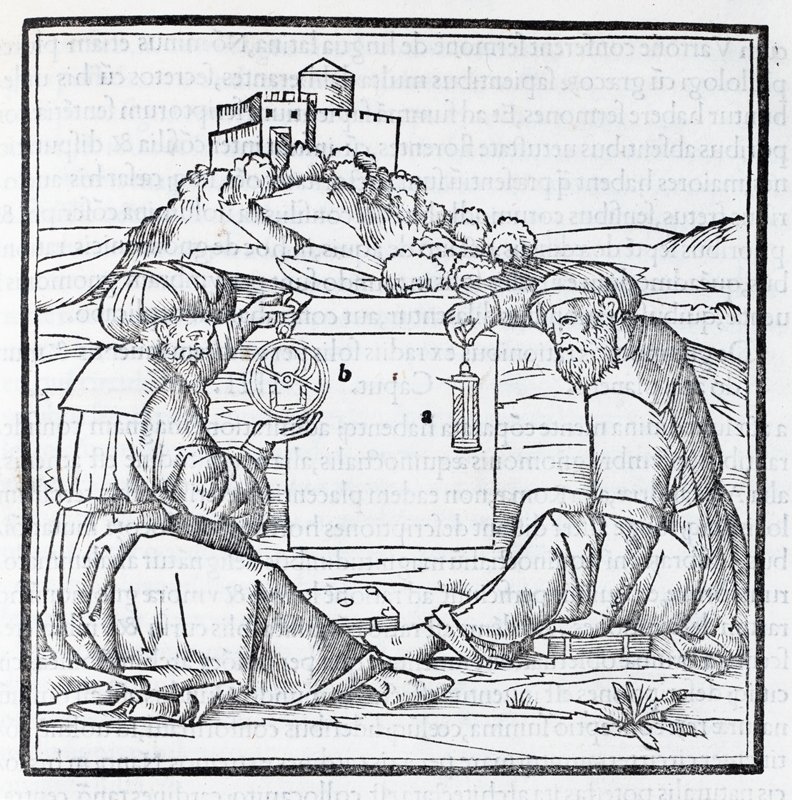
An exhibition entitled Illustrated Architecture Books: Highlights from 500 Years of Theory and Practices at the University of Illinois at Chicago celebrates the 500th anniversary of the publication of the 1511 illustrated edition of Vitruvius’s classic architectural treatise.

The Illustrated Architecture Books exhibition website has more information.  A related website for the Festival of the Architecture Book, 1511-2011 has information on related exhibits at other locations.

Students in HIST 420 The Renaissance may be interested in this exhibition, which is open to the public at UIC until 31 October 2011.

Posted in Art History, History in the Media, History of the Book, Renaissance Art and History | Leave a comment

Search for Meaning in a Post-Osama World

People around the world are now reacting to the news of the death of Osama bin Laden, which is being seen as a significant world historical event.

The military intelligence and special forces operations that led to bin Laden’s death are only beginning to be understood at this point, yet the search for the meaning of a post-Osama world has already begun.  Historians, political scientists, and journalists are attempting to gauge reactions and interpret the broader significance of bin Laden’s death.

One of the most impressive assessments of the possibilities of a post-Osama world that I have seen is Roger Cohen’s op-ed in the New York Times.

Historians can play an important role in contexualizing bin Laden’s death and understanding the broader historical patterns shaping this historical moment.  As historians weigh in on bin Laden’s death, I will update this post.

For my part, I hope that Osama bin Laden’s death provides closure for victims of the September 11 Attacks and offers opportunities to reevaluate the United States military’s role in Afghanistan, Pakistan, and Iraq.  Bin Laden’s death certainly does not eliminate Al Qaeda, religious violence, or global terrorism, but it does present possibilities to re-think how the United States responds to such threats.

Posted in Civil Conflict, Globalization, History of Violence, Religious Violence, Terrorism, War, Culture, and Society | Leave a comment

Osama bin Laden is Dead

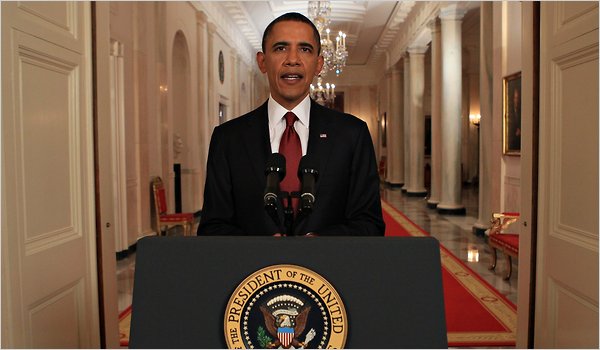
President Barack Obama announced a few minutes ago that U.S. forces have killed Osama bin Laden at a compound in Pakistan.

The video of President Obama’s speech is available at the Washington Post.  The full text of President Obama’s remarks are also available.

The New York Times reports on the President’s speech from the White House.  Details are still emerging on the nature of this special forces operation in Pakistan and reaction from around the world.

Posted in Civil Conflict, History of Violence, Religious Violence, War, Culture, and Society | Leave a comment

Merit Scholarships to Law School

Imagine winning a “full ride” scholarship to law school, potentially worth $100,000 or more.  Sounds great, right?  Be sure to read the fine print….

A report in the New York Times shows that many scholarships to law school are based on rigorous performance assessments, which are often calculated using curves.  Students who cannot maintain high grade point averages often lose their scholarships after the first year, leaving them the stark option of abandoning law school or going into massive debt in order to complete their degrees.

Many history majors and minors at Northern Illinois University and other universities plan to pursue law degrees.  Undergraduate students applying to law schools or graduate schools need to be aware of the rules for scholarships and to carefully consider how best to pursue higher degrees.

Thanks to my colleague Art Ward, who works closely with pre-law students at Northern Illinois University, for forwarding this article!

Posted in Education Policy, Humanities Education | Leave a comment

Historian Eric Foner Wins Pulitzer Prize

Historian Eric Foner has won a Pulitzer Prize for his The Fiery Trial: Abraham Lincoln and American Slavery (Norton, 2010).

The American Historical Association has a brief story about the prize on its website.

NIU students interested in the history of the American Civil War or comparative civil wars may want to check out this book.

Posted in Civil Conflict, War, Culture, and Society | Leave a comment

Women’s Access to Public Education

As discussion of education budgets for 2012 moves forward, historian Jill Lepore provides a poignant reminder of the importance of public education in the lives of women.

Jill Lepore’s op-ed, entitled “Poor Jane’s Almanac,” appears in the New York Times.

Posted in Education Policy, Humanities Education, Women and Gender History | Leave a comment

Highest Paid University Personnel at NIU

Who are the highest paid university personnel at Northern Illinois University?

The answer: the football coach is #1, the president comes in at #2.  Coaches, the athletic director, and non-academic administrators round out most of the rest of the top 15 earners at NIU.

The cost of these top 15 positions for the NIU budget: $2.7 million.  This is equivalent to 42 faculty positions at the assistant professor level!

The AAUP Faculty Salary Survey, republished by the Chronicle of Higher Education, lists the average salary of a Northern Illinois University  Assistant Professor as $64,300.  Simply divide the $2,700,000 spent on the top 15 positions by this average faculty salary to get the 42 faculty positions that could be weighed against those athletic and administrative personnel.

Read the full list and related story at the Northern Star online.

Professors will not be surprised at all by this list.  The number of non-academic administrators and the size of their salaries has continued to grow nationwide, bloating the cost of higher education. In contrast, faculty numbers and real salaries have remained flat over the past generation.  [See previous posts and numerous articles in the Chronicle of Higher Education for further information and data regarding these trends.]

Northern Illinois University students and faculty will want to consider personnel issues, as budget cuts continue throughout the Illinois’s higher educational system.

Posted in Education Policy, Humanities Education, Northern Illinois University | Leave a comment