Napoleonic War Finance in the Media

Princeton economist Paul Krugman discusses war finance during the Napoleonic Wars in his New York Times blog.

This short piece is based on an academic journal article published in the Journal of Economic History in 1991.  The article by professors Bordo and White contrasts French and British methods of financing warfare during the Napoleonic Wars.

This may be of some interest for students in HIST 423 French Revolution and Napoleon.


Posted in Comparative Revolutions, French History, French Revolution and Napoleon, War, Culture, and Society | Leave a comment

Neapolitan Music and the Camorra

A new musical movement in Naples appears to be intimately linked with the Camorra (Neapolitan mafia).

WBEZ’s Worldview offers a story on the “neomelodics.”

Posted in Italian History, Music History | Leave a comment

Thinking about Civil Conflict Comparatively

As the Libyan civil conflict (or revolution if you prefer) continues, observers continue to struggle to make sense of the divisions within Libyan society.  Libyan and North African specialists obviously have much to contribute to analyzing this conflict, but considering civil conflict comparatively may offer some additional ways of understanding the fighting in Libya.

Russell Jacoby attempts to provide such a comparative perspective in an article, based on his forthcoming book, in the Chronicle of Higher Education.

Another attempt to examine the current wave of revolutions comparatively is offered by Simon Sebag Montefiore in a New York Times op-ed.

Posted in Civil Conflict, Comparative Revolutions, History of Violence, War, Culture, and Society | Leave a comment

Academic Freedom Under Attack in Wisconsin

Noted environmental historian William Cronon is facing retaliation by politicians in Wisconsin who are using an Open Records Act request in an attempt to view Cronon’s personal and professional e-mails.  This effort is a gross abuse of the freedom of information laws and of the principle of open governmental records.  Politicians in Wisconsin made this request in direct response to Cronon’s recent op-ed piece in the New York Times, which provided historical contextualization of the recent attempts to strip Wisconsin state workers’ collective bargaining rights and criticized those efforts. This freedom of information request represents a blatant attack on a single professor’s academic freedom in an attempt to silence him.

Faculty and teachers everywhere should be concerned about this assault on academic freedom and the possibility that it could set a precedent for intimidating professors elsewhere in the United States and around the world.  William Cronon is a tenured full professor of history with an international reputation that will offer him considerable support in this legal situation.  Many other professors and teachers have no tenure protections and limited access to legal support.  As Cronon’s academic freedom is attacked, so is that of all of these more vulnerable educators.

Universities across the country are asking professors to get more involved in “service learning” and “engaged learning,” which involves professors acting as public figures in the media.  Universities trumpet their professors’ engagement in the media in order to recruit more students, win more funding, and market their institutions.  The University of Wisconsin at Madison thus proudly announced William Cronon’s op-ed in the New York Times. University of Wisconsin at Madison Chancellor Biddy Martin’s response to the open records request in this case is very disappointing.  Universities across the United States should offer a clear and unambiguous defense of professor Cronon’s academic freedom.

William Cronon’s own blog discusses this case in detail.

News services across the internet are picking up this important story.  The New York Times ran this story about the attack on Cronon.  The Chronicle of Higher Education ran this story on the case and the University of Wisconsin’s immediate response.  Paul Krugman’s blog commented on the story.  Salon ran this story.  The Nation offered this assessment.

As far as I can tell, there has still been no response by the American Association of University Professors.  Professors and teachers lack a strong professional association to protect their interests, as the AMA does for medical doctors and the ABA does for lawyers.

Ruthann Robson, a constitutional law professor at CUNY, offers this assessment of the legal issues in this case at her blog.


Posted in Academic Freedom, Education Policy, Human Rights, Humanities Education | Leave a comment

Outside the Law: A Film on the Algerian War

Outside the Law, a recent film by Rachid Bouchareb, revisits the Algerian War of the 1940s and 1950s.

Students in HIST 390 History and Film: War in Film may be interested in this film, since we will be watching the classic 1965 film, Battle of Algiers, by Gillo Pontecorvo later this semester when we discuss decolonization conflicts.

Milos Stehlik reviews Outside the Law on WBEZ’s Worldview.

Posted in Civil Conflict, Empires and Imperialism, French History, Historical Film, War, Culture, and Society | Leave a comment

Historian William Cronon on the Labor Crisis in Wisconsin

William Cronon, a prominent environmental historian at the University of Wisconsin, offers a historical perspective on the ongoing labor crisis in Wisconsin.

In an op-ed in the New York Times, Cronon heavily criticizes the state legislation (currently blocked by a court order) that would strip state employees of their collective bargaining rights.


Posted in Education Policy, History in the Media | Leave a comment

Corporations Pay No Taxes

As we near the 2011 tax deadline, taxation is on many Americans’ minds.  As citizens prepare their tax reports, it is important to remember that many corporations pay no taxes.  Many major U.S.-based corporations actually have so many tax breaks that they not only pay nothing in taxes—they actually get tax refunds from the I.R.S.

General Electric made $14.2 billion total profits last year (of which $5.1 billion was made in the United States).  G.E. paid no taxes on these massive earnings, though.  Instead, G.E. claimed a tax return of $3.2 billion!

The New York Times reports today on G.E.’s lobbying efforts to obtain and maintain the tax breaks that prevent the corporation from ever paying any taxes.

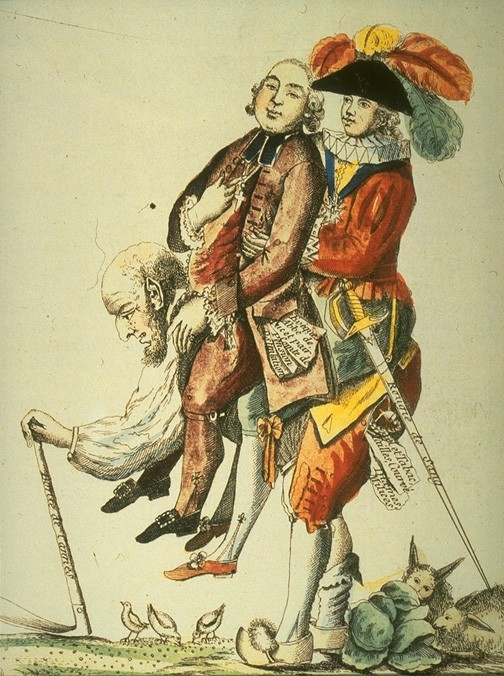
Students in HIST 423 French Revolution and Napoleon will recognize strong parallels to the tax policies of Ancien Régime France, where nobles and clergy paid no taxes, despite their control of vast wealth.

A new book by Nicolas Delalande, entitled Les Batailles de l’impôt, examines taxation policies in France from the French Revolution to today.  We need more comparative histories of taxation to understand patterns of inequities in tax policies in societies around the world.  The field of comparative revolutionary studies could especially benefit from such histories of taxation.

Posted in Comparative Revolutions, French Revolution and Napoleon, History in the Media | 1 Comment

Robert Darnton on the Google Books Settlement

French historian Robert Darnton, who is Director of the Harvard University Library, assesses this week’s court decision throwing out the Google Books settlement in an op-ed in the New York Times.

Darnton’s expertise on the history of the book and of printing gives him a rather unique historical perspective on current projects to build digital libraries.

Students in HIST 423 French Revolution and Napoleon read one of Robert Darnton’s books earlier this semester.


Posted in Digital Humanities, French History, History of the Book, Humanities Education | Leave a comment

Remembering the Triangle Factory Fire

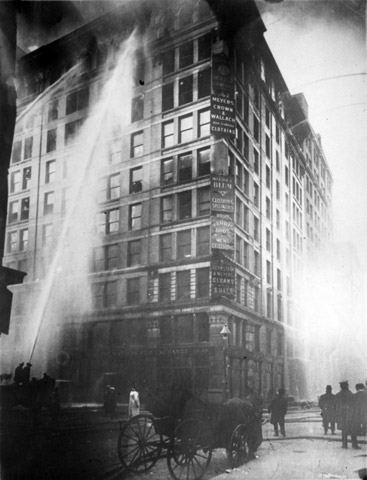
The 100th anniversary of the Triangle Factory Fire disaster in New York is tomorrow.  On 25 March 1911, 146 workers were killed at the Triangle Waist Company in Manhattan.  The tragedy led to new rules for workplace safety.

NPR offers a remembrance here.

Cornell University has a website on the Triangle Factory Fire at the ILR School.

Posted in History in the Media, Women and Gender History | Leave a comment

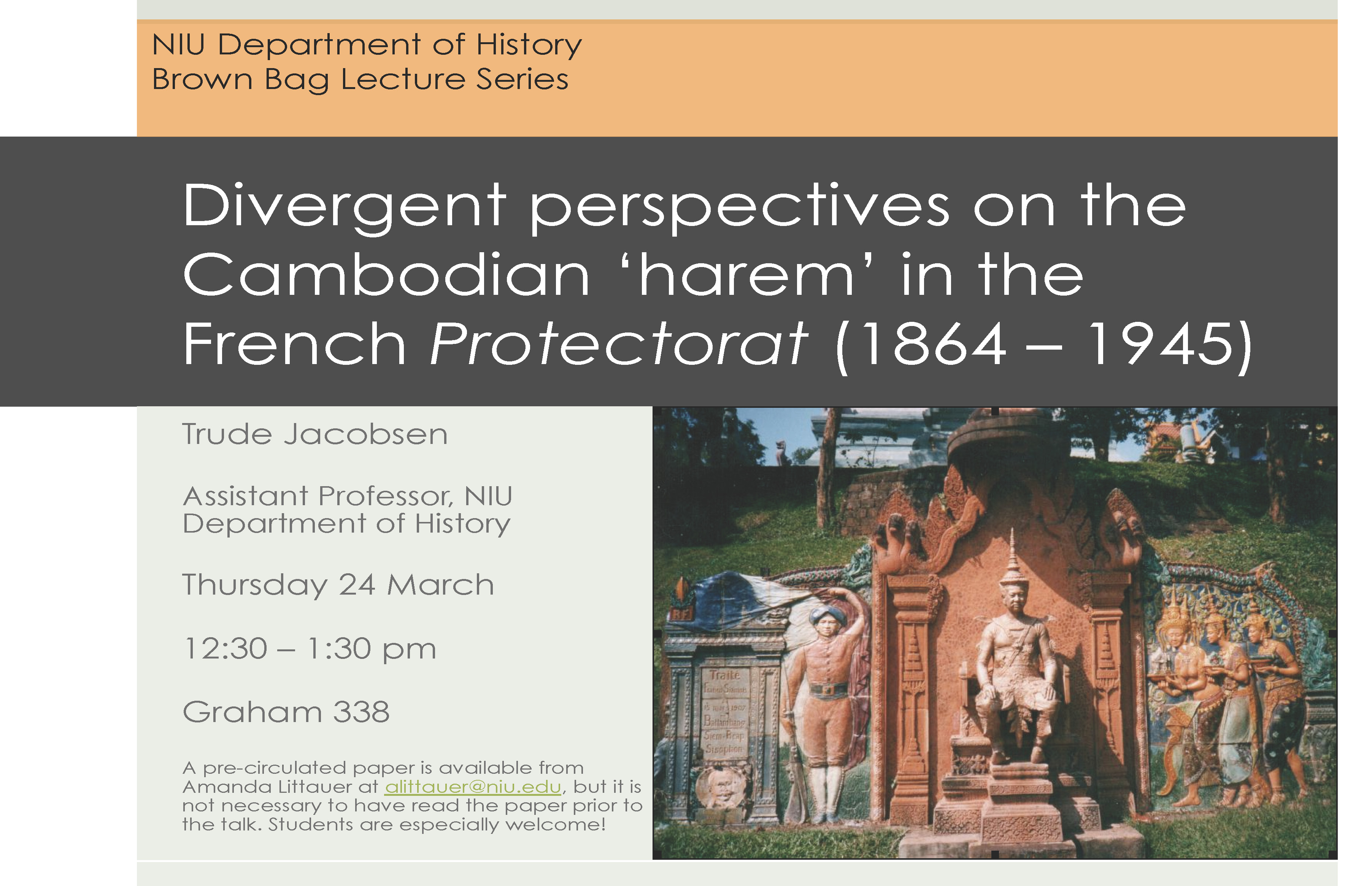
Trude Jacobsen Presentation Tomorrow at NIU

Posted in Empires and Imperialism, French History, History of Violence, Northern Illinois University, Women and Gender History | Leave a comment