University of Wisconsin’s Stance on Academic Freedom

The University of Wisconsin at Madison has taken a weak stance regarding the politically-motivated open records request on Professor William Cronon’s e-mails.

The Chronicle of Higher Education reports that the University of Wisconsin at Madison will comply with the request, releasing some of Professor Cronon’s e-mails when they are not of a personal nature.

The University of Wisconsin at Madison has failed to defend the principle of academic freedom and has refused to consider the status of professors.  Wisconsin’s open records legislation appears to define professors as individuals who would not be considered as government personnel for the purposes of open records requests (see previous post).  However, the University of Wisconsin lawyers apparently do not want invoke the legislation to challenge the request.  See a commentary in the Wisconsin State Journal by two political science professors on the distinction between a government official (who holds power and therefore must be held accountable to the public by open records laws) and a government employee (who holds no official power and therefore is no subject to open records laws).  Faculty members at public universities (as state government employees) are subject to having their e-mails checked by their employers, but should not be legally subject to open records requests.

The university’s weak stance in this case sets a terrible precedent for other universities to use in future cases of FOIA requests.  The result damages the principle of academic freedom and weakens American higher education.

Posted in Academic Freedom, Education Policy, Humanities Education | Leave a comment

Religious Intolerance and Violence

An episode of religious intolerance in the United States — the burning of a copy of the Qur’an — has provoked a new wave of religious violence in Afghanistan.

A Florida pastor and his congregation burned a Qur’an recently, outraging Muslims around the world when the news of the burning went global.  Crowds in Afghanistan have targeted vulnerable aid workers who are perceived to be Western, apparently in direct retaliation for the book burning.

The New York Times covers these episodes of intolerance and violence.  Graduate students from HIST 640 Religious Violence in Comparative Perspective last semester will be interested in this story.


Posted in Civil Conflict, History of Violence, Religious Violence, War, Culture, and Society | Leave a comment

Record Low University Acceptance Rates

New data early reports from universities and colleges across the country suggests that there will be record lows in acceptance rates of applicants for admission to the 2011-2012 academic year.  Elite private universities such as Harvard and Stanford admitted as few as 6.17% and 7.07% of applicants, respectively.  Many public universities, such as UCLA, admitted as few as 25.28%.  These numbers, of course, indicate that there are record highs in the number of applicants seeking university admission.

The Choice blog at the New York Times has a chart showing the early data.

A related forum debate at the New York Times provides interpretation of these numbers, as well as the broader the admissions process.


Posted in Education Policy, Humanities Education | Leave a comment

Crisis Mapping of Conflict Zones

The United Nations has launched an initiative to do “crisis mapping” of conflict zones, such as Libya, using social media online.

The Chronicle of Higher Education has a story about how academics around the world are participating in the UN effort at crisis mapping of the Libyan civil war.  See the Crisis of Libya Map, sponsored by the United Nations Office for the Coordination of Humanitarian Affairs.

Posted in Civil Conflict, Comparative Revolutions, Digital Humanities, History in the Media, Humanities Education, War, Culture, and Society | Leave a comment

Becoming a Man in the Age of Revolutions

Professor Dena Goodman, a historian of women and gender in the Enlightenment and French Revolution at the University of Michigan, will be presenting a lecture on “Becoming a Man in the Age of Revolutions” at the Newberry Library in Chicago on Saturday, April 9, 2011 at 1:00 p.m.

The event description at the Newberry Library reads: “Professor Goodman seeks to complicate the picture of nineteenth-century reactionary aristocrats and modern republicans by bringing an eighteenth-century perspective to bear on French revolutionary and post-revolutionary culture and society. Her paper will trace the life and career of a boy born less than a decade before the start of the French Revolution and asks how he became a man—and what kind of a man he became—through the successive upheavals of French history, from the Revolution and the Terror through the restoration of the monarchy and the regimes that followed. She argues that he became a ‘new man’ of the nineteenth century only by drawing on family ties and patronage networks deeply embedded in the ancien regime of the seventeenth and eighteenth century.”

Graduate students at Northern Illinois University, as well as students in HIST 423 French Revolution and Napoleon may be interested in attending this lecture.

Posted in Comparative Revolutions, Early Modern Europe, French History, French Revolution and Napoleon, Northern Illinois University, Women and Gender History | Leave a comment

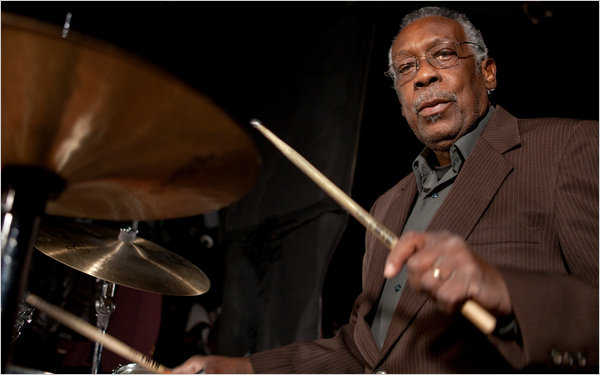
Legendary Drummer Seeks Royalties

The legendary drummer Clyde Stubblefield is seeking royalties for his much-sampled beats, which have been re-used by thousands of musicians.  Stubblefield’s influential drumming style is considered a crucial aspect of the music history of modern rock, funk, rap, and hip-hop.

Stubblefield was the drummer for James Brown on his hit “Funky Drummer,” (1970).  His drum parts for this song are sometimes considered the most-sampled sequences of any musical sequences.  His struggle for recognition and financial compensation will be significant for future drummers and other accompanying musicians.

Read about Stubblefield’s influential drumming in the New York Times.  Recent stories have also appeared in NPR and various drumming publications.

Posted in Digital Humanities, Music History | Leave a comment

Expanding Use of FOIA Requests on Faculty Members

Now that the news of an open records request on University of Wisconsin Professor William Cronon has gone viral, other faculty at public universities are already being targeted by politicized FOIA requests, as a story in the New York Times indicates.

These requests seem to violate the purpose of FOIA laws and clearly represent attacks on academic freedom.  I think that faculty and lawyers need to examine FOIA laws to determine whether faculty at public universities can legitimately be targeted with FOIA requests.

The Wisconsin Open Records Law states that:

“19.31  Declaration of policy. In recognition of the fact that a representative government is dependent upon an informed electorate, it is declared to be the public policy of this state that all persons are entitled to the greatest possible information regarding the affairs of government and the official acts of those officers and employees who represent them. Further, providing persons with such information is declared to be an essential function of a representative government and an integral part of the routine duties of officers and employees whose responsibility it is to provide such information. To that end, ss. 19.32 to 19.37 shall be construed in every instance with a presumption of complete public access, consistent with the conduct of governmental business. The denial of public access generally is contrary to the public interest, and only in an exceptional case may access be denied.”

But, this power to compel state “authorities” or “employees” to produce documents is limited by provisions of 19.32 and 19.37.

The provisions of 19.32 seem to exempt University of Wisconsin faculty from Open Records Act requests.  Provision 19.32 (4) defines “state public office”: “‘State public office’ has the meaning given in s. 19.42 (13), but does not include a position identified in s. 20.923 (6) (f) to (gm)” [my emphasis].

The exception identified in 20.923 (6) (f) is: “University of Wisconsin System: deans, principals, professors, instructors, research assistants, librarians and other teachers, as defined in s. 40.02 (55), the staff of the environmental education board, and instructional staff employed by the board of regents of the University of Wisconsin System who provide services for a charter school established by contract under s. 118.40 (2r) (cm).”

So, University of Wisconsin administrators are covered by the act, but not the academic and educational personnel, including “deans, principals, professors, instructors, research assistants, librarians and other teachers.”

I am not a lawyer, so I have no expertise on this issue.  This post represents my own reading of the Wisconsin Open Records Act, which is available online.  Several constitutional lawyers have commented on this issue online, including Professor Ruthann Robson, who points out on her blog that:

The most recent Court opinion regarding a First Amendment challenge to a state FOIA request was the June 2010 decision in Doe v. Reed, in which the Court considered a request under Washington’s state open records law to reveal the signatories for a ballot initiative to revoke the same-sex civil union law. In Reed, the Court articulated an “exacting scrutiny” standard, “requiring a ‘substantial relation’ between the disclosure requirement and a ‘sufficiently important’ governmental interest.” To withstand this scrutiny, “the strength of the governmental interest must reflect the seriousness of the actual burden on First Amendment rights.”

In Reed, the government interests were “preserving the integrity of the electoral process by combating fraud, detecting invalid signatures, and fostering government transparency and accountability” and that these sufficed to defeat the First Amendment challenge to the disclosure of referendum signatures.

This decision, combined with the provisions of the Open Records Act mentioned above, suggests that the records of faculty members who are not holding “state public office” do not seem to be counted as public records, and therefore should not be subject to Open Records Act requests.


Posted in Academic Freedom, Education Policy, Humanities Education | Leave a comment

Anthony Grafton Comments on the Cronon Affair

Anthony Grafton, an early modern European historian and current President of the American Historical Association, has published a comment on the political attacks on William Cronon in the New Yorker.


Grafton provides contextualization and commentary, referring to this growing controversy as “the Cronon Affair.”

Posted in Academic Freedom, Education Policy, Humanities Education | Leave a comment

American Historical Association Supports Cronon

The American Historical Association has issued a statement supporting Professor William Cronon against Wisconsin politicians who are seeking access to his e-mails.  For those readers not familiar with this case, see my previous postings about this abuse of freedom-of-information laws.  This FOIA request seems to be intended to intimidate an individual professor who commented on policy issues and current events in a blog and an op-ed on the basis of his expertise.  I am glad to see that the AHA is backing professors’ academic freedom and hope that other educational and research organizations will do so as well.

See the AHA statement here.

Support for William Cronon continues to pour in from academic, research, and educational institutions from across the United States.  The American Association of University Professors has issued a statement urging the University of Wisconsin at Madison not to comply with this open records law request.

Posted in Academic Freedom, Humanities Education | Leave a comment

Of Pirates, Empire, and Terror

An interview with Lauren Benton and Dan Edelstein, authors of two new books on piracy, imperialism, and violence appears in a recent issue of the academic journal Humanity.

Lauren Benton’s book, A Search for Sovereignty: Law and Geography in European Empires, 1400-1900 (Cambridge: Cambridge University Press, 2010), concerns the legal history of imperialism.

Dan Edelstein’s The Terror of Natural Right: Republicanism, the Cult of Nature, and the French Revolution (Chicago: University of Chicago Press, 2009), offers a legal history and political theory of the rationale for the Terror during the French Revolution.

This piece should be interesting for readers concerned about current issues of piracy, imperialism, and terror, as well as students in HIST 423 French Revolution and Napoleon.

The interview can be found at Humanity online at the Project Muse database.


Posted in Early Modern Europe, Early Modern World, Empires and Imperialism, French History, French Revolution and Napoleon, Globalization, Piracy, War, Culture, and Society, Warfare in the Early Modern World | Leave a comment