
I recently came across an article from the American Historical Association’s Perspectives examining historical films portraying the American Civil War since Glory.
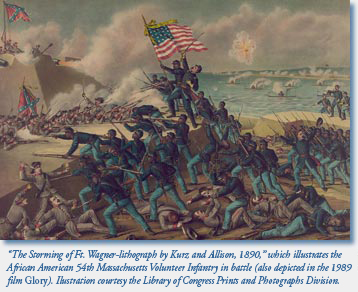
Students in HIST 390 History and Film: War in Film may be interested in this article.
I recently came across an article from the American Historical Association’s Perspectives examining historical films portraying the American Civil War since Glory.
Students in HIST 390 History and Film: War in Film may be interested in this article.
A new article by the Under Secretary for International Trade at the U.S. Commerce Department treats Higher Education in the United States as an exportable commodity.
Undoubtedly American higher education involves study abroad programs, student exchange programs, international student recruitment, institutional agreements between universities, and international research cooperation. However, I wonder whether these complex academic and educational relationships are really best described by the formulation of “exporting” higher education.
The Under Secretary’s support for higher education is certainly welcome, especially in the current climate of budget cutting, but his notion of higher education as an export commodity needs to be considered carefully by academics and educators.
The Under Secretary’s piece appears in the Chronicle of Higher Education.
Between Friction and Collaboration: Imperial Elites and Local Powerbrokers
Northwestern University, 15-16 April 2011
Northwestern University is hosting an upcoming conference on imperialism, entitled “Between Friction and Collaboration: Imperial Elites and Local Powerbrokers.”
Graduate students at Northern Illinois University working on comparative empires, and the history of violence, and early modern global history will be interested in this conference, which features specialists on the British, French, Spanish, and Ottoman empires. A session on theories of empire will also be held.
A detailed program is available online at the Keyman Modern Turkish Studies Program website at Northwestern University.
French military intervention in the Libyan civil war has prompted new thinking about French military policies and about international politics in the Mediterranean region.

Le Monde published a debate between several experts on Mediterranean culture and politics, including the historian Emmanuel Le Roy Ladurie. Find the Le Roy Ladurie’s piece here and the entire debate online at Le Monde.
Students in HIST 423 French Revolution and Napoleon, as well as students planning on taking my upcoming course HIST 458 Mediterranean World, may be interested in reading this debate.
State legislatures in a number of states are considering laws that would allow guns (in some cases including concealed handguns) on university and college campuses.
In some states, such legislation appears to be voluntary—permitting higher education institutions to decide whether or not to allow guns on campuses.
In other states, legislation would clearly require universities and colleges to comply with state law, forcing higher education administrators to allow guns on their campuses.
Arizona is one of the first states to pass legislation mandating that guns be permitted on campuses. The Chronicle of Higher Education reports on this story.
Faculty and students at Northern Illinois University will be interested in following these developments, since the presence of firearms on campus remains a sensitive issue in the wake of the 2008 shootings at NIU.
France is suddenly very active in African conflicts, with major military interventions in Libya and the Ivory Coast.
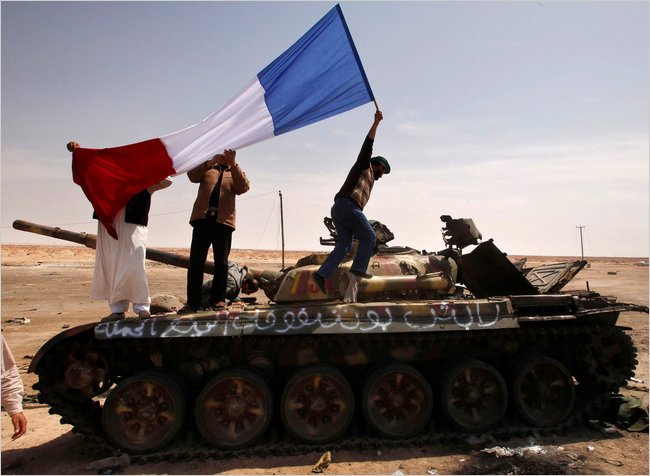
French forces have long been involved in the Ivory Coast and in other west African nations where France arguably still has neocolonial relationships. But, France is now intervening directly to topple Laurent Gbagbo.
French policy toward Libya has changed radically following the outbreak of civil warfare there. France, which had had a policy of rapprochement with Libya recently, has taken the lead in NATO and in airstrikes on Qaddafi’s forces. Policy analysts have varying explanations for France’s new military activity, including: humanitarian impulses, strategic imperatives, NATO leadership, defense policy, international arms marketing, masculine posturing, and Nicholas Sarkozy’s electoral campaign.
The New York Times published an article discussing these issues. NPR covers the role of the Armée de l’Air, or French Air Force, which has been leading the NATO airstrikes in Libya. Reuters reports on how the French airstrikes showcase its Rafale and Mirage fighters for the international arms market. For broader coverage of French intervention in Libya and the Ivory Coast in French language, see Le Monde and Liberation online.
The never-ending hunt for the “real” woman portrayed in Leonardo da Vinci’s Mona Lisa is taking a new twist. In the latest CSI-meets-art history research, an Italian art historian is attempting to locate and exhume the body of Lisa Gherardini, a woman who may have been the model for da Vinci’s painting. New scientific approaches involving DNA research, body imaging, infrared scanning, and forensic analysis are being used to analyze a variety of early modern subjects—from Cosimo I de’ Medici’s clothing to Ferdinando I de’ Medici’s possible poisoning to Leonardo da Vinci’s lost Battle of Anghieri.
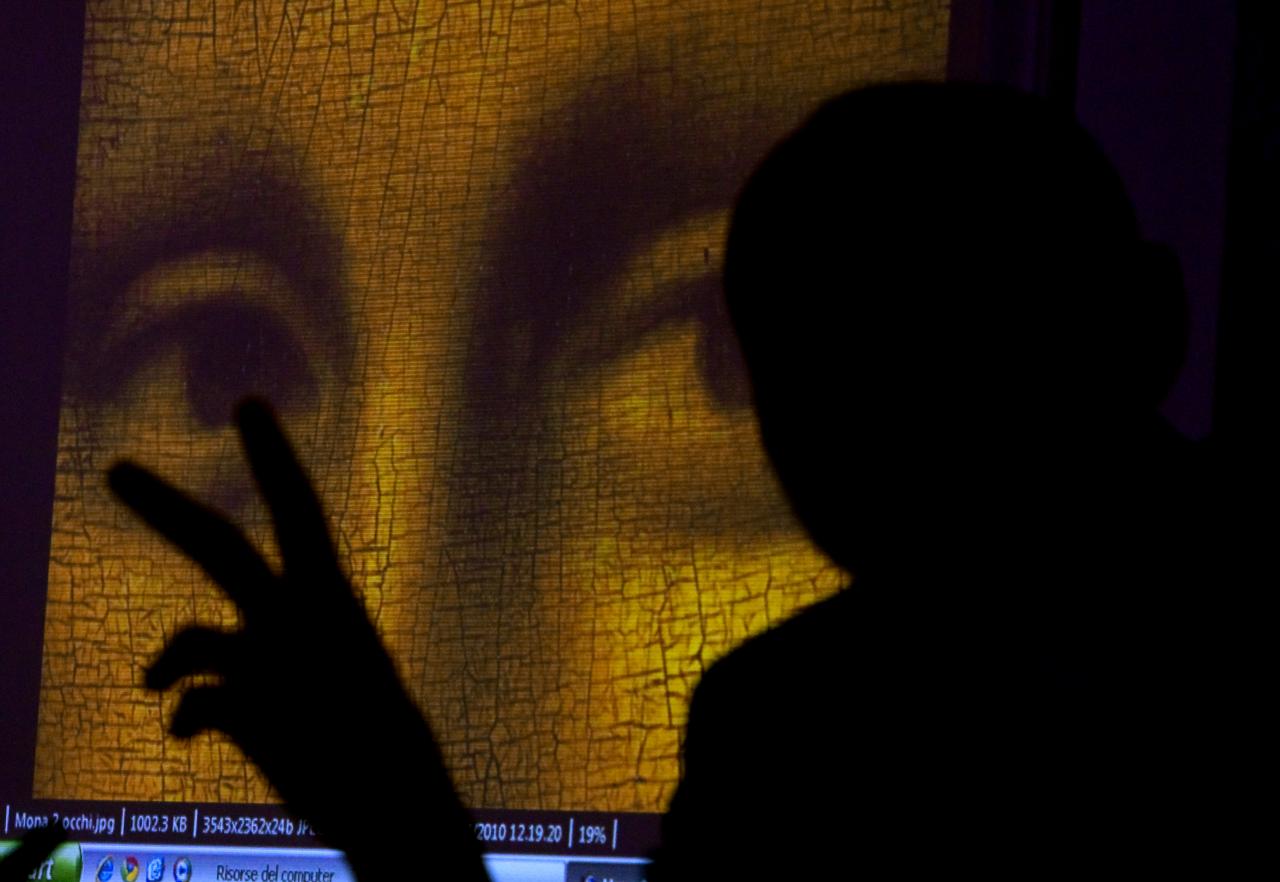
Read about the hunt for the “real” Mona Lisa at the Associated Press.
Students in HIST 420 The Renaissance will be particularly interested in this story.
The Renaissance comes to life on a new TV series on Showtime, beginning tonight. The series is entitled The Borgias, starring Jeremy Irons as Pope Alexander VI.

See a trailer and further information on The Borgias on Showtime’s website.
Students in HIST 390 History and Film: War in Film and HIST 420 The Renaissance may be interested in this new series.
The French Revolution is featured in a recent episode of Milt Rosenberg’s Extension 720 on WGN Radio. French historians David Jordan (University of Illinois at Chicago) and Paul Cheney (University of Chicago) are guests on the show.
David Jordan has written several books about Maximilien Robespierre and the trial of Louis XVI. Paul Cheney is the author of a recent book on the political economy of eighteenth-century France.
Students in HIST 423 French Revolution and Napoleon and graduate students at Northern Illinois University will be interested in this show. The episode is available streaming online at Extension 720.
Thanks to graduate student Bethany Aidroos for identifying this piece and forwarding the link!
First Annual Environmental Film Festival
On April 19 and 20, The Institute for the Study of the Environment, Sustainability, and Energy at Northern Illinois University will host its first annual environmental film festival at the Egyptian Theatre, 135 N. 2nd Street, DeKalb, IL.
Is Change a “Dirty” Word? is the theme of this year’s festival, which will feature four environmental documentaries, an environmental art exhibit and a panel discussion about how to become locally involved in positive environmental change. Those who attend three of the four films will be entered into a prize drawing.
Wednesday night’s films are Burning the Future: Coal in America showing at 6:30 PM and The Green House. Design it! Build it! Live it! showing at 8:45 PM. Thursday night’s films are Living Downstream showing at 6:30 PM and Dirt! The Movie showing at 8:15 PM, followed at 9:45 PM by the panel discussion “Moving Forward.” Refreshments will be sold in the lobby.
The Institute for the Study of the Environment, Sustainability, and Energy is a new initiative at Northern Illinois University. Visit us at http://www.niu.edu/ese for more information and a complete list of our campus, community, and business partners.
Contact:
Melissa Burlingame
mburlingame@niu.edu
340 Montgomery Hall
Northern Illinois University
DeKalb, IL 60115
815-753-6563
 | total900 on The Great War and Modern Memor… |
| Remembering the Stor… on Siege Warfare and the Storming… | |
 | Tyrone on The Roman Colosseum and Gladia… |
 | Gregory Hanlon on Ancient Battlefield Archaeolog… |
 | Sylvia Scoggin on Ukraine War |
 Brian Sandberg: Historical Perspectives