University Administrators’ Salaries

Salary inequities continue to get worse at universities and colleges across the United States.  Over the past generation, the number of administrators have grown, while faculty numbers have remained almost constant.  Those administrators’ salaries have also ballooned, while faculty salaries have flat-lined (adjusting for inflation).

Now, the American Association for University Professors (AAUP) has published a new annual salary report showing that university presidents’ salaries have continued to increase during the latest recession (academic years 2007-2008 through 2010-2011).  The AAUP reports that “During this recessionary period, the average salary increase for presidents was twice the average faculty salary increase at public institutions and nearly three times the faculty salary increase at private institutions. Such a disproportionate increase in compensation for a single individual is an indication of misplaced institutional priorities—especially when faculty members and other higher education employees have been faced with involuntary unpaid furloughs, hiring and salary freezes, and cuts to benefits.”

See the AAUP’s summary or the entire 2010-2011 report online.  See the Chronicle of Higher Education or the New York Times for additional reporting on this issue.

Faculty and graduate students at Northern Illinois University should be aware of the issues raised by the AAUP’s report.
Posted in Education Policy, Humanities Education | Leave a comment

France Bans Niqab

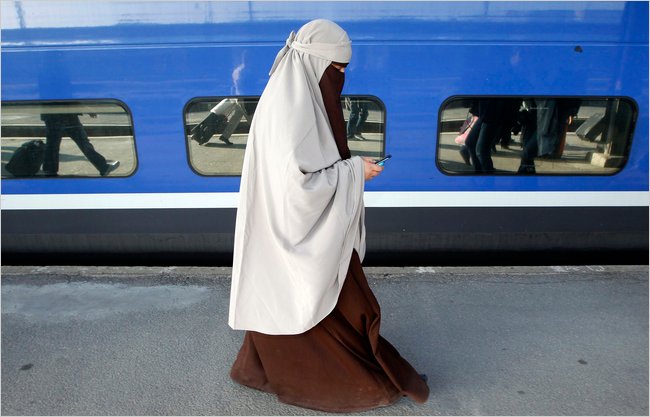
France is implementing a recent law banning the niqab, or full-face veil, in public spaces.  The French notion of laïcité, a version of secularism, is being used to justify outlawing the niqab, as well as to argue for banning other forms of veils.

Women’s rights advocates in France are split on this issue, with some feminists seeing the niqab as a sign of oppression of women and others arguing that women have the right to choose their own attire.  The law stipulates strong punishments for individuals who force women to wear the niqab, suggesting that its authors assume that Muslim women would not voluntarily choose to wear the niqab.  Very few French women currently wear the full-face veil, but the law would also apply to tourists and other visitors to France.  Some critics of the law argue that the law is motivated by racism, anti-Islamic sentiment, and neo-imperial concerns in France.  The ban clearly raises a number of questions about human rights, women’s rights, individual choice, and racism in France and the European Union.

This story will prompt reflections by historians familiar with sartorial regulations, sumptuary laws, and religious conflicts in the early modern period.  My own research deals with the formation of early notions of religious coexistence in seventeenth-century France, which later became known as laïcité.  The concept of laïcité has often been linked with human rights discourses and revolutionary action, but it can also be closely associated with restrictions on individual and collective rights.

Students who have taken HIST 640 Religious Violence in Comparative Perspective, HIST 414 European Wars of Religion, or HIST 458 Mediterranean World may be interested in this issue.

The New York Times reports on the implementation of the ban on the niqab.

Posted in French History, Globalization, Human Rights, Mediterranean World, Religious Violence, Women and Gender History | Leave a comment

“Books as Bombs”

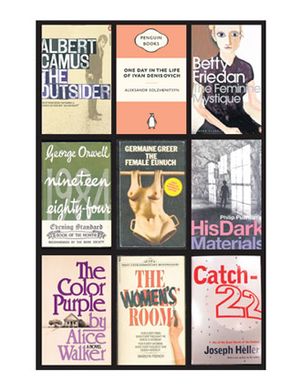
The potential of books to shape ideas and policies is often debated, but a new piece on “books as bombs” in the Independent offers a short introduction to the issue—using Catch-22 as a key example.

Check out the piece on the Independent online.

Students interested in history of the book and information technologies will be interested in this article.

Posted in Digital Humanities, History in the Media, History of the Book, War, Culture, and Society | Leave a comment

New Book on La Grande Illusion

Jean Renoir’s film La Grande Illusion (1937) is a brilliant film set in a prisoner-of-war camp during the First World War.

A recent book by Martin O’Shaughnessy reexamines this classic film:

Martin O’Shaughnessy. La Grande Illusion (London and New York: I.B. Tauris, 2009).

H-France has published a review of the book.  A book description may be found at Amazon.com.

This book may interest some students in HIST 390 History and Film: War in Film.

Posted in French History, Historical Film, Uncategorized, War in Film, War, Culture, and Society | Leave a comment

New French Military Policy

Nicolas Sarkozy has suddenly developed a new French foreign policy that stresses aggressive military intervention.  The French Armée de l’Air has intervened powerfully in the Libyan civil war and French ground forces are on the ground in the Ivory Coast [see my previous posts on these issues].

Nicole Bacharan, a French political scientist, was interviewed on NPR this weekend about Sarkozy’s new military interventionism.


Posted in Civil Conflict, Empires and Imperialism, French History, War, Culture, and Society | Leave a comment

Bunga Bunga Jokes

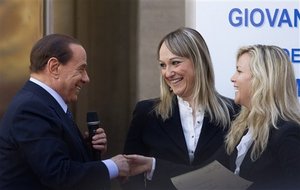
Italian Premier Silvio Berlusconi continues to ridicule Italian women and the Italian justice system as his latest trial moves forward.

Berlusconi’s latest mode of ridicule is to “invite” young women to “bunga, bunga” parties during a ceremony honoring college graduates.  This sort of sexist behavior has become the norm in Berlusconi’s Italy and no longer appears as a political gaffe to many people in Italian society.  Italian feminists and women’s rights activists have rallied against Berlusconi’s abusive attitude toward women this spring, but nothing seems to have changed in Italian politics.

Given Berlusconi’s ability to maneuver with impunity so far, it is not clear whether the joke will be on Berlusconi or on Italy in the end.

Read more about Berlusconi’s recent comments and his trial at NPR.

Posted in Italian History, Women and Gender History | Leave a comment

Warrior Pursuits in Libraries

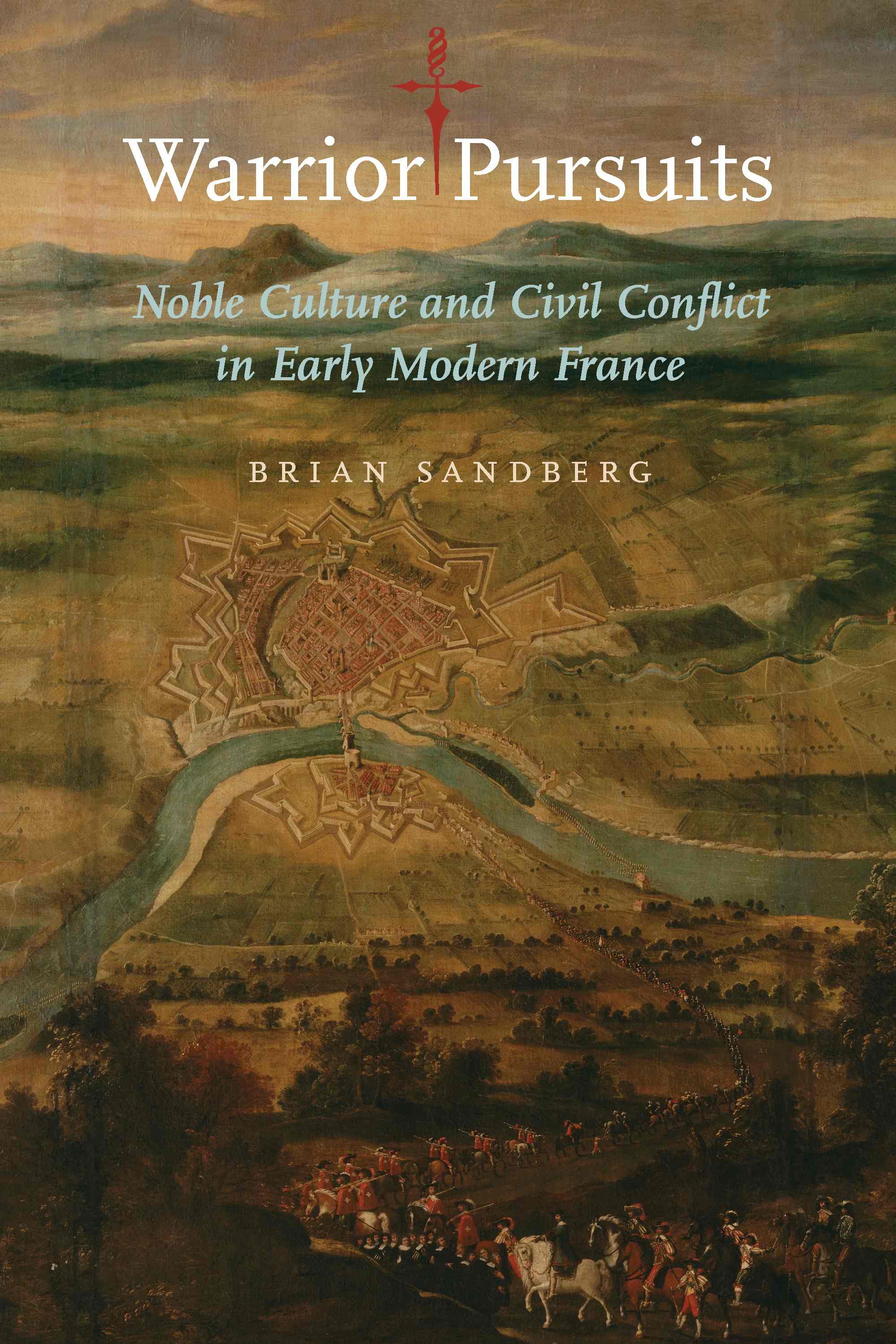
Warrior Pursuits is now available at a library near you.

I am pleased to see that Warrior Pursuits has now been cataloged in 144 libraries worldwide.

WorldCat online catalog allows you to search for books in libraries near you.  Try searching for a book using your zipcode to find the nearest copy of your favorite book.

Posted in Current Research, French Wars of Religion, Warfare in the Early Modern World | Leave a comment

Nabil Matar Lecture

Nabil Matar (Presidential Professor, Departments of English and History, the Religious Studies Program, University of Minnesota)

“Henry Stubbe and the first use of Christian Arabic sources about Muhammad”

Friday 15 April 2011, 4:00 pm

Pick 016

University of Chicago

Co-sponsored by the Renaissance Workshop and the Middle East History and Theory Workshop.

Graduate students in early modern history at Northern Illinois University may be interested in this lecture by a prominent scholar of early modern Muslims and the Mediterranean world.

Posted in Current Research, Early Modern Europe, Early Modern World, Empires and Imperialism, Globalization, Mediterranean World | Leave a comment

Guns in Film

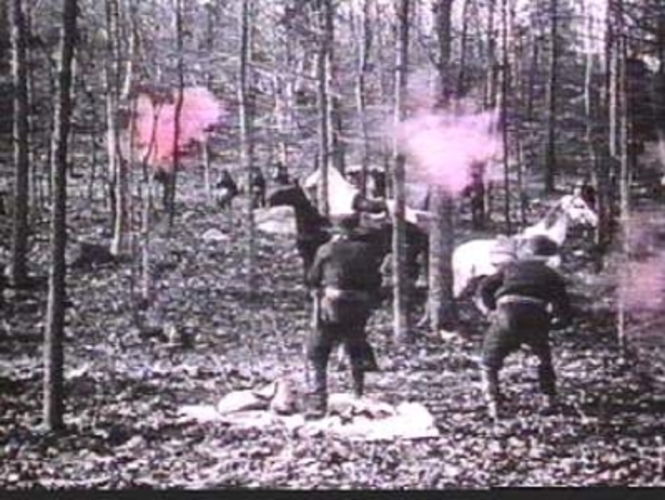
When did guns become pervasive in film?  Perhaps earlier than you imagine….

This is a shootout scene from The Great Train Robbery (1903).

Milos Stehlik, of Facets in Chicago, considered the portrayal of guns in film recently on WBEZ’s Worldview.

Students in HIST 390 History and Film: War in Film may want to check out his piece online at Worldview.

Posted in Historical Film, History of Violence, War in Film | Leave a comment

Nuclear Disaster in Japanese Film

Chicago’s Worldview featured a story today on “Nuclear Disaster in Japanese Film,” by Facets film commentator Milos Stehlik.  This piece does not really have any great new revelations, but does provide a nice introduction to nuclear nightmares in postwar Japanese filmmaking.

Students in HIST 390 History and Film: War in Film may be interested in this piece.

Posted in Environmental History, History of Violence, War in Film, War, Culture, and Society | Leave a comment