Declaring Rights

Some thoughts on human rights and political rights as I prepare for my HIST 423 French Revolution and Napoleon discussions this week on the constitutional guarantees debated and passed by the National Assembly in August and September 1789….

Consider the first three articles of the Declaration of the Rights of Man and Citizen (26 August 1789), here in a translation by historian Lynn Hunt:

1. Men are born free and remain equal in rights. Social distinctions can be based only on common utility.

2. The purpose of all political association is the preservation of the natural and imprescriptible rights of man. These rights are liberty, property, security, and resistance to oppression.

3. The principle of all sovereignty resides essentially in the nation. No body and no individual may exercise authority which does not emanate expressly from the nation. …

The concepts of freedom, equality, rights, political association, and sovereignty enunciated here seem very far indeed from those experienced in modern “democratic” societies.  In some ways rights have greatly expanded (note the male gendering of rights in this document), but other revolutionary concepts of rights have been discarded.  Are social distinctions really based on “common utility” today?  What is the status of the “public” in modern “democracies”?  Would modern political parties fit with revolutionaries notions of “political association”?  Do modern notions of popular sovereignty agree with the revolutionary concepts of sovereignty and authority?

Certainly, we would not want to return to eighteenth-century conceptions of human and political rights.  But, in this time of revolutions in the Arab world and popular demonstrations in Wisconsin, reconsidering the French Revolution’s debates over constitutional guarantees is useful.  After all, the French Revolution’s formulation of rights has influenced modern human rights (including the UN Universal Declaration of Human Rights) more than the American Bill of Rights.

An online version of the full text of the Declaration of the Rights of Man and the Citizen is available at the Center for History and the New Media’s site on Liberty, Equality, Fraternity.

Posted in Comparative Revolutions, French Revolution and Napoleon | Leave a comment

Should Guns be Allowed on Campuses?

A number of states are currently debating bills that would allow handguns to be carried on university campuses.

Professors and students at universities and colleges across the United States should be concerned about such proposed legislation.

The 14 February shootings at Northern Illinois University suggest the limited possibilities of such measures effectively responding to armed violence on university campuses.  Armed NIU police responded within minutes, but the shooter had already taken his own life.  Had the professor in the classroom been armed, would a shootout really have saved lives?  Or, would more students have been caught in a crossfire?

Some gun rights proponents in Illinois advocated legislation to allow handguns on campuses in the immediate aftermath of the NIU shootings, but no legislation has yet been passed here.

I believe that the vast majority of professors and students would feel less safe if handguns were permitted on university and college campuses.

Read about this issue at the New York Times.

Posted in Education Policy, History of Violence, Northern Illinois University | Leave a comment

Friendship in Renaissance Florence

I am enjoying reading Dale Kent, Friendship, Love, and Trust in Renaissance Florence (Cambridge, MA: Harvard University Press, 2009), in preparation for discussions with my HIST 420 The Renaissance students this week.

For a book description, see Amazon.com.


Posted in Current Research, Early Modern Europe, European History, Renaissance Art and History | Leave a comment

Careers for History Majors: A Panel Discussion

Careers for History Majors

A Panel Discussion Featuring NIU History Alumni


Wednesday 2 March, 12:30-2:00 p.m., Campus Life 100

Northern Illinois University

“Think teaching is all you can do with your history degree? Think again!”

Undergraduate students at Northern Illinois University will be especially interested in this upcoming discussion of career possibilities for history majors and minors.

For further information, see the website of the Department of History.

Posted in Humanities Education, Northern Illinois University | Leave a comment

Beware of For-Profit Education

For-profit education has grown exponentially over the past two decades, largely due to subsidies from taxpayers in the form of federal student loans.  In this time of budget cutting, federal dollars should no longer go to for-profit “educational” institutions.  Students who are thinking of taking courses or pursuing degrees should explore community colleges and public universities, which offer superior education and often at  lower prices.

Tom Harkin wrote this succinct, but powerful, critique of for-profit education last fall in Forbes.

Posted in Education Policy | Leave a comment

Attacks off Somalia and the History of Piracy

Another piracy attack off the coast of Somalia has resulted in renewed questions about the dynamics of modern piracy and possible approaches to curbing Somalian pirates’ activities.  Some are now advocating aggressive naval and military intervention by the United States and European nations, sometimes using historical allusions to the so-called Barbary Wars of the early 1800s to buttress their arguments.

Read more about this issue in the New York Times.


Posted in History in the Media, History of Violence, Piracy | Leave a comment

Props and Historical Films

Props are key to establishing the “look” of the past in historical films.  But, how are props selected and used in films?

A new NPR story examines the prop-masters in Hollywood who research, collect, and catalog period objects for use on film sets.  Prop-masters act as scenery advisers to filmmakers, using their expertise in the material culture of historical periods.

Read or listen to the story on NPR.


Posted in Historical Film, History in the Media, War in Film | Leave a comment

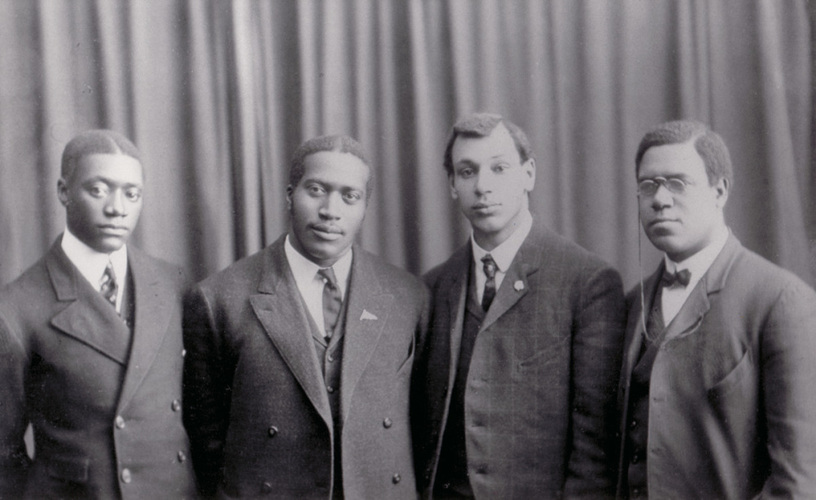
Jubilee Quartet and African-American Spirituals

A fascinating story explores how the Jubilee Quartet at Fisk University attempted to preserve slave-era spirituals in the early twentieth century.

Read the story and hear the recordings from the 1900s and 1910s at NPR.


Posted in Historical Film, Music History | Leave a comment

Director of the Archives Nationales Departs

Le Monde reports that the Director of the Archives Nationales in Paris has departed.  The Archives Nationales has been embroiled in a political fight over the installation of a historical museum in the Hôtel de Soubise, home of the Archives Nationales.  Historical researchers should be concerned about this developing story.

Read the story in Le Monde.

Posted in Archival Research, History in the Media | Leave a comment

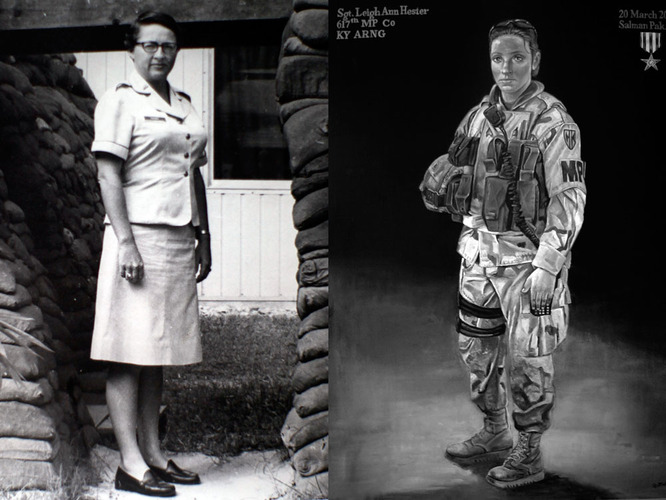
Women in Combat

Women’s participation in the United States Armed Forces is again being reconsidered, with combat roles the key focus.  NPR provided an analysis of the issue today in as story on “Women In War: ‘I’ve Lived Out There With The Guys.'”

Read or listen to the story at NPR.


Posted in Gender and Warfare, War, Culture, and Society | Leave a comment