Raising Teachers’ Status

Teachers’ economic and social status in American society is widely perceived to be in decline.  Although it is very difficult and highly subjective to measure any profession’s status, a new study attempts to gauge teachers’ status in a number of industrialized nations and formulate comparisons.

The lead author of the report argues that “Teaching in the U.S. is unfortunately no longer a high-status occupation.”

The New York Times article on this story also has a link to the original report.


Posted in Education Policy | Leave a comment

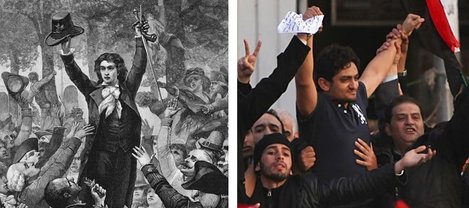
Phrygian Cap Still Used as Revolutionary Symbol

The Phrygian cap is still being used as a revolutionary symbol, more than 200 years after the French Revolution.  Stéphane Hessel recently wore a Phrygian cap while speaking at a pro-Palestinian rally. This story is very timely for my HIST 423 French Revolution and Napoleon class, since we are currently discussing political culture and revolutionary symbolism in the French Revolution.

Hessel’s best-selling pamphlet, Indignez-Vous!, has ignited a new debate within France about Israeli policies toward Palestine.  The pamphlet has been translated into English and has been reprinted by The Nation magazine.  The New York Times reported today on Hessel’s pamphlet and the controversy surrounding it.

Posted in Comparative Revolutions, French History, French Revolution and Napoleon, History in the Media | 1 Comment

Robert Darnton Comments on Egyptian Revolution

French historian Robert Darnton recently commented on the ongoing Egyptian Revolution.  Historians of the Ancien Régime and the French Revolution, including David Bell and James Collins, have been actively considering various comparisons between the French Revolution of 1789-1794 and the still unsettled Egyptian Revolution of 2011.

Read Robert Darnton’s piece in the New York Review of Books online.


Posted in Comparative Revolutions, French Revolution and Napoleon, History in the Media | Leave a comment

Italy-Libya Arms Deal

Italy has long had a close (some would argue neocolonial) relationship with Libya.  Recent revelations of a major shipment of small arms from Italy to Libya is disappointing, but hardly surprising.  Those Italian arms are surely now being used in the growing conflict in Libya.

Read more about this arms deal at EU Observer online.

Posted in Uncategorized | Leave a comment

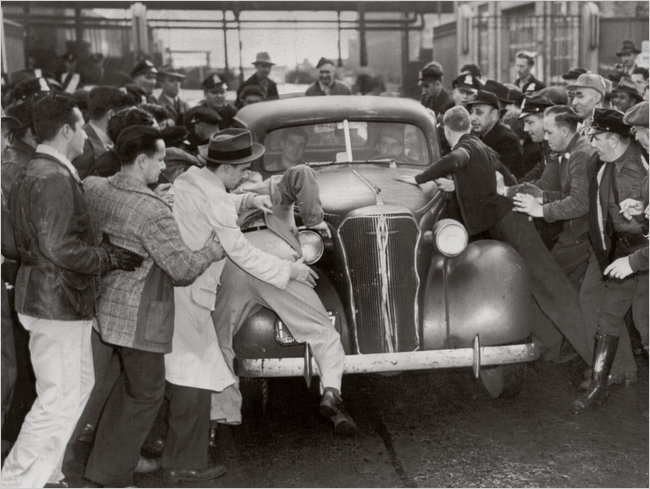
NIU History Professor Discusses Wisconsin Labor Battles

Professor Rosemary Feurer contributed to a New York Times article this weekend on “Wisconsin’s Legacy of Labor Battles.” Professor Feurer is a labor historian and a colleague of mine in the Department of History at Northern Illinois University.  Feurer argues that “the play by the governor [Walker] is part of a longer history and a longer struggle over ideas and social policy,” citing patterns of anti-union network activity in the Midwest over the past century.

Congratulations to Rosemary Feurer on her contribution to this significant article, which provides crucial historical context on the current labor crisis in Wisconsin.

See the entire article in the Week in Review section of the New York Times or online at the New York Times.

Posted in History in the Media, Humanities Education, Northern Illinois University | Leave a comment

French Historian’s Blog

Jim Collins, a friend and French historian colleague who is Professor of History at Georgetown University, now has an active blog on French history and comparative revolutions.

Current posts are focused on the ongoing demonstrations and revolutions in the Arab world.

Check out Jim Collins’s blog here.

Posted in Comparative Revolutions, French History, French Revolution and Napoleon | Leave a comment

Attacks on Teachers

I enjoyed working with Chicago-area high school history teachers all this morning, discussing the European Wars of Religion.  During a coffee break and lunch break, I heard about their concerns about the current attacks on teachers and the teaching profession across the United States.

The Madison protests have certainly helped focus attention on the plight of teachers and other public workers who are being targeted for layoffs, cuts in benefits, and stripping of union rights.  Similar “reforms” and protests are now spreading to Indiana, Ohio, and other states.

The New York Times has a story today dealing directly with teachers’ sense of being under fire.

Posted in Education Policy | Leave a comment

Newberry Teachers’ Consortium

I was thrilled to lead a seminar today at the Newberry Library as part of the Newberry Teachers’ Consortium.  The NTC seminar series offers high school teachers a chance to work with university professors on specific topics of relevance for their classroom teaching.

My seminar explored the theme of “Reformers, Heretics, and Soldiers: European Wars of Religion, 1520s-1660s,” discussing religious violence through Andrew Cunningham and Ole Peter Grell’s notion of the period as “an apocalyptic age.”  We then focused on the experience of religious conflict during the French Wars of Religion, examining the Saint-Médard riots, massacre of Vassy, Saint Bartholomew’s Day Massacre, and the Edict of Nantes.

I thoroughly enjoyed working with a great group of high school teachers from the Chicago suburbs at this NTC seminar.

High school teachers in the Chicago and northern Illinois areas should check out the Newberry Library’s website for the NTC seminar schedule and for additional opportunities for teachers.


 

Posted in Early Modern Europe, European History, French Wars of Religion, Humanities Education, Religious Violence, The Past Alive: Teaching History, Warfare in the Early Modern World | 2 Comments

So you say you want a revolution?

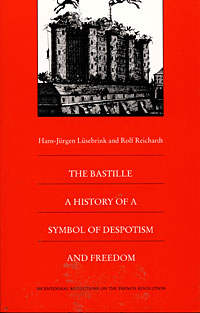
“To those who would change the world, the [French] Revolution still offers a script continuously elaborated and extended—in parliaments and prisons; in newspapers and manifestoes; in revolutions and repressions; in families, armies, and encounter groups. … To those who would interpret the world, it still presents the inexhaustible challenge of comprehending the nature of the extraordinary mutation that gave birth to the modern world.” — Keith Michael Baker and Steven Laurence Kaplan, “Editors’ Introduction,” in Hans-Jürgen Lüsebrink and Rolf Reichardt, The Bastille: A History of Symbol of Despotism and Freedom, trans. Norbert Schürer (Durham: Duke University Press, 1997), xiv.

This quote comes from our reading for this week’s graduate discussion in HIST 523 French Revolution and Napoleon.  See the book description at Duke University Press.

Posted in Comparative Revolutions, French Revolution and Napoleon | Leave a comment

Revisiting the Military-Industrial Complex

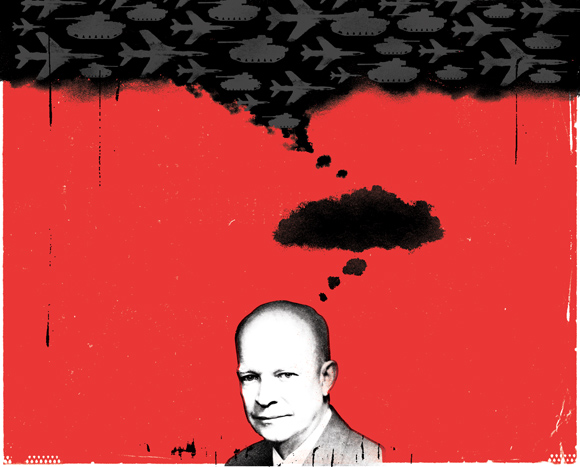
Andrew J. Bacevich has written a brilliant piece on the Military-Industrial Complex, setting Eisenhower’s famous Farewell Address into a broader perspective on “permanent war.”

Bacevich, a Professor of History at Boston University, has emerged as one of the most prominent voices for significant reform of military policies and budgets in the United States. He has also called for a thorough reconsideration of military strategies in Iraq and Afghanistan, advocating ending the counter-insurgency approach to warfare in those conflicts.

Read Bacevich’s article in The Atlantic (January/February 2011).

Posted in History of Violence, Uncategorized, War, Culture, and Society | Leave a comment