
A new Pentagon policy issued by Secretary of Defense Pete Hegseth places sharp limits on the religious identities of U.S. military personnel and prioritizes Christian denominations for support by military chaplains.
“The Defense Department will no longer allow military service members to claim roughly 180 different religious traditions in their personnel records, leaving just 31 to choose from — 22 of which are Christian denominations,” reports The New York Times.
“Aside from the Christian faiths, the newly consolidated “religious affiliation codes” will allow soldiers, sailors, airmen, Marines, and Coast Guard and Space Force personnel to identify in their records as agnostic, Baha’i, Buddhist, Hindu, Muslim, Jewish or Sikh. Wicca, paganism, humanism and atheism are among those that were removed from the list.”
According to The New York Times, “Those who had identified with one of the 180 eliminated faith groups will have just two options under the new policy: ‘no religion’ or ‘other religions.'”
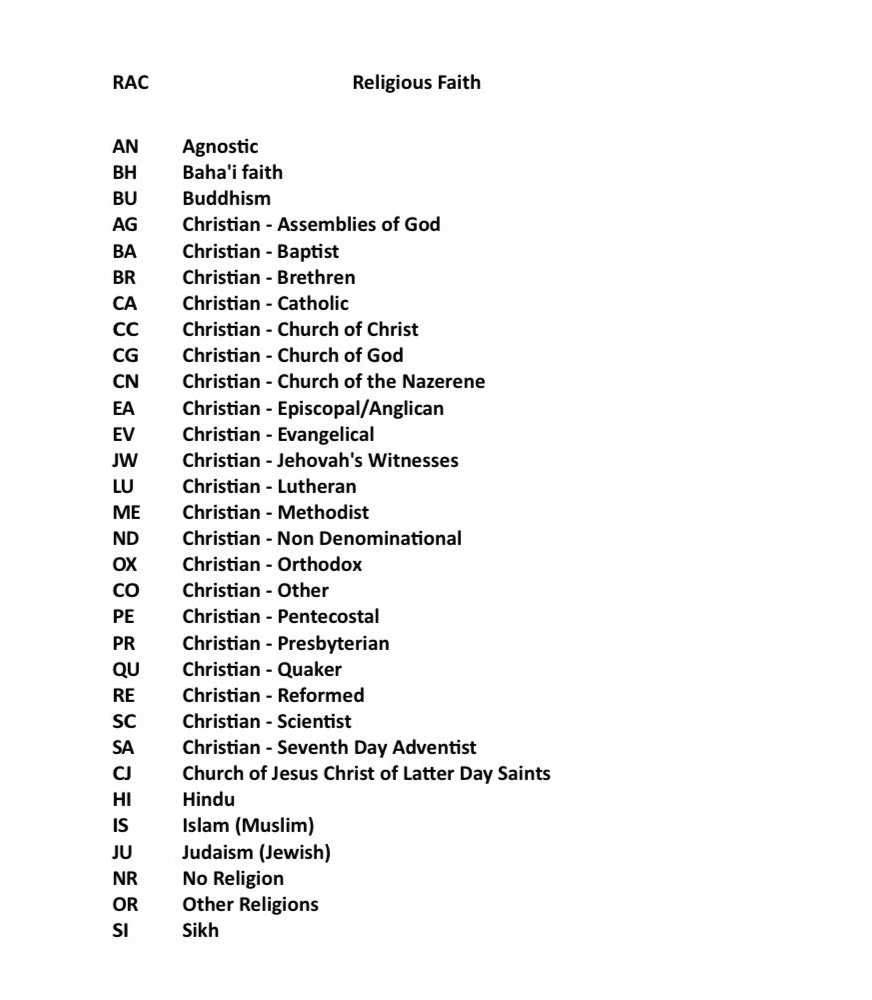
The Department of Defense’s list prioritizes certain versions of Christianity, and especially evangelical Protestant denominations. For example, the Greek, Russian, and Serbian Orthodox faiths are all compressed into a single Christian – Orthodox designation. Practitioners of many other Christian faiths will be reduced to a catch-all designation of “Christian – Other.”
The list ignores different varieties of Jewish and Islamic practice, allowing only designations of Islam (Muslim) and Judaism (Jewish).
Meanwhile, U.S. military service members who identify themselves as Athiesists, Deists, Humanists, Unitarian Universalists, will apparently have to choose a designation of “Agnostic”, “No Religion”, or “Other Religions.”
Military Daily News reports that this policy “follows a broader administrative push that critics have described as a military-wide ascent towards Christian theocracy, evidenced by Defense Secretary Pet Hegseth hosting Christian-based prayer services in the Pentagon auditorium with controversial speakers—as well as public statements invoking Scripture when describing the ongoing military operation in Iran, for example.”
The Trump administration’s military policies assert a particular form of Christian Nationalism, threatening religious freedoms of U.S. military service members, as well as the broader citizenry of the United States. These dangerous policies also undermine civil-military relations in the United States, threatening the integrity of the U.S. military’s Constitutional role within the nation.
“In December 2025, Hegseth announced his intention ‘to make the Chaplain Corps great again,’ prioritizing religious liberty and practice in the military by executing a ‘top-down cultural shift, putting spiritual well-being on the same footing as physical and mental health,’ according to Military Daily News.“
Making the Chaplain Corps “great” clearly involves prioritizing a Christian Nationalist vision within the U.S. military and promoting certain religious faiths among U.S. military personnel at the expense of those of other faiths.
“This latest action comes on the heels of Hegseth announcing chaplain reforms in March 2026. He said his department would be significantly streamlining the number of faith code affiliations for service members, including a separate but related change to replace rank insignia military chaplains wear on their work uniforms with religious insignia.”
These policies threaten the First Amendment of the U.S. Constitution and its protections of religious freedom. The First Amendment reads: “Amendment I. Congress shall make no law respecting an establishment of religion, or prohibiting the free exercise thereof; or abridging the freedom of speech, or of the press; or the right of the people peaceably to assemble, and to petition the Government for a redress of grievances.”
Although the First Amendment refers specifically to limitations on the powers of the United States Congress, subsequent legal precedents extend First Amendment guarantees of freedom of religion, along with other fundamental freedoms to apply to other branches of government in the United States.
The freedom of religion is listed first among these fundamental rights: freedom of speech, freedom of the press, freedom of assembly, and freedom to petition.
As a Professor of History who works frequently with ROTC students and military veterans, I find the implications of the Trump administration policies limiting religious identity in the U.S. military very troubling for my students and for all American citizens.
The Constitution of the United States (1787). National Archives.
Ismay, John, Alexandre E. Petri, and Aimee Ortiz. “Pentagon Cuts 180 Religious Identities From Military Personnel Records.” The New York Times (5 June 2026).
Mordowanec, Nick. “DOD Officially Drops 180 Faiths From Military’s Recognized Religion List.” Military Daily News (4 June 2026).


