Beyond the Battlefield Released

My latest essay has been published in the collective volume on Beyond the Battlefield Reconsidering Warfare in Early Modern Europe, ed. Tryntje Helfferich and Howard Louthan (London: Routledge, 2023), which is scheduled to be released today (22 December 2023).

My contribution is entitled, “Troubles Concerning Religion: Causes, Parties, and Armed Conflict in the French Wars of Religion.”

The book description indicates: “This volume draws together an international team of scholars to explore the experience and significance of early modern European continental warfare from an interdisciplinary perspective.

“Individual essays add to the lively fields of War and Society and the New Military History by combining the history of war with political and diplomatic history, the history of religion, social history, economic history, the history of ideas, the history of emotions, environmental history, art history, musicology, and the history of science and medicine. The contributors address how warfare was entwined with European learning, culture, and the arts, but also examine the ties between warfare and ideas or ideologies, and offer new ways of thinking about the costs and consequences of war. In addition to its interdisciplinarity, the volume is distinctive in including chapters focused not only on Western and Central Europe but also the often-ignored European peripheries, such as the Baltics and the Russian frontier, Scandinavia, and the Habsburg-Ottoman borderlands of Southeastern Europe. As a whole, the volume offers readers interesting alternatives and threads for reconsidering the place and meaning of warfare within the larger history of early modern continental Europe.

“This book will be valuable for general readers, undergraduate and graduate students, and scholars interested in military, early modern, and European history.”

For more information on the book, see Routledge’s website.

Posted in Civil Conflict, Civilians and Refugees in War, Early Modern Europe, Early Modern France, Early Modern World, European History, European Wars of Religion, French Wars of Religion, History of Violence, Reformation History, Renaissance Art and History, War, Culture, and Society, Warfare in the Early Modern World | Tagged , , , , | Leave a comment

Digital Mapping and Pre-Modern Violence

Digital mapping projects are investigating episodes of violence in pre-modern societies in new ways.

Interpersonal violence often erupted in pre-modern societies. Recent studies of late medieval England recount murders in urban centers: “A spice merchant stabbed by a fruit seller over a longstanding feud. A street musician murdered for playing music too loudly after dusk. A deadly quarrel among servants of the Queen of England. And who killed the innkeeper with a sword after a fight?”

Medieval Murder Maps is a digital humanities project based at Cambridge University in the United Kingdom. The New York Times reports on this digital mapping project that investigates murders in medieval England: “These homicide cases, discovered by historians in centuries-old records, may be long closed. But fans of true crime and history can now peruse them in an interactive medieval murder map released in September by University of Cambridge researchers.”

According to The New York Times, “Users can click through the back stories of more than 300 murders in the English cities of London, York and Oxford. Entries are searchable by gender, day of the week and even weapon (pole-axe or crossbow?).”

This digital mapping project lies at the intersection of the fields of Digital Humanities and Violence Studies.

The New York Times reports on digital mapping and violence studies. The Medieval Murder Maps website publishes digital maps on murders in medieval England.

Posted in Cultural History, Digital Humanities, European History, History of Violence, Manuscript Studies, Material Culture, Medieval History, Urban History | Leave a comment

Natalie Zemon Davis and Early Modern History

I deeply saddened to learn today that renowned early modern historian Natalie Zemon Davis has died.

Natalie Zemon Davis was a brilliant historian of early modern French, European, Mediterranean, and global history. Natalie’s essays on unruly women, women’s honor, gender distinctions, religious riots, and print culture were transformative when they were published and they are still taught in graduate programs. The article on “rites of violence” is one of the most important works on the French Wars of Religion and in the broader interdisciplinary field of violence studies.

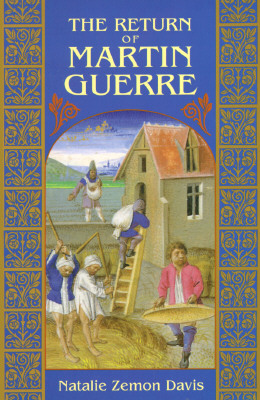
The Return of Martin Guerre is simply one of the most influential microhistories ever written and an amazing book to teach with undergraduate and graduate students.

Natalie did innovative research in women’s history, gender history, microhistory, cultural history, history of the book, Renaissance studies, Reformation studies, and film history. Few scholars do such groundbreaking research across so many distinct fields using interdisciplinary methodologies so effectively.

Natalie was also a generous scholar and a real mentor. She always sat at the front of the room during conference sessions and when discussion opened, she would immediately raised her hand to offer an enthusiastic, but probing question. I am sure that her loss will be a real shock to many who have worked closely with her. 

I had emailed with Natalie recently, but had not seen her in person in several years.

I am glad that I had a chance to take a graduate seminar with Natalie when she served as a visiting professor at the University of Illinois at Urbana-Champaign and later got other opportunities to collaborate with her at workshops and conferences over the years.

I will always remember Natalie’s warmth and joy, especially from her fabulous 90th birthday celebration in Toronto during the Renaissance Society of America conference.

Posted in Cultural History, Early Modern Europe, Early Modern France, Early Modern World, European History, French History, French Wars of Religion, History of the Book, Languedoc and Southern France, Mediterranean World, Rare Books and Pamphlets, Reformation History, Religious Violence, Women and Gender History, World History | Leave a comment

NIU Book Lab and Printing Presses

We are launching an exciting new project at Northern Illinois University to create a NIU Book Lab, which will focus on the history of the book, printing presses, and print culture!

The Northern Illinois University Libraries have created a crowdfunding project to restore the vintage printing presses at NIU, so that our students can engage in their own projects using printing technologies and learn about the history of the book.

The Printing Revolution (c.1450-1550), Renaissance printing, early modern news, religious pamphlets, political pamphlets, and prints are major components of my undergraduate courses on HIST 420 The Renaissance, HIST 414 European Wars of Religion, HIST 422 Early Modern Europe, and HIST 423 French Revolution and Napoleon. My honors and graduate teaching also deals significantly with print cultures and history of the book.

Many undergraduate and graduate students in History do research projects using woodblock prints, engravings, political pamphlets, religious pamphlets, treatises, and other rare printed works from the early modern period. So, a Book Lab would serve these students’ research projects and contribute to the development of their research skills.

These skills are important for historical research, museum studies, archival practices, library and information sciences, and related fields.

Please consider donating to help us “start the presses”!

The NIU Book Lab crowdfunding website has more information about this campaign.

Posted in Archival Research, Cartographic History, Cultural History, Early Modern Europe, Early Modern France, Early Modern World, European History, European Wars of Religion, French Revolution and Napoleon, French Wars of Religion, History of the Book, Information Management, Material Culture, Mediterranean World, Museums and Historical Memory, Northern Illinois University, Political Culture, Public History, Rare Books and Pamphlets, Reformation History, Renaissance Art and History, Undergraduate Work in History, World History | Leave a comment

Among Friends and Rivals: Caravaggio in Rome

The Art Institute of Chicago just opened a new exhibition on Among Friends and Rivals: Caravaggio in Rome.

This art exhibition explores the theme of friendship in the Renaissance through the artworks of Michelangelo Merisi da Caravaggio and his contemporaries in the Papal States.

The Art Institute of Chicago introduces the exhibition: “Whether for his large dramatic canvases or his larger-than-life persona, the name Caravaggio evokes images of turmoil and violence, both sacred and profane. Born in Milan in 1571, Michelangelo Merisi da Caravaggio entered the robust Roman art scene around 1592 and, over the next 14 years, developed an original and captivating painting style that attracted eminent patrons and passionate followers, thrusting him into the public eye. The artist became equally known for his wild behavior; a street brawler, Caravaggio was familiar with the shady underworld of taverns and their clientele, whom he frequently depicted in his work.”

Students in HIST 420 The Renaissance at Northern Illinois University are encouraged to visit this exhibition and see Renaissance artworks in person!

I am also offering HIST 420 students an extra credit opportunity related to this exhibition. If you would like to earn 2 points of extra credit on your overall grade, visit the exhibition and then write up a 1-page response.

The Art Institute of Chicago website provides information on this exhibition.

Posted in Art History, Early Modern Europe, Early Modern World, European History, Italian History, Museums and Historical Memory, Renaissance Art and History | Leave a comment

Britannica Assistant Editor Position

Encylcopaedia Britannica is hiring a new Assistant Editor in Comparative Religion.

This position could be ideal for a historian of religion with a MA or Ph.D. in History.

Here is the job ad from Encyclopaedia Britannica:

Encyclopaedia Britannica is looking for a dynamic, knowledgeable, digital-first writer and editor who will be responsible for Britannica’s coverage of religion.

Britannica is singularly proud of its 254-year history as a publisher and disseminator of knowledge for students as well as lifelong learners. Our mission now is to reach learners where they live online and to engage with them in the multitude of ways people learn, including through visually driven storytelling.

Demonstrable subject matter expertise is essential for this role. The ideal candidate will also have the curiosity and enthusiasm to reach beyond their area of expertise, create content about topics that may not be immediately familiar, and be energized by sharing what they know and what they’ve learned with Britannica’s audience.

Being an editor at Britannica means working in a fast-paced, highly collaborative environment that values the trustworthiness of its content more than anything else, and the successful candidate will thrive in this setting. The successful candidate will also be committed to producing content that is clear, fair, accurate, and relevant.

ROLE: ASSISTANT/ASSOCIATE EDITOR – RELIGION

LOCATION: Chicagoland/Hybrid

RESPONSIBILITIES INCLUDE:

● Planning, in partnership with colleagues, contributors, and advisers, coverage of religion and faith as both an academic and sociological area of importance.

● Editing, writing, and commissioning articles that reflect current developments in these subject areas, as well as creating other types of content for Britannica.com.

● Collaborating with media editors and illustrators on the acquisition and production of images, videos, and other media.

SKILLS AND QUALIFICATIONS:

● Applicant should have significant writing and editing experience. Please include links to three appropriate writing samples with your application.

● Applicants should have an M.A. or Ph.D. in religious studies, theology, or a related subject; a bachelor’s degree with professional experience and broad contacts in a specific field of study will be considered a substitute.

Britannica strives to provide its users with trustworthy, verified information in a constantly changing world. We aspire to fulfill that mission with a diverse, multigenerational workforce with a variety of life experiences and points of view. All backgrounds and cultures are welcomed.

See the full job ad at LinkedIn.

Posted in Careers in History, Cultural History, Jobs and Positions, Reformation History, Religious History, Religious Politics, Religious Violence, World History | Leave a comment

RSA Professional Development Workshop

The Renaissance Society of America is sponsoring a professional development workshop on “Defining, Promoting, and Publishing Your Professional Agenda,” which will be held on 10 November from 1:00 to 2:30 pm.

This is an online workshop that is free, but you do need to register if you want to participate.

Here is the link:

https://www.rsa.org/events/EventDetails.aspx?id=1782963

Graduate students in History at Northern Illinois University may be interested in this professional development workshop.

Posted in Careers in History, Digital Humanities, Early Modern Europe, Early Modern World, European History, Graduate Work in History, Italian History, Mediterranean World, Renaissance Art and History, Writing Methods | Leave a comment

Roman Legions on Tik Tok

Men are apparently sharing their fascination with Roman history on Tik Tok, Instagram, and other online platforms.

“It’s been almost 2,000 years since the Roman Empire reached the historic peak of its power. But many men still contemplate it — quite a lot.”

According to the Washington Post, “A new social media trend prompting women to ask the men in their lives how often they think about ancient Rome reveals that it crosses the minds of many men on a weekly basis. Even daily. Or more — to the surprise and confusion of their loved ones.”

The Tik Tok trend in posting about Roman history seems to be closely associated with expressions of masculinity.

Hannah Cornwell, an ancient historian at Birmingham University, emphasizes that popular culture focuses on “an image of the Roman legion, the imperial eagle and that sort of military aspect — along with gladiators, which has a long association with masculinity and power,”

A Roman re-enactor called Gaius Flavius has a growing Instagram following:

Students in HIST 110 History of the Western World at Northern Illinois University will be interested in this report.

The Washington Post reports on Roman history on Tik Tok.

Posted in Ancient History, Cultural History, Digital Humanities, Empires and Imperialism, European History, History in the Media, Italian History, Museums and Historical Memory, Public History, War, Culture, and Society | Leave a comment

Pre-modern Whales and Whaling

Pre-modern whaling may have contributed significantly to the decline and extinction of some species of whales, according to new research on whale bones.

Olaus Magnus, Carta Marina…. (1539)

“Industrial-scale whaling in the 19th and 20th centuries nearly drove many whale species into extinction. Populations of some of the large marine mammals are just starting to recover after the kind of predation described in the novel “Moby-Dick,” while others face ongoing peril to their existence. But it turns out that whaling’s effects on where whales live go back much deeper into human history.”

The New York Times reports that “a new analysis of ancient whale bones, published Wednesday in the journal Royal Society Open Science, suggests that medieval European hunting may have played a role in some whales disappearing from northeast Atlantic waters long before Captain Ahab, Ishmael and the Pequod sought their great white whale.”

Students in my courses on HIST 420 The Renaissance, HIST 458 Mediterranean World, and HIST 640 Early Globalization may be interested in this new research that relates to maritime history, history of fishing, material culture, history of food, and social history.

The New York Times published an article on the new whale bone research.

Posted in Cartographic History, Cultural History, Early Modern Europe, Early Modern World, Environmental History, Food and Cuisine History, Globalization, Maritime History, Material Culture, Medieval History, Renaissance Art and History, Social History | Leave a comment

Medieval Naval Cannon Found

Maritime archaeologists have found a cannon that may be the oldest naval cannon ever located in Europe.

According to the University of Gothenburg, “an international research team led by maritime archaeologist Staffan von Arbin of the University of Gothenburg has studied what might be Europe’s oldest shipboard cannon. The cannon was found in the sea off Marstrand on the Swedish west coast and dates back to the 14th century.”

Researchers are currently analyzing the cannon. “The findings from the interdisciplinary study contribute new knowledge about the early development of artillery on land and at sea, but also bears witness to a troubled period for seafarers as well as coastal populations.”

University of Gothenburg reports on the finding.

Posted in Battlefield Archaeology, Early Modern Europe, Early Modern World, European History, History of Violence, Maritime History, Medieval History, War, Culture, and Society | Leave a comment