A Renaissance of Violence

I am happy to report that my review of Colin Rose’s A Renaissance of Violence: Homicide in Early Modern Italy has just been published on H-Italy.

“One of the most brazen murders in Bologna’s history occurred on September 8, 1652, when Giacinto Pungelli, a sotto-auditore (assistant judge) in the Tribunale del Torrone (Tribunal of the Tower), was gunned down as he left the church of the Celestine Convent following mass. The judges and notaries of the Tribunale del Torrone conducted an extensive investigation of this assassination of one of their own, interrogating ninety-seven witnesses and uncovering a conspiracy and a long-simmering vendetta. The trial records reveal that ‘Pungelli’s death was a flagrant attack on court authority, but it occurred in the context of partisan rivalry and anti-papal feeling’ (p. 185).”

A Renaissance of Violence constructs an institutional history of the Tribunale del Torrone, a criminal court established by the Papal States to prosecute homicides and other serious crimes in the city and province of Bologna. …”

My full book review of Colin Rose’s A Renaissance of Violence is available as a .pdf file from H-Italy:

https://www.h-net.org/reviews/showpdf.php?id=54816

The full citation of the book is: Colin Rose, A Renaissance of Violence: Homicide in Early Modern Italy (Cambridge: Cambridge University Press, 2019).

I want to thank Peter Sposato, Associate Professor of History at Indiana University Kokomo, for his kind invitation to review this book.
Posted in Civil Conflict, Cultural History, Early Modern Europe, Early Modern World, European History, History of Violence, Italian History, Mediterranean World, Renaissance Art and History, Social History | Leave a comment

Medici Archive Project Fellowships

The Medici Archive Project is offering several new short-term fellowships for graduate students in art and architectural history to conduct archival research in Florence.

I previously served as a NEH Fellow with the Medici Archive Project and had an amazing experience doing collaborative research in the Archivio di Stato di Firenze with the Medici Archive Project.

Here is the announcement from the Medici Archive Project:

Thanks to the continued support of the Samuel H. Kress Foundation, The Medici Archive Project is offering two fellowships for graduate and pre-doctoral students to undertake specialized archival research on-site at the Archivio di Stato as well as other archival collections housed in Florence and across Tuscany.

These fellowships are especially aimed to provide graduate students in art and architectural history with the opportunity to examine original source materials, receive scholarly guidance from MAP Staff, present their findings at MAP-sponsored conferences and workshops, and enroll in MAP’s Paleography and Archival Studies Seminar.

Both fellowships must take place within a period of no less than three months from 15 May 2022 to 23 December 2022.

The stipend is USD 8,000. Fellows will be responsible for their travel and accommodations in Florence.

Eligible candidates must either have American citizenship or be enrolled in graduate programs at universities in the United States.

There is no application form for this fellowship.

Instead, suitable candidates are invited to send via email to education@medici.org, the following documents in a single PDF by 2 APRIL 2022:

1) A cover letter.

2) A short essay (no more than two pages) on how the candidate’s topic will benefit from archival research.

3) A curriculum vitae.

4) The name and email address of a scholar in the field, preferably the candidate’s supervisor, who can comment on the applicant’s qualifications and the merits of the research proposal (please do not include letters of recommendation with the application).

To apply for these fellowships, the following material should be sent electronically to education@medici.org.

Please do not include supplementary material (publications, papers, syllabi, etc.).

All materials must be submitted in English.

For further information, contact education@medici.org.

Posted in Archival Research, Art History, Cultural History, Digital Humanities, Early Modern Europe, Early Modern World, European History, Graduate Work in History, Grants and Fellowships, Italian History, Manuscript Studies, Paleography, Reformation History, Renaissance Art and History | Leave a comment

Seeing Race Before Race Fellowship

Premodern critical race studies is a rapidly expanding field within premodern studies. Many historians of the Medieval and Early Modern World are investigating the histories and languages of race and racism in premodern contexts.

The Center for Renaissance Studies is currently hiring a Postdoctoral Fellow in conjunction with its Seeing Race Before Race project.

Recent Ph.D.s in premodern History and related fields may be interested in applying for this postdoctoral fellowship.

Here is the announcement from the Center for Renaissance Studies at the Newberry Library:

The Newberry Center for Renaissance Studies seeks an early career scholar in Premodern Critical Race Studies to serve as a Public Humanities Postdoctoral Fellow for one year (with the possibility of renewal for a second year pending grant funding) to support Seeing Race Before Race, a multi-year project including an exhibition, public and scholarly programming, a publication, and digital initiatives. The Fellow will begin in Fall 2022, one year before the exhibition launches in Fall 2023.

The Public Humanities Fellow will be responsible for ensuring that all exhibition assets align with prevailing methods of premodern critical race studies. This position will assist in creating and editing exhibition texts; acting as the internal and external communications lead for the project; managing exhibition programming work; developing digital resources; and liaising with departments across the Newberry. The Fellow will report to the Director of the Center for Renaissance Studies.

This position requires a PhD in a humanities field related to medieval, early modern, colonial, Atlantic World, or Indigenous studies from 1100-1800, with expertise in critical race studies preferred. Preference may be given to candidates whose scholarly work or career has been focused on public history, museums, libraries, and archives.

Please email your cover letter, resume, and contact information for three references to Human Resources at jobs@newberry.org. In the email’s subject, please note the position you are applying to. Please combine all requested documents into a single PDF document and submit as an email attachment. For more information, please visit the Newberry’s Employment page here: https://www.newberry.org/employment

Applications will be reviewed beginning March 8, 2022, on a rolling basis, and the review will continue until the position is filled.

Please direct all questions about the position to renaissance@newberry.org

Posted in Cultural History, Digital Humanities, Early Modern Europe, Early Modern World, European History, Globalization, Grants and Fellowships, History of Medicine, History of Race and Racism, History of Science, History of the Book, History of the Western World, History of Violence, Medieval History, Rare Books and Pamphlets, Reformation History, Renaissance Art and History, World History | Leave a comment

Reading Archival Latin Seminar

A Summer Skills Seminar on Reading Archival Latin is being organized by the Mediterranean Seminar for Summer 2022.

Graduate students and researchers interested in learning to read Latin manuscripts are encouraged to apply for this seminar.

The Mediterranean Seminar announcement reads:

The Summer Skills Seminar,  “Reading Archival Latin” will be held via Zoom from Friday, 27 May, and Tuesday to Thursday, 31 May to 2 June 2022 from 10am to noon and 1–3pm MDT.


Course overview

The Archive of the Crown of Aragon (ACA) in Barcelona contains one of the largest and richest archival collections relating to medieval Europe, comprising hundreds of thousands of documents, most from the twelfth to fifteenth centuries, and including financial records, royal letters, administrative documents, trial records, treaties, and many other genres. The documentation can be used for a whole range of topics including social, economic, political, institutional, gender, diplomatic, cultural and religious history. 

The territories of the Crown of Aragon included much of the Iberian Peninsula, parts of southern France, Sicily and southern Italy, parts of Tunisia and Greece, the Balearics, Sardinia and other Mediterranean islands. It had a large and diverse urban population, was highly integrated into Mediterranean and European trade systems, and had significant populations of Muslims and Jews. It developed one of the earliest and most robust chanceries of medieval Europe; the collections of which have weathered the vicissitudes of history all but intact. Much of the documentation has yet to be used by historians. The skills seminar will focus on the Latin-language documentation (from the eleventh to the mid-fourteenth centuries) in the archive’s collections.

This four-day intensive skills seminar will focus on a hands-on introduction to reading unedited Latin documents from a variety of the archive’s fonds and provide participants with an overview of the collections of the ACA, including access to online resources and reproductions.

Topics will include: manuscript abbreviations, dating systems, place and personal names, and research resources and techniques. As much as possible the content will be catered to participants’ interests and needs. Medievalists of all disciplines, graduate students, and qualified undergraduate students, as well as library and archival professionals are encouraged to apply. 

The goal is to provides attendees with a solid preparation for conducting work remotely via the PARES web portal and on-site at the ACA. Participants will find the skills and techniques which the course focuses on useful not only at the Archive of the Crown but at other medieval archives across Spain and Europe.

This Summer Skills Seminar builds on the experience of earlier editions, which participants signaled as “transformative” in terms of their research, and which provided them with an opportunity to network and lay the foundations for future collaborations.

Posted in Archival Research, Early Modern Europe, Early Modern World, European History, Graduate Work in History, Lectures and Seminars, Manuscript Studies, Medieval History, Mediterranean World, Paleography, Renaissance Art and History | Leave a comment

Remembering Florence in the Forgotten Centuries

Florence is almost always associated with the Renaissance, but until relatively recently the focus of Florentine history was on the quattrocento (1400s) and Republican Florence.

Eric Cochrane’s groundbreaking work, Florence in the Forgotten Centuries: A History of Florence and the Florentines in the Age of the Grand Dukes (1973), charted a new course toward studying the history of the princely state of Florence and Tuscany and its Medici rulers.

Eric Cochrane was a professor of History at the University of Chicago and shaped a generation of graduate students and scholars in Renaissance studies there. Cochrane’s book helped to question definitions of the Renaissance and inspired a new wave of interdisciplinary Renaissance studies in the 1990s and beyond.

The Center for Renaissance Studies at the Newberry Library is organizing a roundtable discussion of Eric Cochrane’s landmark study.

The roundtable will be held online via Zoom on Friday 25 February 2022 at 12 noon (Central Time).

Here is the announcement from the Center for Renaissance Studies:

It has been nearly 50 years since Professor Eric Cochrane of the University of Chicago published Florence in the Forgotten Centuries, 1527-1800: A History of Florence and the Florentines in the Age of the Grand Dukes (1973), a book that has inspired generations of scholars. This interdisciplinary roundtable in Professor Cochrane’s honor examines the state of research on the Medici Grand Duchy today, considering in particular how the lenses of gender, globalization, and race have revitalized the scholarship on Florence in the late Renaissance.

Co-organized by Friends of the Medici Archive Project. The Center for Renaissance Studies is grateful to an anonymous donor for inspiring this event.

For more information about this event and a link to the webinar, please visit the calendar page here: https://www.newberry.org/02252021-medici-florence-today-roundtable-honor-eric-cochrane 

Posted in Court Studies, Cultural History, Early Modern Europe, Early Modern World, European History, Globalization, History of Race and Racism, History of the Western World, Intellectual History, Italian History, Lectures and Seminars, Noble Culture and History of Elites, Political Culture, Reformation History, Renaissance Art and History, Women and Gender History | Leave a comment

The History of Black History Month

As Black History Month is celebrated in the United States, it seems like a good time to revisit its history.

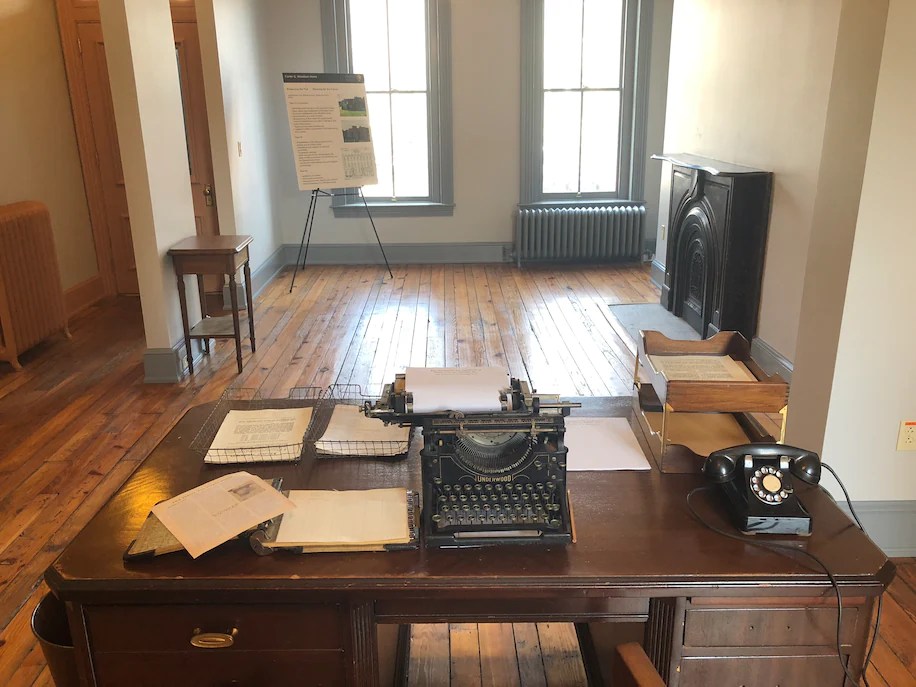
“In his red-brick rowhouse in the heart of D.C., the man who would become known as the ‘father of Black history’ wrote furiously. From a second-floor ‘home office’ at 1538 Ninth Street NW, Carter G. Woodson led and orchestrated a movement to document Black history, dictating dozens of books, letters, speeches, articles and essays promoting Black people and their place in American history.”

Carter G. Woodson was a groundbreaking African-American historian who helped to establish African-American history as a major field of historical study.

Carter G. Woodson’s office. Photo: The Washington Post

The Washington Post reports that “At 12:15 p.m. on most days, Woodson, who would launch what became Black History Month, met with his staff in the kitchen of the house. He’d give orders and strategize. There was little time to waste. He saw his mission — to correct how White people wrote about Black people, and to place Black Americans at the front and center of American history — as critical. ‘If a race has no history,’ Woodson wrote, ‘it has no worthwhile tradition, it becomes a negligible factor in the thought of the world, and it stands in danger of being exterminated.'”

Woodson launched “Negro History Week” in 1926 to focus on African-Americans’ experiences in the United States and their roles in American history. Albert Broussard (Professor of Afro-American history at Texas A&M University) emphasizes that “Woodson’s goal from the very beginning was to make the celebration of Black history in the field of history a ‘serious area of study,'”

According to WBEZ, “The idea eventually grew in acceptance, and by the late 1960s, Negro History Week had evolved into what is now known as Black History Month. Protests around racial injustice, inequality and anti-imperialism that were occurring in many parts of the U.S. were pivotal to the change.” Many colleges and universities began to celebrate Black History Month with seminars, workshops, lectures, and other events each February. The annual celebrations were transformed into a nationally recognized Black History Month in 1976.

The history of race and racism has expanded enormously since Woodson created “Negro History Week” started, but African-American historians continue to shape the histories of the United States, Africa, and the Atlantic World, transforming historical methods and all of World History in the process.

The Washington Post reports on Carter G. Woodson and the history of Black History Month.

WBEZ broadcast a story about African-American Chicagoans’ role in the origins of Black History Month.

Posted in Atlantic World, Cultural History, Globalization, Historiography and Social Theory, History in the Media, History of Race and Racism, History of the Western World, Human Rights, Museums and Historical Memory, The Past Alive: Teaching History, United States History and Society, World History | Leave a comment

History of the Renaissance Book at UCLA

The California Rare Book School is organizing a course on History of the Renaissance Book, which will be held at UCLA on 15-19 August 2022.

Students viewing rare books. Photo: California Rare Book School

The course description states: “This course will serve as a comprehensive introduction to the history of the book in early modern Europe, from the beginning of the fifteenth century to the middle of the seventeenth.  Our goal will be to use the holdings of the UCLA Research Library, with a focus on its Aldine collection, the Getty Research Institute Research Library, and the Huntington Library to learn to ‘read’ a Renaissance book, both as a physical object and as a carrier of cultural values.  We will examine in turn how these books were produced, how they were distributed, and how they were used by those who bought and read them.”

To apply for this course, see the California Rare Book School website.

Posted in Careers in History, Early Modern Europe, Early Modern World, European History, Graduate Work in History, History of the Book, Humanities Education, Information Management, Lectures and Seminars, Rare Books and Pamphlets, Reformation History, Renaissance Art and History | Leave a comment

Research Methods in Early Modern Studies

The Folger Shakespeare Library will be offering a research methods seminar in early modern studies in May 2022 for graduate students pursuing Renaissance and early modern studies.

Graduate students who are considering applying for this research methods seminar are invited to tune into an online discussion of research methods and an orientation to the seminar. This will be held on Thursday 10 February 10 2022 at 3:30 pm.

I would like to encourage graduate students in History and English at Northern Illinois University who are working in early modern studies to participate in this online discussion.

The Folger Shakespeare Library has stellar collections in Renaissance studies, Reformation studies, English history and literature, history of the book, literary history, and early modern European and world history. The Library also provides important training and support in paleography, research methods, and digital humanities.

To register for this online discussion, see the Folger Shakespeare Library.

Posted in Archival Research, Cultural History, Current Research, Digital Humanities, Early Modern Europe, Early Modern France, Early Modern World, European History, French History, Graduate Work in History, History of the Book, Humanities Education, Italian History, Lectures and Seminars, Manuscript Studies, Paleography, Rare Books and Pamphlets, Reformation History, Renaissance Art and History, World History | Leave a comment

On Insurrection and Overturning Elections

Former President Trump has now explicitly stated that he aimed on overturning the 2020 election.
Trump delivered a speech at a rally in Conroe, Texas, on Saturday, 29 January 2022. “Mike Pence did have the right to change the outcome, and they now want to take that right away,” Mr. Trump said. “Unfortunately, he didn’t exercise that power, he could have overturned the election!”

The New York Times reports: “The statement was the first time Mr. Trump described his goal as overturning an election. But Mr. Trump’s statement also included his usual false assertions about election fraud, suggesting he does not believe the election was legitimate.”

Former President Trump speaking on 29 January 2022. Photo: New York Times.

The former President’s statement indicates clearly his own intent to overturn the 2020 election, effectively overthrowing the entire electoral system and subverting the Constitution of the United States.

This revelation comes as prosecutions of militia group members move forward on charges of seditious conspiracy related to the Storming of the U.S. Capitol on 6 January 2021.

Political analysts, journalists, and pundits continue to debate whether or not the United States is heading toward civil war. The increasing cases of civil violence are undeniable, and this debate is largely shaped by misperceptions of the nature of civil conflict. Many observers in the United States continue to define all civil conflict through comparisons with the American Civil War—a sectional conflict involving a separatist movement built around a regional wing of a political party in order to defend a slave regime built on an institutionalized legal system and economy.

There are, of course, many other forms of civil conflict.

Indeed, the United States has experienced waves of civil violence in diverse forms throughout its history: colonial war, massacres, ethnic conflict, revolutionary war, guerilla warfare, rebellion, sedition, racial terrorism, lynchings, race riots, strikes, union busting campaigns, political assassinations, ideological conflict, religious conflict, church bombings, and more.

It is time to take the reality of civil violence seriously and consider the potential for further civil conflict.

As trials of sedition unfold, Trump’s own words already show that the path of responsibility leads ultimately to the Oval Office. Former President Trump and members of his administration clearly had the intent of overturning an election and remaining in power. Their impunity would be the worst possible result for the nation’s political system.

My undergraduate students at Northern Illinois University have been studying the history of civil conflict comparatively in my course Communal Strife: Civil Wars in World History. I hope that they are continuing to utilize the different interpretations of civil conflict that we studied in considering civil violence in the United States.

The New York Times reports on former President Trump’s speech.

Posted in Civil Conflict, Comparative Revolutions, History of Violence, Political Activism and Protest Culture, Political Culture, Revolts and Revolutions, Terrorism, United States History and Society, War, Culture, and Society | Leave a comment

Postdoctoral Scholars in RaceB4Race Studies

The Arizona Center for Medieval and Renaissance Studies is hiring two Postdoctoral Research Scholars in RaceB4Race Studies.

These postdoctoral fellowship positions will provide great opportunities for recent Ph.D.s in History and the humanities who work on premodern race studies.

Here is the announcement from the Arizona Center for Medieval and Renaissance Studies:

The Arizona Center for Medieval and Renaissance Studies (ACMRS) is looking for two outstanding and motivated Postdoctoral Research Scholars with PhDs in literature, history, religion, philosophy, comparative literature, classics, or related humanistic fields to join our ongoing Andrew W. Mellon Foundation-funded RaceB4Race initiative for a two-year appointment starting Fall 2022 at a stipend salary of $75,000/fiscal year. This is a full-time, benefits eligible, fiscal-year (July 1- June 30) appointment.

The desirable applicant will have expertise in premodern critical race studies and conduct their own individual research in their area of study. We are defining premodern as including classical, medieval, and early modern scholarship in any humanistic field. We also seek to recruit postdoctoral scholars who have the potential to assume a tenure-track faculty position and who would benefit from a mentored professional development opportunity.

Postdoctoral Research Scholars are expected to pursue an active research agenda. In lieu of teaching, scholars will be expected to collaborate closely with undergraduates, graduates, and faculty affiliated with RaceB4Race to create innovative premodern critical race studies curricula, including peer-to-peer social media content. Postdoctoral Research Scholars will also participate in professional advancement and mentoring programs.

For more information, see the full ACMRS announcement.

Posted in Careers in History, Early Modern Europe, Early Modern World, Empires and Imperialism, Graduate Work in History, Grants and Fellowships, History of Race and Racism, History of Violence, Human Rights, Medieval History, Reformation History, Renaissance Art and History, World History | Leave a comment