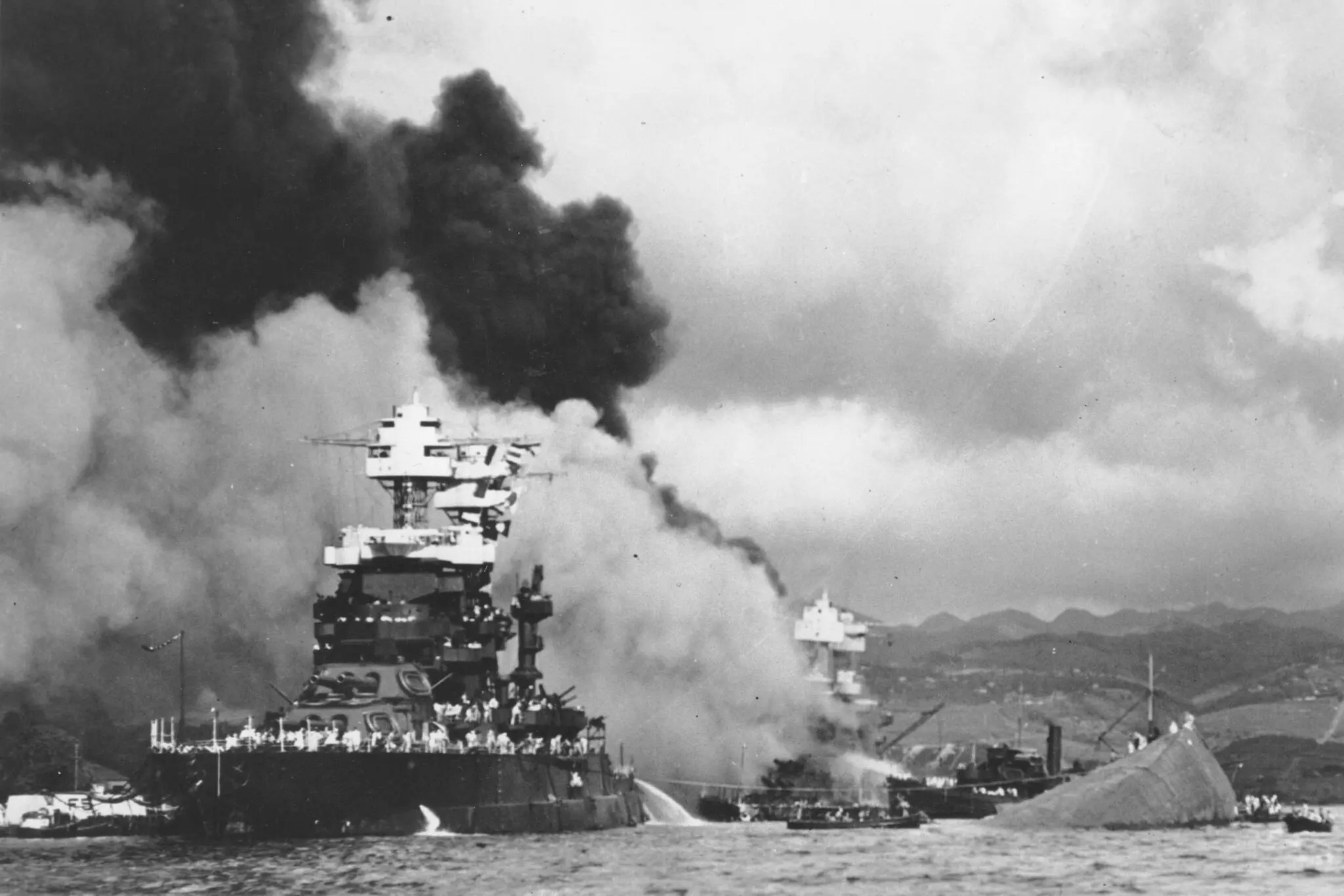
Today, the United States is remembering the Japanese attack on Pearl Harbor on December 7, 1941. Concerns with historical memory and the disappearance of the World War II generation are apparent with this year’s commemoration of the 80th anniversary of the surprise attack and the United States’ entry into the Second World War.
Pearl Harbor, 7 December 1941. Photo: U.S. Navy, AP.
Even as the nation invokes historical memories of Pearl Harbor, it recognizes a certain closure. A program that has worked to identify victims of the attack using DNA techniques has also come to an end this week.
The New York Times reports: “As the nation observes the 80th anniversary of the attack that drew the United States into World War II, the military said this week that a six-year project to identify those killed on the Oklahoma had matched human remains from the ship with the names of 355 sailors and Marines.”
“Thirty-three of the ship’s crew members could not be identified by comparing remains with DNA samples from relatives or dental records as part of the project, which began in 2015 and which officials said had ended.”
The U.S. Navy’s Naval History and Heritage Command has an online reading room on the Pearl Harbor Attack. I am proud to say that Greg Bereiter who earned his Ph.D. at Northern Illinois University, is Branch Chief of the Histories Branch at the Naval History and Heritage Command.
Undergraduate students at Northern Illinois University will be examining the history of war and society with me in my upcoming class, HIST 384 History of War since 1500 during the Spring 2022 semester.
The National Archives and Records Administration has 35 archivist job openings at their location in Spanish Lake, MO.
The job announcement indicates: “This position is part of the National Archives and Records Administration. The purpose of this position is to serve as a member of one of the Reference Service teams, located within one of the Core Units, Military Personnel Records (MPR) Center, National Personnel Records Center (NPRC), National Archives and Records Administration (NARA).”
Northern Illinois University students and graduates in History may be interested in applying for a position with the National Archives and Records Administration.
Historical studies at NIU allow students to develop skills in archival studies, document analysis, and public history that prepare them for jobs in various research, archival administration, library science, information management, and administrative fields.
The full job description is available at the USAJobs website.
France constructed a vast empire in the Caribbean and North America during the early modern period, leaving lasting cultural influence in Francophone Haiti, Louisiana, and Quebec.
Often forgotten is the French imperial territory in the Illinois country and Mississippi valley.
A musical and humanities program sponsored by Illinois Humanities is attempting to highlight Illinois Creoles and their Francophone culture.
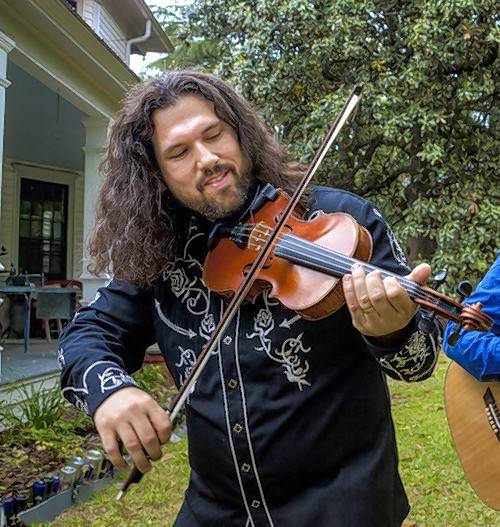
Dennis Stroughmatt is serving as a Road Scholar with Illinois Humanities, presenting “Illinois Creoles, French Canadians, and Louisiana Cajuns: A Continental Story.” Stroughmatt promotes French speaking and singing in the Midwest region of the United States.
Dennis Stroughmatt
Illinois Humanities provides a description of the program: “New France once stretched from the St. Lawrence River of Canada to New Orleans, and within its’ territory lived a vast population of French colonists almost as diverse as they were strong. With the coming of new borders and the formation of new countries like Canada and The United States, these French founders would find themselves divided and even isolated. But their cultures have remained, still existing after two centuries of isolation.”
“This program will take audiences on a journey of discovery where they will hear the history of their arrival, the French dialects they still speak, and the unique music they still perform. And most important, through story and song, played on “Creole Fiddle,” audiences will have fun learning how the French of “The Illinois Country” serve almost as a time capsule for their cousins to the north and south. With a “dash” of Cajun and a “pinch” of Quebecois this program will show how Illinois Creole culture bridges the continental expanse from Canada to Louisiana.”
The Center for Renaissance Studies at the Newberry Library will be offering a NEH Summer Institute for faculty on Mapping the Early Modern World.
Here is the announcement from the Center for Renaissance Studies:
Mapping the Early Modern World
NEH Summer Institute July 18-August 12, 2022 Newberry Library
Application Deadline: March 1, 2022
CRS is pleased to announce a professional development institute for higher education faculty, led by CRS Director Lia Markey and James Akerman, Director of the Herman Dunlop Smith Center for the History of Cartography at the Newberry.
Co-organized by the Newberry Library’s Smith Center for the History of Cartography and its Center for Renaissance Studies, and supported by a grant from the National Endowment for the Humanities, this interdisciplinary institute is designed for non-specialists who have either worked with early modern maps in limited contexts, or who find themselves drawn to the subject for the first time. They will engage with the most recent scholarship, guided by faculty from multiple disciplines. The institute will be grounded in the Newberry’s remarkable collection of early modern cartographic resources and related materials, gaining insights into the complex contributions that the prolific archive of mapping made to transformations in the early modern world.
I am pleased to see that Lael Weinberger has published a review of Samuel Moyn’s Humane: How the United States Abandoned Peace and Reinvented War (2021)!
Lael earned a MA in History at Northern Illinois University and then went on to pursue a JD and PhD in History at the University of Chicago. He is currently serving as Olin-Searle-Smith Fellow in Law at Harvard Law School.
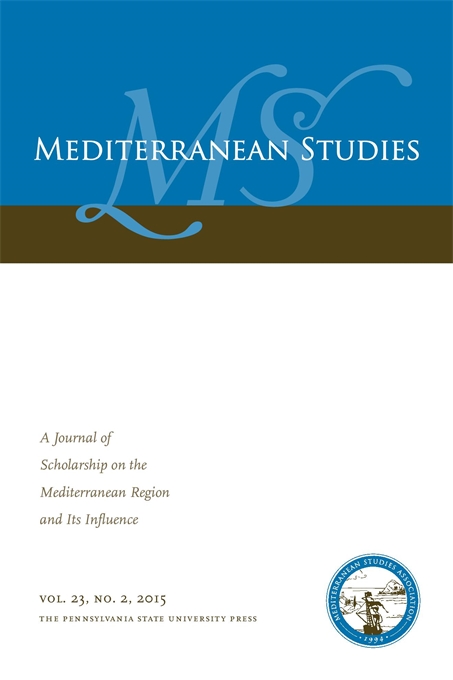
I am happy to report that my most recent article has just been published in Mediterranean Studies. It took a number of years to do the research, writing, rewriting, revisions, and editing to produce the article, but here (finally) it is:
Sandberg, Brian. “‘Moors Must Not Be Taken for Black’: Race, Conflict, and Cultural Translation in the Early Modern French Mediterranean.” Mediterranean Studies 29, no. 2 (2021): 182–212. https://doi.org/10.5325/mediterraneanstu.29.2.0182.
Mediterranean Studies is one of the premier academic journals on Mediterranean history and culture. Here is the journal’s mission statement:
“Mediterranean Studies focuses on the Mediterranean world over a broad chronological span—from Late Antiquity to the Enlightenment. The journal’s interdisciplinary approach includes work on the arts, religions, cultures, histories, and literatures of the Mediterranean world. Contributors come from a wide range of backgrounds, including archeology, English, Jewish studies, history, comparative literature, medieval studies, religion, and art history. Such varied and rich contributions make for vibrant conversations across several disciplines.”
The Center for Renaissance Studies at the Newberry Library is hosting a research methods workshop on Teaching the Early Modern Book: Ways of Seeing, Ways of Thinking.
This is a great opportunity for graduate students interested in the history of printing and cultural history in early modern Europe. Graduate students in History, English, Renaissance studies, and related fields at Northern Illinois University are eligible to seek funding to support their participation, since NIU is a member of the Center for Renaissance Studies Consortium.
Here is the announcement from the Center for Renaissance Studies:
Teaching the Early Modern Book: Ways of Seeing, Ways of Thinking
Research Methods Workshop Friday, February 11, 2022 Led by Michael F. Suarez, SJ (University of Virginia)
Application Deadline: November 1, 2021
Participants in this full-day workshop will learn through examples about the constituent elements of books and how to “read” their meanings and significance. They will also undertake a series of exercises—which they might make use of for their own courses and demonstrations—in bibliography, the formal analysis of printed artifacts (viz., format, edition, impression, issue, state, etc.) and in book history (viz., authorship, patronage, intellectual property, censorship, etc.).
We welcome applications from faculty and graduate students at any level. Priority will be given to applicants from Center for Renaissance Studies consortium institutions. For more information, including a link to submit an application, please visit the event calendar page here: https://www.newberry.org/02112022-teaching-early-modern-book-ways-seeing-ways-thinking
The Center for Renaissance Studies at the Newberry Library has extended the deadline for submissions to their graduate conference in premodern studies.
Graduate students in premodern studies at Northern Illinois University may want to consider submitting a proposal to this conference. NIU is a member of the Newberry Library Consortium, so graduate students can apply for funding to participate in conferences and workshops or to conduct research in Newberry Library collections.
Here is the announcement from the Center for Renaissance Studies at the Newberry Library:
The Center for Renaissance Studies at the Newberry Library is pleased to announce that submissions for our 2022 Multidisciplinary Graduate Conference in Premodern Studies are now open. This annual graduate student conference, organized and run by advanced doctoral students, has become a premier opportunity for emerging scholars to present papers, participate in discussions, and develop collaborations across all fields of medieval, Renaissance, and early modern studies. Participants from a wide variety of disciplines find a supportive and collegial forum for their work, meet future colleagues from other institutions and disciplines, and become familiar with the Newberry and its resources.
In 2022, the conference will adopt a hybrid (virtual and in-person) format. Graduate students may submit proposals for virtual workshops of pre-circulated papers or in-person panel presentations. We will also set aside some space for virtual panel presentations for those who cannot travel but prefer to present traditional papers. Participants may attend both the virtual and in-person portions of the conference, but may only present work at one session. We invite proposals for papers from students in masters or PhD programs on any humanities topic relating to material before 1800. We encourage submissions from disciplines as varied as the literature of any language, history, classics, anthropology, art history, music, comparative literature, theater arts, philosophy, political science, religious studies, transatlantic studies, disability studies, and manuscript studies. All papers must be in English.
The 2022 conference program will include virtual and in-person sessions relating to career diversity, professionalization, and rare book presentations in addition to the workshops and conference panels.
Please note that when submitting a proposal, you must indicate whether you are applying to a virtual workshop with pre-circulated materials (8-12 pages, due January 3, 2022) OR a traditional panel presentation (20-minute papers, primarily in person with some virtual sessions available). You are welcome to submit proposals for both a workshop and a panel presentation, but each proposal must be submitted separately, and you will only be able to present at ONE session.
Abstract submissions will be accepted online only. The extended deadline to submit an abstract through our online submission form is Friday, October 15, 2021 at 11:59pm Central Time.
I tuned in online this week for the launch of the ePublic of Letters lecture series, organized by Monique O’Connell and Brian Maxson.
Brian Maxson did a nice job of kicking off this new lecture series with a lecture on Vespasiano da Bisticci, Florentine bookseller and writer. The talk focused on Vespasiano’s Lives and its depiction of Florentine patricians and other contemporaries during the second half of the fifteenth century.
This lecture fit nicely with the current themes in my course on The Renaissance at Northern Illinois University, since my students have been discussing friendship, political patronage, betrayal, and exile in Renaissance Florence using Dale Kent’s Friendship, Love, and Trust in Renaissance Florence (Cambridge, MA: Harvard University Press, 2009). Vespasiano da Bisticci figures in Kent’s discussion of Cosimo il vecchio de’ Medici’s patronage networks.
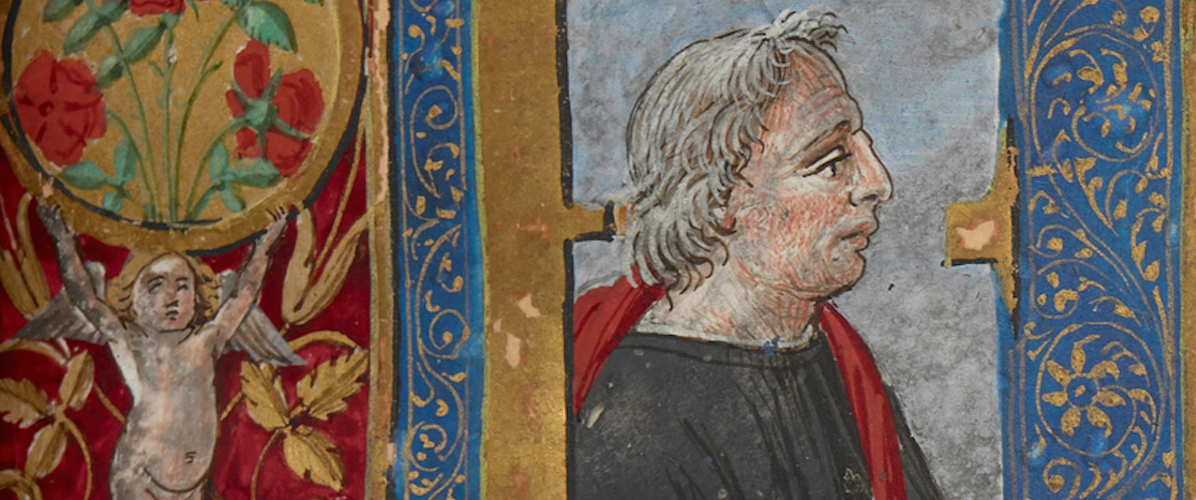
Vespasiano da Bisticci, from Vita di Gianozzo Manetti, Add 9770, f.6r (vellum), British Library.
This lecture is also timely, since Ross King has just published a new popular history of the Renaissance focused on Vespasiano: Ross King, The Bookseller of Florence: The Story of Manuscripts that Illuminated the Renaissance (2021).
The British Library has manuscripts by Vespasiano da Bisticci, including some digitized sources. The University of Bologna hosts a digital humanities project on Vespasiano da Bisticci’s letters.
The ePublic of Letters group expects to launch a website soon.



 Brian Sandberg: Historical Perspectives