Postdoctoral Fellowship on Hérnan Colón

A postdoctoral fellowship in early modern studies is being offered by the Arnamagnæan Institute at the University of Copenhagen.

Here is the Arnamagnæan Institute’s call for applications:

Postdoctoral Position – Hernando Colón’s Book of Books

The Arnamagnæan Institute, Department of Nordic Studies and Linguistics, Faculty of Humanities, University of Copenhagen Denmark, invites applications for a two year postdoctoral position to be filled by 1 April 2020 or as soon as possible thereafter.

Hernando Colón’s Book of Books
Earlier this year a remarkable discovery was made at the University of Copenhagen’s Arnamagnæan Institute, when one of the manuscripts in the collection was positively identified as El libro de los epítomes, one of the principal bibliographical tools from the library of Hernando Colón (1488-1539), son of the navigator Christopher Columbus.

Long believed to be missing, the book’s discovery has been hailed as one of the most exciting developments in early modern book history for decades, and the University of Copenhagen has therefore decided to launch a three-year research project focusing on this remarkable book. Funding for the project is provided by the Carlsberg Foundation.

The Principal Investigator is Professor Matthew Driscoll of the Arnamagnæan Institute, who will oversee the production of an edition and translation of the Libro, both in digital and print form.

Job content
The project is seeking a postdoctoral researcher, to be based at the Arnamagnæan Institute, for a two-year period starting at some point between 1 April 2020, the project’s starting date, and 1 April 2021. The successful candidate will be expected to assist with the editorial work by, among other things:

  • Identifying the books which are summarised in the Libro and linking them to entries in the other bibliographical tools in Colón’s library.
  • Determining whether the books still exist in Colón’s library, and finding copies and descriptions elsewhere; identifying digital copies where they exist.
  • Mapping the book-trade in the early 16th century on the basis of Colón’s notes and comments.
  • And, most importantly, analysing the epitomes as evidence of reading practices in the 16th century, and situating them within/against other contemporary practices by humanists and other scholars from across Europe and beyond.

Qualification requirements
In order to be considered for the position applicants must have research qualifications at least corresponding to what can be achieved as part of a successfully completed PhD within a relevant field.

Applicants should have a PhD-degree or equivalent in a relevant subject, such as Classical philology, Spanish or Early Modern History. Requirements for the position include:

  • A solid knowledge of Latin, especially medieval and early modern, as well as fluency in Spanish and, ideally, Italian and French. English is the working language of the project and hence also required at a high level. Familiarity with Danish, or a willingness to acquire such, would be an advantage but is not required.
  • A background in book and collection history, European literature and the history of ideas in the early modern period.
  • Experience in conducting research into primary sources in archives and special collections libraries.
  • Familiarity with digital tools and techniques used in humanities.

For further information about the position, please contact professor Matthew Driscoll, mjd@hum.ku.dk.

See the full call for applications on H-Net.
Posted in Archival Research, Cartographic History, Court Studies, Cultural History, Early Modern Europe, Early Modern World, Empires and Imperialism, European History, Globalization, History in the Media, History of the Book, Humanities Education, Information Management, Intellectual History, Museums and Historical Memory, Noble Culture and History of Elites, Political Culture, Reformation History, Religious History, Renaissance Art and History, Warfare in the Early Modern World, World History | Leave a comment

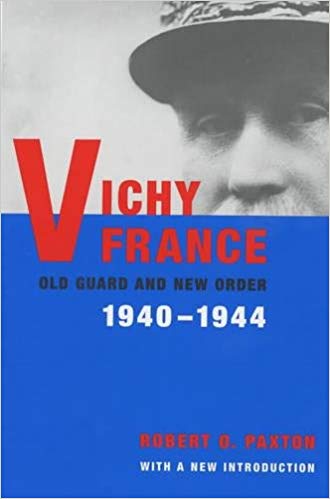
Vichy France Offers Insights into the Trump Era

The Vichy government in occupied France during the Second World War became notorious for its collaboration with Nazi Germany and its organization of deportations of Jews and its participation in the bureaucratic mechanisms of the Holocaust.

The Vichy regime and its history continue to be highly controversial in modern French politics and the labels Vichy or collabo can be used as insults in French language. Since the 1980s, the legacy of Vichy collaboration with Nazi Germany has emerged as a key aspect in debates over French politics and historical memory, based on the historical research of Robert O. Paxton and other historians of Vichy France.

In a new op-ed piece, French historian Robert Zaretsky considers whether the history of Vichy France offers insights in to America in the Trump Era.

Zaretsky’s op-ed appears in the New York Times.

Posted in European History, European Union, French History, History in the Media, History of Violence, Human Rights, Museums and Historical Memory, War, Culture, and Society | Leave a comment

Operation Night Watch

The Rijksmuseum in Amsterdam has launched Operation Night Watch, a project to restore Rembrandt van Rijn’s Night Watch in view of museum audiences and live streaming online.

The restoration of Night Watch is part of the Rijksmuseum’s Year of Rembrandt in 2019, celebrating the 350th anniversary of the death of the famous Dutch artist.

Night Watch is a great artistic masterpiece, but also an important historical document of Dutch civic patriotism and military culture during the Dutch Revolt (1566-1648), one of the major conflicts of the European Wars of Religion.

Operation Night Watch and the live stream of restoration of Night Watch is available on the Rijksmuseum website. The Rijksmuseum also has a virtual tour of the iconic painting online. The museum’s website also has further information on the artist Rembrandt van Rijn.


Posted in Art History, Civil Conflict, Civilians and Refugees in War, Cultural History, Early Modern Europe, Early Modern World, European History, European Wars of Religion, History in the Media, Museums and Historical Memory, Noble Culture and History of Elites, Political Culture, Reformation History, Revolts and Revolutions, War, Culture, and Society, Warfare in the Early Modern World | Leave a comment

Oral History Jobs

Many cultural organizations and foundations hire historians to conduct historical research, analyze historical sources, present historical findings, and manage archival collections.

The HistoryMakers, a non-profit organization based in Chicago, is currently hiring video oral historians. Here is the announcement:

The HistoryMakers seeks to hire a full-time Video Oral History Publisher in order to make The HistoryMakers Digital Archive accessible to users worldwide. Those hired must have a background in African American, American, women and gender studies, anthropology, social history, economics, politics, STEM/medicine, the arts, library or information science or other related fields and will work as  part of a publishing team that will process and add 40-45 interviews/month to The HistoryMakers Digital Archive (each interview is 3-6 hours in length). The person hired must have excellent writing skills. They must also have prior experience as a proofreader/editor and be an expert researcher and writer who can accurately describe in a concise and accurate manner the contents of each videotaped segment. The interviews cover 20th century history interviews across a wide variety of occupations, geographic areas and fields (i.e. STEM, law, art, education, music, etc.). The publisher will be responsible for:

  • Watching the assigned interviews in The HistoryMakers Video Oral History Collection (www.thehistorymakers.org) and proofreading each interview under a 3-4 interviews per week quota system;
  • Audit/editing the assigned interviews and dividing the interviews with chapter headings to provide for easy access;
  • Writing abstracts for each 30 minutes videotaped section of the assigned interview;
  • Evaluating each assigned interview in accordance with The HistoryMakers guidelines and procedures (www.thehistorymakers.org);
  • Choosing video clips and assigning clip titles that reflect the clip’s contents for use in future productions and for use on The HistoryMakers website;
  • Writing social media posts and blogs that reflect the content of the interviews;
  •  Performing quality control testing on the assigned interviews and uploading them to The HistoryMakers Digital Archive; and
  • Working as a part of a team in order to process and add 40-45 interviews per month to The HistoryMakers Digital Archive.

Candidates must have strong administrative skills (type 60 wpm), be naturally detailed, and possess superior proofreading and organizational skills. Prior experience with detailed paper file, desktop and electronic file management along with prior experience working with databases. Candidates must also demonstrate their interest in furthering The HistoryMakers mission and growth.

For more information, see the full job posting on H-Net.

Posted in Careers in History, Digital Humanities, Graduate Work in History, History in the Media, Humanities Education, Museums and Historical Memory, Undergraduate Work in History | Leave a comment

New Italian Paleography Website

The Center for Renaissance Studies at the Newberry Library has created a new Italian paleography website and digital resource.

This resource will be incredibly useful resource for advanced undergraduate students, graduate students, and researchers in Renaissance studies.

Here is the Center for Renaissance Studies’ announcement:

The Newberry Library’s Center for Renaissance Studies proudly launches a new digital resource devoted to Italian paleography, sponsored by the Andrew W. Mellon Foundation. Paleography, the study of the history of handwriting and scripts in books, manuscripts, and other documents, is essential for scholarly research in the humanities for the premodern period.  Created and edited by Isabella Magni (Newberry Library), Lia Markey (Newberry Library), and Maddalena Signorini (Università di Roma-Tor Vergata) in collaboration with the University of Toronto Libraries Information Technology Services and the Walter J. Ong S.J. Center for Digital Humanities at St. Louis University, this new website provides pedagogical tools for the study of Italian vernacular handwriting from 1100 to 1700 using manuscripts in the Newberry collections as well as other US institutions. The new paleography site complements a resource devoted to French paleography launched in 2016, also funded by the Mellon Foundation and designed in partnership between the Newberry, Toronto, and St. Louis. Like the French site, the intended audience of the Italian site is varied: scholars preparing to conduct research in Italian archives; students studying Italian language, history and culture; curators, librarians, and archivists who work with manuscripts; calligraphers and graphic designers interested in historical scripts; and anyone who would like to experiment with transcribing early Italian documents.

The site features 102 digitized manuscripts representing 7 different types of scripts and 3 difficulty levels. Each manuscript is paired with a transcription and a scholarly entry written by a specialist in the field. These background essays provide the historical, cultural, and at times codicological context for the manuscripts. Using the Ong Center’s transcription tool, T-PEN, users of the site can transcribe the documents and save their transcriptions online.  The site includes a handbook describing the various types of scripts and providing the history of the vernacular in medieval and Renaissance Italy. The site also comprises an appendix with significant manuscript calligraphy books and maps from Italy in the Newberry collections to showcase the library’s rich holdings and to provide another context for studying handwriting from the period. Finally, examples of abbreviations and symbols, a glossary of paleography terms, links to dictionaries, and bibliography and references provide essential resources for the study of Italian paleography. Over the next year, the team plans to incorporate teaching materials to make integration of the site into the classroom seamless.

You can access the Italian Paleography website here: https://italian-paleography.library.utoronto.ca

Follow the website on Twitter at: https://twitter.com/italpaleography

For more information, see the website of the Center for Renaissance Studies at the Newberry Library.

Posted in Archival Research, Court Studies, Digital Humanities, Early Modern Europe, Early Modern World, European History, Graduate Work in History, Italian History, Mediterranean World, Noble Culture and History of Elites, Reformation History, Renaissance Art and History, The Past Alive: Teaching History | Leave a comment

Historical Archivist Jobs

Many federal, state, and local government institutions offer historical archivist jobs, as do museums, corporations, and non-for-profit organizations. Historical archivists typically work with collections of personal papers, official records, company files, material objects, and miscellanea.

Archivio di Stato di Venezia (State Archives of Venice)

History undergraduate and graduate students are trained in archival methods and have experience in conducting research in archives and special collections. So, they are well prepared to work as historical archivists, humanities librarians, and specialized researchers.

History Associates is currently offering several positions for historical archivists, working with former government officials’ papers.

The History Associates job ads are available online on H-Net.


Posted in Archival Research, Careers in History, Jobs and Positions, Museums and Historical Memory | Leave a comment

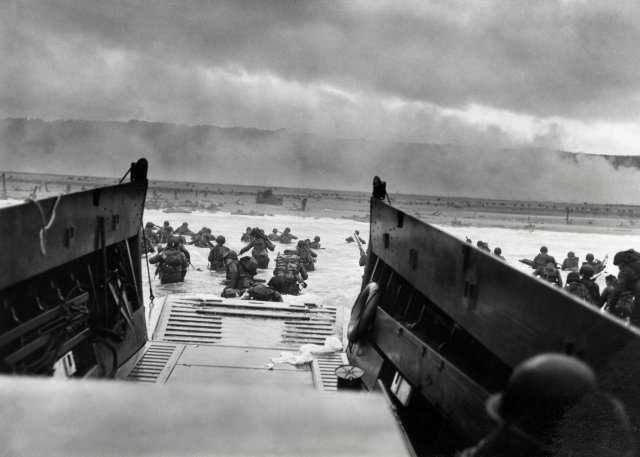
D-Day 75th Anniversary

Today is the 75th Anniversary of the D-Day landings in Normandy during the Second World War.  So, the Second World War is front-page news today in news media around the world, and many of the reports have a direct link to my course on War in Film at Northern Illinois University.

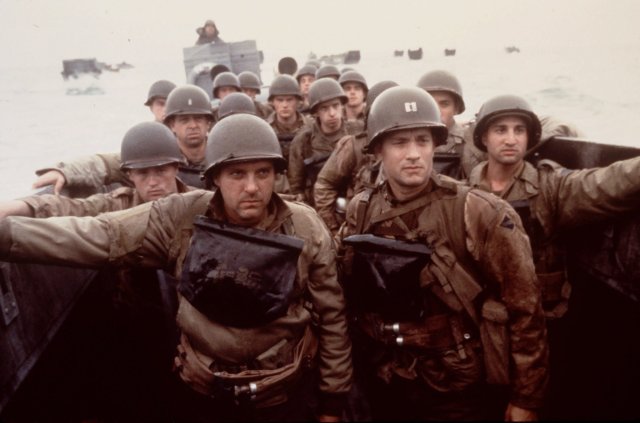
The New York Times published an interesting article on “‘Saving Private Ryan’ Got My Dad to Finally Talk About the War.”

Here is a link to the article: https://www.nytimes.com/2019/06/05/opinion/d-day-movies-75th-anniversary.html

Historical anniversaries and commemorations often represent important moments for historical reflection and reinterpretation. So, students interested in the Second World War on film should scout out the coverage of the D-Day commemorations today and the rest of the week.

The BBC reports on official commemorations of D-Day in Normandie, France. The New York Times has additional coverage of the D-Day commemorations, as well as articles on Ernie Pyle‘s wartime reporting, D-Day battlefield archaelogy in Normandie, and historical memory of D-Day in France.


Posted in European History, European Union, French History, Historical Film, History of Violence, Museums and Historical Memory, War and Society, War in Film, War, Culture, and Society | Leave a comment

Political Realism in Apocalyptic Times

This week’s horrific Easter bombings in Sri Lanka remind us once again of the troubling presence of religious violence in today’s world.

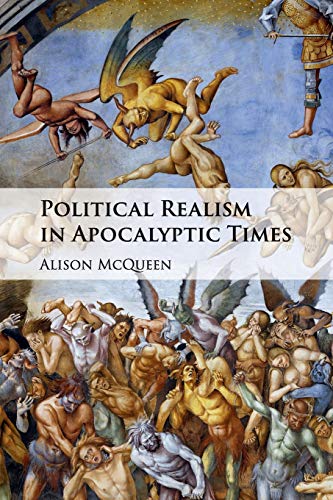
Alison McQueen recent book, Political Realism in Apocalyptic Times (Cambridge: Cambridge University Press, 2018), grapples with the politics of apocalyptic thinking and the role of religion in political theory.

My review of Alison McQueen’s Political Realism in Apocalyptic Times has just been published by The Strategy Bridge. 

I write: “We seem to be living in apocalyptic times. Since the September 11 attacks in 2001, apocalyptic language and visions of worldly destruction have proliferated in American political culture and news media and around the world. George W. Bush’s crusading Global War on Terror rhetoric employed frequent allusions to God’s will and the Last Judgment. The massive American bombardment and invasion of Iraq—accompanied by oil fires, looting, and destruction—produced a wealth of apocalyptic imagery. The ensuing sectarian conflict during the Iraq War fueled horrific killings, market bombings, and massacres. The brutality of the Syrian Civil War has prompted millions of Syrians to flee as refugees from a war-torn and devastated landscape. Militants have claimed to be acting to establish an Islamic State in Iraq and Syria in preparation for the end times. Civil warfare and religious violence in Nigeria, Congo, Libya, Sudan, Somalia, Pakistan, Myanmar, Indonesia, and other nations is often described in apocalyptic terms. Meanwhile, climate scientists warn of the potentially devastating effects of global warming, leading many journalists to offer apocalyptic predictions of global disaster.”

“Within this context, Alison McQueen’s Political Realism in Apocalyptic Times offers a refreshing approach to religion in political theory. …”

My review of Alison McQueen’s Political Realism in Apocalyptic Times is available online at The Strategy Bridge

Posted in History of Violence, Political Culture, Political Theory, Religious History, Religious Politics, Religious Violence, Renaissance Art and History, Strategy and International Politics, War and Society, War, Culture, and Society | Leave a comment

Last Doolittle Raider Dies

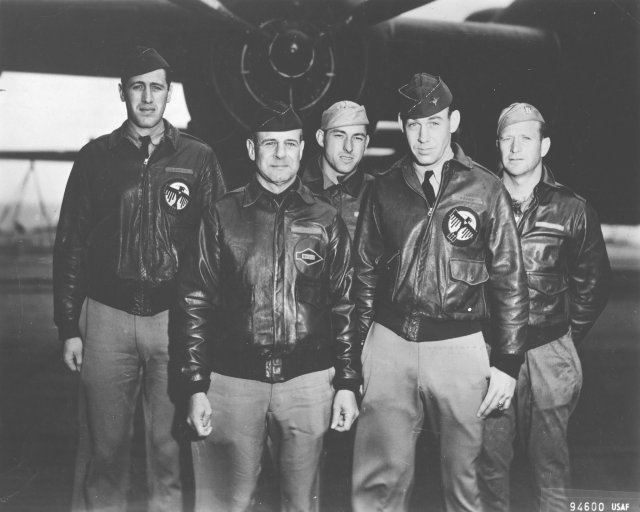
Lt. Richard E. Cole, the last crewmember of the Doolittle Raiders, has died. Lt. Richard E. Cole, known as Dick Cole, was co-pilot on the lead plane, piloted by Lt. Col. James H. Doolittle, during a bombing mission on Tokyo in April 1942.

Sixteen B-25 bombers of the U.S. Army Air Corps launched from the USS Hornet aircraft carrier on 18 April 1942, on a mission to bomb Tokyo, in an attack that became known as the “Doolittle Raid.”

The New York Times reports: “Richard E. Cole, who was Jimmy Doolittle’s co-pilot in the lead plane of a storied mission in the history of American air power, the bombing raid on Japan in retaliation for its attack on Pearl Harbor months earlier, died on Tuesday in San Antonio. He was 103 and the last survivor of the 80 Doolittle raiders, who carried out America’s first strikes against the Japanese homeland in World War II.”

Lt. Richard E. Cole, co-pilot, is pictured second from the right in this photo. Photo credit: U.S. Air Force.

Students in HIST 384 History of War since 1500 at Northern Illinois University will be interested in this story, having read John Dower’s War Without Mercy, while studying the Pacific War this semester.

For context on the Doolittle Raid and the Pacific War, see:

Gunter Bischof and Robert L. Dupont, eds., The Pacific War Revisited (Baton Rouge, LA, 1997).

John W. Dower, War Without Mercy: Race and Power in the Pacific War (New York, NY:
Pantheon Books, 1986).

Richard B. Frank, Downfall: The End of the Imperial Japanese Empire (1999).

Ronald Spector, Eagle Against The Sun: The American War With Japan (1985).

The New York Times has published an obituary on Dick Cole.  CNN also reports on Dick Cole’s death.

Posted in History in the Media, Maritime History, Strategy and International Politics, War and Society, War, Culture, and Society | 1 Comment

Swiss Reformation Conference

The H. Henry Meeter Center will host “The Swiss Reformation at 500,” a two-day conference to mark the beginning of the Swiss Reformation in 1519, when Huldrych Zwingli started his work in Zurich. Bruce Gordon (Yale Divinity School), Amy Nelson Burnett (University of Nebraska-Lincoln), John Roth (Goshen College), Jordan Ballor (Acton Institute), and Esther Chung-Kim (Claremont McKenna College) will assess the impact of Zwingli’s work and of the Swiss Reformation and its significance for us today. Please join us on September 13-14, 2019 at Calvin Theological Seminary (3233 Burton St. SE, Grand Rapids, MI 49546).

For more information and to register, see https://calvin.edu/…/meeter-c…/swiss-reformation-conference/.

Posted in Conferences, Early Modern Europe, European Union, European Wars of Religion, Reformation History, Religious History, Renaissance Art and History | Leave a comment