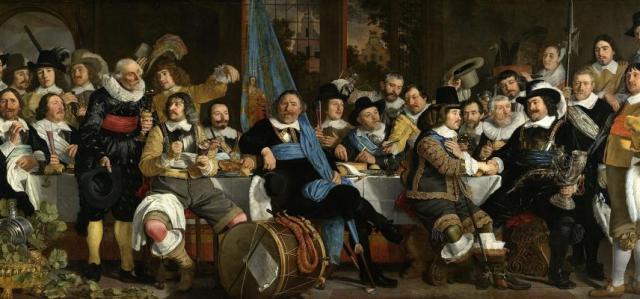
Postdoctoral Fellowships on the European Fiscal-Military System

The Faculty of History at the University of Oxford is seeking six Research Associates to join the team from September 2019, or as soon as possible thereafter, for an ambitious 5-year multi-national research project. ‘The European Fiscal-Military System 1530-1870’ is funded by a €2.5 million European Research Council Advanced Grant, directed by Professor Peter Wilson, and hosted and coordinated by the University of Oxford.

Through six case studies (one for each appointee), this project will detail the extent to which co-operative processes were intrinsic to the growing scale of warfare and the rise of the European states system.

You will conduct independent research on one of the project’s six case studies, in libraries and archives in the UK and abroad. You will collaborate with the wider project team, take part in meetings, workshops and conferences, and contribute to public engagement work.

You will hold a doctorate in a relevant field (or show evidence that a doctorate is imminent), have sufficient knowledge of the languages relevant to your case study, and outstanding spoken and written English. You will have excellent communication and data handling skills, a demonstrable capacity for independent research and be capable of working to strict deadlines.

These posts are fixed-term for up to 3 years. For an informal discussion about the role, please contact Professor Peter Wilson: peter.wilson@history.ox.ac.uk.

For Further Particulars and how to apply, visit https://www.recruit.ox.ac.uk/pls/hrisliverecruit/erq_jobspec_version_4.jobspec?p_id=138343

This announcement was posted on H-Net.

Posted in Archival Research, Early Modern Europe, Early Modern World, Empires and Imperialism, European History, Grants and Fellowships, History of Violence, Reformation History, Renaissance Art and History, State Development Theory, Strategy and International Politics, War and Society, War, Culture, and Society, Warfare in the Early Modern World | Leave a comment

Featured Review on War and Culture in American Historical Review

I am happy to report that my review essay on three new books on war and culture in early modern Europe has been published in the American Historical Review (AHR).

The books under review are:

Ilya Berkovich. Motivation in War: The Experience of Common Soldiers in Old-Regime Europe. New York: Cambridge University Press, 2017. Pp. xii, 280. $29.99.

Christy Pichichero. The Military Enlightenment: War and Culture in the French Empire from Louis XIV to Napoleon. Ithaca, N.Y.: Cornell University Press, 2017. Pp. xi, 301. $49.95.

Thomas Dodman. What Nostalgia Was: War, Empire, and the Time of a Deadly Emotion. (Chicago Studies in Practices of Meaning.) Chicago: University of Chicago Press, 2018. Pp. xi, 275. $35.00.

This review essay was selected to appear as a featured review in the latest issue of AHR. Here is the full citation: American Historical Review 123:5 (December 2018): 1629-1633.

The review essay is available online at the AHR website on Oxford Academic.


Posted in Early Modern Europe, European History, French History, French Revolution and Napoleon, History of Violence, Revolts and Revolutions, War and Society, War, Culture, and Society, Warfare in the Early Modern World | Leave a comment

Newberry Library Early Career Fellowships

Center for Renaissance Studies, Newberry Library

Early Career Postdoctoral Fellowship, 2019-2020

Application Deadline: January 4, 2019

The Center for Renaissance Studies (CRS) at the Newberry Library is pleased to announce an Early Career Postdoctoral Fellowship for recent PhDs from one of our CRS consortium schools. Applicants must have the PhD in hand by June 2019 or have recently completed the PhD in 2018. Half of the fellow’s time will be devoted to research of her/his choosing and half time to working with the CRS on projects related to the activities of a lively Renaissance research center, including curatorial work, digital humanities initiatives, programming, paleography studies, and collection presentations of rare books and materials. Applicants are invited from all fields of the humanities whose work is particularly well connected to the Newberry’s medieval and early modern collections.

Due date: 11:59 PM CST on January 4th, 2019

Stipend amount: $4,200 a month plus health insurance

Eligibility: PhD from a CRS consortium university in 2018 or by June 2019

Requirements: letter of interest, project description, CV, 3 letters of recommendation (one from the PhD advisor)

Duration: 10 months starting September 3, 2019

Applications will be accepted online only. For a step-by-step guide for preparing to submit your application, visit http://www.newberry.org/how-apply

Please direct all inquiries regarding the fellowship to renaissance@newberry.org.

Posted in Digital Humanities, Early Modern Europe, Early Modern World, European History, Graduate Work in History, Grants and Fellowships, Reformation History, Renaissance Art and History | Leave a comment

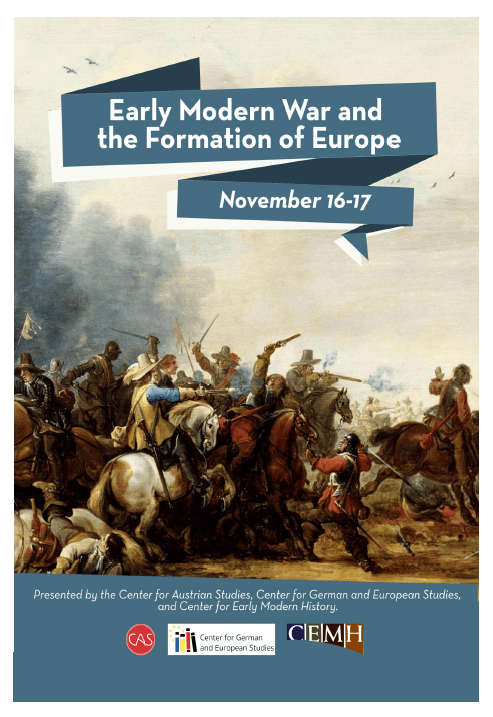
Early Modern War and the Formation of Europe

The Center for Austrian Studies at the University of Minnesota at Minneapolis hosted an interdisciplinary conference on Early Modern War and the Formation of Europe this weekend (16-17 November 2018).

The conference included diverse perspectives on war, culture, and society in the seventeenth century from historians, art historians, musicologists, and literary scholars. I was pleased to be able to participate in the conference and present new research on the concept of religious warfare and the language of “troubles” in early modern France.

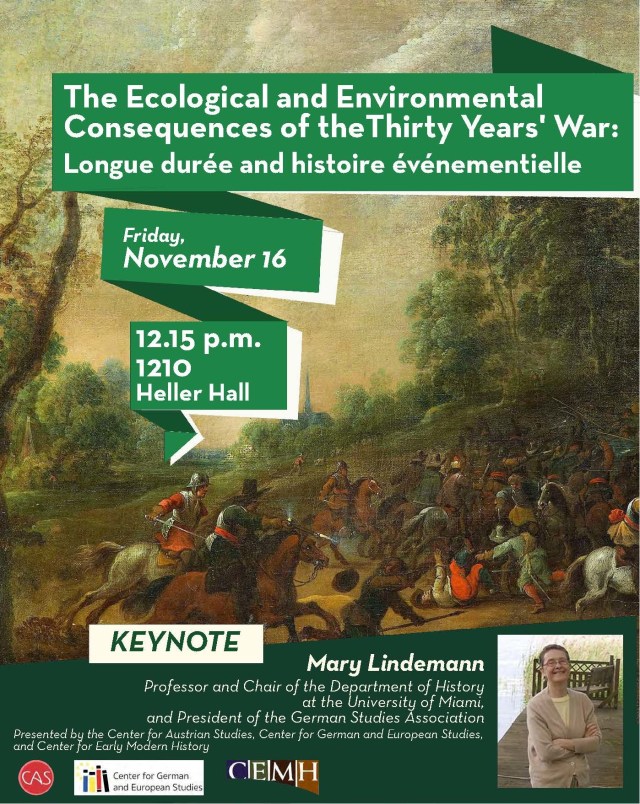
Mary Lindemann delivered a keynote lecture on “The Ecological and Environmental Consequences of the Thirty Years’ War: Longue durée and histoire événementielle” at the conference.

The conference Program is available as a .pdf file.

Posted in Conferences, Cultural History, Early Modern Europe, Early Modern World, Empires and Imperialism, European History, European Wars of Religion, French Wars of Religion, History of Violence, Mercenaries, Noble Culture and History of Elites, Reformation History, Religious Violence, War and Society, War, Culture, and Society, Warfare in the Early Modern World | Leave a comment

Afro-Atlantic Histories

A massive art exhibition on Afro-Atlantic Histories recently opened at the São Paulo Museum of Art (MASP) in São Paulo, Brazil. The exhibition includes early modern, modern, and contemporary artworks depicting Afro-Americans and their experiences in Brazil and the Atlantic World.

Holland Cotter, a New York Times art critic, raves about the exhibition: “It’s worth going a distance for greatness. And great is what the exhibition “Histórias Afro-Atlânticas” (“Afro-Atlantic Histories”) is. With 450 works by more than 200 artists spread over two museums, it’s a hemispheric treasure chest, a redrafting of known narratives, and piece for piece one of the most enthralling shows I’ve seen in years, with one visual detonation after another.”

Cotter argues that “the story of the westward African diaspora has been told many times, but never, in my experience, with this breadth or geographic balance. The European trade in black bodies hit South America early in the 16th century, and lingered late. By the time slavery was officially abolished in Brazil in 1888 — the show coincides with the 130th anniversary of that event — the country had absorbed well over 40 percent of some 11 million displaced Africans. Today it is home to the world’s largest black population outside of Nigeria.”

Holland Cotter’s review of the exhibition is available on the New York Times website.

Posted in Art History, Atlantic World, Cultural History, Early Modern World, Empires and Imperialism, Globalization, History in the Media, History of Violence, Human Rights, Maritime History, Museums and Historical Memory | Leave a comment

Magic, Religion, and Science

The Arizona Center for Medieval and Renaissance Studies is organizing a conference on Magic, Religion, and Science in the Global Middle Ages and Renaissance, which will be held in Phoenix in February 2019.

“The ACMRS and MAP Joint Conference: Magic, Religion, and Science in the Global Middle Ages and Renaissance (2019) ​​​is ​​​an ​​​annual ​​​gathering ​​​of ​​​scholars, ​​​students, ​​​retirees ​​​and ​​​members ​​​of ​​​the ​​​general ​​​public ​​​interested ​​​in ​​​medieval and Renaissance ​​​studies. ACMRS is proud to announce that its 2019 conference will be held jointly with the Medieval Association of the Pacific. We welcome papers that explore any topic related to the study and teaching of the Middle Ages and Renaissance and especially those that focus on the general theme of ​​​“Magic, Religion, and Science ​​​in ​​​the ​​​Global ​​​Middle ​​​Ages ​​​and ​​​Renaissance.” The ​​​conference ​​​lasts ​​​four ​​​days, ​​​from ​​​Wednesday, ​​​February ​6​, ​​​with ​​​sessions ​​​beginning ​​​at ​​​1 ​​​p.m., ​​​until ​​​Saturday, ​​​February ​​​9 ​​​at ​​​9 ​​​p.m.” ​

The Arizona Center for Medieval and Renaissance Studies website has further information on this upcoming conference.

Posted in Conferences, Early Modern Europe, Early Modern World, European History, Reformation History, Religious History, Renaissance Art and History | Leave a comment

The Eighty Years’ War and the Birth of the Netherlands

The Rijksmuseum in Amsterdam is inaugurating a major new exhibition on the Dutch Revolt (or the Eighty Years’ War) next week.

The curators explain that “This year is the 450th anniversary of the outbreak of the Eighty Years’ War, and to mark the event the Rijksmuseum is holding an exhibition entitled ’80 Years’ War. The Birth of the Netherlands’. From 12 October 2018 to 20 January 2019, satirical cartoons, items of clothing, weapons and paintings by Bruegel, Rubens and Ter Borch will be our ‘eyewitnesses’, telling the story of how the Dutch nation was born.”

Just in time for Northern Illinois University students to discuss the Dutch Revolt in my course on the European Wars of Religion, the Rijksmuseum has launched a website associated with the exhibition.

The overview reads: “In a contemporary exhibition created by the Flemish stage designer Roel van Berckelaer, the Rijksmuseum will show how the 80 Years’ War changed and shaped the Netherlands, and how this conflict gave the southern Netherlands, now Belgium, a distinct character. 80 Years’ War is the first major exhibition to encompass the entire conflict and place it in its international context. It raises many issues – such as religious freedom, self-determination, terror and persecution – that remain highly topical today.”

The 80 Years’ War website at the Rijksmuseum provides information on the exhibition and links to supporting materials.

Posted in Art History, Civil Conflict, Civilians and Refugees in War, Cultural History, Digital Humanities, Early Modern Europe, Early Modern World, Empires and Imperialism, European History, European Wars of Religion, History in the Media, History of Violence, Museums and Historical Memory, Reformation History, Religious History, Religious Politics, Religious Violence, Renaissance Art and History, War and Society, War, Culture, and Society, Warfare in the Early Modern World | Leave a comment

Suffocating Democracy

Historian Christopher R. Browning (who is professor emeritus at the University of North Carolina at Chapel Hill) just published a provocative essay on the suffocation of democracy in the United States, drawing comparisons between current American politics and the politics of interwar Germany.

Browning explains that, “As a historian specializing in the Holocaust, Nazi Germany, and Europe in the era of the world wars, I have been repeatedly asked about the degree to which the current situation in the United States resembles the interwar period and the rise of fascism in Europe. I would note several troubling similarities and one important but equally troubling difference.”

The essay argues that President Trump administration’s policies of isolationism and the undermining of democratic institutions reflect patterns from interwar international relations, the waning of Weimar democracy, and the rise of National Socialism (Nazism) in Germany.

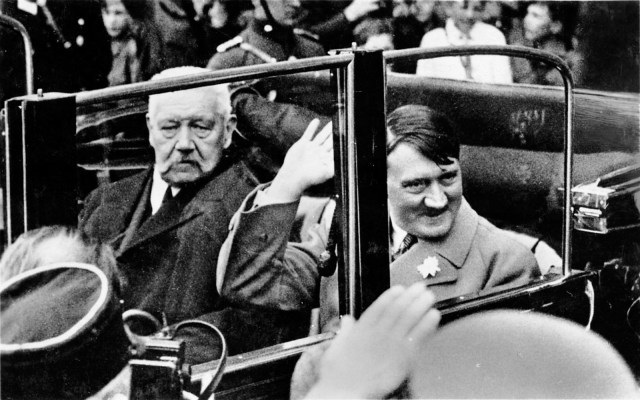
Interestingly, instead of comparing Adolf Hitler and President Trump, Browning draws a direct comparison between President Hindenburg and Mitch McConnell. Browning points out that “Paul von Hindenburg, elected president of Germany in 1925, was endowed by the Weimar Constitution with various emergency powers to defend German democracy should it be in dire peril. Instead of defending it, Hindenburg became its gravedigger, using these powers first to destroy democratic norms and then to ally with the Nazis to replace parliamentary government with authoritarian rule. Hindenburg began using his emergency powers in 1930, appointing a sequence of chancellors who ruled by decree rather than through parliamentary majorities, which had become increasingly impossible to obtain as a result of the Great Depression and the hyperpolarization of German politics.”

German President Paul von Hindenburg and Chancellor Adolf Hitler on their way to a youth rally at the Lustgarten, Berlin, May 1933

Culture Club/Getty Images

Browning claims that “If the US has someone whom historians will look back on as the gravedigger of American democracy, it is Mitch McConnell. He stoked the hyperpolarization of American politics to make the Obama presidency as dysfunctional and paralyzed as he possibly could. As with parliamentary gridlock in Weimar, congressional gridlock in the US has diminished respect for democratic norms, allowing McConnell to trample them even more. Nowhere is this vicious circle clearer than in the obliteration of traditional precedents concerning judicial appointments.”

However, Browning finds that the current Republican authoritarianism in the United States is very different from early twentieth-century fascism in Italy and Germany in several ways. “The domestic agenda of Trump’s illiberal democracy falls considerably short of totalitarian dictatorship as exemplified by Mussolini and Hitler,” according to Browning.

Browning’s essay entitled “The Suffocation of Democracy” is published online in  The New York Review of Books (and will appear in the 25 October 2018 print edition).


Posted in European History, History in the Media, Political Culture, State Development Theory, War, Culture, and Society | Leave a comment

Portuguese Shipwreck Found

Marine archaeologists are exploring the site of an early modern Portuguese shipwreck.

NPR reports that “A 400-year-old shipwreck that signified a time when the spice trade between Portugal and India was booming has been uncovered 40 feet below the water’s surface during a dredging project. The shipwreck was discovered off the coast of Cascais, Portugal, not far from the capital, Lisbon.”

A team of marine archaeologists is now conducting excavations to recover artifacts from the shipwreck.  Jorge Freire, director of the project, claims that “from a heritage perspective, this is the discovery of the decade. … In Portugal, this is the most important find of all time.” (Reuters)

The NPR report on the shipwreck is available on their website.  BBC and Reuters provide additional reporting on the shipwreck.

Posted in Early Modern Europe, Early Modern World, Empires and Imperialism, European History, Food and Cuisine History, Maritime History, Material Culture, War and Society, Warfare in the Early Modern World | Leave a comment

Femmes à la Cour de France

Femmes à la cour de France. Charges et fonctions (XVe – XIXe siècle), ed. Caroline zum Kolk, Kathleen Wilson-Chevalier (Villeneuve d’Ascq, Septentrion, 2018), ISBN-102757423614, will soon be published.


This collective volume on women at the royal court of France in the early modern period includes interdisciplinary studies in English and French languages on noblewomen and their households, their official and family roles, women and court politics, motherhood and parenting, mistresses and sexuality, and gender and court culture.

I contributed an essay on “« Je ne vis jamais cette cour plus pleine de tourment » : Montmorency Women and Confessional Politics at Court during the French Wars of Religion,” to the volume.

This collective volume is an outgrowth of an engaging conference on Femmes à la cour de France – charges et fonctions (Moyen Âge – XIXe siècle) that was organized by Caroline zum Kolk and Kathleen Wilson-Chevalier and held at the Institut d’Études Avancées de Paris in October 2015.

Scholars working on early modern women, gender, and sexuality will be interested in this volume, as will historians of the French court and early modern France.


Posted in Early Modern Europe, Early Modern World, European History, European Wars of Religion, French History, French Wars of Religion, Noble Culture and History of Elites, Paris History, Political Culture, Women and Gender History | Leave a comment