Summer Archival Studies Seminar

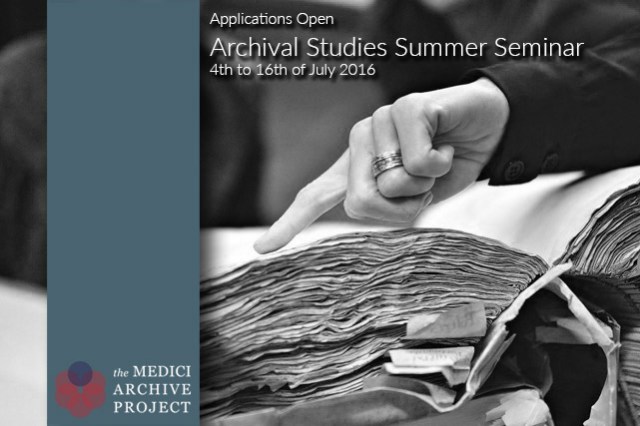
The Medici Archive Project is offering a Archival Studies Seminar in Florence this summer.
MAP-ArchivalStudies

The call for applications reads:

The Medici Archive Project (MAP) is pleased to announce the call for participation in our summer seminar in archival studies and early modern Italian palaeography in Florence, Italy. Taught in a series of lectures and supported by MAP’s resident faculty and visiting scholars, students will be immersed into Italian archives (with particular emphasis on Florentine archival collections); examine in-depth various documentary typologies; read diverse early modern scripts; and learn how to plan research in archives and libraries across Italy. This seminar is especially relevant for advanced graduate students studying Renaissance and early modern topics. Participating students will be taught at the Archivio di Stato in Florence, as well as at other archives in Florence and Rome. Aside from the lectures regularly taught by the MAP staff, this seminar will also feature three guest lecturers.

Guest Instructors:

Tamar Herzig is Associate Professor of Early Modern European History, specializing in the religious history of fifteenth- and sixteenth-century Italy and in gender history. She serves as Director of Tel Aviv University’s Morris E. Curiel Institute for European Studies. The guest lecture will be entitled Letters and Registers in the Este and Gonzaga Archives.

Marcello Simonetta is Professor of European Political History at Sciences Po and at the American University of Paris. His interests are in the political and diplomatic history of early sixteenth-century Italy, particularly Florence. His guest lectures are on the Mediceo avanti il Principato: The Pre-history of the Medici and Le Carte Strozziane: The Missing Link in Medici History.

Brendan Dooley is Professor of Renaissance Studies at University College Cork. Professor Dooley works on the histories of culture and knowledge with reference to Europe and especially to Italy and the Mediterranean world.  The guest lecture is on Avvisi and Newsletters in Early Modern Italy.
 

Posted in Archival Research, Digital Humanities, Early Modern Europe, Early Modern World, European History, Graduate Work in History, Humanities Education, Italian History, Lectures and Seminars | Leave a comment

Graduate Seminar at the Newberry Library

The Center for Renaissance Studies at the Newberry Library is hosting a dissertation seminar for early modern historians in Fall 2016.

Doctoral students at Newberry Consortium members, such as Northern Illinois University, as encouraged to participate.

Here is the Newberry Library’s announcement:

Renaissance-Header-small

Fall 2016 Dissertation Seminar for Historians

Led by Craig Koslofsky and Robert Morrissey, both of the University of Illinois at Urbana-Champaign

Places in this seminar have recently opened up, so we are accepting new applications through July 1, 2016.

The seminar will meet from 2 to 5 pm on four Fridays: September 16, October 21, November 18, and December 9.

Apply online here: https://www.newberry.org/09162016-2016-dissertation-seminar-historians

This seminar is devoted to creating a broad-based community of graduate students who are at the beginning stages of working on their dissertations in the history of Europe or the Atlantic World, c. 1400-c. 1750. The goal is to provide comments and criticisms from a larger group of specialists than would be available on any single campus. Discussions will focus on methods and comparisons, with an eye to helping PhD candidates articulate the larger intellectual and historical significance of their specialized research.

Eligibility: The seminar will be limited to 12 participants who have passed all examinations and achieved ABD status by the time of the seminar. Applicants should be near the beginning rather than the end of their dissertation research. Priority is given to students from Center for Renaissance Studies consortium schools.

~

Students from Center for Renaissance Studies consortium schools ( http://www.newberry.org/center-renaissance-studies-consortium-members ) have priority, in accordance with consortium membership benefits. Fees are waived for students from consortium institutions. Such students  may be eligible to apply for travel funds to attend ( http://www.newberry.org/newberry-renaissance-consortium-grants ). Each member university sets its own policies, limitations, and deadlines, and some may limit eligibility to certain departments or units within the institution; contact your Representative Council member in advance for details.

Posted in Atlantic World, Early Modern Europe, Early Modern World, European History, Graduate Work in History, Lectures and Seminars | Leave a comment

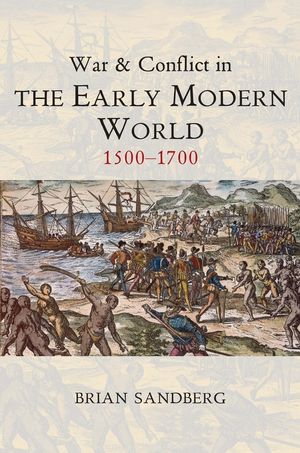
War and Conflict in the Early Modern World Release

I am pleased to report that my new book, War and Conflict in the Early Modern World (Cambridge: Polity Press, 2016),  has been released in the U.K., Europe, Australia, and New Zealand.

Sandberg-War&Conflict(BlackSeries)2

Here is the brief book description (blurb):

In this latest addition to the acclaimed War & Conflict Through the Ages series, Brian Sandberg offers a truly global examination of the intersections between war, culture, and society in the early modern period. Sandberg traces the innovative military technologies and practices that emerged around 1500, then explores the different forms of warfare—including dynastic war, religious warfare, raiding warfare, and peasant revolt— that shaped conflicts during the sixteenth and seventeenth centuries. He explains how significant social, economic, and political developments transformed warfare on land and at sea at a time of global imperialism and growing mercantilism, forcing states and military systems to respond to rapidly changing situations.

Engaging and insightful, War and Conflict in the Early Modern World will interest scholars and students of world history, the early modern period, and the broader relationship between war and society.

Table of Contents

  • Contents
  • Preface
  • Introduction
  • Chapter 1: Innovative Warfare, 1450s-1520s
  • Chapter 2: Maritime Conflict and Colonial Expansion, 1490s-1530s
  • Chapter 3: Schism and Social Conflict, 1510s-1560s
  • Chapter 4: Dynastic War and State Development, 1520s-1580s
  • Chapter 5: Noble Violence, 1520s-1620s
  • Chapter 6: Sectarian Violence and Religious Warfare, 1560s-1640s
  • Chapter 7: Raiding Warfare, 1580s-1640s
  • Chapter 8: Peasant Revolt and Rural Conflict, 1590s-1650s
  • Chapter 9: Ethnic Conflict, 1620s-1660s
  • Chapter 10: Rebellion and Civil Warfare, 1630s-1660s
  • Chapter 11: Mercantile War, 1630s-1690s
  • Chapter 12: Territorial War, 1660s-1700s
  • Conclusion: c. 1700
  • Notes

War and Conflict in the Early Modern World will will soon be released in the United States (June 2016).  Pre-orders can be made at Wiley (the U.S. distributor) or on Amazon.

For exam copies and more information, see the Polity Press website.


Posted in Civil Conflict, Comparative Revolutions, Current Research, Early Modern Europe, Early Modern World, Empires and Imperialism, European Wars of Religion, Globalization, History of Violence, Maritime History, Noble Culture and History of Elites, Reformation History, Religious Violence, Renaissance Art and History, Revolts and Revolutions, War, Culture, and Society, Warfare in the Early Modern World | Leave a comment

Armada Portrait Campaign

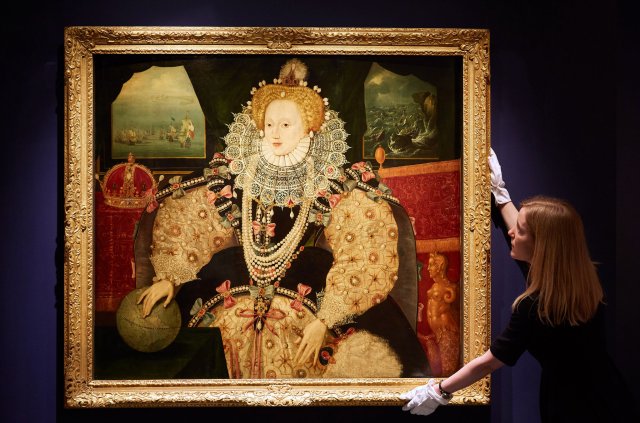
A fundraising campaign has been launched to purchase one of the famous “Armada Portraits” of Elizabeth I of England. The painting was originally owned by Sir Francis Drake and is now being sold by his descendants.

ArmadaPortrait

This painting presents Elizabeth I as victor over the Spanish Armada of 1588, one of the major naval campaigns during the European Wars of Religion.  The composition provides a powerful image of early modern feminine authority and assertive sovereignty.  The painting raises interesting questions regarding gender, religious politics, and warfare in early modern Europe.

“It is the painting that represents everything about the Elizabethan age, including Shakespeare, the moment when England began to rule the waves, and Elizabeth’s reign,” according to Christine Riding of Royal Museums Greenwich. Riding stresses that “It indicates a gear shift in the national identity, the idea of the plucky English, punching above their weight, of the mythology of Gloriana, and the idea of the queen as a strong and just woman.” Riding’s comments appear in an article in the New York Times (see link below).

The Royal Museum Greenwich now hopes to acquire the painting. The New York Times reports that “The Art Fund has pledged £1 million, and Royal Museum Greenwich said it would use its entire annual acquisition budget of £400,000 toward the purchase.”

The New York Times reports on the fundraising campaign.

Northern Illinois University students who have taken my course on European Wars of Religion, 1520s-1660s will recognize this painting.

Posted in Art History, Atlantic World, Early Modern Europe, Early Modern World, Empires and Imperialism, European History, European Wars of Religion, Gender and Warfare, History of Violence, Museums and Historical Memory, Reformation History, Religious Violence, Renaissance Art and History, War and Society, War, Culture, and Society, Warfare in the Early Modern World, Women and Gender History | Leave a comment

Ken Burns Defends the Humanities

Historical filmmaker Ken Burns delivered the Jefferson Lecture at the National Endowment for the Humanities on 9 May 2016.

Inside Higher Ed reports that “Ken Burns, the documentary maker who brought the Civil War, the histories of baseball and jazz, and the biographies of the Roosevelts to film, had a chance Monday night to honor the National Endowment for the Humanities, which supported much of his work. He praised the NEH for both its grants and its standards, and thanked the endowment for naming him to deliver this year’s Jefferson Lecture, the nation’s highest annual honor in the humanities.”

KenBurns-AP

“Burns used the lecture to defend the humanities from its many attackers, to describe how those who work on issues of race (as he has done in many projects) face particular criticism and to champion the art of the narrative as a tool to advance history and promote a common understanding of society,” according to Inside Higher Ed.

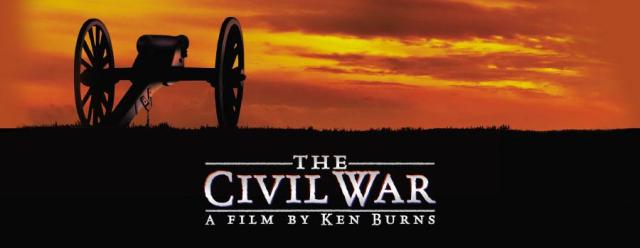
Ken Burns is probably best known for his highly successful documentary film, The Civil War. Burns has gone on to make numerous documentaries on aspects of American history, music, sports, and culture.

Burns-CivilWar

In his lecture, Burns stresses that “in a larger sense, the humanities help us all understand almost everything better — and they liberate us from the myopia our media culture and politics impose upon us. Unlike our current culture wars, which have manufactured a false dialectic just to accentuate otherness, the humanities stand in complicated contrast, permitting a nuanced and sophisticated view of our history, as well as our present moment, replacing misplaced fear with admirable tolerance, providing important perspective and exalting in our often contradictory and confounding manifestations.”

“The humanities help make us smarter,” Burns argues. “From them, we can appreciate the complexities and undertow of our history, politics and culture. They suggest that knowledge and experience matter, that there are no easy solutions, that nothing is just black and white”

Inside Higher Ed reports on Ken Burns’s lecture. The prepared text of Burns’s Jefferson Lecture is available at the NEH website.

Posted in Cultural History, Digital Humanities, Historical Film, History in the Media, Humanities Education, Museums and Historical Memory, The Past Alive: Teaching History, War and Society, War in Film, War, Culture, and Society | Leave a comment

President Obama to Visit Hiroshima

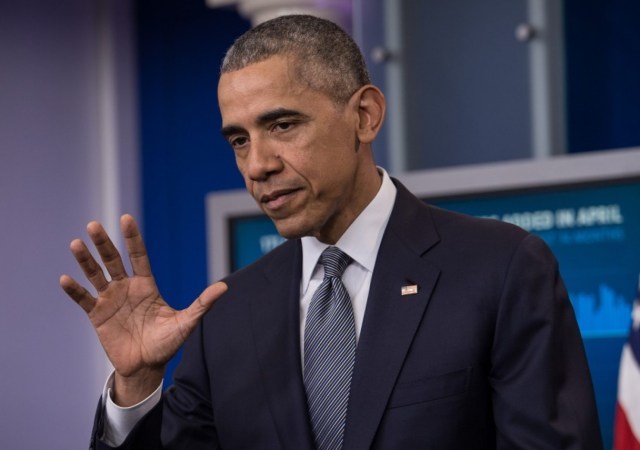
The Washington Post reports that President Obama will visit Hiroshima, Japan. This would be a historic visit, since Obama would be the first United States President to visit Hiroshima during his administration.

“President Obama will make a historic trip this month to Hiroshima, Japan, becoming first sitting U.S. president to visit the site of the world’s first atomic bombing,” according to the Washington Post, “The White House formally announced the visit Tuesday after weeks of speculation that Obama would stop in the city after attending the Group of 7 economic summit in Ise-Shima from May 25-27. The president is expected to deliver a speech on non-proliferation of nuclear weapons.”

Obama-Getty

Photo: Getty


The historical memory of the first atomic bombing at Hiroshima continues to provoke powerful emotions and intense political reactions. Hiroshima has deep significance for Japanese survivors and families of victims, anti-imperial activists, and nationalist politicians. Anti-nuclear activists and anti-war protesters worldwide have long focused on the symbolism of Hiroshima. U.S. veterans of the Second World War have often celebrated the bombing of Hiroshima as necessary and justified.


The World War II generation is fast disappearing and has less political influence now, so perhaps President Obama’s visit will be less controversial. Nonetheless, this visit brings to mind the political controversy surrounding the National Air and Space Museum’s Enola Gay exhibit and the 50th Anniversary of end of World War II in the 1990s.

The New York Times points out that “The visit, hotly debated in the White House for months as the president planned his coming trip to Vietnam and Japan, carries weighty symbolism for Mr. Obama, who is loath to be seen as apologizing for that chapter in American history.”

The Washington Post and the New York Times report on President Obama’s visit.

On the Enola Gay exhibit controversy and related issues, see:Edward T. Linethal and Tom Engelhardt, eds., History Wars: The Enola Gay and Other Battles for the American Past (New York, NY: Macmillan, 1996).

Posted in Empires and Imperialism, History in the Media, Museums and Historical Memory, Strategy and International Politics, War and Society, War, Culture, and Society | Leave a comment

Dissertation Seminar in History at the Newberry Library

Dissertation Seminar in History at the Newberry Library

briansandberg's avatarCluster for the Study of Religious Violence

The Center for Renaissance Studies at the Newberry Library will be hosting a dissertation seminar in History in Fall 2016.

Ph.D. candidates in Renaissance, Reformation, Early Modern European, Atlantic World History, and Early Modern World History at Northern Illinois University and other Newberry consortium institutions may take this seminar for credit in their home programs.

Here is the Newberry Library’s announcement:

Renaissance-Header-small

Fall 2016 Dissertation Seminar for Historians

Led by Craig Koslofsky and Robert Morrissey, both of the University of Illinois at Urbana-Champaign

Submission Deadline: May 1
The seminar will meet from 2 to 5 pm on four Fridays: September 16, October 21, November 18, and December 9.

Apply online here: https://www.newberry.org/09162016-2016-dissertation-seminar-historians

This seminar will create a broad-based community of graduate students who are at the beginning stages of working on their dissertations in the history of Europe or the Atlantic World, c. 1400-c. 1750. The goal is to provide…

View original post 166 more words

Posted in Uncategorized | Leave a comment

Cervantes and Shakespeare Symposium

The Newberry Library is hosting a symposium on “Cervantes and Shakespeare: A Transnational Conversation” on Thursday, April 14Friday, April 15, 2016.

The Newberry Library announcement reads:

A Joint Cervantes/Early Modern Studies Symposium

“Cervantes and Shakespeare: A Transnational Conversation”

Featured speakers: William Egginton and James Shapiro

For full details and to register to attend, see:

http://www.newberry.org/04142016-cervantes-and-shakespeare-transnational-conversation

This program is free and open to the public, but space is limited and registration in advance is required.

Downloadable PDF flyer:

Faculty and graduate students at member institutions of the Center for Renaissance Studies consortium may be eligible to apply for travel funding to attend this program.  http://www.newberry.org/newberry-renaissance-consortium-grants

Posted in Conferences, Cultural History, Early Modern Europe, Early Modern World, European History, Graduate Work in History | Leave a comment

Art History Lectures at the Smart Museum

Art History Lectures at the Smart Museum

briansandberg's avatarCluster for the Study of Religious Violence

The Smart Museum at the University of Chicago is offering a series of lectures in art history in April and May 2016.

Northern Illinois graduate students are encouraged to attend lectures that relate to their historical studies.

SmartMuseum-lectures

View original post

Posted in Uncategorized | Leave a comment

Graduate Seminar at the Newberry Library

Graduate Seminar at the Newberry Library

briansandberg's avatarCluster for the Study of Religious Violence

The Newberry Library is offering a graduate seminar on “Gender, Bodies, and the Body Politic in Medieval Europe” in Fall 2016.

Northern Illinois University is a consortium member of the Newberry Library. This status allows graduate students at Northern Illinois and other consortium universities to enroll in Newberry seminars for credit at their home institutions.

This seminar is a great opportunity for graduate students interested in religious history, gender history, and the history of political culture.

The Newberry Library’s announcement reads:

Fall 2016 Ten-Week Graduate Seminar

Early application deadline: May 1

Gender, Bodies, and the Body Politic in Medieval Europe
2-5 pm Thursdays, September 29 to December 8
Led by Tanya Stabler Miller, Loyola University Chicago

Details and online application: https://www.newberry.org/09292016-gender-bodies-and-body-politic-medieval-europe

This seminar will examine the relationship between gender, sex differences, and politics-defined broadly-in medieval Europe, exploring the ways in which systems of power mapped onto perceived sex differences…

View original post 253 more words

Posted in Uncategorized | Leave a comment