Early Modern Jewish Studies Fellowship

The Medici Archive Project in Florence, Italy, is offering a postdoctoral fellowship in early modern Jewish studies.

The position description reads:

“The letters in the Medici Granducal Archive (Mediceo del Principato) constitute an impressive historical reservoir of Jewish history. The content of this vast collection—over six thousand volumes—opens new windows onto cross-sections of Jewish culture in early modern Italy and Europe. Only in recent years have historians of various humanist disciplines begun to assess this vast body of information. The great majority of these documents have yet to be explored. It is for this reason that the Medici Archive Project (www.medici.org) is offering an eleven-month fellowship (1 September 2013 – 1 August 2014) for conducting research on the history of Jews and Jewish culture, to be carried out on-site at the Archivio di Stato in Florence, working on the Mediceo del Principato. The selected candidate will be responsible for organizing, editing and preparing for on-line publication the copious archival material on Jewish culture gathered by Medici Archive Project research team and staff since 2000.”

Qualifications:

“Applicants should have all of the following qualifications: a completed Ph.D. in any field of Renaissance or early modern Jewish studies; fluency in English and Italian (a knowledge of Hebrew and Latin is desirable); substantial research experience with original documentary material; commitment to a scholarly career involving archival research; significant publication record in the field of Renaissance or early modern Jewish studies.”

Stipend:

“The stipend is $43,000 plus an allowance for travel expenses, and may be renewed for a second year, pending available funds.”

To apply, see the full advertisement for the fellowship is available at H-Net.
Posted in Archival Research, Digital Humanities, European History, Grants and Fellowships, Humanities Education, Italian History, Reformation History, Renaissance Art and History, Study Abroad | Leave a comment

Job Opportunity in Northern Illinois: Historian at Rock Island

The United States Army Sustainment Command at Rock Island, Illinois, is currently searching for a full-time Historian (a civilian position).

Here is a link to the job description:

https://www.usajobs.gov/GetJob/ViewDetails/334842700

Senior History majors, recent graduates, and Master’s students at Northern Illinois University may want to consider applying for this position in the region.

The United States Armed Forces and other U.S. government agencies employ historians to assess the past activities of their institutions and to maintain their archival records. This is just one of the potential career opportunities in Public History available to History majors and minors.

Humanities training in historical research, intensive reading, document analysis, textual criticism, and information management make History majors ideal candidates for many jobs beyond teaching.


Posted in Careers in History, Humanities Education, Museums and Historical Memory, Northern Illinois University, Undergraduate Work in History, War, Culture, and Society | Leave a comment

World War II Exhibit and Viewer Identification

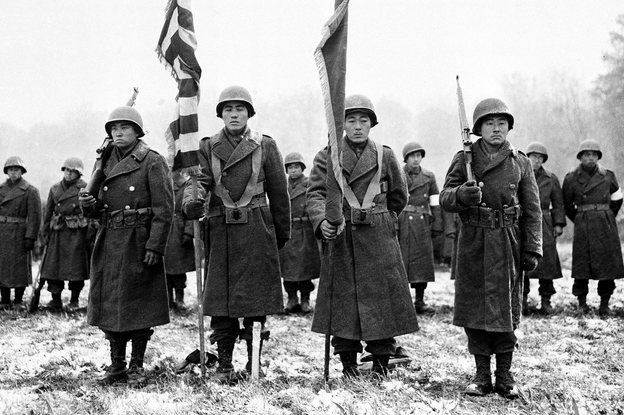
A new exhibit is opening at the National World War II Museum in New Orleans this weekend, featuring a more direct approach to reach its museum audience. The new wing attempts to engage museum visitors by prompting viewer identification with individuals who experienced specific episodes of the Second World War.

japanese-american-soldiers

Techniques of viewer identification invite each museum-goer to consider the perspective of an individual while viewing an exhibit. The National Holocaust Museum in Washington, D.C., distributes small information cards to each visitor with a photo and brief biography of a Holocaust victim in order for viewers to consider this individual’s experience within the broader nightmare of the Nazi state and its extermination programs.

NPR reports on the new exhibit at the museum. I have not yet been able to visit the National World War II Museum, so I cannot assess its use of viewer identification. I am troubled that the techniques described by NPR seems to be restricted to showing American perspectives of the conflict, however. Teaching the history of the Second World War requires a multiplicity of non-American perspectives to avoid serious distortion, I would argue. Offering Japanese-American points-of-view on the war is not the same as offering Japanese perspectives. Does the museum offer British, German, Russian, Western European, Eastern European, Jewish, Chinese, Australian, Indian, or Oceanian perspectives?

That the new wing is entitled “US Freedom Pavilion: The Boeing Center” does not bode well for presenting a sophisticated historical view of the Second World War.

The association of Stephen Ambrose with the project of the National World War II Museum’s work is unfortunate. Ambrose, a former professor at the University of New Orleans who is now deceased, helped launch the New Orleans-based museum and served as its President. Ambrose was accused of serial and rampant plagiarism in 2002 in one of the most famous modern cases of plagiarism and academic dishonesty.

The National World War II Museum should think about how to disassociate itself from Stephen Ambrose’s influence and approaches.

Read about Stephen Ambrose in a separate post at this site.

Posted in Academic Publishing, Historical Film, Museums and Historical Memory, Strategy and International Politics, War in Film, War, Culture, and Society | 1 Comment

Plagiarism and Patriotism

This weekend, a new exhibit is opening at the National World War II Museum in New Orleans. The opening prompts a reflection on one of the founders of that museum and its former President, historian Stephen E. Ambrose.

Ambrose was a best-selling author of books on Dwight D. Eisenhower and on American military history who advanced an overtly nationalist and politicized view of American history. He became famous as a historical consultant for Saving Private Ryan and the television adaptation of his Band of Brothers, as well as a television commentator on military affairs. His books celebrated American infantry soldiers as well as the United States Army, cementing the popular image of the Second World War as “the Good War.”

Fred Barnes’s review of Ambrose’s The Wild Blue, published in the Weekly Standard, broke the news about Ambrose’s plagiarism in 2002. Ambrose was accused of intentional and serial plagiarism of other historians’ research and writing. PBS reported on the Ambrose case, while Slate and Forbes condemned Ambrose’s plagiarism when allegations first surfaced. The History News Network published a detailed article in 2010 on how the Ambrose plagiarism story gradually developed.

ambrose-The Wild Blue

Despite the massive evidence of Ambrose’s plagiarism, he was never punished. The American Historical Association, the national organization of professional historians, does define plagiarism, but has abandoned adjudicating plagiarism cases. Ambrose’s publishers continue to profit from publishing and distributing his popular books, without editing them to quote the passages that he lifted from other authors. The National Endowment for the Humanities, which awarded Ambrose one of its prestigious National Humanities Medals in 1998, has never rescinded the medal and still lists his award statement on the NEH website.

Ambrose has also been accused of outright invention of source material. The New Yorker reported in 2010 on Ambrose’s fabricated interviews of Dwight D. Eisenhower used in his biography of the general. Eisenhower’s son has defended Ambrose, but historians are appropriately troubled by Ambrose’s sloppy or invented interview transcripts. The History News Network published a series of stories on the accusations in 2010.

While the accusations of source fabrication are shocking, the connection of plagiarism with a political agenda should be considered in detail. After all, Stephen Ambrose was cherry-picking juicy passages of text written by others in order to concoct a particular version of history. CBS reported in 2002 that Ambrose was working on a book on “his own transformation from a left-wing demonstrator to a super patriot,” eventually published as To America: Personal Reflections of an Historian. This memoir has been perversely recommended as a historical text on some home schooling websites.

Clearly, Ambrose had a blatantly patriotic agenda to enshrine his vision of World War II as the “Good War” in most of his books, questioning their utility and relevance for historians and history students. As a history professor, I would never recommend an Ambrose book or adopt one in any of my courses.

Surely, the National World War II Museum, a museum dedicated to presenting the complex history of the war and educating the public, must want to avoid replicating Ambrose’s blindly patriotic historical vision in its exhibitions.

Read more about the new exhibit at the National World War II Museum in a separate post.

Posted in Academic Publishing, Education Policy, Historical Film, Historiography and Social Theory, Humanities Education, Museums and Historical Memory, Political Culture, Strategy and International Politics, Uncategorized, War in Film, War, Culture, and Society, Writing Methods | 1 Comment

French Military Intervention in Mali

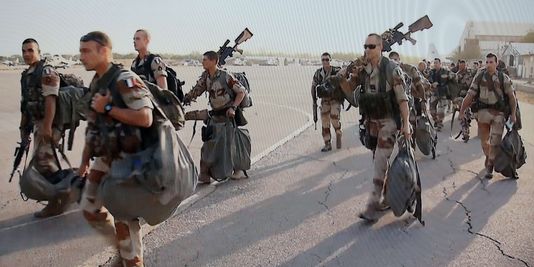
French President François Hollande has launched a military intervention into war-torn Mali, where a civil war has been raging for months. The French Prime Minister Jean-Marc Ayrault explained the rationale for the French intervention, claiming that military action is justified “pour stopper la menace terroriste.”

hollande-enguerre

Le Monde reports on President Hollande’s decision to intervene and the reaction of the French public.

Islamist militant groups have conquered large portions of northern Mali and have taken control of Timbuktu. African states and organizations have backed the legitimate Malian government and supported its operations against the Islamist militants, which it regards as rebels.

mali-map

French special forces have already conducted raids against Islamist forces within Mali and have supported Malian troops on the ground. Malian government forces have reported retaken the strategically important town of Konna. One French helicopter pilot was killed in the initial attacks, according to French Ministry of Defense.

gazelle-helicopter

French troops have also been deployed in the capital, Bamako. The French Minister of Defense declared that the French forces are in the capital “pour contribuer à la protection de Bamako et pour assurer la sécurité de nos ressortissants.”

frenchsoldiers

Le Monde reports on the French operations in Mali. Another Le Monde article provides background on the current civil war in Mali. The BBC and the Washington Post provide reporting on the operations in English.

French special forces have also reportedly carried out a raid in Somalia in order to liberate a French military intelligence officer held hostage there since 2009. Reports are still sketchy on this raid, however.

Historians and political scientists interested in French war and society will want to follow the developing news on the French intervention in Africa. The military intervention has implications for French and European Union politics, Franco-African relations, and Mediterranean exchanges. France has long maintained neo-colonial relationships with West Africa and this intervention will raise new questions about whether or not French forces can operate effectively in Mali. The intervention aims to stabilize the Mali government and state security, raising new questions about state development processes and state-building efforts in West Africa.

Update: The French Air Force has launched air strikes on rebel military forces and supply bases in and around Gao, according to a report on 13 January by the BBC. The French military intervention in Mali seems to be expanding rapidly.


Posted in Civil Conflict, Empires and Imperialism, European Union, French History, History of Violence, Mediterranean World, Political Culture, State Development Theory, Strategy and International Politics, Terrorism, Uncategorized, War, Culture, and Society | Leave a comment

Decline in Enrollments at Public Universities

Student enrollments continue to decline at public universities nationwide. For several years, state universities and colleges have been grappling with declining enrollments.

uiuc-quad

A new report by Reuters indicates that “Tuition will likely decline this fiscal year in a record 15 percent of U.S. public universities, while schools expecting growth anticipate the lowest increases in over a decade, Moody’s Investors Services said on Thursday.”

Moody’s regularly studies higher education finances and issues credit ratings for universities and colleges. The current study concluded: “Moody’s found that a third of universities expect net tuition revenue to either decline or grow at a rate below inflation in fiscal year 2013. In all, 17% of both private and public universities are expecting declines in net tuition revenue, while another 16% are expecting percent increases that are less than the rate of inflation.”

My own university, Northern Illinois University, and other state universities are especially concerned by the projections of declining enrollments. NIU has already experienced several years of declining enrollments, presumably due to the pressures that students and their families are feeling due to the 2008 financial collapse, the foreclosure crisis, and the high unemployment rates.

Over the past generation, state legislatures have reduced their financial support of higher education, leaving many state universities and colleges more dependent on student tuition than before. So, just as American students and their families are being financially squeezed more than at any point in 50 years, educational institutions are being forced to make massive cutbacks or raise tuition rates.

For the Moody’s Investors Service report, see Moody’s website.

The Reuters article was republished in the Chicago Tribune online, along with this photo of the Quad at the University of Illinois at Urbana-Champaign.

For readers interested in tuition and university finances, I have written several previous posts in my website’s sections on Education Policy, Humanities Education, and Undergraduate Work in History with links to recent studies on those issues. Prospective undergraduate students, current students, and their families—especially in Illinois—may want to follow up on these links.

Posted in Education Policy, Humanities Education, Northern Illinois University, Undergraduate Work in History | Leave a comment

Renaissance Academies as Social Networks

The academies of Renaissance Italy are being compared with internet social networks, such as Facebook. A major collaborative research project on The Italian Academies 1525-1700:The First Intellectual Networks of Early Modern Europe, is producing new findings on the complex world of academies in Renaissance Italy. The researchers have launched a website on Italian Academies to present their findings on social interactions among academy members during the Renaissance.

barbieri-anelante

The team has also created an online Database of Italian Academies at the British Library with information on Renaissance academies and their members. The website for the database claims that: “The British Library holds some of the finest collections outside Italy of publications produced by Italian Academies and their members. Much of this material is catalogued in ways which have not permitted easy access by scholars working on a particular Academy or on Academies in general. The creation of a Themed Collection of data relating to Academies aims to open up the Library’s holdings to new research on the Italian learned Academies of the late Renaissance and early modern periods and their relationship to book production, printing and publishing in this period.” The Database of Italian Academies is searchable by people, subjects, and images.

The Italian newspaper La Repubblica reports on the new research. [Thanks to my colleague Monica Azzolini (University of Edinburgh) for this reference.]

Digital Humanities projects such as the The Italian Academies 1525-1700, The Medici Archive Project, The 1641 Depositions, Gallica, and Europeana are radically changing how Renaissance and early modern scholars conduct research.

Posted in Archival Research, Digital Humanities, Early Modern Europe, Early Modern World, European History, Italian History, Renaissance Art and History | 2 Comments

Political Assassinations in Paris

Three Kurdish women were murdered in Paris yesterday in the offices of the Kurdish Institute. The women were all political activists affiliated with the PKK, a Kurdish nationalist group active in Turkey and Iraq. Sakine Cansiz, one of the co-founders of the PKK, was among the dead.

kurdishwomen

No motive has yet been established, but the killings seem to have been targeted political assassinations and the French Interior Minister called the killings “executions.” PKK nationalists have carried out armed attacks and bombings against Turkish forces, causing them to be labelled a terrorist group by some nations.

Parisians are shocked by that the assassinations were carried out in the French capital, in the 10th arrondissement, close to the center of the city. Le Monde writes that “La nouvelle a provoqué une onde de choc en France, où les assassinats politiques de ce type sont rares, mais aussi en Turquie où l’événement fait la ‘une.'”

Pro-PKK Turkish activists have periodically held rallies in Paris—often calling for the release of the imprisoned Abdullah Öcalan, co-founder of the PKK along with the slain Sakine Cansiz. I witnessed one of these rallies in the place de la Bastille during my recent sabbatical research in Paris.

This story raises a number of questions about broader political issues and historical contexts: PKK organization, ethno-nationalist movements, Turkish nationalism, Ottoman legacies, post-colonial arrangements, political violence, targeted assassinations, European Union politics, Parisian activism, and gender and violence.

Le Monde reports on the killings in Paris and on the investigation, as does Libération. The BBC and the Washington Post provide reporting on the murders in English. Le Monde also has video of a Kurdish rally in Paris following news of the assassinations.

Posted in European Union, French History, Gender and Warfare, History of Violence, Human Rights, Paris History, Strategy and International Politics, Terrorism, Women and Gender History | Leave a comment

History of the Book Lecture

The Newberry Library’s Center for Renaissance Studies is hosting the annual History of the Book Lecture.

Jeffrey Masten (Northwestern University), “Toward Queerer Book History”

History of the Book Lecture

Newberry Library, Towner Fellows Lounge, Friday, 11 January 11 2013 at 2 pm

The Center for Renaissance Studies offers this description of the lecture:

“How can the history of the book engage more fully with recent developments in the history of Renaissance sexualities? Professor Masten will consider a range of examples to think about same-sex male eroticism in and around early printed books, from the perspective of production as well as reception. What meanings emerge from historiated capitals, so-called “children initials”?  Where might we look for signs of “queer readerships” in early modern books? How are the critical rhetorics of book history and textual criticism implicated in languages of sex and gender?”

Posted in Conferences, Early Modern Europe, Early Modern World, European History, History of the Book, Reformation History, Renaissance Art and History, Women and Gender History | Leave a comment

Early Modern Workshop

The Early Modern Workshop at the University of Chicago is having its first meeting of the year on Monday 7 January at 5:00pm in Pick 319.

Hunter Harris will present his paper “Bacon’s Rebellion, Colonial Policy, and the English Atlantic, 1676- 1688.”

Graduate students in History at Northern Illinois University may be interested in attending this workshop.


Posted in Early Modern Europe, European History, European Wars of Religion, History of Violence, Revolts and Revolutions, War, Culture, and Society, Warfare in the Early Modern World | Leave a comment