Napoleon’s Letter on Destroying the Kremlin in 1812

During Napoleon’s invasion of Russia in 1812, the French emperor came to the realization that he would have to abandon Moscow and order the retreat of his Grand Armée. In a coded letter to his foreign minister, he announced that he was planning to plant bombs in the Kremlin to destroy its fortifications before beginning the retreat.

napoleon-moscowletter

This letter was sold at auction this week and purchased by the Musée des Lettres et Manuscrits in Paris.

The BBC reports on the auction.

Posted in Archival Research, Early Modern Europe, Empires and Imperialism, European History, French History, French Revolution and Napoleon, Strategy and International Politics, War, Culture, and Society | Leave a comment

Piazza Fontana and Romanzo di una Strage

Major historical events often have to wait for years to receive serious treatment in historical film, especially in the case of controversial episodes that produce sharply opposing narratives of those events.

For the first time, the bombing in Piazza Fontana in 1969 is the subject of a major feature film, Romanzo di una Strage. A large bomb exploded in a bank in Piazza Fontana in Milano on 12 December 1969, killing 17 people and wounding 88. The bombing shocked Italians and produced outrage across the country, a crucial moment in the so-called strategia di tensione campaigns of right-wing and left-wing radicalism and violence in Italy in the late 1960s.

piazzafontana

Piazza Fontana launched a period of intensified political and social conflict, known as the Anni di Piombo (Years of Lead) throughout the 1970s.

Romanzo di una Strage (2012) is directed by Marco Tullio Giordana. The film focuses on the competing investigations, political murders, and cover-ups in the immediate aftermath of the Piazza Fontana bombing in 1969-1972. Giordana controversially places a sympathetic portrait of police commissioner Luigi Calabresi at the center of his political thriller. The Piazza Fontana case still remains unsolved today, despite several investigations, trials, and overturned convictions. The film posits its own theories on various threads of the complicated story, but hesitates to present its own definitive verdict on the case and the cover-up.

Marco Tullio Giordana explains his perspective in an interview published by Nouvel Observateur. Giordana actually witnessed the Piazza Fontana bombing from a passing tram and was interviewed by Luigi Calabresi as an eyewitness. It seems that Giordana’s personal experience strongly shaped the narrative structure and cinematography of the film.

The film’s interpretation of the Piazza Fontana bombing and its protagonists has provoked much interest and also sharp criticism. Republica TV published a video review of the film in Italian. Nouvel Observateur, Marianne, Libération, and Le Figaro provide reviews in French. For the reactions of Luigi Calabresi’s son, Mario, see a story in Corriere della Sera.

For context on the Piazza Fontana bombing and film representations of political violence in Italy during the Anni di Piombo, see: Alan O’Leary’s Tragedia all’italiana: Italian Cinema and Italian Terrorisms 1970-2010 (Oxford: Peter Lang, 2011), Alan O’Leary and Pierpaolo Antonello’s Imagining Terrorism: The Rhetoric and Representation of Political Violence in Italy, 1969-2006 (London: Legenda, 2009), and Paul Ginsborg’s A History of Contemporary Italy: Society and Politics, 1943-1988 (Palgrave Macmillan, 2003).

Romanzo di una Strage is released internationally as Piazza Fontana: The Italian Conspiracy.

Posted in Civil Conflict, European History, European Union, Historical Film, History of Violence, Italian History, Political Culture, Terrorism, Uncategorized, War, Culture, and Society | Leave a comment

Study Abroad in Southern France – Meeting at NIU

Study Abroad in Southern France in Summer 2013

Meeting on Monday, November 26 from 4-6 pm in Watson 110

Northern Illinois University is launching a Study Abroad Program in Southern France, based in Bordeaux, in Summer 2013. The program in History and Foreign Languages will be led by co-directors Brian Sandberg and Elizabeth Erbeznik.

Co-Director Elizabeth Erbeznik will be conducting an informational meeting about the program (where we will discuss such logistics as coursework, housing, excursions, and ball-park program costs) on Monday, November 26 from 4-6 pm in Watson 110. The meeting will not take the full 2 hours, but the two-hour come-and-go format should offer students a chance to get all the necessary information needed to start making arrangements and also to answer any questions.

If students cannot attend the meeting but are still interested in studying abroad in Bordeaux, please contact Elizabeth Erbeznik or Brian Sandberg (bsandberg@niu.edu) by email as soon as possible.

Posted in European History, French History, Graduate Work in History, Humanities Education, Northern Illinois University, Study Abroad, Undergraduate Work in History | Leave a comment

The Cultural History of Warfare

“The cultural history of war, then, is here to stay.”  So concluded Rob Citino in an impressive historiographical essay, which can be considered the first major article of military history to be published in a generation by the American Historical Review, the flagship academic journal in the historical discipline in the United States. [Robert M. Citino, “Military Histories Old and New: A Reintroduction,” American Historical Review 112 (October 2007): 1070-1090.]

Citino cites John A. Lynn’s Battle, Fred Anderson and Andrew Cayton’s The Dominion of War, and Isabel V. Hull’s Absolute Destruction as providing exemplary new histories of warfare utilizing cultural history approaches. [John A. Lynn, Battle: A History of Combat and Culture (Boulder, Colo., 2003); Fred Anderson and Andrew Cayton, The Dominion of War: Empire and Liberty in North America, 1500–2000 (New York, 2005); Isabel V. Hull, Absolute Destruction: Military Culture and the Practices of War in Imperial Germany (Ithaca, N.Y., 2005).]

The same year that Citino published his AHR article, Wayne E. Lee similarly underlined the importance of cultural approaches to warfare. Lee has gone on to publish two fascinating collective volumes on the cultural history of war. [Wayne E. Lee, “Mind and Matter—Cultural Analysis in American Military History: A Look at the State of the Field,” The Journal of American History 93 (2007): 1116-1142; Wayne E. Lee, ed., Warfare and Culture in World History (New York: NYU Press, 2011); Empires and Indigenes: Intercultural Alliance, Imperial Expansion, and Warfare in the Early Modern World (New York: NYU Press, 2011).]

As a practitioner of the cultural history of warfare, I am certainly glad to see the outpouring of cultural histories of warfare in various time periods and geographic regions. But, I also wonder why it has taken so long for historians of warfare to embrace cultural approaches to the study of war, an all too common human activity.

The New Cultural History is hardly new, after all. In the 1970s, as historians of warfare were grappling with how to use social methods to forge a History of War and Society, innovative anthropological and literary approaches were already challenging the then dominant Social History. Lynn Hunt’s highly successful edited volume The New Cultural History (Berkeley, CA: University of California Press, 1989) solidified a new label for the historical studies that were emerging from the Literary Turn in the 1980s.

Competing versions of cultural history drove new research on rituals, representations, images, imaginaries, political culture, gender, masculinities, emotions, memory, and other dimensions of culture throughout the 1990s and 2000s. The massive scholarship generated around these issues and debates allowed cultural history approaches to become well established in historical writing in the United States, Canada, Great Britain, and beyond. Arguably, the New Cultural History displaced Social History as the principal sub-field in the historical discipline, at least in the United States.

Even as the New Cultural History became dominant, many cultural historians were beginning to challenge its centrality to the discipline. Lynn Hunt, one of the key proponents and practitioners of cultural history, published another collective volume on Beyond the Cultural Turn: New Directions in the Study of Society and Culture (Berkeley, CA: University of California Press, 1999). So, even as historians of War and Society were becoming historians of War, Culture, and Society, cultural history was rapidly transforming. Since the dawn of the new millennium, many historians have been exploring ways of weaving cultural and social history together to study environmental history, religious history, history of science. Oh, and violence.

In case you haven’t noticed, violence studies are in. There has been a steady flood of publications on warfare and violence over the past decade. Major works on warfare such as Peter H. Wilson’s The Thirty Years’ War: Europe’s Tragedy, Drew Gilpin Faust’s This Republic of Suffering: Death and the American Civil War, Timothy Snyder’s Bloodlands: Europe Between Hitler and Stalin, have garnered attention from a wide audience of historians and general readers. Numerous new research centers on violence, peace, conflict resolution, civil conflict, and war studies have been launched at institutions such as Yale University, Arizona State University, University of Newcastle, and Université de Paris I. The shock of the September 2001 Attacks, the lengthy commitment of the Afghan War, and the polemics surrounding the Iraq War have all contributed to a massive growth in interest in the serious study of the history of violence and warfare. The University of Pennsylvania’s Penn Humanities Forum has announced Violence as its theme for its 2013-2014 fellowship competition, a sign of how seriously all historians and humanities scholars are taking violence these days.

I hope that historians of War, Culture, and Society are taking note and moving quickly to dialogue with their other historical colleagues. We have something important to say to a broader audience of humanities scholars, social scientists, policy makers, and the public.

This essay was cross-posted on the SMH Blog.


Posted in Early Modern Europe, Early Modern World, Historiography and Social Theory, History of Violence, War, Culture, and Society, Warfare in the Early Modern World | Leave a comment

The Civil War in America

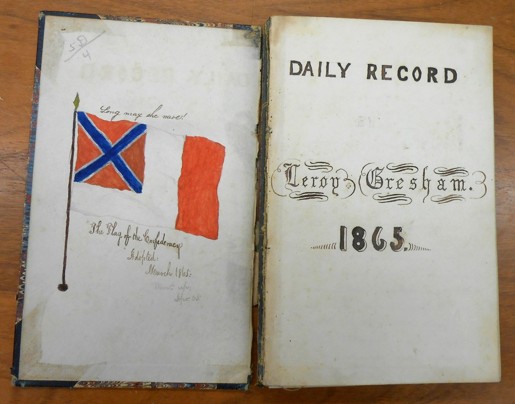
The Library of Congress has organized a new exhibition on “The Civil War in America,” which includes diaries and other writings by participants in and observers of the American Civil War of 1861-1865.

One of the objects featured in the exhibition is a manuscript diary by LeRoy Gresham, a teenager from Macon, Georgia, who recorded his observations on the Civil War. When he received news of the fall of Fort Sumter, he wrote: “War! Thou demon that ravishes fair countries, stay thy mad career.” LeRoy went on to chronicle his life as an invalid, news of the war, and Sherman’s march, leaving historians with a fascinating window on life during the Civil War.

The Library of Congress has information on its “The Civil Wars in America” exhibition.

The Washington Post reviews the exhibition online.

Posted in Civil Conflict, History in the Media, War, Culture, and Society | Leave a comment

Armistice Day in France

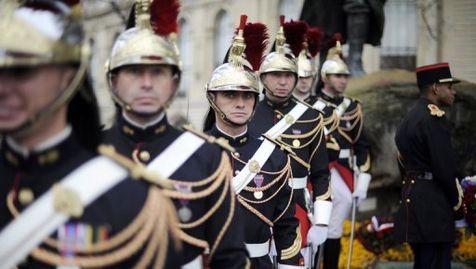
This past Sunday was Armistice Day, marking the end of the First World War in 1918. France celebrates 11 November each year with a series of ceremonies commemorating the dead of La Grande Guerre, as the First World War is often known. This commemoration is arguably much more important in France than it has ever been in the United States, where it is now celebrated as Veteran’s Day, since France suffered many more deaths, in addition to the occupation of parts of northern France and the devastation of the Western Front.

This year’s celebration of 11 November is different, however. Last year, the Nicolas Sarkozy government decided to expand the celebrations « en hommage à tous les morts pour la France ». So, the ceremonies will now commemorate all French veterans killed in any wars, not just the fallen of La Grand Guerre. The new François Hollande government has chosen to continue with this new model and celebrated 11 November with the expanded symbolic format more similar to the American Veteran’s Day.

Libération and Le Monde report on the 11 November ceremonies.  Some commentators and politicians have criticized the new ceremonies as obscuring the importance of the First World War and its horrifying legacy of trench combat and attrition warfare.

In addition to the controversy surrounding this year’s ceremonies, questions have been raised about amnesties for French soldiers who were executed during the war, especially during the army mutinies of 1917. Some individual soldiers’ cases have been reviewed, leading to rehabilitations, but some want a general amnesty for all French soldiers. Le Monde reports on one of the soldiers.

The French Armistice Day commemoration reminds us how important it is for historians of war and society to look beyond the history of American involvement in warfare. European and global perspectives often offer strikingly different understandings of the experience of war.

Armistice Day also highlights an important scholarly debate over the historical memory of the First World War has been raging for over a decade, since the publication of Jay Winter’s Sites of Memory, Sites of Mourning: The Great War in European Cultural History (Cambridge: Cambridge University Press, 1998). The current controversies over 11 November in France will certainly add to this expanding debate, which has been dominated by historians using cultural methods. Historians of war and society could be more active in contributing to our understanding of the historical memory of the First World War and other past wars that continue to be commemorated.

This essay was cross-posted on the SMH Blog.

Posted in European History, French History, History in the Media, History of Violence, War, Culture, and Society | Leave a comment

Get Out the Vote!

Election day in the United States is TODAY, 6 November 2012.

University students are often very busy during the middle of the semester, but it is important to exercise your citizenship and vote.

Many people think that their votes don’t count. If you have ever been tempted to not vote, please check out filmmaker Errol Morris’s film  11 Excellent Reasons Not to Vote?

Get out the vote!

Posted in Human Rights, Political Culture | Leave a comment

Tom Ricks on Firing Generals

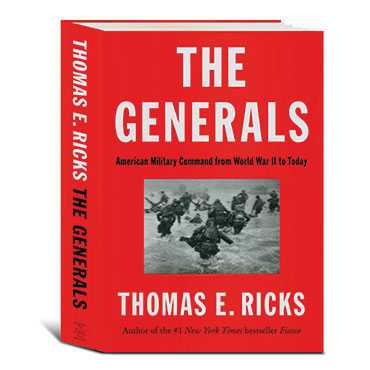
Tom Ricks has a new book out on American military leadership, entitled, The Generals: American Military Command from World War II to Today.

NPR has done an interview with Ricks on his book, and particularly on the issue of when and how generals have been removed from command. Ricks argues that civilians leaders should be more willing to remove generals who fail to perform.

I have not yet been able to read this new book, but look forward to reviewing it. Undergraduate and graduate students interested in the history of military organizations, command, and leadership may want to check out this book.

Update: Tom Ricks has commented on the Petraeus scandal and resignation in an interview on NPR.  This interview seems to present an interesting counterpoint to his recent work on firing generals.

Posted in Political Culture, Strategy and International Politics, War, Culture, and Society | Leave a comment

Mitt Romney and the Neocons

Mitt Romney, despite his sometimes “soft” rhetoric on foreign policy issues, has embraced Neoconservative (Neocon) policymakers and advisers, including many of the same advisers who were responsible for the planning and implementation of the invasion and occupation of Iraq in 2003.

Stephen Walt, Professor of International Relations at Harvard University, has published an analysis of the Third Obama-Romney Presidential Debate, which focused on foreign policy issues, in Foreign Policy.

Walt points out that Mitt Romney has employed Neocons as advisers and often touts their ideas. For example, despite Romney’s claims that he would cut the Federal deficit, he has repeatedly argued for increasing U.S. Defense spending, following Neocon policy advice. Walt explains: “And that’s the genius of neoconservatism’s frequently outlandish policy recommendations. They are always calling for the United States to spend excessive amounts of money on defense, to threaten potential enemies with dire consequences if they don’t bend to our will, and to use force against just about anyone that the neocons don’t like (and it’s a long list). No president — not even George W. Bush — has done everything the neocons wanted, but by constantly pushing for more, it makes doing at least part of what they want seem like a sensible, moderate course. And as we saw after 9/11, every now and then the stars may line up and the neocons will get what they’re pushing for (See under: Iraq). Too bad it never works out well when they do.” Should Romney be elected President, expect military spending to skyrocket (and the Federal budget deficit with it).

Neocon foreign policies have been abysmal failures, yet they continue to have significant influence in Washington, D.C., especially within the Republican party.  Part of this staying power is that Neocons have strong institutional support from conservative think tanks and political organizations.

The Neocons have been able to avoid paying for their serious policy miscalculations and mistakes.  Walt argues that: “Neoconservatism’s final strand of twisted genius is its imperviousness to contrary evidence. Because most of their prescriptions are so extreme, they can explain away failure by claiming that the country just didn’t follow their advice with sufficient enthusiasm. If we lost in Iraq, that’s because Bush didn’t attack Iran and Syria too, or it’s because Obama decided to withdraw before the job was really done. (Such claims are mostly nonsense, of course, but who cares?) If Afghanistan turned into a costly quagmire on Bush’s watch, it’s because Clinton and Bush refused to ramp up defense spending as much as the neocons wanted. If we now headed for the exit with little show for our effort, it’s because we didn’t send a big enough Afghan surge in 2009-2010. For neocons, policy failure can always be explained by saying that feckless politicians just didn’t go as far as the neocons demanded, which means their advice can never be fully discredited.”

The third Presidential debate failed to clarify Romney’s foreign policy ideas, but his many speeches clearly show a strong, and dangerous, Neocon influence.

Posted in Political Culture, Strategy and International Politics | Leave a comment

NIU History Student wins Lincoln Laureate Award

NIU History student Wayne Duerkes has won a Lincoln Laureate Award, a major undergraduate award given in the State of Illinois.

Lincoln Laureate Awards are given to one senior from each of the public and private universities in the State of Illinois.

NIU Today reports on Wayne Duerkes’s designation as a Lincoln Laureate awardee.

Wayne Duerkes has been an avid reader, probing questioner, and engaged thinker throughout his historical studies at NIU.  He has also played a major role in organizing History Club at NIU, arranging for historical lectures, workshops, field trips, and other activities. Wayne is planning on pursuing the history of the American Civil War in graduate studies.

I have known Wayne since he participated in my HIST 414 European Wars of Religion course and I am very happy to see that he has won the prestigious Lincoln Laureate Award.

Congratulations, Wayne!

Posted in Careers in History, Northern Illinois University, Undergraduate Work in History, War, Culture, and Society | Leave a comment