Religion, Politics, and Money

Religion, politics, and money are often intertwined in curious ways. Religious and political alliances between Jewish Zionists and Christian Evangelicals are baffling to many people. My students frequently express confusion about intersections between Jewish and Protestant messianic and apocalyptic beliefs. Campaign donations in the Republican primary race are revealing some of these connections.

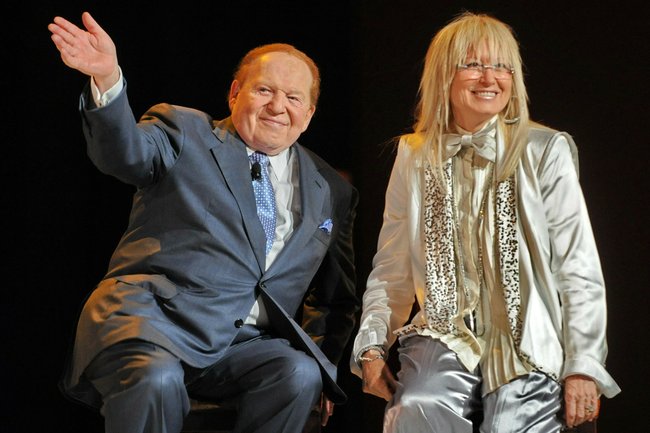
The New York Times reports today on Sheldon Adelson, “the man behind Gingrich’s money.”

The article provides in-depth coverage on Adelson’s donations, revealing how individual political donors can powerfully sway elections in the United States in order to advance their own particular vision of religious politics. Both Democratic and Republican donors can now legally donate millions of dollars to super PACs (political action committees) to publicize their personal agendas.

Political and religious activism have often overlapped in previous historical periods.  NIU students in HIST 414 European Wars of Religion and HIST 640 Religious Violence in Comparative Perspective, 1500 to Today should consider what, if anything, this modern case of religious politics suggests for our study of past intersections between religion, politics, and money.

Posted in European Wars of Religion, Political Culture, Religious Violence | Leave a comment

Movement for De-Baptism in France

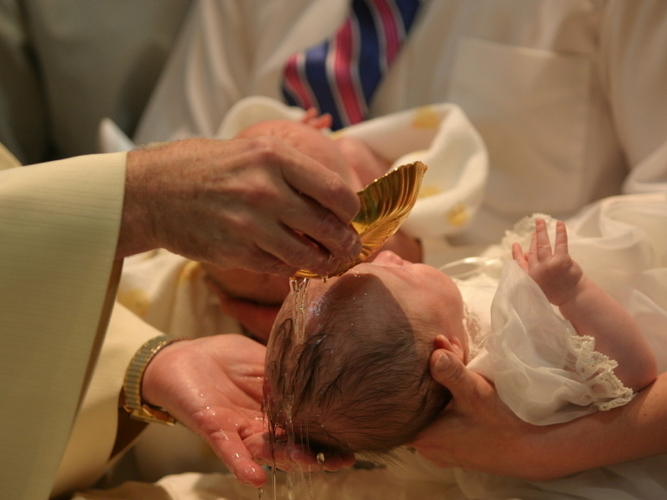
A movement promoting de-baptism is growing in France, challenging the authority of the Catholic Church and presenting quandaries for historians who use baptismal records as sources.

A French man named René LeBouvier has sued the Catholic Church in order to have his name stricken from the baptismal register of the church where he was baptized as an infant. He has won a court ruling based on French human rights law, but the Catholic Church has appealed to a higher court.

NPR reports on the case. The article explains the religious and political issues involved in the case, but does not discuss the historical implications. Many historians use baptismal records as key sources for the social history of communities. If states can force churches to alter their baptismal records, the historical value of these documents may be compromised.

NIU students in HIST 414 European Wars of Religion and HIST 640 Religious Violence in Comparative Perspective will be interested in this story after reading about the baptism controversies of the sixteenth and early seventeenth centuries.

Posted in European History, European Union, European Wars of Religion, French History, French Wars of Religion, Human Rights, Religious Violence | Leave a comment

English Translations of the Iliad

Homer’s The Iliad has been translated and re-translated into English numerous times.  Willis G. Reiger, director of the University of Illinois Press, points out that “according to The Oxford Guide to Literature in English Translation, the Iliad is among the most translated works in English, and English has more versions than any other language.”

Reiger examines some of the notable translations of The Iliad, suggesting that modern notions of manliness may have something to do with the proliferation of translations of Homer’s classic in English.

Reiger’s piece is published in the Chronicle of Higher Education.

Posted in Civil Conflict, Empires and Imperialism, European History, History in the Media, History of the Book, Mediterranean World, Noble Culture and History of Elites, War, Culture, and Society, Women and Gender History | Leave a comment

Commemorating Frederick the Great

Germans are commemorating the 300th anniversary of the birth of Frederick II “the Great”, king of Prussia in the mid-eighteenth century.

Frederick the Great is known above all for his generalship in a series of wars against the Habsburgs over the control of Silesia and influence within the Holy Roman Empire. Under his command, the Prussian army enforced brutal discipline on its soldiers, but its infantry gained a reputation for military efficiency.

Frederick the Great’s legacy has been successively embraced by Prussian monarchists, German nationalists, and Nazi leaders. This has made the historical memory of Frederick the Great highly controversial within modern Germany and Europe.

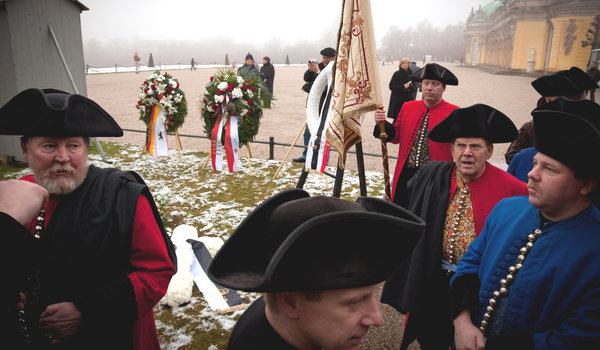
Surprisingly, then, some Germans today are actively celebrating the 300th birthday of Frederick the Great. The New York Times reports on the commemorations in Potsdam, which included historical reenactors dressed in eighteenth-century costumes and uniforms.

Posted in Early Modern Europe, European History, History in the Media, War, Culture, and Society, Warfare in the Early Modern World | Leave a comment

Vada a bordo, cazzo!

Almost every major disaster seems to have its heroes and its villains.  The Costa Concordia disaster off Isola di Giglio has made Captain Francesco Schettino a villain for allegedly abandoning his ship and Livorno Port Authority Commander Falco a hero for ordering Schettino to return to his ship and to organize its evacuation.

Commander Falco’s repeated orders, transmitted via radio, seem to have been ignored by Captain Schettino, leading an exasperated Falco to exclaim: “Vada a bordo, cazzo!” Millions of people worldwide have now listened to this exchange on La Repubblica, the Telegraph, YouTube, and other media outlets.

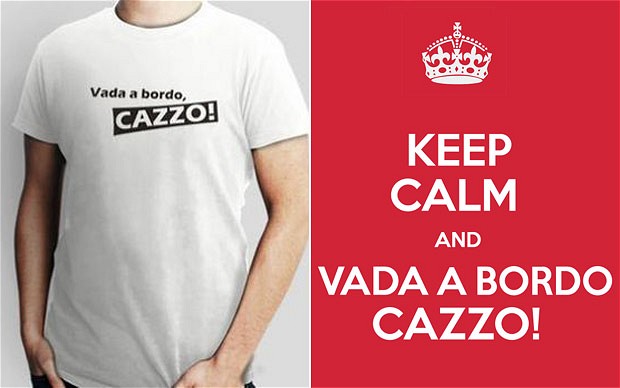
The phrase “Vada a bordo, Cazzo!” has gone viral and is now celebrated in Italy and elsewhere with T-shirts.

I suppose that it was inevitable that a mass tourism disaster would have to have a response through global commercialization.

The phrase “Vada a bordo, cazzo!” literally means “Get back on board, dick!”  But, “cazzo” is a much used expletive in Italian that is used to express frustration, much as “shit” is used in English.  So, I would argue that Falco was not calling the captain a “cazzo”, but rather using “cazzo” as a non-personal expletive here.

The Telegraph reports on the phrase and the T-shirts in circulation.

Posted in European Union, Globalization, Italian History, Maritime History, Mediterranean World | Leave a comment

Coffee in the Early Modern Mediterranean

We take coffee shops for granted today. From global chain like Starbucks to classic Parisian cafés and local American diners, coffee shops deliver caffeine to people around the world.

Coffee consumption became global in the seventeenth century, when a coffee craze swept the Mediterranean and Europe.

A NPR food story offers a whimsical look back at attitudes toward coffee as its popularity spread in the early modern period.

Historians of food, consumption, and mercantilism have been studying early modern coffee production and consumption seriously now for several decades.  Students of HIST 458 Mediterranean World, 1450-1750 will be interested in the NPR story and the broader historical literature on coffee in the early modern world.


Posted in Early Modern Europe, Early Modern World, European History, Food and Cuisine History, Mediterranean World, Renaissance Art and History | Leave a comment

Imperial Rivalry in the Modern Mediterranean

France and Turkey are now contending for political and economic dominance in the Mediterranean in the wake of the Arab Spring revolutions.

Soner Cagaptay, a Senior Fellow at the Washington Institute for Near East Policy, argues that the imperial legacies of the French Empire and the Ottoman Empire are shaping the current neoimperial policies of both France and Turkey in the Mediterranean region.

The Ottoman Empire conquered most of the Eastern Mediterranean and much of North Africa in the late fifteenth and early sixteenth centuries, becoming a major world power. France engaged in early forms of maritime imperialism in the Mediterranean from the sixteenth century before expanding its Atlantic colonies in the Caribbean and Canada. Despite French involvement in latter-day crusading against “the Turk” in the early modern period, France and the Ottoman Empire sometimes acted as allies against their common Habsburg enemies.

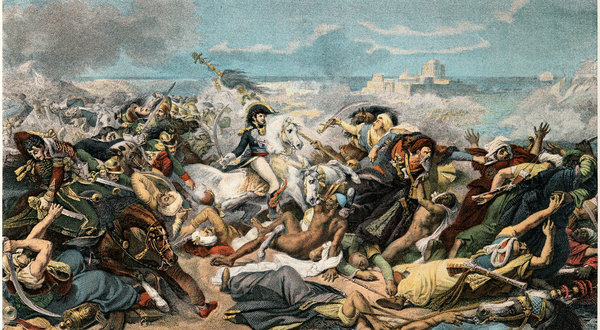
As Cagaptay emphasizes, Napoleon’s invasion of Egypt disrupted the political situation in North Africa and the Levant.  French “new” imperialism in North and West Africa in the nineteenth century then led to direct rivalry with the Ottoman Empire.  Echoes of this competition are being felt today.

Cagaptay’s op-ed is available at the New York Times online.

Posted in Comparative Revolutions, Early Modern Europe, Early Modern World, Empires and Imperialism, Mediterranean World, Political Culture | 2 Comments

Libraries and E-book Demand

All the kinks have certainly not been worked out of the ongoing electronic publishing “revolution”. Public and university libraries are experimenting with various forms of e-book borrowing, but a number of problems with e-borrowing have not yet been sorted out.

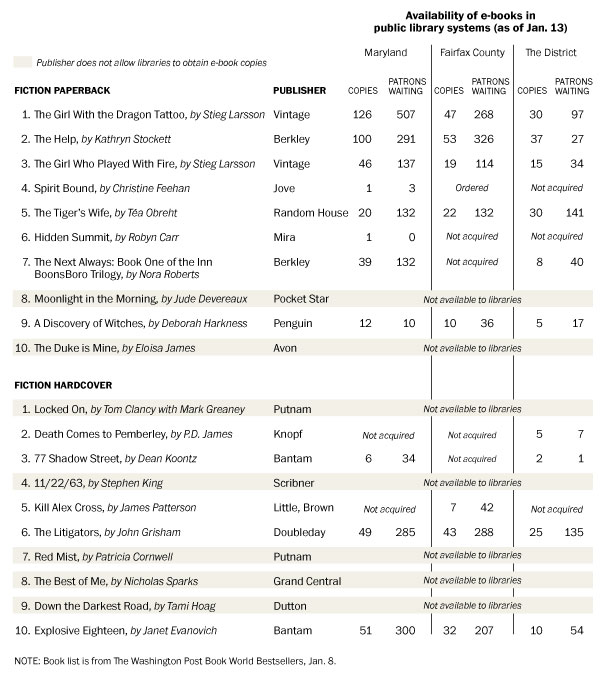
The Washington Post reports that DC area public libraries are so far unable to meet the demand for e-borrowing, especially of popular books such as best-selling novels. The following table presents the Washington Post findings:

Historians and other humanities scholars are attempting to develop new strategies for electronic publishing and digital humanities projects. Access to e-books and journal article databases (or the lack thereof) continues to pose significant limitations for using digital humanities texts and hypertexts effectively in or beyond the classroom.

The Washington Post article is available online.


Posted in Academic Publishing, Digital Humanities, Humanities Education, Political Culture | Leave a comment

Wreck of the Costa Concordia in the Mediterranean

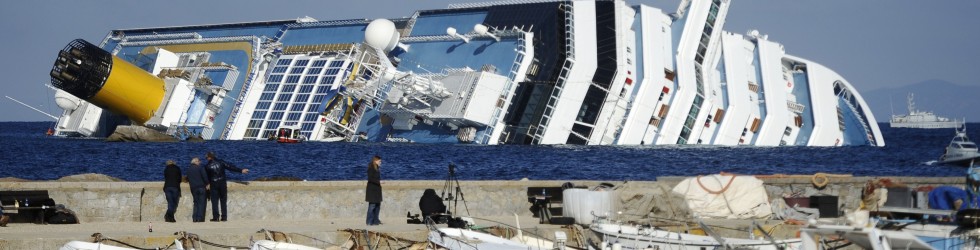
A gigantic cruise liner with 4,234 passengers aboard ran aground near Isola del Giglio, a tiny island off the Tuscan coast, over the weekend. The Costa Concordia had sailed from Civitavecchia, heading on cruise of the western Mediterranean. As the cruise liner passed near Isola del Giglio on Friday evening, it hit an underwater rock formation that cut an enormous gash under its portside waterline. The ship quickly took on water and began to list, forcing its evacuation.

Survivors described their terror and the chaos aboard as passengers scrambled for safety.  The BBC reports eyewitness accounts, many of which made comparisons to the Titanic disaster and to the 1997 film. Most of the passengers were successfully evacuated, but at least 11 people were killed and 24 passengers are still missing. A Korean couple and a crew member were rescued more than 24 hours after the ship ran aground.

Repubblica has full coverage of the disaster.  The BBC provides coverage in English and maps.

The Costa Concordia was a modern luxury cruise liner built by the Italian firm Fincantieri for 450 million Euros and completed in 2006.  Nautical experts and shipbuilders are astonished by the shipwreck, according to the BBC.

The commander of the Costa Concordia has been arrested over his handling of the ship and of the disaster.  Repubblica reports on the charges against the commander and the accusations that he abandoned his ship while passengers were still aboard. Sylvia Poggioli reports from Italy for NPR on the accusations against the commander.  An audio recording of the Livorno port authority ordering the commander back on board his ship is available on the Telegraph online.   NPR provides additional details on the investigationLa Repubblica is now reporting that commander Schettino was reportedly drinking and dining with a former hostess who has tried to defend him in the press.

NPR reports on the possible approaches to salvaging the Costa Concordia once the rescue operation has concluded.

The wreck of the Costa Concordia raises a number of serious questions about the state of the Mediterranean and the disaster is already provoking heated debate in Italy. Massive luxury cruise liners have become increasingly present in the Mediterranean, as the tourism industry expands.  The concept of the Grand tour of Italy as a crucial part of early modern European noblemen’s education has been extended to the entire Mediterranean and democratized for tourists of wealthy countries.  Historians of the Mediterranean World will want to follow the developments in the Costa Concordia disaster and the debate about its significance for Mediterranean tourism, economic development, ecology, and society.

Posted in Environmental History, European History, European Union, Globalization, Maritime History, Mediterranean World | Leave a comment

Laurent Dubois on the History of Haiti

As Haitians continues to struggle with rebuilding following the disastrous 2010 earthquake, historians are grappling with explaining the historical roots of Haiti’s current predicament.

Laurent Dubois, a professor of history at Duke University, has written several books on Haiti and on the French Caribbean in the early modern period through the Haitian Revolution. Dubois is now writing a new book entitled Haiti: The Aftershocks of History, dealing with Haiti’s contemporary history.

Laurent Dubois discusses his forthcoming book on NPR’s Weekend Edition.  For information on Haiti’s recovery to date see this NPR report.

Posted in Environmental History, French History, French Revolution and Napoleon, Globalization, Human Rights | Leave a comment