A Growing Francophonie

Francophonie is apparently growing rapidly.

Demographic studies of French-speaking populations suggest that French language use is increasing worldwide.  Francophonie is normally defined as the group of nations that have adopted French as an official language—including France, Switzerland, Belgium, Canada, Haiti, Guadaloupe, Sénégal, Mali, Côte d’Ivoire, Madagascar, Viêt Nam, and other nations. Although the European French-speaking population is relatively stable, the Francophone population of many African, Asian, and Caribbean nations is growing rapidly.

Researchers at Université Laval in Canada project that the Francophone population will grow from an estimated 175 million French speakers worldwide in 2000 to 680 million French speakers by 2050.  See: Richard Marcoux et Mathieu Gagné, “La francophonie de demain : essai de mesure de la population appartenant à la francophonie d’ici 2050,” Cahiers québécois de démographie 32:2 (2003): 273-294.

French-language instruction programs in American and other Anglophone nations need to prepare students to interact with the growing Francophone population worldwide. French historians need to develop more courses dealing with French dimensions of globalization.  Too often, globalization is understood exclusively through Anglo-American or Chinese perspectives.

For more information on Francophonie, see the Organisation Internationale de la Francophonie (OIF).

Posted in Education Policy, French History, Globalization, Humanities Education | Leave a comment

Autolib’ in Paris

Autolib’ is arriving in Paris!

Following the success of the Vélib’ bicycle renting service, Paris is installing car rental stations across the city. Paris continues to reinvent itself and to redefine urban modernity. The Autolib’ system will use electric cars and is projected to significantly reduce the total number of cars in Paris.

French historians and graduate students doing research in Paris will be eager to use both the Vélib’ and Autolib’ systems, which allow new mobility for foreign scholars on long-term research stays in the city.

The BBC reports on Autolib’.

Posted in Environmental History, French History, Paris History | Leave a comment

Manuscript Studies and Multispectral Imaging

Manuscript studies are going hi-tech.

Historical researchers working on manuscripts from the ancient, medieval, and early modern periods can now utilize sophisticated imaging instruments to reveal traces of ink and other materials that have faded and are no longer legible.

Digital humanities projects involve much more than merely scanning and digitization projects.  Most humanities scholars are familiar with online digital humanities resources, which are certainly helpful in expanding accessibility to humanities documents.  Some humanities researchers are developing research techniques and tools that allow scholars to examine documents and collections in entirely new ways.

The Economist reports on the multispectral imaging instruments and techniques being used by a team of researchers at the University of Oxford.

It turns out that this is my 200th post in Historical Perspectives!  Thanks to everyone who has been reading my discussions of research, writing, teaching, and the historical discipline!

Posted in Archival Research, Digital Humanities, Early Modern Europe, Early Modern World, History of the Book | Leave a comment

Creating Communities through Coercion

I will be chairing a session on “Creating Communities through Coercion in Seventeenth-Century France” at the American Historical Association (AHA) in Chicago in early January 2012.

AHA Session 183

Saturday, January 7, 2012: 2:30 PM-4:30 PM

Iowa Room (Chicago Marriott Downtown)

Chair: Brian W. Sandberg, Northern Illinois University


Topics:

“‘Let us melt into sadness’: Ordering France’s Emotions after the Assassination of Henry IV,” by John W. McCormack, University of Notre Dame

“Unwilling Allies: Forced Cooperation during the Princely Fronde, 1650–53,” by James Coons, University of Wisconsin-Madison

“Forcing French Catholicism: Noble Conversion and Reeducation after the Revocation of the Edict of Nantes,” by Elizabeth Churchich, Rutgers University-New Brunswick

The full session description is available in the AHA program online.

Posted in Conferences, Early Modern Europe, European Wars of Religion, French History, French Wars of Religion, Religious Violence, Warfare in the Early Modern World | Leave a comment

Daughter of Dirty War

Issues of gender and violence are finally beginning to be studied through global perspectives and comparative methods, often with disturbing results.

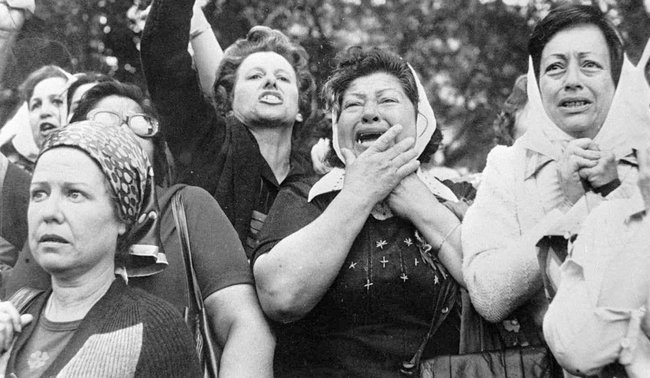
A trial in Argentina has presented evidence of abductions of the children by Argentinian military officers in order to prevent retaliation by their political enemies. An estimated 500 babies were abducted during the late 1970s and early 1980s. The stolen babies included boys but many of the victims were girls, and gendered violence seems to have been directed against the abducted babies’ mothers.

Similar cases of military abductions of children in Franco’s Spain have recently emerged. The New York Times reports on the Argentinian abductions and trial.

Students in the WOMS program at Northern Illinois University may be interested in this story and related research on gender and violence.


Posted in Gender and Warfare, History of Violence, Human Rights, War, Culture, and Society, Women and Gender History | Leave a comment

Leonardo da Vinci Blockbuster

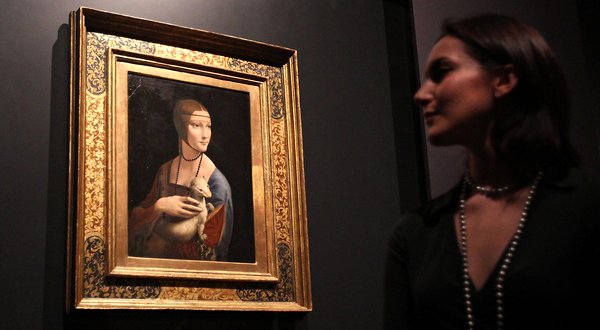
Art lovers and historians are queuing up for a Leonardo da Vinci blockbuster exhibition at the National Gallery in London. The exhibition is entitled Leonardo da Vinci: Painter at the Court of Milan and is on view until 5 February 2012. Leonardo is clearly still incredibly popular with museum goers, as anyone teaching Renaissance history would predict.

The National Gallery in London has information on the show at its website.  The New York Times reports on the crowds attending the exhibition.

Students in HIST 420 The Renaissance will be interested in the show and in the National Gallery website for the exhibition.

Posted in Art History, Early Modern Europe, Early Modern World, History in the Media, Italian History, Mediterranean World, Renaissance Art and History | Leave a comment

Book Covers and the E-Book Revolution

As the ongoing e-book revolution spreads, many authors and readers lament the possible demise of printed books.

Despite growing e-book sales, publishers seem to have found robust niche markets for printed books.  Well-designed book covers and aesthetic features in some printed books seem to appeal to many readers.

The continued market for printed books alongside e-books will not surprise historians of the “Print Revolution” and early modern printing.  The development of moveable type and the printing press created incredible new opportunities for fifteenth-century publishers.  Yet, manuscript books continued to thrive in certain markets.  Editors produced many hybrid books as art objects, incorporating hand-painted illuminations, unique leather bindings, and other elaborate features. Anthony Grafton, Lisa Jardine, Andrew Petegree, Eveyln Welch, and other scholars of Renaissance printing and material culture have greatly qualified the “revolutionary” dimensions of the “Print Revolution” by examining the production and dissemination of these hybrid books.

The New York Times reports on current strategies employed by publishers of printed books today.

Posted in Academic Publishing, Digital Humanities, Early Modern Europe, Early Modern World, History of the Book, Renaissance Art and History | Leave a comment

College Student Study Habits

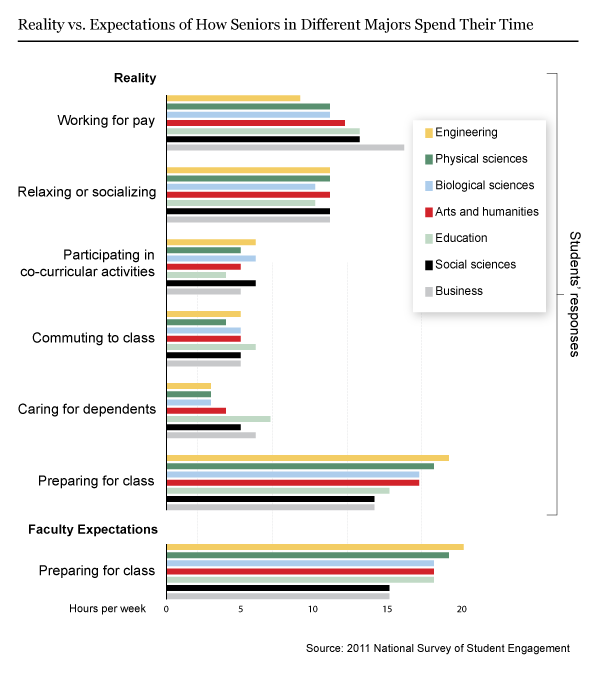
The National Survey of Student Engagement (NSSE), a new report on university and college student study habits, measures the number of hours that students spend a week in their studies and other activities.  The results provide some indication of the relative difficulties of disciplines, based on the amount of time students engage in studies.

The survey shows that Engineering students study the most, while Business students study the least.  Approximately 31 percent of Arts and Humanities seniors study more than 20 hours a week, according to the survey.

A 12 credit hour schedule per semester schedule is based on the assumption that students would study approximately 2 hours per hour spent in class hour.  Thus, a 12 credit hour schedule is considered a “full time” course load, since students are expected to spend 24 hours studying and 12 hours in classes, for a total of 36 hours of coursework (roughly the equivalent of a full-time work schedule of 40 hours).

Undergraduate students today have many competing demands on their time, however.  Many of my own students at Northern Illinois University work part-time (and some of them, full-time) jobs.  The NSSE study’s data clearly bears this out.  Arts and Humanities students (including History majors) spend an average of 17 hours preparing for classes, 12 hours working, 11 hours socializing, 5 hours commuting, 5 participating in co-curricular activities, 4 hours caring for dependents.

The NSSE study is available at the NSSE website.  The Chronicle of Higher Education reports on the NSSE survey and on criticisms of the survey’s methodologies.

Posted in Education Policy, Humanities Education | Leave a comment

Colloque Miroirs de Charles IX

I am in Paris currently, participating in an interdisciplinary conference on Miroirs de Charles IX: Images, Imaginaires, Symboliques at the Institut National de l’Histoire de l’Art.

The conference is tightly focused, with presentations by historians, art historians, and literary scholars on the imagery of Charles IX, who was king of France during the early phases of the French Wars of Religion from 1561-1574. Charles IX is best known for presiding over the Saint Bartholomew’s Day Massacre of Huguenots (French Protestants) in Paris in August 1572. The conference deals with the complex imagery of majesty, justice, piety, peace, and war utilized by the king and his councilors during his reign.

The conference was organized by Luisa Capodieci, Estelle Leutrat, and Rebecca Zorach.

The scientific committee for the conference included: Andreas Beyer, Luisa Capodieci, Olivier Christin, Philippe Desan, Marianne Grivel, Estelle Leutrat, Philippe Morel, Henri Zerner, and Rebecca Zorach.

The program is available online at the website of the Université de Paris I.

Posted in Conferences, Early Modern Europe, European Wars of Religion, French Wars of Religion, History of Violence, Religious Violence, Warfare in the Early Modern World | Leave a comment

Faculty Productivity Demonstrated

A new report demonstrates that faculty can be incredibly productive, producing much more revenue for universities than their salaries cost.

The report examines faculty at the University of Texas at Austin and was prepared by Mark A. Musick, an Assistant Dean in the university’s College of Liberal Arts.

“What the data show is that the faculty are extremely productive on average,” Musick indicated.  “Professors generate more money in terms of research funding and teaching than they’re paid, by a wide margin.”

The Texas report finds that: “University of Texas faculty members produced about $558-million in revenue, combining teaching and external grants, while the compensation they received from state dollars amounted to $257-million during the 2009-10 academic year. The teaching revenue is calculated by the money the state allocates to universities per credit-hour of teaching.”

The report also indicates that “The highest-paid faculty members generate the most money for the university. Those earning annual salaries of $175,000 or more cost the state $107-million but brought in $218-million in research grants and money from the state.”

The Chronicle of Higher Education reports on the Texas report and its wider context. The Texas report could potentially serve as a model for universities across that United States that are wanting to gauge faculty productivity, so faculty will want to become familiar with the Texas report.

Posted in Education Policy, Humanities Education | Leave a comment