Early Modern Workshop at the University of Chicago

The Early Modern Workshop at the University of Chicago is an active community of researchers on early modern European and global history.

I have attended presentations at the Early Modern Workshop periodically over the past five years, since taking up my position at Northern Illinois University. I recently had a wonderful opportunity to participate in the workshop and present one of my unpublished papers, thanks to a kind invitation by co-organizers Elisa Jones and Kirsty Montgommery.  I chose a chapter-in-progress dealing with religious peacemaking and negotiation in southern France during the French Wars of Religion, entitled: “‘Put Us All in Good Peace and Union’: Religious Peacemaking in Languedoc after the Edict of Nantes.”

The workshop format involves discussion of a precirculated paper, so I was on the “hot seat” for an hour or so of intense questioning regarding my chapter. The discussion was intense and I received some fantastic criticism and feedback on my draft chapter. Now, I need to heading back to the computer to rework the chapter based on all the helpful suggestions.

The Early Modern Workshop is a great resource for early modern historians in the Chicago area and beyond.
Posted in Conferences, Early Modern Europe, Early Modern World, European History, French Wars of Religion | Leave a comment

Amazon Now Publishes Books

Publishers and editors worldwide have been adjusting to developments in e-publishing, cutbacks in library acquisitions, the spread of e-readers, the growth of online booksellers, and the decline of independent bookstores.

Now, publishers face new challenges from Amazon, which has begun to publish some books itself, cutting out authors’ need to work with publishers. This development has the potential to reshape the publishing landscape, initially in fiction publishing. Eventually, this new strategy could affect non-fiction publishing, too.

This trend is not entirely new, since Barnes and Noble has long published its own books, especially in fields that allow books to be produced cheaply, such as editions of literary classics and reprints of out-of-copyright non-fiction books.

The New York Times reports on an author’s experience with Amazon’s publishing initiative.


Posted in Academic Publishing, Digital Humanities, Humanities Education | Leave a comment

Friendship in Premodern Europe

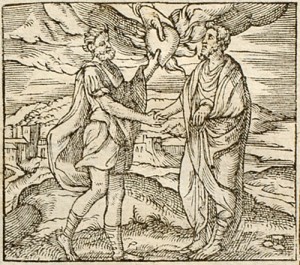
This weekend, I am participating in a conference on Friendship in Premodern Europe (1300-1700), hosted by the Centre for Reformation and Renaissance Studies (CRRS) at the University of Toronto.

This conference has been organized by historian Konrad Eisenbichler and the CRRS. The program and conference information is available online at the Friendship in Premodern Europe (1300-1700) webpage at the CRRS website.

Posted in Conferences, Early Modern Europe, Early Modern World, European History, Renaissance Art and History | 2 Comments

What’s a Poor French Noble to Do?

Poor nobles apparently abound in today’s France. There are still many nobles living in 21st-century France, and supposedly a number of them have fallen on hard times.

Luckily for these poor nobles there is a charitable association, the Association d’Entreaide de la noblesse française (ANF), dedicated to helping out young nobles who need scholarships to go to universities. This organization, known in English as the Association for the Mutual Assistance of the French Nobility, was created in the 1930s to assist French noble families and to uphold the values of nobility.

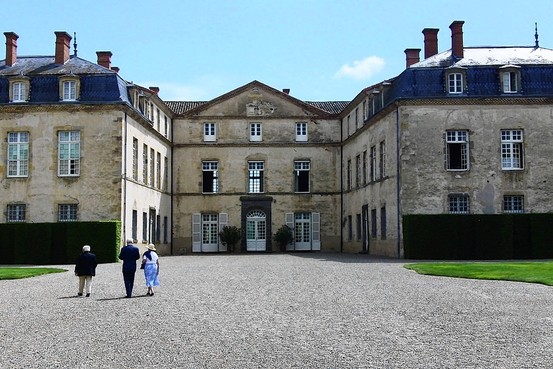
The Wall Street Journal reports on a recent meeting of a local ANF chapter in Auvergne.

The discourse of the “poor noble” has actually been employed by nobles for centuries. Early modern French nobles routinely claimed to be impoverished by their monetary contributions to royal finances, administrative offices, and military campaigns. Some of the nobles who claimed to be poor were indeed financially ruined by investments and warfare, others used the discourse of the “poor noble” instrumentally in their requests for reimbursements and gratifications from French monarchs.

The history of European nobles and social elites extends into contemporary societies, yet few historians have seriously examined the broad history of nobilities and elites.


Posted in Early Modern Europe, European History, European Union, French History, Languedoc and Southern France, Noble Culture and History of Elites, Political Culture | 1 Comment

French Intellectuals in the Media

France has long had a robust history of public intellectuals—Renaissance essayists  such as Michel de Montaigne, Enlightenment philosophes such as Voltaire, and modern philosophers such as Sartre. Tony Judt and other French historians have traced the developments in modern French intellectual history and philosophy.

Robert Zaretsky, a French historian, now adds a commentary on the current state of French public intellectuals in a review of Pascal Boniface’s Les Intellectuels Faussaires
(“The Counterfeit Intellectuals”). Zaretsky’s review is published in the Chronicle of Higher Education as a selection for subscribers only, but may be accessed through most university libraries’ online databases.

Graduate students in French history and literature courses may be interested in this story.

Posted in Academic Publishing, European History, French History, History in the Media, History of the Book, Human Rights | Leave a comment

Dissertation Travels and Archival Research

Historians are used to traveling for research. Most graduate students and professors of history head to archives and specialized research libraries to consult manuscripts, rare books, and printed documents. Although a some important document collections have been digitized, the vast majority of archives may only be accessed by traveling to specialized collections. Archival research remains the vital field work of most historians.

A doctoral student in history at the University of Texas at Austin chronicles her experiences traveling to do archival research for her dissertation in a piece in the Chronicle of Higher Education.

Of course, this student’s research travels in the United States seem remarkably easy (and even quaint) compared with the complexities and costs of traveling to European, Asian, Latin American, or African archives. Doctoral students traveling to collections abroad normally have to deal with using foreign languages, employing other currencies, learning different housing procedures, navigating government bureaucracies, discerning archival policies, and appreciating local cultures.

But, then again, traveling abroad is part of the allure of studying the history of other cultures!

Posted in Archival Research, European History, Graduate Work in History | Leave a comment

The Antichrist in Politics

Historians and students of the Reformation are very familiar with the role of the Antichrist in religious reformers’ thinking and religious politics. Bob Scribner’s classic study, For the Sake of Simple Folk, analyzes Lutheran print propaganda, including imagery of the Antichrist. The Four Horsemen of the Apocalypse, by Ole Peter Grell and Andrew Cunningham, emphasizes the Apocalyptic culture of the Reformation period, which envisioned the Antichrist as already active in fomenting evil on the earth. Many Reformation leaders believed that the Last Days were coming in their own lifetime.

The concept of the Antichrist is alive and well in American politics today.  An op-ed in the New York Times by Matthew Avery Sutton, Associate Professor of History at Washington State University, discusses the role that the Antichrist plays in current politics in the United States.


Posted in Early Modern Europe, Early Modern World, European Wars of Religion, French Wars of Religion, Religious Violence | Leave a comment

States of Early Modernity: Symposium at the Newberry

Newberry Center for Renaissance Studies

A Symposium and Workshop on States of Early Modernity

Registration deadline: Friday, September 30
Symposium: Friday, October 14, 2011, 9 a.m. to 5 p.m.

Leaders:
Crystal Bartolovich, Syracuse University
Victoria Kahn, University of California, Berkeley
Ania Loomba, University of Pennsylvania
Mark Netzloff, University of Wisconsin-Milwaukee

http://www.newberry.org/renaissance/conf-inst/EarlyModernity.html

Printable PDF flyer – please feel free to distribute and post: http://www.newberry.org/renaissance/conf-inst/StatesOfEarlyModernity.pdf

This program is free and enrollment is not limited, but registration in advance is required. Readings will be precirculated electronically to registrants.

Faculty members and graduate students from member institutions of the Center for Renaissance Studies consortium may be eligible to apply for travel funding to attend this program. See http://www.newberry.org/renaissance/consortium/ReimburseInfo.html for details.

Posted in Conferences, Early Modern Europe, Early Modern World, Empires and Imperialism, State Development Theory | Leave a comment

Early Modern French Historian Wins MacArthur Fellowship

Jacob Soll, a historian of early modern French history, has won one of the prestigious MacArthur Fellowships.

Soll works on information management and state development in early modern France.  He has published books on Publishing ‘The Prince’, about a French translation of Machiavelli’s famous work, and The Information Master, a study of Jean-Baptiste Colbert’s methods of organizing information during Louis XIV’s reign.

The MacArthur Foundation introduces Jacob Soll and all of this year’s MacArthur Fellows at their website.

Graduate students in early modern European history will want to find out about Jacob Soll’s work and his award.

Posted in Early Modern Europe, French History, Humanities Education | Leave a comment

Libyan Women at War

Libyan women have been closely involved in the Libyan Civil War over the past six months. Many Libyan women have participated in the Civil War as combatants, logistical supporters, medical assistants, and family mangers.

An article in the New York Times reports on Libyan women’s experiences of civil warfare and their status in the emerging Libyan society.

Posted in Civil Conflict, Comparative Revolutions, Gender and Warfare, War, Culture, and Society, Women and Gender History | Leave a comment