-
Recent Posts
Recent Comments
total900 on The Great War and Modern Memor… Remembering the Stor… on Siege Warfare and the Storming… Tyrone on The Roman Colosseum and Gladia… Gregory Hanlon on Ancient Battlefield Archaeolog… Sylvia Scoggin on Ukraine War Archives
- April 2026
- March 2026
- February 2026
- January 2026
- December 2025
- October 2025
- August 2025
- July 2025
- May 2025
- April 2025
- March 2025
- February 2025
- January 2025
- November 2024
- October 2024
- September 2024
- August 2024
- February 2024
- January 2024
- December 2023
- November 2023
- October 2023
- September 2023
- August 2023
- April 2023
- March 2023
- February 2023
- January 2023
- December 2022
- October 2022
- September 2022
- August 2022
- July 2022
- May 2022
- April 2022
- March 2022
- February 2022
- January 2022
- December 2021
- November 2021
- October 2021
- September 2021
- August 2021
- June 2021
- May 2021
- April 2021
- March 2021
- February 2021
- January 2021
- December 2020
- November 2020
- October 2020
- September 2020
- August 2020
- May 2020
- April 2020
- March 2020
- January 2020
- August 2019
- July 2019
- June 2019
- April 2019
- February 2019
- January 2019
- December 2018
- November 2018
- October 2018
- September 2018
- August 2018
- April 2018
- March 2018
- February 2018
- January 2018
- December 2017
- October 2017
- September 2017
- July 2017
- June 2017
- February 2017
- December 2016
- September 2016
- August 2016
- July 2016
- June 2016
- May 2016
- April 2016
- March 2016
- February 2016
- January 2016
- December 2015
- November 2015
- October 2015
- September 2015
- July 2015
- June 2015
- May 2015
- April 2015
- March 2015
- February 2015
- January 2015
- December 2014
- November 2014
- October 2014
- September 2014
- August 2014
- July 2014
- June 2014
- May 2014
- April 2014
- March 2014
- February 2014
- January 2014
- December 2013
- November 2013
- October 2013
- September 2013
- August 2013
- July 2013
- June 2013
- May 2013
- April 2013
- March 2013
- February 2013
- January 2013
- December 2012
- November 2012
- October 2012
- September 2012
- August 2012
- July 2012
- May 2012
- April 2012
- March 2012
- February 2012
- January 2012
- December 2011
- November 2011
- October 2011
- September 2011
- August 2011
- July 2011
- June 2011
- May 2011
- April 2011
- March 2011
- February 2011
- August 2010
Categories
- Academic Freedom
- Academic Publishing
- Ancient History
- Archival Research
- Arms Control
- Art History
- Atlantic World
- Atrocities
- Authoritarianism
- Battlefield Archaeology
- Careers in History
- Cartographic History
- Civil Conflict
- Civil Rights Issues
- Civil-Military Relations
- Civilians and Refugees in War
- Climate Change
- Comparative Revolutions
- Conferences
- Contemporary Art
- Contemporary France
- Court Studies
- Crowd Studies
- Cultural History
- Culture
- Current Research
- Democracy
- Digital Humanities
- Early Modern Europe
- Early Modern France
- Early Modern World
- Education Policy
- Empires and Imperialism
- Environmental History
- European History
- European Studies
- European Union
- European Wars of Religion
- Food and Cuisine History
- Francophonie
- French Empire
- French History
- French Language and Literature
- French Revolution and Napoleon
- French Wars of Religion
- Gender and Warfare
- Genocides
- Globalization
- Graduate Work in History
- Grants and Fellowships
- High School History Teaching
- Higher Education
- Historical Film
- Historical Re-enactment
- Historiography and Social Theory
- History in the Media
- History of Medicine
- History of News
- History of Race and Racism
- History of Science
- History of Slavery
- History of the Book
- History of the Western World
- History of Violence
- Human Rights
- Humanities Education
- Idea of Europe
- Illinois History and Society
- Information Management
- Information Revolutions
- Intellectual History
- international relations
- Italian History
- Jobs and Positions
- Languedoc and Southern France
- Laws of War
- Lectures and Seminars
- Legal history
- Little Ice Age
- Manuscript Studies
- Maritime History
- Material Culture
- Medieval History
- Mediterranean World
- Mercenaries
- Migration History
- Militias and Paramilitaries
- Monarchies and Royal States
- Museums and Historical Memory
- Music History
- Noble Culture and History of Elites
- Northern Illinois University
- Paleography
- Paris History
- Peacemaking Processes
- Piracy
- Political Activism and Protest Culture
- Political Culture
- Political History of the United States
- Political Parties and Organizations
- Political Theory
- Printing Revolution
- Public History
- Rare Books and Pamphlets
- Reformation History
- Religious History
- Religious Politics
- Religious Violence
- Renaissance Art and History
- Republicanism
- Revolts and Revolutions
- Security Studies
- Siege Warfare
- Social History
- State Development Theory
- Strategy and International Politics
- Study Abroad
- Terrorism
- The Past Alive: Teaching History
- Translations
- Uncategorized
- Undergraduate Work in History
- United States Foreign Policy
- United States History and Society
- Urban History
- War and Society
- War in Film
- War, Culture, and Society
- Warfare in the Early Modern World
- Women and Gender History
- World History
- Writing Methods
Meta
Renaissance Prints at the Art Institute of Chicago
This is a big year for the Renaissance at the Art Institute of Chicago. A major exhibition on Kings, Queens, and Courtiers: Art in Early Renaissance France is ongoing at the Art Institute until 30 May 2011.
Another exhibit will be opening next month on Altered and Adorned: Using Renaissance Prints in Daily Life. This show will run from 30 April to 10 July 2011 at the Art Institute of Chicago.
Student in HIST 420 The Renaissance at Northern Illinois University will be interested in both of these shows.
Debtor Prisons in the United States
Has the United States recreated the debtor prisons of the early modern period?
A current United States Supreme Court case questions whether some states’ laws on “deadbeat dads” constitute imprisonment for debt.
A NPR story today considers the court case and draws comparisons to early modern debtor prisons.
At War in Libya?
Are the Unites States and its allies at war in Libya?
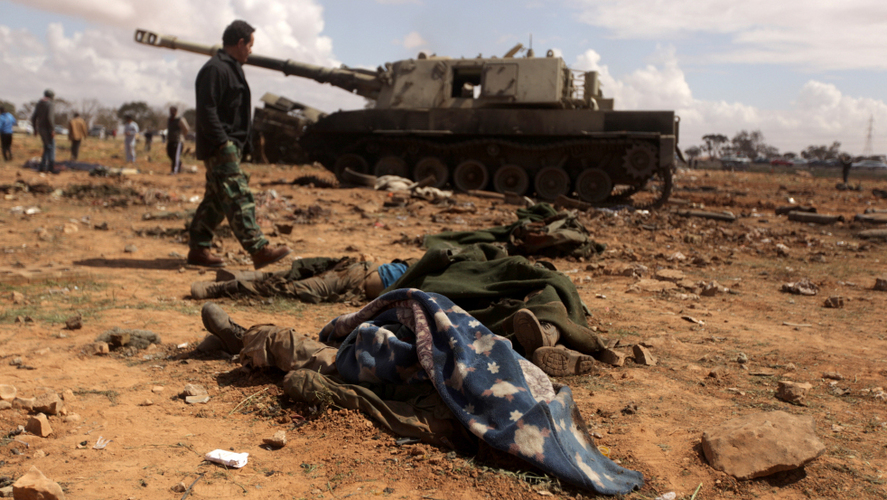
As discussed in a recent post, the airstrikes in Libya can be seen as constituting not merely the institution of a no-fly zone but a military intervention in a civil conflict in support of the Libyan opposition groups, especially in Benghazi. The modern practice of states engaging in “military actions.”
The modern practice of engaging in “military actions” and “policing actions” without formal declarations of war creates ambiguities, however. The Obama administration’s claim to be acting to protect Libyan civilians in a humanitarian intervention has created more confusion. Politicians and pundits across the political spectrum are now exploiting the ambiguity over conceptions of a “state of war” in order to score political points.
A piece on NPR examines modern notions of a “state of war” and the processes of instigating warfare. This piece suggests that the military operations in Libya do not (yet) constitute a war. Although I find this piece rather flawed, it does at least open a new arena of discussion on the military intervention in Libya.
Meanwhile, Richard Haass of the Council on Foreign Relations has criticized the airstrikes and no-fly zone in Libya, referring to these operations as a clear military intervention into a Libyan civil war. Listen to Haass’s interview on NPR, and find a summary of the interview here. I do not endorse all of Haass’s assessments of the situation in Libya and find his description of Libya as a “tribal” country highly problematic. However, I do agree with his argument that the airstrikes constitute military intervention in a Libyan civil conflict.
Perhaps we can now move beyond discussion of the no-fly zone, to examine exactly what the military intervention in Libya represents.
Military Intervention in Libya
While much of the media coverage of the Libyan conflict has focused on the debate over a no-fly zone, the European and American military intervention in Libya is clearly much broader than than a no-fly zone would imply. The initial targets and timing of French and American airstrikes make clear that allying with the Libyan opposition forces and protecting their positions in Benghazi are the primary goals of the intervention.
A story in the Christian Science Monitor examines the French role in the initial airstrikes. Reports in Al Jazeera, The New York Times, the Guardian, and Le Monde reinforce this interpretation of the rationale for the military intervention.
Now that the United States and its allies have intervened to support the opposition forces (or rebels), policymakers need to identify the anti-Ghaddafi forces and discern their political aims. Having spent years trying to decipher the shifting groups of participants in early seventeenth-century civil conflicts, I believe that this will be very difficult to do in Libya, especially without a significant U.S. diplomatic or military presence on the ground. Civil conflicts that are not based on regional, ethnic, or religious affiliations often produce incredibly fragmented political and military groups with varying interests. This promises to be a very complicated, and potentially lengthy, military intervention in Libya.
French historians will be interested in following this latest expression of French nationalism and militarism in North Africa. France has a long history of colonial projects and neocolonial relationships in North African and the Mediterranean. Nicolas Sarkozy resumed the French arms trade to Libya several years ago, permitting Gaddafi to purchase French missiles, aircraft, and military radio equipment. French concerns about immigration from North Africa are clearly shaping Sarkozy’s policies and his government’s intervention in Libya, especially following news of more than 100,000 refugees already fleeing from the Libyan conflict. While Libya’s oil reserves certainly figure in the French intervention in Libya, these other concerns are clearly operative, too.
Call for Proposals: Attending to Early Modern Women Conference
Call for Proposals
Attending to Early Modern Women: Remapping Routes and Spaces
June 21-June 23, 2012 Milwaukee, Wisconsin
Attending to Early Modern Women, which has been held seven times at the University of Maryland since 1990, is moving to the University of Wisconsin-Milwaukee, thanks to the generous support of the College of Letters and Science at UWM. The conference will retain its innovative format, using a workshop model for most of its sessions to promote dialogue, augmented by a plenary session on each of the four conference topics: communities, environments, exchanges, and pedagogies. It will be held at the UWM School of Continuing Education Conference Center in the heart of downtown Milwaukee, within easy walking distance of the lakeshore, the Milwaukee Art Museum, the Milwaukee Public Museum, and the Amtrak station.
Attendees will stay in the near-by and newly renovated Doubletree Hotel. The conference will run from Thursday June 21 through Saturday June 23, 2012, and attendees will also have the opportunity to participate in a special pre-conference seminar on Wednesday June 20 at the Center for Renaissance Studies at the Newberry Library in Chicago.
A detailed description of the conference and the call for proposals is now available at: www.atw2012.uwm.edu
Proposals for workshops that address the conference themes may now be submitted, to atw-12@uwm.edu. Deadline: August 31, 2011.
Please forward this call to colleagues and students who you think might be interested.
Bellicose Women: A “Gender Gap” in Policymaking?
The decision for the United States to go to war in Libya appears to have been made by female policymakers in the Obama administration. An article in the Christian Science Monitor discerns a “gender gap” in foreign policy formulation in the White House, suggesting that bellicose women policymakers pushed for military intervention in Libya.
The notion that bellicose women can instigate military action connects nicely with my own research on women, gender, and violence. When I present research on gender and violence during the French Wars of Religion, I often get questions and comments suggesting that women could not really have been seriously involved in warfare. Many scholars and students seem to have bought into the popular myth that war is exclusively a masculine domain.
Recent historical research demonstrates that women have long been involved intimately in the practices of warfare, and not just as victims. John A. Lynn’s Women, Armies, and Warfare in Early Modern Europe offers a fascinating portrait of women’s involvement in armed forces throughout the early modern period. My own research shows that many women were active participants in religious and civil warfare in early modern France.
It is time to rethink the notion of warfare as a purely masculine sphere.
Resource for Research on Historical Film
Students in HIST 390 Film and History: War in Film will be interested in Screening the Past, an e-journal on filmmaking that has numerous articles and film reviews dealing with historical films.
At War in Libya
The United States has today entered into a new war in Libya. President Obama’s decision to implement a no-fly zone in Libya entails cruise missile strikes and bombing to dismantle surface-to-air missile emplacements and Libyan ground forces close to Benghazi. The New York Times and other news organizations now confirm that United States and French forces have begun bombardments in Libya.
The President has clearly sided with the Libyan opposition coalition, intervening in a widening civil conflict. This military intervention will involve providing significant political support and committing the prestige of the United States to protect the opposition coalition’s integrity for an indeterminate period of time. This is a very risky political and military strategy that will clearly require significant financial costs and increased stress on the already strained United States military system.
Numerous policy analysts have questioned the wisdom of a no-fly zone strategy in Libya, including Michael Lind, a fellow with the New America Foundation who wrote this piece in Salon. Steve Clemmons, another fellow at the New America Foundation, critiqued the no-fly zone strategy in the BBC. Meanwhile, The Economist has offered its own assessment of the risks of a no-fly zone in Libya.
Can the United States effectively enter into a Libyan War while simultaneously waging ongoing wars in Afghanistan and Iraq?