Becoming a Man in the Age of Revolutions

Professor Dena Goodman, a historian of women and gender in the Enlightenment and French Revolution at the University of Michigan, will be presenting a lecture on “Becoming a Man in the Age of Revolutions” at the Newberry Library in Chicago on Saturday, April 9, 2011 at 1:00 p.m.

The event description at the Newberry Library reads: “Professor Goodman seeks to complicate the picture of nineteenth-century reactionary aristocrats and modern republicans by bringing an eighteenth-century perspective to bear on French revolutionary and post-revolutionary culture and society. Her paper will trace the life and career of a boy born less than a decade before the start of the French Revolution and asks how he became a man—and what kind of a man he became—through the successive upheavals of French history, from the Revolution and the Terror through the restoration of the monarchy and the regimes that followed. She argues that he became a ‘new man’ of the nineteenth century only by drawing on family ties and patronage networks deeply embedded in the ancien regime of the seventeenth and eighteenth century.”

Graduate students at Northern Illinois University, as well as students in HIST 423 French Revolution and Napoleon may be interested in attending this lecture.

Posted in Comparative Revolutions, Early Modern Europe, French History, French Revolution and Napoleon, Northern Illinois University, Women and Gender History | Leave a comment

Legendary Drummer Seeks Royalties

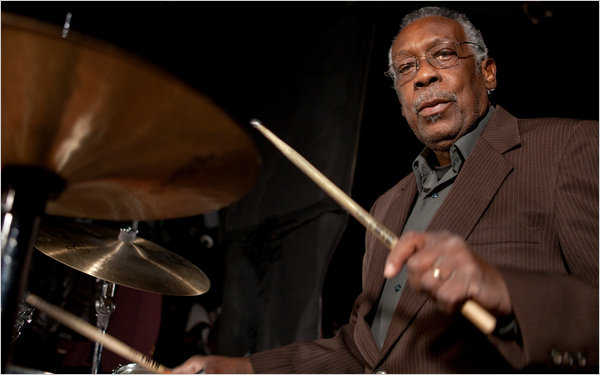
The legendary drummer Clyde Stubblefield is seeking royalties for his much-sampled beats, which have been re-used by thousands of musicians.  Stubblefield’s influential drumming style is considered a crucial aspect of the music history of modern rock, funk, rap, and hip-hop.

Stubblefield was the drummer for James Brown on his hit “Funky Drummer,” (1970).  His drum parts for this song are sometimes considered the most-sampled sequences of any musical sequences.  His struggle for recognition and financial compensation will be significant for future drummers and other accompanying musicians.

Read about Stubblefield’s influential drumming in the New York Times.  Recent stories have also appeared in NPR and various drumming publications.

Posted in Digital Humanities, Music History | Leave a comment

Expanding Use of FOIA Requests on Faculty Members

Now that the news of an open records request on University of Wisconsin Professor William Cronon has gone viral, other faculty at public universities are already being targeted by politicized FOIA requests, as a story in the New York Times indicates.

These requests seem to violate the purpose of FOIA laws and clearly represent attacks on academic freedom.  I think that faculty and lawyers need to examine FOIA laws to determine whether faculty at public universities can legitimately be targeted with FOIA requests.

The Wisconsin Open Records Law states that:

“19.31  Declaration of policy. In recognition of the fact that a representative government is dependent upon an informed electorate, it is declared to be the public policy of this state that all persons are entitled to the greatest possible information regarding the affairs of government and the official acts of those officers and employees who represent them. Further, providing persons with such information is declared to be an essential function of a representative government and an integral part of the routine duties of officers and employees whose responsibility it is to provide such information. To that end, ss. 19.32 to 19.37 shall be construed in every instance with a presumption of complete public access, consistent with the conduct of governmental business. The denial of public access generally is contrary to the public interest, and only in an exceptional case may access be denied.”

But, this power to compel state “authorities” or “employees” to produce documents is limited by provisions of 19.32 and 19.37.

The provisions of 19.32 seem to exempt University of Wisconsin faculty from Open Records Act requests.  Provision 19.32 (4) defines “state public office”: “‘State public office’ has the meaning given in s. 19.42 (13), but does not include a position identified in s. 20.923 (6) (f) to (gm)” [my emphasis].

The exception identified in 20.923 (6) (f) is: “University of Wisconsin System: deans, principals, professors, instructors, research assistants, librarians and other teachers, as defined in s. 40.02 (55), the staff of the environmental education board, and instructional staff employed by the board of regents of the University of Wisconsin System who provide services for a charter school established by contract under s. 118.40 (2r) (cm).”

So, University of Wisconsin administrators are covered by the act, but not the academic and educational personnel, including “deans, principals, professors, instructors, research assistants, librarians and other teachers.”

I am not a lawyer, so I have no expertise on this issue.  This post represents my own reading of the Wisconsin Open Records Act, which is available online.  Several constitutional lawyers have commented on this issue online, including Professor Ruthann Robson, who points out on her blog that:

The most recent Court opinion regarding a First Amendment challenge to a state FOIA request was the June 2010 decision in Doe v. Reed, in which the Court considered a request under Washington’s state open records law to reveal the signatories for a ballot initiative to revoke the same-sex civil union law. In Reed, the Court articulated an “exacting scrutiny” standard, “requiring a ‘substantial relation’ between the disclosure requirement and a ‘sufficiently important’ governmental interest.” To withstand this scrutiny, “the strength of the governmental interest must reflect the seriousness of the actual burden on First Amendment rights.”

In Reed, the government interests were “preserving the integrity of the electoral process by combating fraud, detecting invalid signatures, and fostering government transparency and accountability” and that these sufficed to defeat the First Amendment challenge to the disclosure of referendum signatures.

This decision, combined with the provisions of the Open Records Act mentioned above, suggests that the records of faculty members who are not holding “state public office” do not seem to be counted as public records, and therefore should not be subject to Open Records Act requests.


Posted in Academic Freedom, Education Policy, Humanities Education | Leave a comment

Anthony Grafton Comments on the Cronon Affair

Anthony Grafton, an early modern European historian and current President of the American Historical Association, has published a comment on the political attacks on William Cronon in the New Yorker.


Grafton provides contextualization and commentary, referring to this growing controversy as “the Cronon Affair.”

Posted in Academic Freedom, Education Policy, Humanities Education | Leave a comment

American Historical Association Supports Cronon

The American Historical Association has issued a statement supporting Professor William Cronon against Wisconsin politicians who are seeking access to his e-mails.  For those readers not familiar with this case, see my previous postings about this abuse of freedom-of-information laws.  This FOIA request seems to be intended to intimidate an individual professor who commented on policy issues and current events in a blog and an op-ed on the basis of his expertise.  I am glad to see that the AHA is backing professors’ academic freedom and hope that other educational and research organizations will do so as well.

See the AHA statement here.

Support for William Cronon continues to pour in from academic, research, and educational institutions from across the United States.  The American Association of University Professors has issued a statement urging the University of Wisconsin at Madison not to comply with this open records law request.

Posted in Academic Freedom, Humanities Education | Leave a comment

Of Pirates, Empire, and Terror

An interview with Lauren Benton and Dan Edelstein, authors of two new books on piracy, imperialism, and violence appears in a recent issue of the academic journal Humanity.

Lauren Benton’s book, A Search for Sovereignty: Law and Geography in European Empires, 1400-1900 (Cambridge: Cambridge University Press, 2010), concerns the legal history of imperialism.

Dan Edelstein’s The Terror of Natural Right: Republicanism, the Cult of Nature, and the French Revolution (Chicago: University of Chicago Press, 2009), offers a legal history and political theory of the rationale for the Terror during the French Revolution.

This piece should be interesting for readers concerned about current issues of piracy, imperialism, and terror, as well as students in HIST 423 French Revolution and Napoleon.

The interview can be found at Humanity online at the Project Muse database.


Posted in Early Modern Europe, Early Modern World, Empires and Imperialism, French History, French Revolution and Napoleon, Globalization, Piracy, War, Culture, and Society, Warfare in the Early Modern World | Leave a comment

Napoleonic War Finance in the Media

Princeton economist Paul Krugman discusses war finance during the Napoleonic Wars in his New York Times blog.

This short piece is based on an academic journal article published in the Journal of Economic History in 1991.  The article by professors Bordo and White contrasts French and British methods of financing warfare during the Napoleonic Wars.

This may be of some interest for students in HIST 423 French Revolution and Napoleon.


Posted in Comparative Revolutions, French History, French Revolution and Napoleon, War, Culture, and Society | Leave a comment

Neapolitan Music and the Camorra

A new musical movement in Naples appears to be intimately linked with the Camorra (Neapolitan mafia).

WBEZ’s Worldview offers a story on the “neomelodics.”

Posted in Italian History, Music History | Leave a comment

Thinking about Civil Conflict Comparatively

As the Libyan civil conflict (or revolution if you prefer) continues, observers continue to struggle to make sense of the divisions within Libyan society.  Libyan and North African specialists obviously have much to contribute to analyzing this conflict, but considering civil conflict comparatively may offer some additional ways of understanding the fighting in Libya.

Russell Jacoby attempts to provide such a comparative perspective in an article, based on his forthcoming book, in the Chronicle of Higher Education.

Another attempt to examine the current wave of revolutions comparatively is offered by Simon Sebag Montefiore in a New York Times op-ed.

Posted in Civil Conflict, Comparative Revolutions, History of Violence, War, Culture, and Society | Leave a comment

Academic Freedom Under Attack in Wisconsin

Noted environmental historian William Cronon is facing retaliation by politicians in Wisconsin who are using an Open Records Act request in an attempt to view Cronon’s personal and professional e-mails.  This effort is a gross abuse of the freedom of information laws and of the principle of open governmental records.  Politicians in Wisconsin made this request in direct response to Cronon’s recent op-ed piece in the New York Times, which provided historical contextualization of the recent attempts to strip Wisconsin state workers’ collective bargaining rights and criticized those efforts. This freedom of information request represents a blatant attack on a single professor’s academic freedom in an attempt to silence him.

Faculty and teachers everywhere should be concerned about this assault on academic freedom and the possibility that it could set a precedent for intimidating professors elsewhere in the United States and around the world.  William Cronon is a tenured full professor of history with an international reputation that will offer him considerable support in this legal situation.  Many other professors and teachers have no tenure protections and limited access to legal support.  As Cronon’s academic freedom is attacked, so is that of all of these more vulnerable educators.

Universities across the country are asking professors to get more involved in “service learning” and “engaged learning,” which involves professors acting as public figures in the media.  Universities trumpet their professors’ engagement in the media in order to recruit more students, win more funding, and market their institutions.  The University of Wisconsin at Madison thus proudly announced William Cronon’s op-ed in the New York Times. University of Wisconsin at Madison Chancellor Biddy Martin’s response to the open records request in this case is very disappointing.  Universities across the United States should offer a clear and unambiguous defense of professor Cronon’s academic freedom.

William Cronon’s own blog discusses this case in detail.

News services across the internet are picking up this important story.  The New York Times ran this story about the attack on Cronon.  The Chronicle of Higher Education ran this story on the case and the University of Wisconsin’s immediate response.  Paul Krugman’s blog commented on the story.  Salon ran this story.  The Nation offered this assessment.

As far as I can tell, there has still been no response by the American Association of University Professors.  Professors and teachers lack a strong professional association to protect their interests, as the AMA does for medical doctors and the ABA does for lawyers.

Ruthann Robson, a constitutional law professor at CUNY, offers this assessment of the legal issues in this case at her blog.


Posted in Academic Freedom, Education Policy, Human Rights, Humanities Education | Leave a comment