The Center for Renaissance Studies at the Newberry Library is hosting a virtual discussion of scientific instruments and scientific knowledge in the Renaissance.
Here is the announcement from the Center for Renaissance Studies:
Astrolabes and Armillary Spheres:
Scientific Instruments and Prints in the Renaissance
Susan Dackerman (Stanford University) and Pedro Raposo (Adler Planetarium)
Friday, October 30, 2020 12-1 pm CDT
During the Renaissance, the development of new scientific tools and their promotion through print media altered navigation, inspired exploration, and enabled European colonialism.
In this virtual conversation, Renaissance print scholar Susan Dackerman (Stanford University) and historian of science Pedro Raposo (Adler Planetarium) will discuss the workings of early modern scientific instruments and their depiction on paper. Our new exhibition on Renaissance invention features sixteenth and seventeenth-century loans from the Adler Planetarium including an intricate German clock, a shipwrecked Portuguese mariner’s astrolabe, and a movable model of the Ptolemaic cosmos known as an armillary sphere.
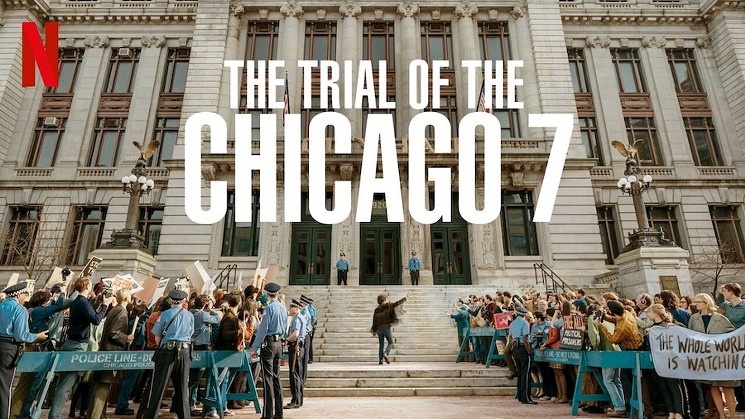
I saw the new Aaron Sorkin film, The Trial of the Chicago 7, on Netflix over the weekend and would like to recommend the film to any students interested in historical film.
Photo: Promotional poster for The Trial of the Chicago 7.
I periodically teach HIST 390 History and Film at Northern Illinois University on the theme of War in Film, and the course includes a section on the Vietnam War in film and television. The Department of History at Northern Illinois regularly offers HIST 390 History and Film, taught by different professors on various themes.
There are lots of reviews, articles, and interviews about The Trial of the Chicago 7 already available online. NPR’s Fresh Air reviewed the film this weekend. Esquire published an article on the historical background. Mashable has an article on separating fact from fiction in the film.
Photo: Anti-War protesters confronting the Chicago Police in The Trial of the Chicago 7.
Northern Illinois University students will be interested in some of the local connections with the Anti-War Protests, the 1968 Chicago National Convention, and the Trial of the Chicago Seven.
The 125 Key Moments website at Northern Illinois University provides an account of an anti-war protest on campus in 1969.
The website also discusses the May 1970 anti-war protests at Northern Illinois University in the wake of the Kent State Massacre.
I can suggest a local response to The Trial of the Chicago 7, written by Marjorie Fritz-Birch, whose mother served as a juror in the trial of the Chicago Seven. The article indicates that “Fritz-Birch, then an anti-war college student, attended an appearance of Chicago Seven defendant Rennie Davis at Northern Illinois University.”
Photo: Courtroom scene from The Trial of the Chicago 7.
John H. Collins (Professor of History, Northern Illinois University) wrote a letter to the editors of The New York Times in 1970, in response to the expected convictions of the Chicago Seven defendants (which came two days later on 18 February 1970).
Here is the text of Collins’s letter:
Fate has presented President Nixon with a magnificent opportunity. With a stroke of the pen he can defuse the student revolt, pre‐empt the most effective arguments of the New Left and destroy the plausibility of charges of proto‐fascism now openly leveled at his Administration.
To Pardon the ‘Seven’
To the Editor:
He can do all this without any sacrifice of his own principles. Let him issue full and free pardons to the “Chicago Seven” and their lawyers. The offenses are Federal offenses.
For months these men have displayed themselves before the American public in all their honorable idealism and indignation, and in all their calculated contumacity, fanaticism and vulgarity. They no longer represent, if they ever did, that clear and present danger which alone could justify their suppression.
In jail they will be martyrs, fueling the militant protest, serving as exhibit “A” in every radical propagandist’s case. Pardoned they will stand, in the words of Jefferson, as monuments to the safety with which error of opinion may be tolerated so long as reason is left free to combat it.
Will Mr. Nixon seize this chance? Or will he wait until “Free the Seven” demonstrations have been mounted all over the country, and his hands are tied by the political necessity of not seeming to yield to organized pressure?
JOHN H. COLLINS Professor of History Northern Illinois University DeKalb, III., Feb. 16, 1970
Numerous interviews with the main protagonists of the Chicago Seven trial are available, especially from the anniversary commemorations of the 1968 Riots at the Democratic National Convention. I can signal a POV interview with Tom Hayden and a Media Burn interview with Abbie Hoffman.
A number of French academic societies have issued statements condemning the killing of Samuel Paty, a history teacher who was brutally murdered by an Islamist militant on Friday.
Paty was apparently targeted for showing cartoons of Muhammad, which had been published by the controversial satirical magazine Charlie Hebdo, to his students in a class on freedom of speech at the collège (middle school) where he taught history and geography.
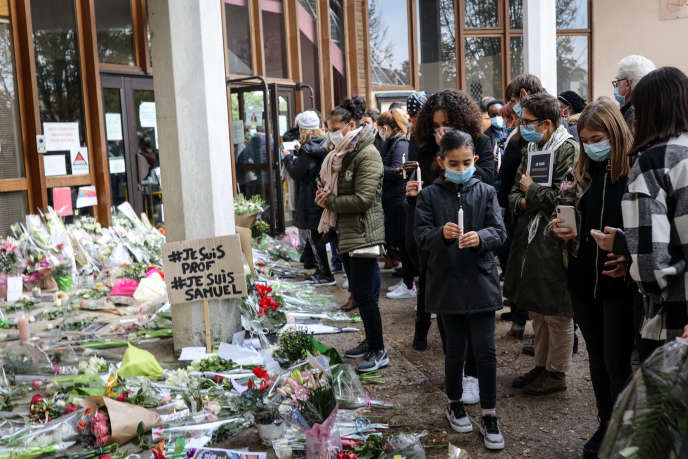
Flowers left in memory of Samuel Paty at the school where he taught, collège du Bois d’Aulne at Conflans-Sainte-Honorine. Photo: Reuters.
The Société des Professeurs d’Histoire Ancienne de l’Université, Société des Historiens Médiévistes de l’Enseignement Supérieur Public, Association des Historiens Modernistes des Universités françaises, and the Association des Historiens Contemporanéistes de l’Enseignement Supérieur et de la Recherche have issued a joint statement condemning the attack on Samuel Paty:
Les quatre Sociétés d’enseignant·es historien·nes du Supérieur (SoPHAU, SHMESP, AHMUF, AHCESR) expriment toute l’horreur qu’elles ressentent après l’assassinat de leur collègue professeur dans un collège de Conflans Sainte-Honorine. Cet acte de fanatisme fait tragiquement mesurer tout le prix que doivent attacher l’Etat et la société française à l’enseignement des savoirs critiques. Nous exprimons aux proches, aux collègues et aux élèves du professeur défunt nos condoléances. Plus largement, nous adressons un message de soutien à nos collègues enseignants du primaire et du secondaire, premiers acteurs de la transmission des principes de la laïcité, premiers engagés sur le terrain de la diffusion des connaissances et premiers exposés aux ravages de l’obscurantisme. Nous exprimons notre détermination à ne rien céder, à leurs côtés, dans ce combat fondamental pour la défense de la liberté d’expression et de la tolérance.
Sylvie Pittia, Présidente de la Société des Professeurs d’Histoire Ancienne de l’Université
Dominique Valérian, Président de la Société des Historiens Médiévistes de l’Enseignement Supérieur Public
Nicolas Le Roux, Président de l’Association des Historiens Modernistes des Universités françaises
Clément Thibaud, Président de l’Association des Historiens Contemporanéistes de l’Enseignement Supérieur et de la Recherche
In the wake of the horrific murder of history teacher Samuel Paty, historians are grappling with how to teach students and the public about the history of violence in France.
Paty taught history and geography at a collège (middle school) in a suburb near Paris and was killed in a brutal knife attack by a militant on Friday.
Photo: History teacher Samuel Paty.
Professor Jean-Clément Martin (Professeur émérite d’Histoire, Université Paris 1, and Ancien directeur de l’Institut d’Histoire de la Révolution Française) has written an essay dedicated to Samuel Paty on the complexities of teaching the many violent episodes in French history.
Martin observes that “La mort abominable est un choc pour la communauté nationale. Pour la communauté des enseignants d’histoire elle a une dimension particulière : parce que notre collègue a été tué pour avoir présenté des caricatures et avoir appelé à la liberté d’opinion à propos de croyances et de violences, nous nous devons, nous lui devons, de réfléchir ensemble sur la façon dont nous enseignons les épisodes violents de l’histoire de France.”
Martin calls for a “rélexion pédagogique sur ces événements sans recourir aux idéologies et aux polémiques. …”
The politicization of some of the massive protests over the weekend in remembrance of Samuel Paty disturbed some observers. Martin notes “mon insatisfaction devant les hommages qui ont été rendus hier dans le pays.”
Martin criticizes those who seek to defend French values of freedom of speech by presenting a sanitized version of French history as a bastion of freedom and non-violent toleration. He argues that “il faut alors abandonner des idées convenues, en commençant par ne pas dire que la France est le pays des Lumières ou des Droits de l’homme. …”
The appropriate response, according to Martin, is to engage in a reflection on the long history of violence within France, from the Saint Bartholomew’s Day Massacre in 1572, to the September Massacres of 1792, to the execution of Louis XVI, to the Vendée Civil War, and beyond. Martin is a historian who published extensively on the French Revolution and the Vendée Civil War, so his examples naturally focus on the period of the French Revolutionary Wars.
In the face of violence, Martin presents a defense of historical methodology: “Revenons aux fondamentaux de l’enseignement de l’histoire, établir les faits, refuser les idées reçues et participer aux combats pour la vérité historique, qui ce qu’elle est, fragile, modeste mais fondée sur l’essentiel : la libre discussion en pratiquant le recours à la logique et à la vérification, le respect des opinions en exigeant leur totale transparence.“
He concludes: “C’est pour avoir exercé cette tâche souvent si mal comprise que Samuel Paty est mort, c’est en continuant cette pratique que nous lui rendrons justice et que nous pourrons garantir notre propre existence.”
Jean-Clément Martin’s essay is published online at Mediapart.
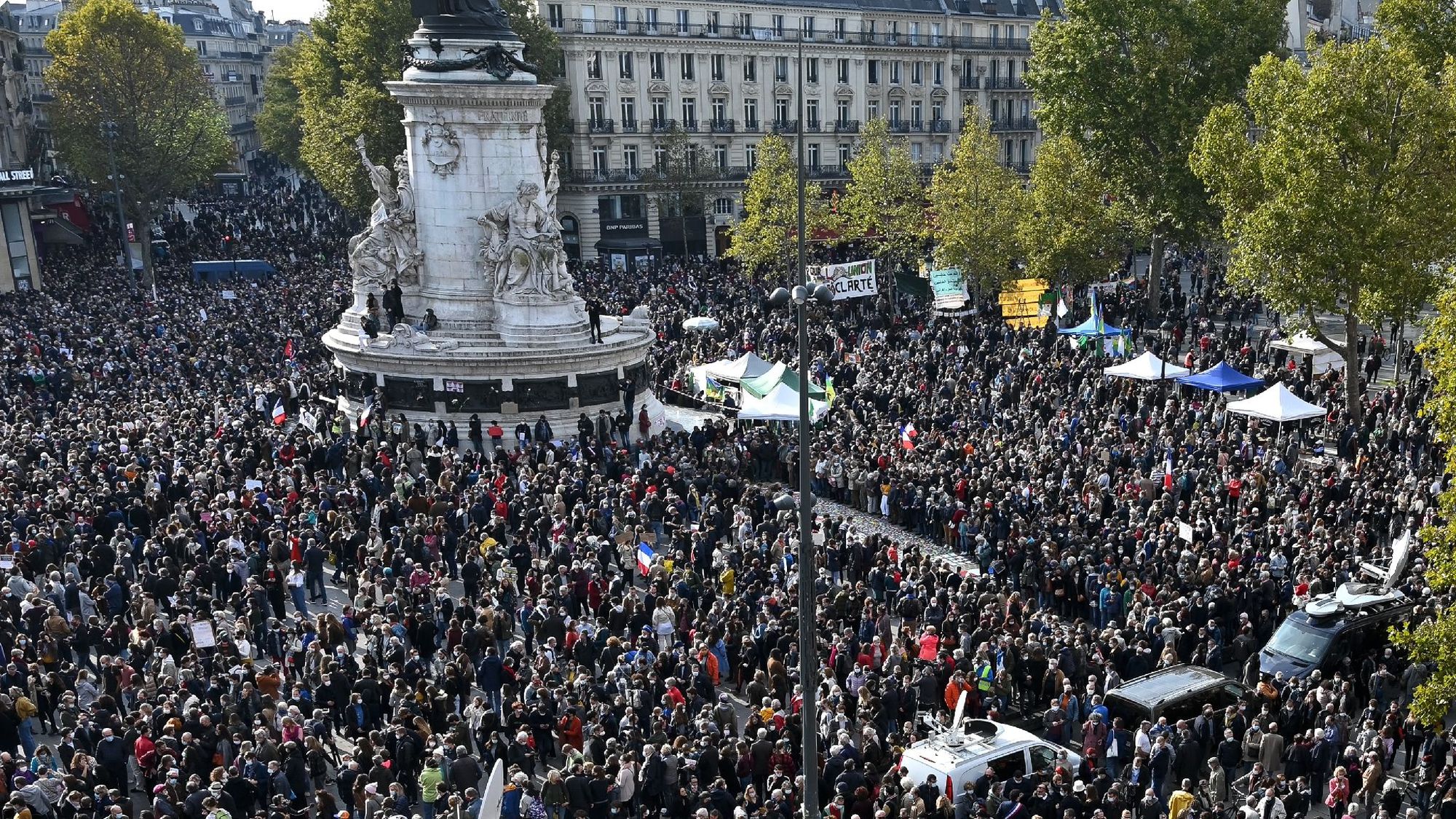
Tens of thousands of French citizens are rallying today in memory of Samuel Paty, a history and geography teacher, who was brutally murdered on Friday near the collège (middle school) where he taught.
Rally in memory of Samuel Paty in the place de la République in Paris. Photo: L’Express.
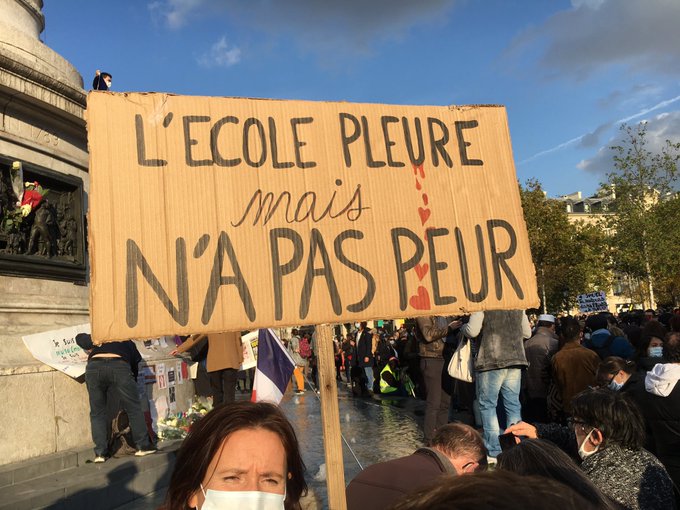
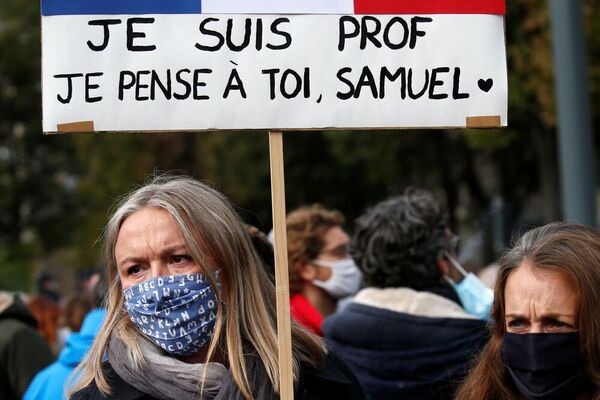
A large crowd gathered in the place de la République in Paris to condemn the horrific act of violence against a teacher. Protesters carried signs specifically supporting teachers: “Je suis enseignant” (I am a teacher), “Je suis prof” (I am a professor or teacher), and “Nous, profs, enseignons la liberté d’expression et ça va continuer” (We teachers teach freedom of speech and this will continue), and “L’école pleure mais n’a pas peur” (Schools cry but don’t fear).
Protesters in Paris. Photo: Le Monde.
Other signs had broader expressions of support: “Je défend la liberté d’expression” (I defend freedom of speech), “Freedom of speech” (in English), and “Ils ne décapiteront pas la République” (They will not behead the Republic).
Prime Minister Jean Castex and the Mayor of Paris Anne Hidalgo both addressed the crowd, and Castex tweeted a message: “Vous ne nous faites pas peur. Nous n’avons pas peur. Vous ne nous diviserez pas. Nous sommes la France !“
Many French people have expressed worries about French public education and the freedom of speech being under attack. French teachers and teachers’ unions have complained about unsafe working conditions in some neighborhoods over the past decade.
A woman protesting in Lille. Photo: Le Monde.
This attack comes in the midst of renewed trauma in France over the Charlie Hebdo Attacks in January 2015 and the current trial of individuals who allegedly provided material support to the militants who committed the killings at the Charlie Hebdo offices. Charlie Hebdo had long been known for its satirical cartoons and controversial anti-religious stances, but Islamist extremists had accused the magazine of blasphemy for publishing cartoons of Muhammad.
Samuel Paty apparently became a target of Islamist militants after showing some of the Charlie Hebdo cartoons of Muhammad during a class discussion of freedom of expression.
On a personal note, the rallies today are a sad reminder of the massive rallies in France in January 2015, when I was doing research in Paris and participated in the protests in memory of the slain editors, writers, and editors of Charlie Hebdo.
Le Monde, L’Express, and the BBC report on the rallies in Paris and across France.
I was deeply saddened to hear of yesterday’s horrific attack on Samuel Paty, a history and geography teacher in Conflans-Sainte-Honorine, near Paris, who was brutally killed and beheaded by an 18-year-old militant after leaving the collège (middle school) where he taught.
Photo: Le Monde
Samuel Paty was reportedly targeted because of his use of Charlie Hebdo cartoons of the Prophet Muhammad in a recent class concerning the freedom of expression.
The republishing of the cartoons recently by Charlie Hebdo at the beginning of an highly publicized trial of individuals accused of assisting the militants who committed the massacre at the Charlie Hebdo office in January 2015, was deliberately provocative and has raised once again issues of freedom of expression, laïcité (secularism), justice, anti-Islamic sentiment, and racism in contemporary France.
This latest attack specifically targeted a history teacher and raises many additional questions about the status of historians, teachers, and educators in France. This act of violence also represents a direct attack on public education and academic freedom.
I would like to express my condolences to the family, colleagues, and students of Samuel Paty. I deplore the brutal violence that has been directed against him in an attempt to threaten historians and teachers across France.
The Center for Renaissance Studies at the Newberry Library is hosting a series of discussions on Race in Dialogue, which focuses on critical race studies in the humanities.
Graduate students in HIST 522 Early Modern Europe at Northern Illinois University will be particularly interested in the first discussion in the series on Kim F. Hall’s Things of Darkness.
Here is the announcement from the Center for Renaissance Studies:
Things of Darkness: Economies of Race and Gender in Early Modern England at 25
Friday, November 13, 2020 12-1 pm CDT
CRS is pleased to announce the first session of Race in Dialogue, a new series of virtual conversations on premodern critical race studies and Indigenous studies.
The first session features Professors Kim F. Hall (Barnard College) and Noémie Ndiaye (University of Chicago) in conversation about the legacy of Hall’s Things of Darkness: Economies of Race and Gender in Early Modern England, a foundational text in premodern critical race studies that celebrates its 25th anniversary in 2020.
This is free and open to all, but space may be limited and registration in advance is required. For more information, including the link to the online registration form, please visit our website here: https://www.newberry.org/11132020-race-dialogue
If you have any questions, please send an email to renaissance@newberry.org.
The Renaissance Society of America is organizing an online graduate student workshop on Expanding the Renaissance. The workshop is being organized by the RSA Graduate Student Advisory Committee, which has issued a call for papers. The workshop will held virtually as a series of 5-minute “lightning talks.”
Graduate students in Renaissance studies and early modern history at Northern Illinois University are encouraged to submit a proposal to participate in this workshop.
Here is the full call for papers from the Renaissance Society of America:
The Renaissance Society of America’s Graduate Student Advisory Committee is pleased to launch the Online Graduate Student Lightning Talk Series with its inaugural session on “Expanding the Renaissance,” taking place 3 December 2020. Submissions are due 30 October 2020.
As scholars and students of Renaissance Studies, we recognize that we, as the RSA Statement in Support of Social Justice states, “have structured a Western European world view that has excluded or abused people of color.” In acknowledgement of this and other elements of exclusion in Renaissance Studies, the RSA Student Community seeks to expand our understanding of the Renaissance (1300–1700) by hosting lightning talks that address topics, sources, or methodologies that are commonly excluded or overlooked from mainstream narratives.
Lightning talks are concise oral presentations of five minutes, which may or may not include visual aids. Presentations could be based on:
An argument from your work (BA/MA thesis, dissertation, or article)
Initial findings from side projects, or work in progress
Archival findings
Pedagogical questions
Field/experience-based observations, and/or
Anything that stimulates discussion.
The talks will be followed by a brief discussion and Q&A. Graduate students of all stages are invited to apply. Please submit your name, proposed title, and a short description (max. 150 words) via the RSA Online Graduate Student Lightning Talk Series Application Form by Friday, October 30. Students will be notified of accepted submissions on Friday, November 13. The first online lightning talks session will take place on Thursday, December 3 at 12:00 p.m. ET.
Are you writing a paper dealing with the history of war and society during academic year 2020-20201? If so, you may be eligible to submit your paper for consideration for a Best Paper Prize from the War and Society Program at Chapman University.
Students are urged to contact their professors about whether or not your paper might be a good candidate for submission to this competition.
Northern Illinois University students in HIST 422/522 Early Modern Europe should contact Professor Sandberg via e-mail to inquire about their projects.
Here is the announcement from the War and Society Program at Chapman University:
The War and Society Program at Chapman University invites submissions for the best papers in the field of War and Society (broadly defined to include themes such as race and the military, foreign relations, the home front, soldiers’ stories, memory and commemoration, and other related topics) written between August 2020 and May 2021 by either undergraduate or masters-level students. Papers may focus on the U.S. experience or global perspectives.
The prize selection committee, which includes national and international scholars, will give preference to those papers that employ substantial primary research along with multidisciplinary approaches.
Two prizes will be awarded:
The Undergraduate Paper Prize: Submission should come as a PDF, no more than 20 pages (exclusive of endnotes) with a short letter of support (no more than one page) from a faculty member who supervised the paper.
The Graduate Paper Prize for MA Students: Submission should be journal article length not to exceed 30 pages (exclusive of endnotes) with a short letter of support (no more than one page) from a faculty member who supervised the paper.
The prize in each category is one award of $1000, with a subsequent prize for honorable mention of $250 each in each category. The submission deadline is June 15, 2021. The competition is open to students from all institutions.
The annual Conference on Illinois History is currently being held at the Abraham Lincoln Presidential Library and Museum in Springfield, Illinois from 5-9 October 2020.
Due to the Covid-19 pandemic, the conference is a virtual event this year, allowing interested students and members of the public to access the conference sessions online.
The full program and registration instructions for the Conference on Illinois History are available at the conference website.
The Conference on Illinois History also offers Continuing Professional Development Units (CPDUs) for teachers.
Graduate and undergraduate students at Northern Illinois University may be interested in this virtual conference.





 Brian Sandberg: Historical Perspectives