Paris, Ville de Cour ?

Conférence de Caroline zum Kolk will present a lecture on “Paris, Ville de Cour ?” as part of the “Les Mardis de Lauzun” lecture series at the Institut d’Études Avancées de Paris.

Mardi 03 Février 2015, 18h0020h00

IEA de Paris

17 quai d’Anjou

75004 Paris

The abstract for the lecture reads:

À la fin du Moyen Âge, les cours réduites et fonctionnelles du Moyen Âge se transforment en des organes politiques de premier plan qui brillent par leur taille et leur faste. La cour de France suit cette évolution tout en conservant un mode de vie itinérant, se déplaçant sans cesse d’une ville et d’un château à l’autre. Ce n’est qu’au début des années 1560, période où Catherine de Médicis assure la régence pour le jeune Charles IX, qu’apparaissent les indices d’une réforme qui vise à mettre un terme à l’itinérance curiale et l’installation de la cour à Paris. Les mesures prises par la reine, dont la construction du palais des Tuileries, modifient le statut de la capitale et les fonctions des résidences royales des alentours. La réforme va de pair avec une réflexion sur l’étiquette de cour et l’organisation d’une société curiale qui a perdu son caractère exclusivement masculin.

Documentée par des indices très disparates, cette tentative de réforme est passée inaperçue, d’autant plus qu’elle n’a pas porté les fruits escomptés : la crise de la fin du règne des Valois a mis un terme au séjour parisien de la cour. Elle a laissé néanmoins de nombreuses traces dans le tissu urbain et marque une étape décisive dans l’histoire de la capitale et de son rapport souvent conflictuel avec le pouvoir royal.

See the IEA de Paris website for more information.

Posted in Art History, Cultural History, Early Modern Europe, European History, Food and Cuisine History, French History, French Wars of Religion, Noble Culture and History of Elites, Paris History, Urban History | Leave a comment

The Insufficient Ark at U of C

The Early Modern Workshop at the University of Chicago is holding a discussion of Maura Capps’ dissertation chapter “The Insufficient Ark: A Political Ecology of a Failed Agricultural Department at the Cape of Good Hope, 1795-1806.”

Maura is a PhD candidate in the Department of History specializing in the environmental history of Britain’s settler empire.

The workshop will take place Monday 2 February 2015, at 5pm in Pick 319.

Graduate students at Northern Illinois University may want to participate in this workshop.

Posted in Atlantic World, Cultural History, Early Modern Europe, Early Modern World, Empires and Imperialism, Environmental History, European History, Food and Cuisine History, Globalization, Lectures and Seminars, Northern Illinois University | Leave a comment

Shipbuilding and Mediterranean Ports

Many observers have focused on the decline of industrial factories in Europe when discussing the emergence of a post-industrial economy in the Eurozone. Changes in naval and commercial shipbuilding have often been ignored, except by persons engaged in maritime industries and residents of port cities.

Mediterranean ports have been transformed significantly over the past generation, as shipbuilding operations have moved to Indian Ocean and East China Sea port facilities. Marseille, Barcelona, and Genoa are three of the major Mediterranean ports often cited as examples of major economic and cultural transformations.

The smaller port of La Ciotat, once a significant naval shipbuilding site, offers a different sort of example. This port has increasingly focused its shipyards on refurbishing luxury superyachts, rather than building new ships.

LaCiotat-shipyard

A recent New York Times article offers a portrait of the new maritime industries at La Ciotat.

Posted in European History, European Union, French History, Maritime History, Mediterranean World | Leave a comment

Northern Star Report on Charlie Hebdo Attacks

The Northern Star, the student-run newspaper of Northern Illinois University, has published several reports on the Charlie Hebdo attacks.

MarcheRepublicaine

The latest piece, “NIU professor to take lessons from Paris’ Charlie Hebdo marches to history class,” featured an interview I did with student reporter Margaret Maka concerning the aftermath of the terrorist attacks in Paris and the grand Marche républicaine.

The Northern Star article is available online.

Posted in European History, European Union, French History, Globalization, History in the Media, History of Violence, Human Rights, Northern Illinois University, Paris History, Religious Violence, Study Abroad, Terrorism | Leave a comment

Responding to Terrorism in Paris

The director and fellows of the Institut d’Études Avancées de Paris—where I am currently serving as a Résident (Residential Fellow) during the 2014-2015 academic year—held a meeting in the aftermath of the attack on Charlie Hebdo to discuss ways in which we might organize some sort of academic response to the violence.

We had a useful discussion of the complex issues surrounding the terrorist attacks and brainstormed about which themes we could effectively discuss based on our research specializations. We will assemble again soon to determine what sort of roundtable or workshop might be most effective and to determine what sort of audience is most appropriate.

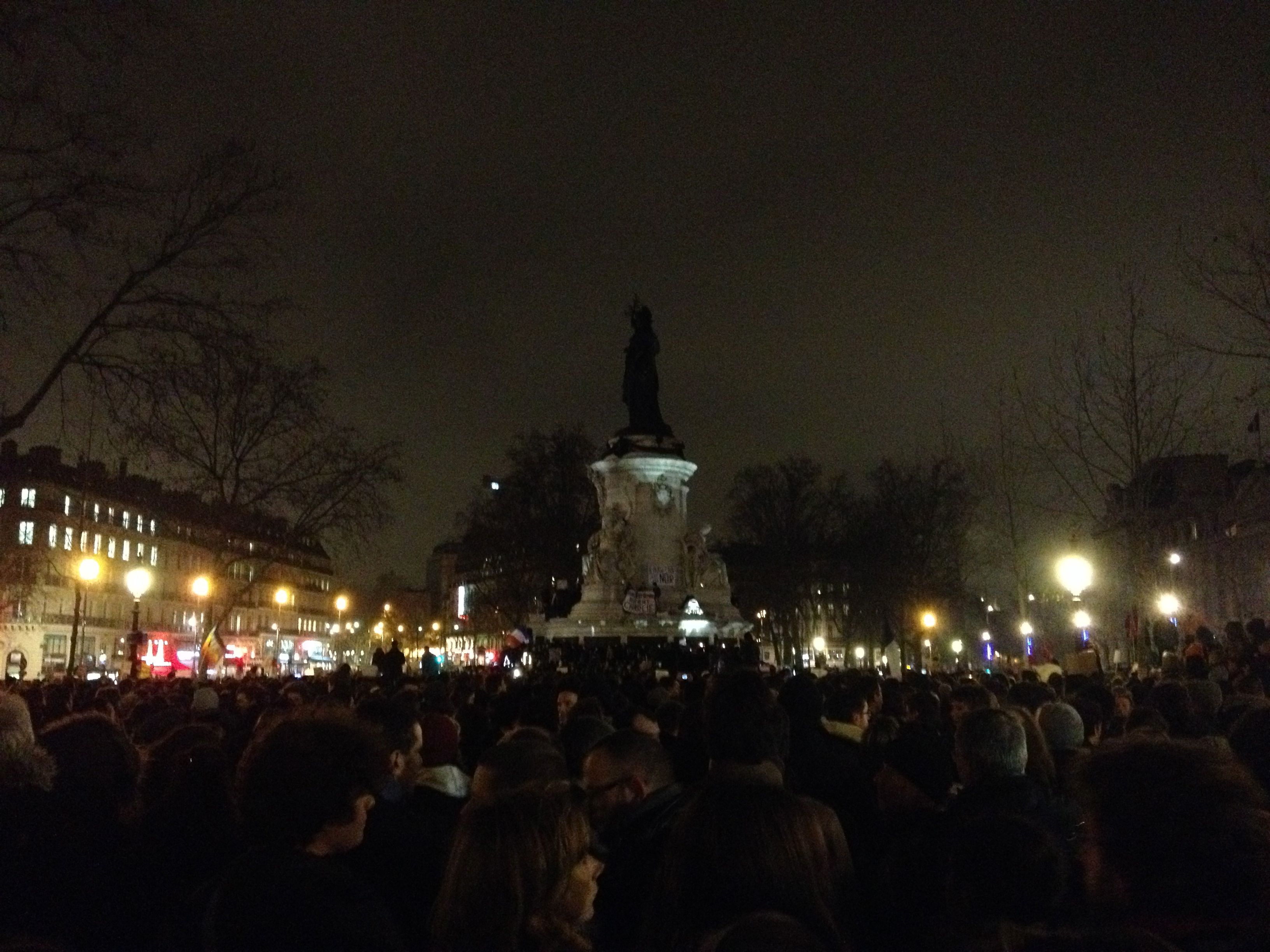
Across France, by far the most popular slogan among people responding to the terrorist attacks has been “Je suis Charlie.” The slogan had already become dominant in French political culture by the evening of the attack on Charlie Hebdo’s offices, when thousands of Parisians gathered at place de la République.

JeSuisCharlie-candles

French historians and other academics who study French culture, European politics, terrorism, and religious violence will all be following this evolving situation closely. I have encouraged our Northern Illinois University graduate students in French history to try to keep up with the significant coverage of the attacks and the political fallout from them, since French historians are often called on to comment on current events in the areas they study.

I previously offered a graduate research seminar at Northern Illinois University on Religious Politics and Sectarian Violence in Comparative Perspective during Fall 2013. I am planning on offering a graduate reading seminar on the same theme during the coming 2015-2016 academic year.

Unfortunately, the subject of religious violence continues to be all too relevant in today’s world.

The website of the IEA de Paris is : http://paris-iea.fr/

Posted in European History, European Union, French History, History of Violence, Human Rights, Paris History, Religious Violence, Terrorism | 1 Comment

La Marche Républicaine in Paris

Things have been rather crazy in Paris over the past week with the terrorist attack on Charlie Hebdo, the shootings of police officers, the massive manhunt for the gunmen, and two police assaults on a print shop and a Hyper Cacher grocery store that were seized by terrorists.

I went to the rally on Wednesday evening at place de la République in solidarity with the victims of the Charlie Hebdo attack. There was a crowd of an estimated 35,000 people at the rally, which was mostly somber apart from some chants of “Je suis Charlie” and “Liberté d’expression.”

Charlie-rally

Despite the attacks, businesses, government offices, public transportation networks, restaurants, and tourism services continue to operate, except in the specific areas that have been directly affected by shootings. The winter sales started on the day of the attack on Charlie Hebdo and people have continued to shop for clothes at the boutiques in the Marais and the grand magasins along boulevard Hausseman throughout the tragic events of the past week.

The general mood among Parisians I know seems to be one of sadness and relative shock, but not surprise. Millions of French people felt touched by the terrorist attacks and decided to participate in a series of massive marches in cities across France on Sunday.

MarcheRepublicaine

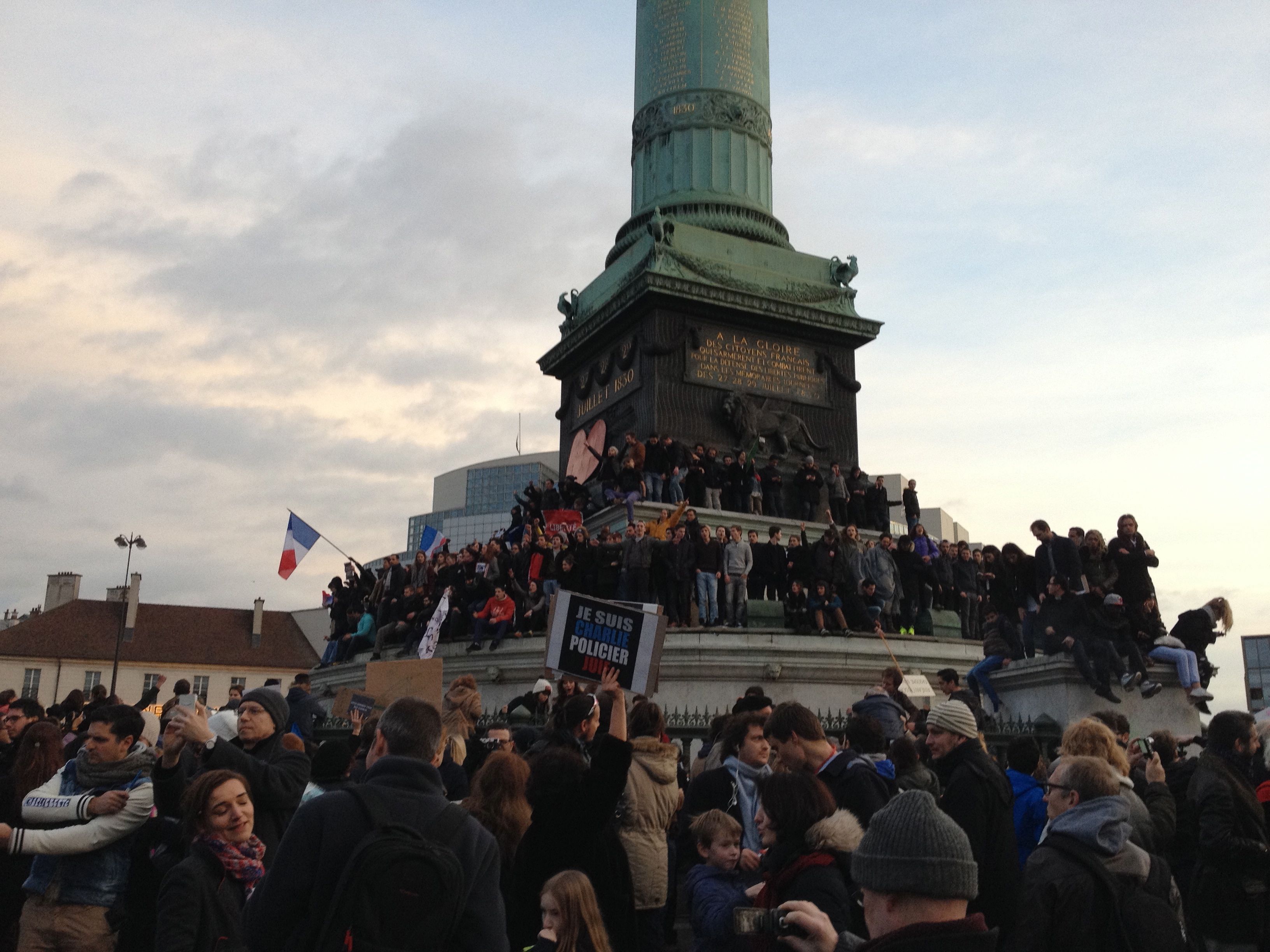
I participated in the massive Marche Républicaine in Paris on Sunday, which was absolutely amazing.  There were an estimated 1.5 million people at the march in Paris, with crowds so enormous that we all simply took over large swaths of Paris from Gard du Nord through the 4th, 10th, 11th, 4th, and 12th arrondissements to place de la Nation. Many of the news reports referred to the march participants as a “marée humaine.”

The march seemed completely peaceful and very touching, with lots of “Je suis Charlie” signs, but also hand-drawn cartoons and homemade signs promoting peace and toleration.

Marche-pencil

A multi-ethnic France was present at the march, with white, Arab, African, and Asian French people participating, as well as lots of international students and visitors. The crowds were also religiously diverse, including Christians, Muslims, Jews, Buddhists, Sikhs, and atheists.

Bastille

If you would like to see more about the terrorist attacks and the situation in Paris, see my other recent blog posts at https://briansandberg.wordpress.com/ and at http://religiousviolence.wordpress.com/.


Posted in European History, European Union, French History, Human Rights, Paris History, Political Culture, Religious Violence, Terrorism | 1 Comment

Early Modern Workshop in Chicago

The Early Modern Workshop is meeting at the University of Chicago on Monday, January 12, at 5:00pm in Pick 319.

Prof. Constantin Fasolt will lead a discussion on historical method and the challenges faced by historians of the late medieval and early modern periods. We invite history students from a wide range of specialties to attend, as the material should also be useful to those outside the workshop’s typical purview.

Among some of the topics that will be discussed will be the issue of how best to incorporate various philosophies of history in dissertation writing, how to approach problematic sources and questionable authorial intent, and the way in which various traditions of social, intellectual, and/or cultural histories can be utilized to improve projects with a less-rounded focus.

Please see the attached short afterword of R. I. Moore’s War on Heresy as a primer to the conversation and come with your own methodology questions. As always, dinner and refreshments will be served. Please contact Colin Rydell at colinr@uchicago.edu if you think you may need assistance.

Posted in Early Modern Europe, Early Modern World, Graduate Work in History, Historiography and Social Theory, Lectures and Seminars | Leave a comment

A French September 11?

The cover of Le Monde, the leading French newspaper, displayed a photo of the spontaneous rally at the place de la République on Wednesday evening, 7 January, following the horrific attack on the offices of Charlie Hebdo earlier in the day. Le Monde entitled its cover, “Le 11-septembre français.”

LeMonde-11SeptembreFrancais

The editors of Le Monde were not the only ones to draw comparisons between the attack on Charlie Hebdo and the 11 September 2001 Attacks on the World Trade Center and the Pentagon. In the immediate aftermath of the attack, numerous French and European journalists seized on the attacks as resembling the 11 September Attacks.

The brutal shootings of the cartoonists of Charlie Hebdo, their collaborators, and two police officers has shocked Parisians and the entire French public. The images of two gunmen shooting at a police car and yelling “Allah Akbar!” (God is Great!) are indeed terrifying. Understandably, comparisons with the horrific violence of 11 September and other episodes of Islamist religious terrorism have emerged.

Yet, the 7 January and 11 September attacks are very different in many ways.

The scale of the attacks and the magnitude of the carnage on 11 September simply dwarf the killings in Paris. Thousands of people, not dozens, were killed and wounded in the attacks themselves, and many more people were directly affected by the attacks. The soaring towers of the World Trade Center were destroyed and the immense Pentagon was seriously damaged.

The geographic scope and demographic impact of the 11 September Attacks was also much broader. Hundreds of thousands of people in New York City and Washington, D.C. were directly affected by the attacks, responding to emergencies or evacuating from entire portions of those cities. Entire neighborhoods were cordoned off and transportation systems shut down, forcing many to make long walks home. Several of the neighborhoods of Lower Manhattan would remain closed off for months. Thousands of flights were rerouted or cancelled, stranding tens of thousands of passengers for days and disrupting air traffic for an extended period of time.

The geographic impact of the Charlie Hebdo attacks has been minimal. The Paris Métro, RER, and bus systems continued to function with almost no disruption on the day of the shootings. One of the most bizarre aspects of 7 January 2015 for me was hearing the nearly continuous wails of sirens, punctuated occassionally by blaring loudspeakers—as guides explained Parisian sites to tourists aboard bateaux mouches (scenic tourist boats) on the Seine below my office window on l’île Saint-Louis. I was simultaneously able to observe a stream of emergency vehicles racing along the Voie Georges Pompidou and the Quai des Célestins to respond to the scene of the attacks. I later walked home through the Marais, still filled with tourists and shoppers who had been taking advantage of the first day of the winter sales in Paris. The rhythms of everyday life in Paris were hardly affected, except for the victims of the violence, their immediate neighbors, and the emergency and government teams responding to the shootings.

The targets and methods of the attacks were also strikingly distinct. The Al Qaeda militants flew jumbo passenger jets into the skyscrapers of the World Trade Center, an economic and administrative target, but also a tourist site and multiuse building sure to be filled with diverse groups of civilians.  The Al Qaeda terrorists also flew a plane into the headquarters of the United States Department of Defense, a military target. Another plane failed to reach its target, which may have been the White House or the Capitol. Many European journalists often present the 11 September Attacks as centered on the Twin Towers in New York, de-emphasizing the terrorists’ aims to strike the government and military of the United States in Washington, D.C.

The 11 September terrorists’ tactics of hijacking planes and flying them into buildings in spectacular displays that could be viewed and videoed is striking. Sociologist Mark Juergensmeyer, who studies religious violence calls this tactic “performance violence” to refer to the theatrical nature of this sort of display that is meant to send searing visual messages to broad audiences. The 11 September attacks were deliberately intended to produce massive casualties and to kill indescriminately.

The gunmen who struck Charlie Hebdo, in contrast, struck at a non-descript office building on a small street in a quiet quarter of the 11 arrondissement in Paris, merely a few hundred meters from my current apartment. The targets were journalists and cartoonists in a conference room, not the administrative offices of the publication or the building itself. The shootings were brutal, but largely hidden from sight and not meant to be viewed by a broad audience. The gunmen were very descriminating in their attack, targeting certain individuals in the Charlie Hebdo offices, but spared others. All of the individuals killed and wounded were civilians, but the gunmen clearly regarded them as legitimate targets. The Charlie Hebdo attacks only became “performance violence” because several individuals managed to film their shooting of police officers during their flight from the scene.

The organization of the attacks also seem to have been very different. Hijacking multiple planes and flying them into different targets required very elaborate planning and administrative support from an extended terrorist organization. The gunmen at Charlie Hebdo were initially described as executing a “professional” attack, but details are already emerging that suggest ad-hoc improvisation in addition to some planning. The attackers at first went to the wrong building, for example.

For me, the most disturbing similarity between the 11 September 2001 and 7 January 2015 attacks is the reaction of journalists and politicians in the aftermath of horrific violence. American politicans and journalists quickly declared that the 11 September Attacks were attacks on “freedom” and French politicians and European journalists have already crafted a narrative that the attack on Charlie Hebdo was an assault on liberté, and specifically liberté de la presse (freedom of speech, as Americans often put it). Many French citizens and people around the world have embraced the slogan “Je suis Charlie” (I am Charlie) in order to show solidarity with the victims of the terrible shootings.

This reminiscent of the “We are all Americans” slogans in the aftermath of 11 September, but such solidarity evaporated as the United States began massive military operations in order to carry out vengeance through a so-called War on Terror. France and the entire European Union seem increasingly threatened by renewed militarism and anti-immigrant politics that could be exacerbated by launching their own vast anti-terrorist campaigns.

Interpreting the motives of militants and terrorists is always difficult, but studies of religious terrorism and religious violence caution against presuming that attackers would really be motivated to take away someone else’s “freedoms.”

The motives of the gunmen who attacked Charlie Hebdo may bear some resemblance to those of the 11 September attackers, but it is too early to be certain. The few statements that we have so far from the Charlie Hebdo attackers themselves, recorded in videos and reported by survivors and witnesses, suggest that they were guided by other motives—such as blasphemy and iconoclasm. The attackers pointedly avoided a martyrdom action (or suicide attack), planning an escape route and indeed successfully managing to exit Paris.

At this point, we can only be sure that the attacks on Charlie Hebdo were not a repeat of 11 September 2001. This is a comparison that is very dangerous indeed.

[This post is re-blogged from the Center for the Study of Religious Violence blog, which I also maintain.]


Posted in Atrocities, Civilians and Refugees in War, European History, European Union, French History, History of Violence, Human Rights, Paris History, Political Culture, Religious Politics, Religious Violence, Strategy and International Politics, Terrorism, War, Culture, and Society | Leave a comment

Massacre of Journalists at Charlie Hebdo in Paris

Charlie Hebdo, a French satirical publication in Paris, was attacked by terrorists this morning. Two gunmen reportedly entered the offices of Charlie Hebdo and opened fire, killing ten people and wounding more. The gunmen then exited the building and opened fire on a police car that was responding, killing two policemen. The attackers fled in a car northeast through Paris and are still at large.

Attentat-CharlieHebdo

The latest reports indicate that the journalists and cartoonists Charb, Wolinski, Cabu et Tignous were all killed in the attack. Charlie Hebdo has long been targeted by radical Islamist militants after the magazine published cartoons of the Prophet Muhammed and other satiric work deemed offensive by some radical imams. No group has so far taken credit for the attack, but the gunmen claimed to be carrying out vengeance in the name of Islam. Witnesses and video footage both affirm that the gunmen yelled “Allahou Akbar” during their assault. Witnesses also allege that the attackers yelled “Nous avons tué Charlie Hebdo” and nous avons vengé le prophète.”

I am shocked by this appalling act of brutal violence in the heart of Paris. This atrocious attack occurred near the Bastille and a mere 200 meters or so from my current residence. My thoughts are with the victims’ families and with all of our friends and colleagues in Paris.

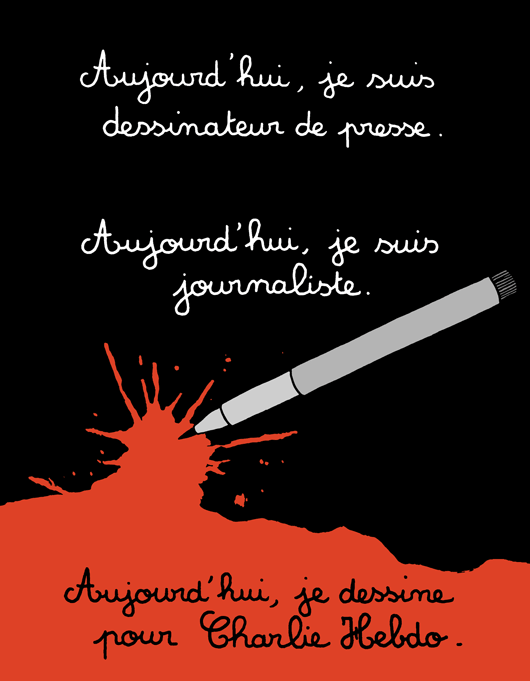
Martin Vidberg, a blogger and cartonist for Le Monde.fr, published this tribute to the journalists of Charlie Hebdo.

Vidberg-CharlieHebdo

For full reporting on the attack on Charlio Hebdo, see Libération, LeMonde, and France24.

The New York Times and BBC report in English on the massacre.

Posted in Atrocities, Civilians and Refugees in War, Contemporary Art, French History, History in the Media, History of the Book, History of Violence, Paris History, Terrorism, War, Culture, and Society | 1 Comment

Remnants of War in Iraq

In war, there are always things left behind.

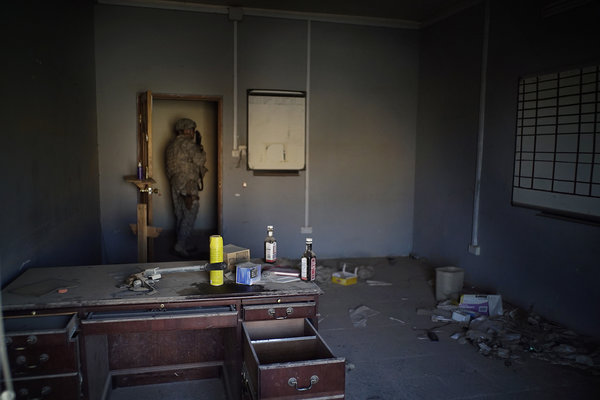
“When the American troops left Iraq three years ago, they left behind a fragile country that collapsed into civil war. They also left behind the detritus of soldiers’ lives that, in the ensuing years, was left untouched, frozen in time,” according to the New York Times.

Iraq-CampTaji

U.S. troops sent back to Iraq recently because of the expanding control by Islamic State forces are often re-occupying abandoned buildings and bases, like Camp Taji, that American forces previously used.

“One Marine major in Anbar, who has been in Iraq before and had just returned from Afghanistan in September when he was ordered back to Iraq, said it was ‘eerie’ and ‘spooky’ to return. Another said the place looked like ‘a train wreck,'” reports the New York Times.

At Camp Taji, the things left behind mingle with new artifacts, like a marked-up copy of a recent issue of Foreign Affairs, which included a very relevant article on “What Have We Learned? Lessons From Afghanistan and Iraq.”

American officers and soldiers read, observe, and analyze the conflicts in which they are involved. Their perspectives on the Iraq War and its material culture should be considered in political and strategic assessments of the ongoing conflict, as well as in historical analyses of the war.

The New York Times reports on the Iraq War.

Posted in Cultural History, History of Violence, Material Culture, Museums and Historical Memory, Strategy and International Politics, War, Culture, and Society | Leave a comment