Friendship and Sociability in Premodern Europe

A new collective volume on Friendship and Sociability in Premodern Europe: Contexts, Concepts, and Expressions, ed. Amyrose McCue Gill and Sarah Rolfe Prodan (Toronto, 2014) has just been released.

McCueGillProdan-Friendship

The book description reads: “Friendship and Sociability in Premodern Europe explores ideas and instances of friendship in premodern Europe through a series of investigations into amity in discrete social and cultural contexts related to some of the most salient moments and expressions of European history and civilization: the courtly love tradition, Renaissance humanism; the spread of syphilis; the Reformation, the Counter-Reformation (and the attendant confessionalization and wars of religion); Jesuit missions; the colonization of America; and, lastly, expanding trade patterns in the Age of Discovery. The essays progress thematically as well as logically with the goal of providing a panoramic view of friendship and sociability in premodern Europe rather than a comprehensive history or unified theory of premodern friendship. Each paper presents an element of novelty – a revised or adapted concept, tradition, or strategy of social and interpersonal relating in the premodern world.”

I wrote an essay entitled “‘Accompanied by a Great Number of Their Friends’: Warrior Nobles and Amitié during the French Wars of Religion,” for this volume, which grew out of a fascinating conference on friendship in medieval and early modern Europe at the University of Toronto.

For a full description see the Centre for Reformation and Renaissance Studies website at the University of Toronto.

Download the book order form if you are interested in ordering a copy for yourself or your library. The book lists for the very reasonable price of $39.95.

Readers interested in Renaissance culture and early modern European history will be interested in this book.

Posted in Early Modern Europe, Early Modern World, European Wars of Religion, French Wars of Religion, Italian History, Reformation History, Renaissance Art and History | Leave a comment

First World War in Film

This week marks the centennial of the outbreak of the First World War. Numerous new books and articles are remembering the war and its terrible destruction. I was recently conducting research in France and was impressed by the crowded window displays dedicated to la guerre de 1914-1918 at bookstores across the country.

LaGrandeIllusion

As part of the WWI commemoration in the United States, a newspaper article in the Wall Street Journal takes a look back at portrayals of the First World War in film.

See the Wall Street Journal for this article.

Northern Illinois University students in HIST 390 History and Film: War in Film will be interested in this piece.


Posted in Historical Film, History of Violence, War in Film, War, Culture, and Society | Leave a comment

Dissertation Writing

The Chronicle of Higher Education has published a piece on dissertation writing with some simple, straightforward advice: Write!

The advice piece suggests that “there is only one fail-safe method, one secret, one guaranteed trick that you need in order to finish your dissertation: Write.”

No secrets here, just sound advice for dissertation candidates.

See the full piece at the Chronicle of Higher Education online.

Posted in Academic Publishing, Graduate Work in History, Humanities Education, Writing Methods | Leave a comment

Tanks in World War II Films

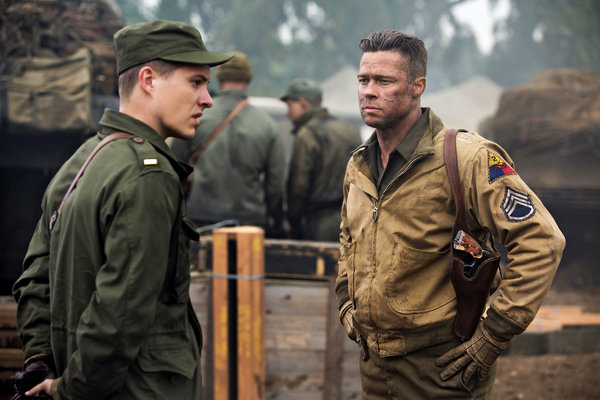
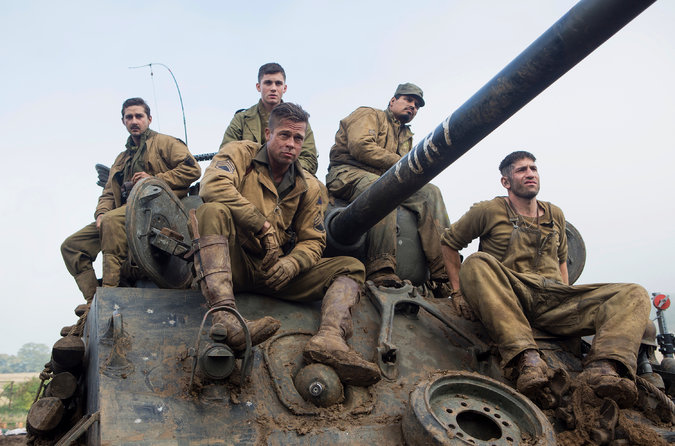
Fury, a new World War II film, will be released this fall, presenting the perspective of United States tank crews fighting in Germany toward the end of the war in Europe. The film focuses on a Sherman tank named Fury and its crew, members of the famous U.S. Third Armored Division.

Fury-Sherman

The film stars Brad Pitt and apparently portrays the war as brutal and gritty rather than the “Good War” of nostalgia.

Fury-Pitt

The New York Times offers an early review of the film.

Northern Illinois University students of HIST 390 History and Film: War in Film will be interested in this review and the forthcoming film.

I will update this post once I am able to see the film.


Posted in European History, Historical Film, History of Violence, War in Film, War, Culture, and Society | Leave a comment

Reconsidering Anti-War Films

As the centennial of the outbreak of the First World War approaches, films about the conflict are being re-examined.  Perhaps the most famous film about the First World War is Lewis Milestone’s All Quiet on the Western Front (1930), based on the novel by Erich Maria Remarque, which is often hailed as the quintessential anti-war film because of its depiction of the brutality and horror of trench warfare.

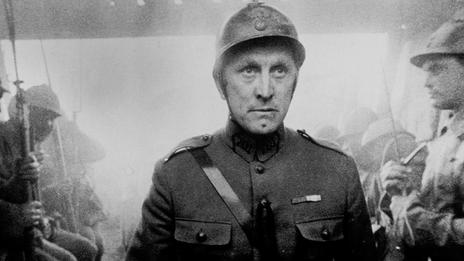
Tom Brook has published a new article on anti-war films in the BBC. “The World War I centenary is giving films that oppose conflict a renewed currency,” he writes. “In London this week an anti-war classic, Stanley Kubrick’s 1957 picture Paths of Glory set in the trenches of World War I, is being screened at a special film season curated by Sir Peter Jackson. In the US this summer several anti-war classics are being shown in a special series at the American Film Institute , including Jean Renoir’s 1937 picture Grand Illusion, which conveys the view that war is futile.”

PathsofGlory

Image: a still from Stanley Kubrick, Paths of Glory (1957).

The French film director François Truffaut once allegedly remarked that “There’s no such thing as an anti-war film.” Other filmmakers have expressed similar sentiments on the difficulty or impossibility of creating a film that truly opposes war. Brook argues that “There are different ways to interpret this remark but it’s widely agreed that Truffaut was suggesting that movies will inevitably glorify combat when they portray the adventure and thrill of conflict – and the camaraderie between soldiers.”

Tom Brook’s “Is There any Such Thing as an ‘Anti-War Film’?” appears in the BBC online.

Northern Illinois University students in HIST 390 History and Film: War in Film will find this article useful.


Posted in Atrocities, Historical Film, History in the Media, History of Violence, Human Rights, War in Film, War, Culture, and Society | Leave a comment

Summit on Sexual Violence

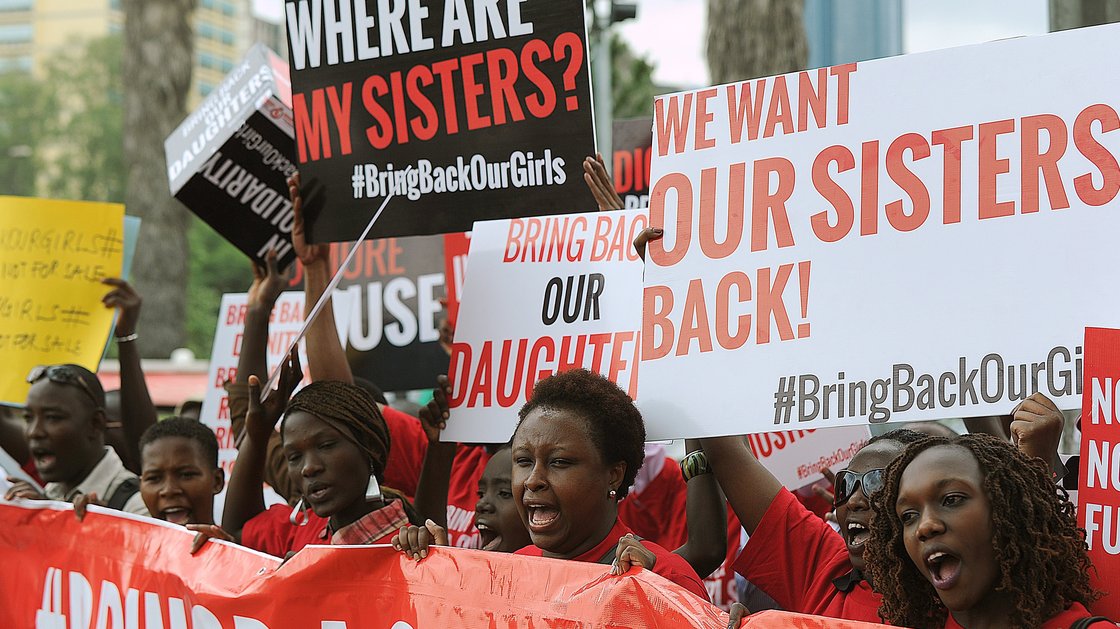
A global summit is currently being held in London on the problem of sexual violence in warfare. The summit, entitled “The Global Summit to End Sexual Violence in Conflict,” is sponsored by the government of the United Kingdom.

“For a long time, wartime rape was treated with a shrug. But now, the U.N. has begun to document the problem, to understand just how widespread it is,” according to a report by NPR. “Last year, many countries signed on to a commitment to end sexual violence in conflict. And groups like Physicians for Human Rights are training local doctors in war zones how to take evidence of sexual violence for later use in trials.”

NigerianWomenProtest

The UK government website has the summit program. NPR reports on the sexual violence summit online.

Researchers and students working on issues of gender and violence in history and society will be interested in this summit’s findings.


Posted in Atrocities, Civil Conflict, Civilians and Refugees in War, Gender and Warfare, History of Violence, Human Rights, Laws of War, War, Culture, and Society, Women and Gender History | 1 Comment

Sikh Clash at the Golden Temple

Sikh Clash at the Golden Temple

briansandberg's avatarCluster for the Study of Religious Violence

Swords crossed at the Golden Temple in Amristar, India, as Sikh activists and guards clashed during a commemoration of the Indian Army assault on the site in the 1984.

Sikh-clash

“The violence broke out after a group of ‘radical Sikh activists’ wanted to brandish their swords and chant slogans calling for a separate Sikh homeland, or Khalistan,” according to a NPR article, based on reporting by the Times of India.

The 1984 assault on the holiest Sikh religious site provoked retaliatory attacks by Sikhs, including the assassination of Indira Gandhi.

NPR reports on the violence at the Golden Temple.

View original post

Posted in Uncategorized | Leave a comment

A Sequel to Restrepo

A sequel (of a sort) to Restrepo, the 2010 documentary film by Sebastian Junger and Tim Hetherington about combat at a firebase in Afghanistan, is being released.

The new documentary, Korengal, by Sebastian Junger attempts to contextualize the broader conflict in Afghanistan using interviews and unused footage from the earlier documentary film. Photographer Tim Hetherington was killed in the Libyan Civil War, but his footage is used in the new film.

The new film and the original documentary together provide interesting material on 21st-century combat, soldiers’ experiences of warfare, and war reporting.

NPR reports on Korengal.

Northern Illinois University students in HIST 390 History and Film: War in Film may be interested in this story.

Posted in Historical Film, History in the Media, History of Violence, War in Film, War, Culture, and Society | Leave a comment

Oral History Researcher Position

The HistoryMakers seeks to hire a full time Oral History Researcher to complete in-depth research for its video oral history interviews across a wide variety of occupations and fields (i.e. STEM, law, art, education, music, etc.). The researcher/writer will be responsible for:

• Conducting background research on outstanding African Americans to locate their contact information and biographical information prior to interviews using the Internet and online resources.

• Researching and preparing detailed research outlines as well as long and short biographies in accordance with The HistoryMakers style.

• Evaluating and processing The HistoryMakers interviews consistent with The HistoryMakers standards

Candidates must have strong administrative(type 60 wpm) and organizational skills. They must be strong researchers, writers and adept at proofreading. Prior experience with detailed paper file and desktop management is critical as well as proven experience in a non-profit setting. Candidates must also demonstrate their interest in furthering The HistoryMakers mission and growth

The HistoryMakers is a national 501 (c)(3) not-for-profit organization dedicated to creating an unprecedented national video oral history archival institution recording the stories of both well known and unsung African American HistoryMakers. The goal is to record at least 5000 oral history interviews and to expose this material to the public through strategic media, technology, academic and community partnerships.

The HistoryMakers

c/o Julieanna Richardson

1900 S. Michigan Ave.

Chicago, IL 60616

info@thehistorymakers.com

http://www.thehistorymakers.com/


Posted in Careers in History, History in the Media, Jobs and Positions | Leave a comment

Marc Bloch Prize

The Marc Bloch Prize for 2015 will be awarded to the author of the best new MA thesis in early modern or modern European history and in the history of Europe in the world.

Bloch-Marc

The winner will receive a prize of €3,000 and will be invited to give a talk on the subject of his or her thesis. Eligibility is limited to candidates holding an MA degree (awarded in 2013 or 2014) and EUI members are not eligible. Entries for the prize must be submitted by the original author, and can be submitted in any European language.

For more information see: http://life.eui.eu/marc-bloch-prize-2015.html

Posted in Careers in History, Early Modern Europe, European History, French History, Graduate Work in History, Grants and Fellowships | Leave a comment