Restoration Work at the château de Versailles

Louis XIV expanded the château de Versailles in the 1680s, creating a grand palace complex that became the effective administrative capital of France. Louis XIV’s royal state promoted Bourbon dynastic interests and managed the French military from Versailles during the Nine Years’ War and the War of Spanish Succession.

The château de Versailles served as the principal residence and administrative for Louis XV and Louis XVI during the eighteenth century. The palace was pillaged by crowds during the French Revolution and was later used as a site for diplomatic conferences and public ceremonies by Napoleon and subsequent French governments.

The château remains one of the most important historical sites in France and has been named a UNESCO World Heritage site. NPR reports that “With nearly 7 million visitors a year, the Chateau of Versailles in France is one of the most popular tourist attractions in the world. But one day a week, it’s closed. So what happens at Versailles on its day off? A spa day, of sorts — involving cleaning and conservation work.”

versailles-restoration1

NPR presents a fascinating story on the regular restoration work at the château de Versailles.

Posted in Art History, Early Modern Europe, French History, French Revolution and Napoleon, Museums and Historical Memory, Noble Culture and History of Elites, Political Culture, Warfare in the Early Modern World | Leave a comment

Digital Humanities Postdocs

The Council on Library and Information Resources (CLIR) is sponsoring several postdoctoral fellowships on digital humanities projects in medieval studies.

The announcement reads:

Fellowships in Data Curation for Medieval Studies

Information for Applicants

NOTE: All postdoctoral fellowship positions are contingent upon funding. Applications are accepted via CLIR’s online application system and will be accepted until all positions are filled.

The CLIR/DLF Postdoctoral Fellowship in Data Curation for Medieval Studies is an expansion of the CLIR Postdoctoral Fellowship Program in Academic Libraries. These five, fully-funded fellowships will provide recent Ph.D.s with professional development, education, and training opportunities in data curation for Medieval Studies. Through this program, CLIR seeks to raise awareness and build capacity for sound data management practice throughout the academy.

Each fellowship is two year appointment, with a $60,000 salary, plus benefits, and a yearly travel and research stipend.

Who May Apply

Recent Ph.D.s from any discipline with relevant expertise in Medieval Studies are encouraged to apply, so long as they meet the eligibility criteria for the Postdoctoral Fellowship Program.

2013 Host Institutions and Position Descriptions

Fellows will be placed at five institutions in the United States and Canada:

Questions about the application process or the program should be directed to postdoc@clir.org.

See the CLIR website for more information.

Posted in Digital Humanities, Grants and Fellowships, Information Management | Leave a comment

Renaissance Cartography and the Naming of America

The history of the naming of America is already well-established. The famous Martin Waldseemüller map of 1507 is the first known cartographical project to utilize the term America to designate the lands reported by Amerigo Vespucci. The map was collected and preserved along with other contemporary cartographical works by the German globemaker Johannes Schöner.

Waldseemullermap1507-Vespucci

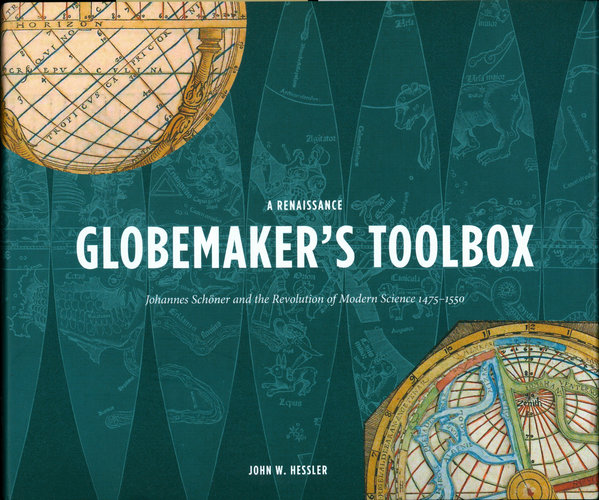
A new book by John W. Hessler reexamines Johannes Schöner and the history of Renaissance cartography.

Hessler-GlobemakersToolbox

The New York Times reports on the new book and the Waldseemüller map.

Posted in Early Modern Europe, Early Modern World, Globalization, History of the Book, Museums and Historical Memory | Leave a comment

Why Professors Shouldn’t be Armed

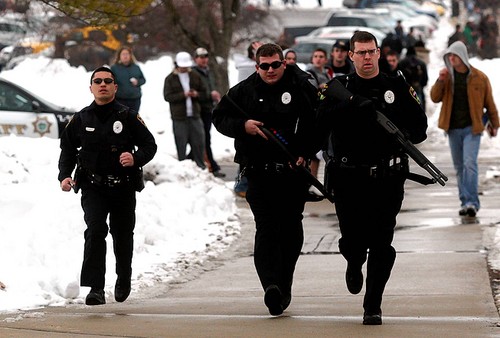
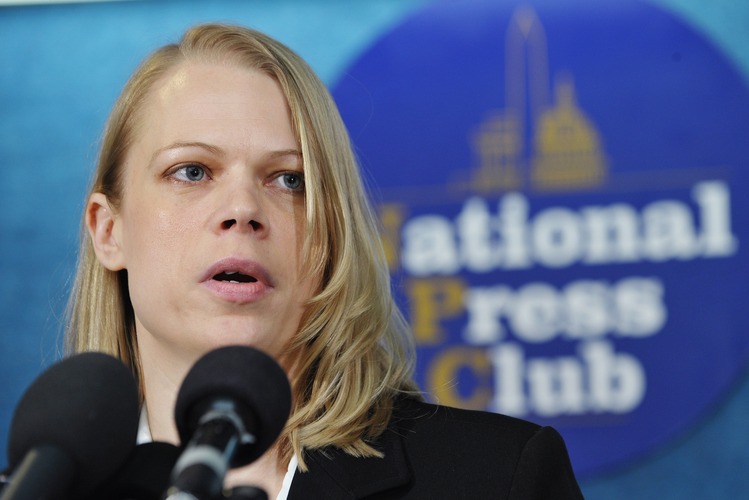
Lucinda Roy, a Virginia Tech professor who met with Seung-Hui Cho prior to his shooting rampage in 2007, argues that university professors should not be armed.

Roy asserts that “College professors and K-12 teachers are not law enforcement officers. It’s our responsibility to notice students who are seriously troubled and bring them to the attention of professionals trained to respond in crisis situations, which is why I reported Seung Hui-Cho to various units on campus. In cases where there is no record of violence, however, even the most experienced teachers, counselors, and law enforcement personnel cannot easily predict whether or not a threat is imminent. But we can detect extreme anguish, consuming loneliness, and unbridled anger in young people and try to intervene before these become toxic.”

35672235

When my own campus, Northern Illinois University, experienced a shooting rampage in February 2008, students and faculty members from Virginia Tech reached out to support our grieving campus community. In the days immediately after the NIU shooting, some gun advocates in Illinois suggested that NIU professors should be armed.

I believe that many professors at NIU would agree with Roy that arming professors would not improve campus safety.

This educator celebrates Lucinda Roy’s courage in articulating this forceful argument against arming professors.

Inside Higher Ed published Lucinda Roy’s essay.

Posted in Arms Control, History of Violence, Human Rights, Humanities Education, Northern Illinois University, Political Culture | Leave a comment

Early Modern Religious Orders

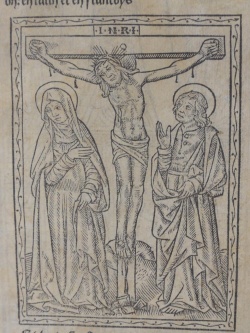
The Newberry Library in Chicago hosted a conference on Early Modern Religious: Comparative Contexts this weekend.

JeromeEpistola

The conference offered comparative perspectives on monks, friars, nuns, and lay people who were involved in Catholic religious orders in early modern European, Mediterranean, Latin American, Asian, and Oceanian contexts. The conference participants emphasized that the history of religious orders needs to involve gendered perspectives that compare monks’ and nuns’ experiences. A number of the papers also stressed viewing cloisters as having permeable boundaries that allowed for many forms of interaction between religious communities and lay communities in the outside world.

Barbara Diefendorf and Megan Armstrong presented fascinating papers on early modern French Capuchins and Franciscans in southern France and the Mediterranean.

The conference program is available online at the Newberry Library website.

Posted in Conferences, Early Modern Europe, Early Modern World, European History, European Wars of Religion, French History, Mediterranean World, Reformation History, Religious History, Renaissance Art and History, Women and Gender History | Leave a comment

Sexual Violence in the U.S. Armed Forces

Sexual violence in the United States Armed Forces has become a major problem. Numerous studies and public scandals have highlighted incidents of rape and sexual harassment, which have often gone unpunished.

Women who report sexual harassment and rape claim that they are often ignored or marginalized by their commanders.

women-vets-assault1

NPR reports on the culture of impunity for rapists in the U.S. military.

Students and scholars working on gender and violence issues and on women and warfare will be interested in this report and related stories.

Posted in Gender and Warfare, History of Violence, Human Rights, War, Culture, and Society, Women and Gender History | Leave a comment

Massive Spending Cuts on Higher Education

State governments across the U.S. have made massive spending cuts on higher education since the financial crisis of 2008.

HigherEdSpendingCuts

The spending cuts by states are one of the key reasons for increasing tuition rates at  American public universities. Other factors certainly play a role in tuition hikes, but the de-funding of public education by state governments forces public universities either to slash services or to raise tuition.

Jordan Weissmann reports on the spending cuts to higher education in an article in The Atlantic.

Posted in Education Policy, Humanities Education | Leave a comment

10th Anniversary of the Invasion of Iraq

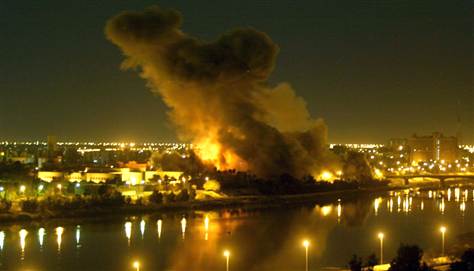
This week marks the 10th anniversary of the U.S. invasion of Iraq and the beginning of the Iraq War (2003-2011).

Baghdad-bombing2003

The BBC has published a special report on “Iraq: 10 Years On.”  Le Monde offers a video documentary on the anniversary.  Al Jazeera provides extensive reporting on the 10th anniversary of the beginning of the Iraq War.

NPR reports on comparisons between the historical memories of Vietnam War and the Iraq War.

The New York Times offers a series of op-eds reflecting on the meaning of the invasion and the prolonged Iraq War that followed. John A. Nagl’s op-ed, entitled “What America Learned in Iraq,” provides a military perspective from the officer (now retired) who authored the United States Army’s counter-insurgency policy.

The Iraqi people continue to suffer from civil violence and it can be argued that the Iraq War is still ongoing today. The Iraq Body Count project continues to monitor reports of attacks in Iraq and to record fatalities on its website.

Students of the history of war, culture, and society will be interested in the extensive flood of publications surrounding the 10th anniversary of the outbreak of the Iraq War. Graduate students working on issues of historical memory will want to explore the cultural processes of commemorating the Iraq War.


Posted in History of Violence, Museums and Historical Memory, Strategy and International Politics, War, Culture, and Society | Leave a comment

Jane Goodall Plagiarism Accusations

World-famous primatologist Jane Goodall has been accused of committing plagiarism in her new book, Seeds of Hope: Wisdom and Wonder From the World of Plants.

Goodall’s book apparently uses passages from various internet sites, including Wikipedia, without quotations or attribution.

Goodall is the latest celebrity author to be accused of plagiarism, following the incidents by Fareed Zacharia, Doris Kearns Goodwin, and Stephen Ambrose. Plagiarism cases vary, ranging from sloppy miscitations to careless appropriations to deliberate lifting of entire passages.

It is not yet clear how serious the Goodall case really is.  Also, Goodall has reportedly collaborated with Gail Hudson, a freelance editor, in the writing of this book and some of her other works.

A Washington Post report by Steven Levingston, the non-fiction book editor at the paper, makes the accusations against Goodall.

Posted in Academic Publishing, History of Science, Writing Methods | Leave a comment

Women Already in Combat

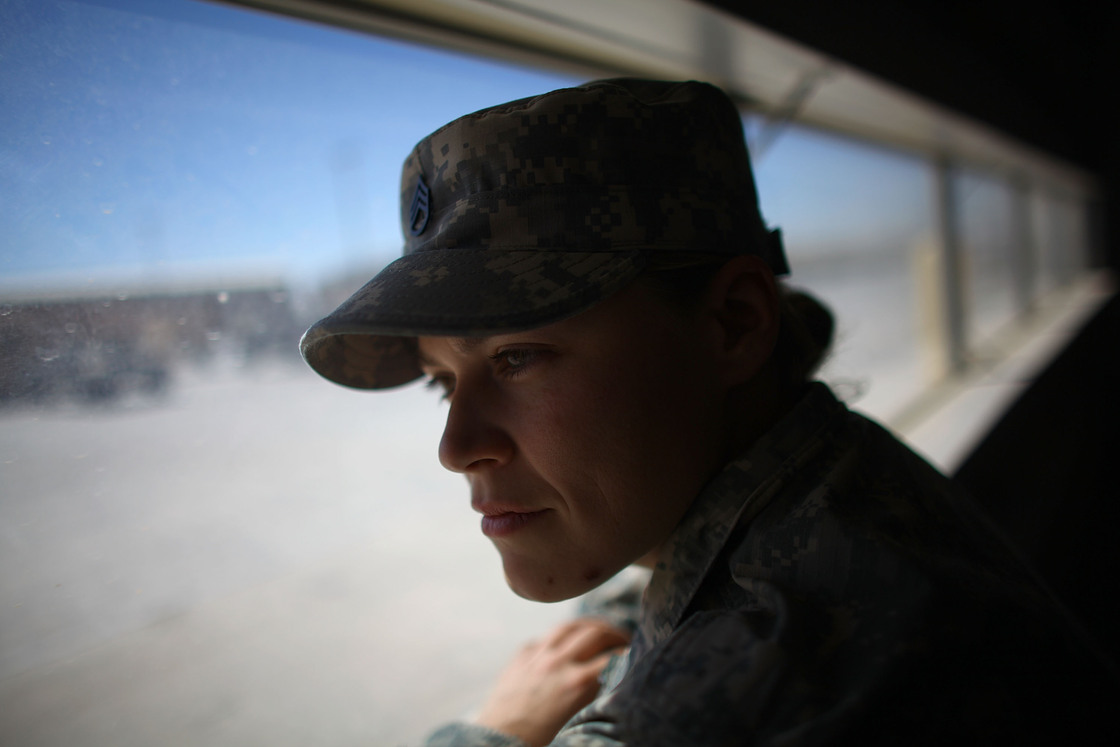
American women are already serving in combat. Although news analysts and commentators continue to debate the merits of placing women in combat roles, many women soldiers and veterans have been dealing with the realities of combat duty for quite some time.

women_fet5

The recent change in U.S. Department of Defense policy now allows women to participate fully in combat missions, effectively approving the existing situation for a number of women serving in the Iraq War and Afghan War over the past decade. One of the rationales for changing the policy was to provide service women with equal access to combat pay and benefits.

NPR reports on the experiences of American women in combat. The New York Times offers accounts of American servicewomen whose careers were affected by the previous ban on women in combat.

Posted in Gender and Warfare, History of Violence, Human Rights, Strategy and International Politics, War, Culture, and Society, Women and Gender History | 2 Comments