Overhyping MOOCs

Education media is abuzz with news about MOOCs (Massive Open Online Courses). The Chronicle of Higher Education has repeatedly touted the supposed benefits of MOOCs in successive stories for several years now, as have other education and technology publications online.  The mainstream television and radio media have now picked up on Coursera’s rapid expansion.

Rarely do any of these media outlets examine the content of MOOCs critically. Instead, they routinely present any criticism of MOOC courses as resulting from professorial conservatism or technological ignorance.

The Chronicle of Higher Education has just published an article based on their survey of 103 professors who actually teach MOOCs. The online survey asked 184 MOOC professors (103 responded) a series of questions about their courses and instructional methods.

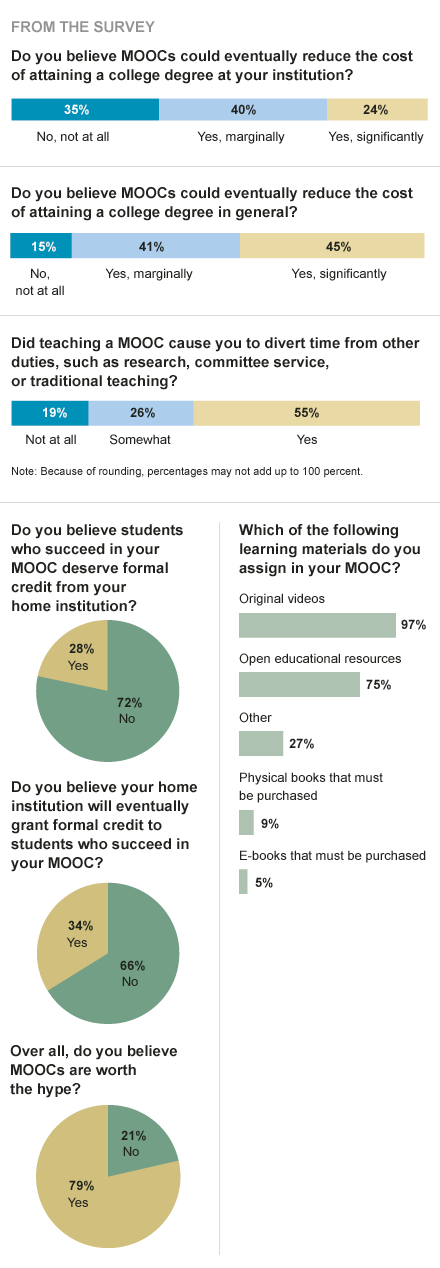
The most stunning finding of the survey was that 72 percent of MOOC professors believed that the students who passed their courses did not deserved credit at their own colleges and universities.

MOOCsurvey-credit

Unsurprisingly, the Chronicle of Higher Education buries this key finding toward the end of the article. “As far as awarding formal credit is concerned, most professors do not think their MOOCs are ready for prime time. Asked if students who succeed in their MOOCs deserve to get course credit from their home institutions, 72 percent said no.” Considering that the survey only questioned active MOOC professors who are proponents of online courses, this is a telling sign of the serious limitations of MOOCs within American university education.

The survey also shows that “the average pass rate was 7.5 percent”—a miserable completion rate that would not be acceptable on any college or university campus. The Chronicle of Higher Education places this statistic in a section on “Cutting College Costs,” implying that MOOCs have a potential to significantly reduce tuition costs and transform the United States higher-education system.
MOOCsurvey

Another intriguing result from the survey was that “Professors who responded to The Chronicle survey reported a variety of motivations for diving into MOOCs. The most frequently cited reason was altruism—a desire to increase access to higher education worldwide.”

The global aspirations of many of the MOOC professors clash with the U.S. media’s presentation of the supposed benefits of MOOCs for American undergraduate students. The majority of MOOC courses offer practical (and basic) education in science, mathematics, and engineering, which may be more useful to individuals around the world who are living in areas that lack fully developed higher-education systems.

I would argue that the Chronicle of Higher Education and other educational media are overhyping the potential of MOOCs and greatly exaggerating their relevance for American undergraduate students.

See the full story at the Chronicle of Higher Education online.
Posted in Digital Humanities, Education Policy, Globalization, Humanities Education, Uncategorized | Leave a comment

Domestic Violence and Gun Rights

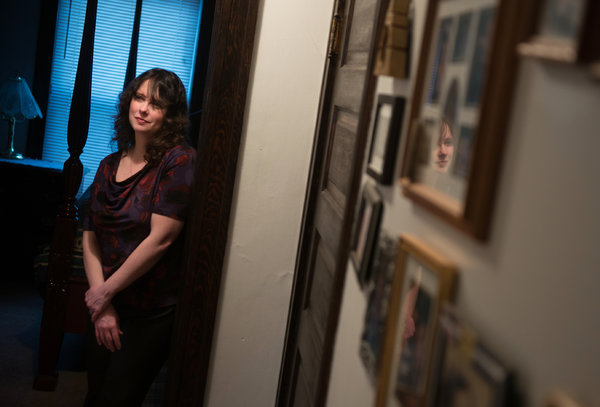
Gun rights advocates are challenging the legal protections granted to victims of domestic violence. Women who have been physically abused and threatened often seek protective orders (restraining orders) from city and county courts. In some states, those restraining orders may involve the abuser surrendering firearms.

In a series of cases, the National Rifle Association is now challenging judicial orders stripping gun rights from domestic abusers. Gun advocates are also lobbying to prevent the passage of tougher laws in states that do not currently require abusers to surrender their firearms.

facingprotectiveorders

The New York Times reports: “Intimate partner homicides account for nearly half the women killed every year, according to federal statistics. More than half of these women are killed with a firearm. And a significant percentage were likely to have obtained protection orders against their eventual killers.”

A study of murders and attempted murders of women in 10 U.S. cities published in Criminal Justice Review found that approximately 20 percent of the women had requested protective orders shortly before being attacked.

Advocates for abused women argue that judges should be able to order domestic abusers to temporarily surrender their firearms as part of protective orders, at least during a “cooling off” period during the implementation of the protective order and, if relevant, during divorce proceedings.

According to the New York Times, “in the mid-1990s, Wisconsin became one of the first states to require the surrender of firearms with full protective orders.” But, the National Rifle Association has since lobbied—often successfully—to prevent other states from adopting such legislation.

See the New York Times for the full story. Scholars and students researching gender and violence issues will want to consider the findings of the studies cited in the article.

Posted in Arms Control, History of Violence, Human Rights, Women and Gender History | Leave a comment

Graves of Black Death Victims Unearthed

The graves of twelve suspected victims of the Black Death have been unearthed in London. Workers excavating on a tunnel for an extension of the London Underground system discovered the human remains and brought in archaeologists to investigate.

Plague victims' skeletons are unearthed during the constructions of the Crossrail link in London

This excavation is one in a series of recent discoveries of plague burial sites in Europe, allowing for DNA testing and forensic examination of plague victims. The new evidence may be able to confirm that the Black Death was indeed bubonic plague, as has long been suspected. Over the past twenty years, some scholars have theorized that the pandemic may have been caused by a filovirus rather than bacteria.

The Guardian reports on the excavations.

NIU students in medieval history and Western Civilization courses may want to follow this developing story.

Posted in Early Modern Europe, Early Modern World, European History, History of Medicine, History of Science | Leave a comment

Habemus Papam

White smoke billowing from the chimney above the Sistine Chapel today (14 March 2013) indicated that a new pope has been elected: “Habemus Papam!”

francis132way

Cardinal Jorge Bergoglio, archbishop of Buenos Aires, has been elected pope and has taken the title of Francis. Bergoglio is a Jesuit who has now become the first pope ever from Latin America.

The election of a Latin American pope in some ways represents a historic shift in the Catholic Church, the majority of whose members now reside in the “Global South” of Latin America, Africa, and Asia—rather than in Europe and North America.

NPR reports on the election, quoting historian Thomas X. Noble of Notre Dame University. BBC also reports on the election.

Update: Criticisms of the new pope have emerged, stemming from Bergoglio’s work as a Jesuit in Argentina during the Dirty War of the 1970s. An Argentine journalist accuses Bergoglio of complicity in the abduction and interrogation of two Jesuits by the Argentine military, according to the BBC. The journalist, Horacio Verbitsky, was interviewed recently by Democracy Now.

The Vatican officially denies the allegations, as the BBC reports. An article in the Washington Post considers Bergoglio’s actions during the Dirty War. An article in HNN cautions against judging Bergoglio’s actions harshly based on the evidence unearthed so far.

Additional criticisms of the new pope have surfaced regarding his handling of sexual abuse cases involving pedophile priests in the archdiocese of Buenos Aires. The Washington Post reports on this story.

On 19 March, Pope Francis was officially inaugurated in an open-air mass in the Vatican City. The Washington Post reports that “The Catholic Church officially inaugurated Pope Francis as its first Latin American and Jesuit pontiff on Tuesday morning. More than 150,000 faithful, joined by leaders from much of the secular and spiritual world, watched as the humble and hopeful Argentine was vested with the trappings of authority at an open-air Mass in St. Peter’s Square.”

Latin Americanists, scholars of human rights issues, and historians of civil conflict will want to investigate these allegations and the broader context of the Dirty War.

Posted in Civil Conflict, Civilians and Refugees in War, European History, History of Violence, Human Rights, Italian History, Political Culture, Religious History | Leave a comment

A Van Dyck Painting Rediscovered Online

An Anthony Van Dyck portrait has been identified in an online database. The previously unidentified painting was in storage at a museum in the United Kingdom, but a digital image of the portrait was recently added to an online database, where an art historian recognized it.

Van Dyck-rediscovered

The painting has been identified as a portrait of Olivia Boteler Porter, who was a lady-in-waiting to Queen Henrietta Maria, wife of King Charles I of England.

The BBC reports on the discovery.


Posted in Art History, Digital Humanities, Early Modern Europe, European History, History in the Media, Noble Culture and History of Elites, Reformation History, Women and Gender History | Leave a comment

Sephardic Jews Invited to Return to Spain

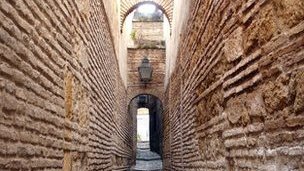
More than 500 years after the infamous 1492 expulsion of Jews from the kingdom of Spain, the modern Spanish government is preparing to invite Jews to return to the country. “In November [2012],” according to the BBC, “Spain’s justice minister Alberto Ruiz-Gallardon announced a plan to give descendants of Spain’s original Jewish community – known as Sephardic Jews – a fast-track to a Spanish passport and Spanish citizenship.” Tens of thousands of Jews converted to Christianity as conversos after the 1492 expulsion order, while others fled from Spain.

JewsinSpain

The BBC indicates that “the proposed new law, if passed, is expected to allow all new citizens of Sephardic origin to keep their existing passports.”

Commentators have proposed various theories on political motives for this proposal and its timing, suggesting the Spanish government’s possible desire to initiate a rapprochement with Israel.

Although many Muslims and moriscos (Muslim converts to Christianity) were also expelled from Spain in the fifteenth through early seventeenth centuries, no attempt to reach out to their descendents has been made.

The BBC reports on this story.

NIU students in HIST 414 European Wars of Religion, HIST 420 The Renaissance, and HIST 458 Mediterranean World, 1450-1750 will be interested in this article. Graduate students working on religious violence and intolerance issues will want to follow this story.

Posted in Civilians and Refugees in War, Early Modern Europe, Early Modern World, Empires and Imperialism, European History, European Union, European Wars of Religion, History of Violence, Human Rights, Mediterranean World, Political Culture, Religious History, Religious Violence, Renaissance Art and History | 1 Comment

Innovation in Italian Politics?

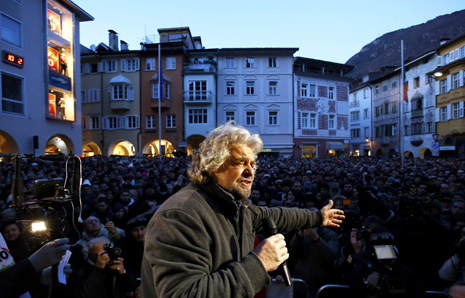
The recent elections in Italy surprised many Italians and have dumbfounded observers around the world. The center-left coalition led by Luigi Bersani seemed poised to win the elections, but did not come out as a clear winner. The resurgence of Silvio Berlusconi is especially shocking to people familiar with Italy but living outside of the country. Beppe Grillo’s Cinque Stelle movement has surged forward, gaining a whopping 25.6 percent of the vote. In Italy’s multiparty parliamentary system, this represents the largest vote for any single political party. But Grillo is not joining any coalitions, leaving the fate of the next government uncertain.

Comedian Turned Politician Beppe Grillo Addresses Supporters At Rally

Commentators in the United States and the United Kingdom often like to poke fun at Italian politics, often with good reason.

But, an article by Alexander Stille in the current New Yorker questions: “Maybe Italy’s Politicians Aren’t Crazier Than Ours.” Stille examines Italian politics as a laboratory for political innovations (good and bad) that later spread internationally.

Posted in European History, European Union, Italian History, Political Culture | Leave a comment

Georges Vigarello Seminars at the Louvre

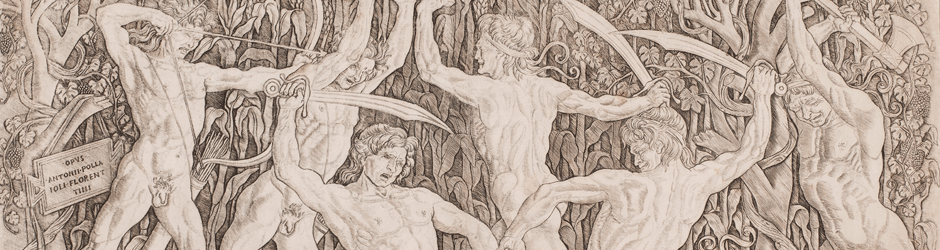
Philosopher and historian Georges Vigarello is presenting a series of seminars at the Louvre on Le corps et le mouvement (XVe-XXe).

pollaiuolo-gladiateurs

The seminars will be held on 25 March, 4 April, 11 April, 18 April, and 22 April in the Auditorium at the Louvre.

For more information, see the seminar program at the Louvre website.

Posted in Art History, Conferences, European History, French History, History of Medicine, Lectures and Seminars, Paris History, Renaissance Art and History | Leave a comment

Drones and Changing Conceptions of Airspace

Drones have already significantly transformed the conduct of military operations in Afghanistan, Pakistan, and other areas. Now, drones are beginning to change conceptions of airspace.

Yesterday (4 March 2013), an Alitalia pilot on approach to New York’s JFK airport reported seeing a drone at 1500 feet near his aircraft. The Alitalia plane successfully landed and airport continued to operate normally, but the sighting of a drone in the airspace of a major international airport triggered serious concerns about the potential of drones to disrupt air traffic.

This incident is currently being investigated.

NPR reports on the incident.

Readers interested in drones should consult P. W. Singer, Wired for War: The Robotics Revolution and Conflict in the Twenty-First Century (New York: Penguin Press, 2009).

Posted in Arms Control, History of Violence, Human Rights, Political Culture, Strategy and International Politics, Terrorism, War, Culture, and Society | Leave a comment

Historians Discuss Papal Resignation

Historians at the University of California at Santa Barbara are holding a public panel discussion of the papal resignation.

Here is the announcement from the UCSB website:

UCSB Historians To Examine Pope Benedict XVI’s Resignation

Public invited to panel discussion on Tuesday, March 5th.

(Santa Barbara, Calif.) — The announcement by Pope Benedict XVI that he will resign his office at the end of the month stunned the Catholic world. The last time a pope resigned was nearly 600 years ago, when Gregory XII stepped down in 1415 to end the schism that had produced numerous popes and anti-popes, some of whom resigned simultaneously.

In a panel discussion titled “When Popes Resign — What Will Happen When There Are Two Living Popes?” a group of historians from UC Santa Barbara will discuss the ramifications of Pope Benedict’s decision to leave office, and the issues surrounding his departure.

Sponsored by the UCSB History Associates, the panel discussion will take place at 7:30 p.m. on Tuesday, March 5, at the University Club, 1332 Santa Barbara Street. The cost is $8 for members and $10 for all others. Reservations are suggested and may be made by calling (805) 893-4388 or by sending a check, made payable to the UCSB History Associates, to the Department of History, University of California, Santa Barbara, CA 93106.

Participating scholars include Elizabeth DePalma Digeser, professor and chair of history and a specialist in Ancient Rome; Edward D. English, adjunct associate professor of history and executive director of the Medieval Studies Program; Carol Lansing, professor of history and a specialist in Medieval Europe; and Stefania Tutino, professor of history and a specialist in Reformation Europe.

Click here for more information about the panel discussion.

To view the complete story click here.


Posted in European History, Italian History, Lectures and Seminars, Political Culture, Reformation History, Religious History, Renaissance Art and History | Leave a comment