High School Teaching and Incoming College Students

An American high school teacher has issued a stern warning to college and university professors: brace yourselves.

Kenneth Bernstein—a recently retired high school teacher of government in the Washington, DC, area—paints a bleak portrait of the incoming college students who are products of the No Child Left Behind program in the United States.

academe-cover

Bernstein begins: “You are a college professor.  I have just retired as a high school teacher. I have some bad news for you. In case you do not already see what is happening, I want to warn you of what to expect from the students who will be arriving in your classroom, even if you teach in a highly selective institution.”

After walking the reader through the details of No Child Left Behind’s requirements and of the demands of teaching to its requirements, Bernstein concludes: “Now you are seeing the results in the students arriving at your institutions. They may be very bright. But we have not been able to prepare them for the kind of intellectual work that you have every right to expect of them. It is for this that I apologize, even as I know in my heart that there was little more I could have done. Which is one reason I am no longer in the classroom.”

Academe, a publication of the American Association of University Professors (AAUP), published Bernstein’s essay as “Warnings from the Trenches.” The Washington Post republished his essay online.

NIU students in the Teacher Certification programs in History and other disciplines will want to read this essay, which has already gone viral in the Facebook and blogosphere worlds.

Posted in Careers in History, Education Policy, Humanities Education, Undergraduate Work in History | Leave a comment

The Role of Dissertation Research

An article, provocatively entitled “The Dissertation Can No Longer Be Defended,” in the Chronicle of Higher Education discusses new digital models for dissemination of dissertation research. Stacey Patton, the author, begins her article by stating: “The dissertation is broken, many scholars agree. So now what?”

dissertationcannolongerbedefended

This statement displays the author’s bias in dismissing the relevance of dissertations. Do “many scholars” really agree that “the dissertation is broken”?  If so, where is the evidence of this?

The author sets up an absurd dichotomy between a “21st century” dissertation and a “traditional” dissertation (which is presented as backward). I would instead argue that approaches to doctoral research are incredibly complex and are always changing.

Faculty members are in a unique position to assess cutting-edge (21st century) research questions and methods and to direct doctoral research. Many faculty members, such as myself, embrace digital technologies as having important roles in doctoral research, but that hardly means that dissertations are outdated.

Faculty doctoral advisors—not reporters or university administrators—have the skills and experiences needed to determine how doctoral research should best be disseminated.

Although the author of “The Dissertation Can No Longer Be Defended” has received a Ph.D., she seems to misunderstand broader dimensions of doctoral research, as well as the academic job and publishing markets. Almost all of her quotes seem to have come from interviews with critics of a “traditional” dissertation and proponents of digital institutions. Programs that have not embraced digital dissertations are presented as “behind the curve.”

When  Anthony Grafton (Professor of History at Princeton University) is quoted, the reporter marginalizes him by minimizing the significance of his argument. The reporter writes: “Meanwhile, some scholars say the traditional approaches to the dissertation aren’t necessarily in need of overhaul at all, even if digital and other nontraditional formats may be preferable for some projects.” Grafton is not just “some scholar,” but a recent President of the American Historical Association, a highly published Renaissance historian, and an influential scholar who has actually directed many doctorates.

Toward the end of the article, the reporter off-handedly remarks that “Many other professors say that until the tenure process no longer requires the publication of book-length works, scholars in the pipeline will continue to follow the traditional formula for writing dissertations.” This point is, of course, at the heart of the matter.

Doctoral research is intended to prepare graduate students for their professional research responsibilities, which involves conducting new research and publishing research findings in articles, collective volumes, monographs, and other formats. The role of doctoral research, as I see it, is to advance knowledge and contribute to addressing human problems through systematic scholarly research. Only active research scholars in each discipline can determine the standards for relevant and quality research methods and findings. This is the reason for using doctoral mentoring and peer review processes, which are always evolving and never “traditional.”

This article seems to be typical of much of the reporting for the Chronicle of Higher Education: pro-technology, pro-administration, anti-faculty, anti-humanities, simplistic, and one-sided.

Posted in Academic Publishing, Careers in History, Digital Humanities, Education Policy, Graduate Work in History, Humanities Education | 3 Comments

Pope Benedict XVI Announces Resignation

Pope Benedict XVI has surprised Italians and the world with an announcement that he plans to resign the Papal throne and go into retirement at the end of the month. Benedict XVI is 85 years old and says that he is too tired to continue the duties of leading the Catholic Church.

BenedictXVI

Benedict XVI is not the first pope to retire. Pope Gregory XII resigned in 1415 during a period of conflict in the Church known as the Great Schism (1378-1417). A provision in canon law provides for the possibility of a legitimate papal resignation.

La Repubblica and the BBC report on the surprise announcement. NPR provides an audio report, including an interview with NPR’s Silvia Poggioli.

An English translation of the text of Pope Benedict XVI’s announcement is available on NPR’s website.

Silvia Poggioli provides an excellent report on Pope Benedict XVI’s legacy on NPR. The French newspaper Le Monde offers a retrospective on Benedict XVI, focusing on the many scandals he faced as pope. The Washington Post delves into the VatiLeaks scandal and corruption in Papal administration. Le Monde and Corriere della Sera report on criticism of the resignation by Catholic clergy and lay people.

Charles Keenan, a doctoral student in History at Northwestern University, offers historical context on previous papal resignations in an article on HNN.

For context on Gregory XII’s resignation and the history of the Great Schism, see:

Alison Williams Lewin, “‘Cum Status Ecclesie Noster Sit’: Florence and the Council of Pisa (1409),” Church History 62 (June 1993): 178-189.

Gene A. Brucker, “‘The Horseshoe Nail’: Structure and Contingency in Medieval and Renaissance Italy,” Renaissance Quarterly 54 (Spring 2001): 1-19.

For a history of papal elections, see:

Frédéric J. Baumgartner, Behind Locked Doors: A History of the Papal Elections (Palgrave Macmillan, 2003).

NIU students in HIST 420 The Renaissance and graduate students in Mediterranean World history will be interested in tracking this story and the upcoming conclave to elect a new pope.

Posted in Early Modern Europe, European History, European Union, History in the Media, Italian History, Mediterranean World, Renaissance Art and History, Uncategorized | Leave a comment

Unemployment in Italy

Italy has been plagued by severe unemployment for years, especially for young Italians who are just graduating from high school and university. Italians routinely lament the fuga dei cervelli (brain drain) as young, talented citizens emigrate to find better professional opportunities abroad.

italy-youthunemployment

New statistics underline the depth of the problem of youth unemployment in Greece, Spain, and Italy. See the report in the BBC.

Posted in Education Policy, European History, European Union, Italian History | Leave a comment

Plagiarism and Politics

Acts of plagiarism often have significant costs, especially in the fields of politics and higher education. Numerous high-profile cases of plagiarism have led to the resignations of politicians, government ministers, educational administrators, university presidents, and other officials over the past decade.

Germanminister-Schavan

The latest example is Annette Schavan, who recently resigned as Minister of Education in Germany after serious accusations of plagiarism in her doctoral thesis surfaced. The university that originally granted her doctorate investigated the allegations and has rescinded the degree. Schavan denies having plagiarized and is planning to sue her university.

This is a second ministerial resignation over plagiarism in the government of Angela Merkel. Karl-Theodor zu Guttenberg had to resign his post as Minister of Defense in Germany in 2011 over accusations of plagiarism.

The BBC reports on the Schavan case.


Posted in Academic Publishing, Education Policy, European History, European Union, Humanities Education, Noble Culture and History of Elites | Leave a comment

Sherman Prize for Undergraduates

2013 Edwin H. Sherman Family Prize

for Undergraduate Scholarship in Force and Diplomacy

Temple University’s Center for the Study of Force and Diplomacy (http://www.temple.edu) is delighted once again to solicit submissions for its annual Edwin H. Sherman Family Prize for Undergraduate Scholarship in Force and Diplomacy. The recipient of the Sherman Prize will receive a $1,000 award along with a certificate.
Any paper written by an undergraduate student in the 2012 calendar year, submitted by either the student or a faculty member at the student’s college or university, is eligible. The paper must address an issue, contemporary or historical, that demonstrates the intersection of force and diplomacy in international affairs. Although electronic submissions are preferred, hard-copy submissions will be accepted.

Papers must be emailed or postmarked no later than Friday, March 8, 2012.

Please address electronic submissions and all questions to: David A. Guba, Jr.

David A. Guba, Jr.
Davis Fellow, CENFAD
Center for the Study of Force and Diplomacy
Temple University, Department of History
913 Gladfelter Hall, 1115 W. Berks Street
Philadelphia, Pennsylvania 19122
Tel: (215) 204-7466
email:tuc70342@temple.edu


Posted in Arms Control, History of Violence, Political Culture, Strategy and International Politics, Undergraduate Work in History, War, Culture, and Society | Leave a comment

Knights of Malta Celebrate 900th Anniversary

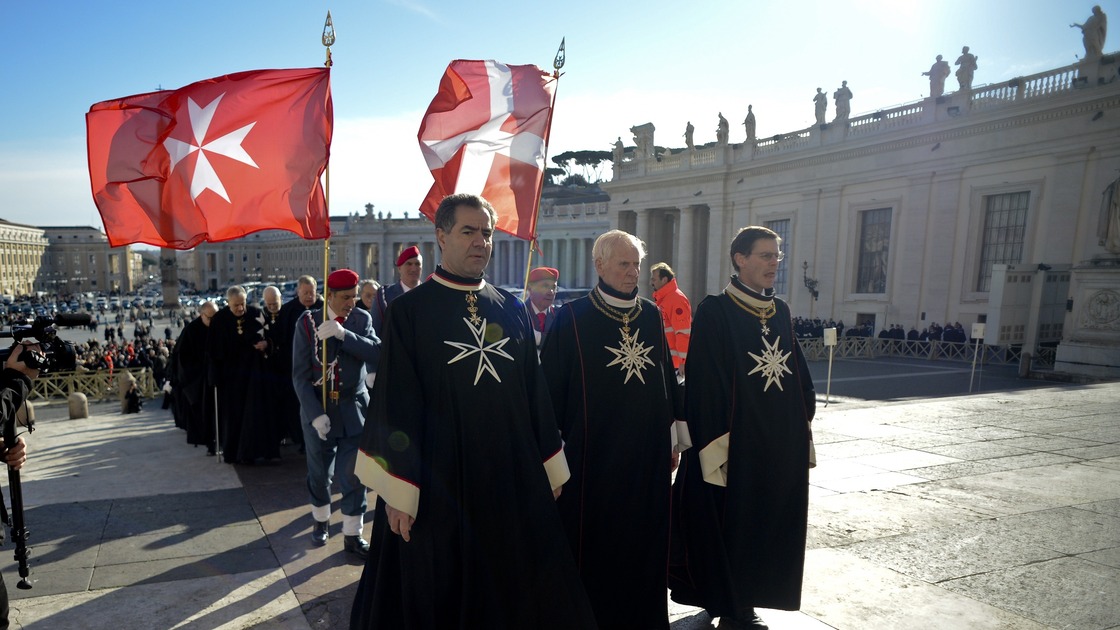
The Order of Saint John of Jerusalem, also known as the Knights of Malta, is celebrating its 900th anniversary.

KnightsofMalta900

The Order of Saint John of Jerusalem was founded as a crusading Christian military order in the 11th century and transformed its mission several times over the intervening centuries. This military order engaged in holy war against the Saracens and later the Ottoman Turks in the Levant and across the Mediterranean. The Order has successively been based in Jerusalem, Cyprus, Rhodes, Malta, and now Rome.

The Knights of Malta held a procession in the Vatican City today and attended mass at Saint Peter’s Basilica.

NPR reports on the celebrations in the Vatican City.

Students in HIST 414 European Wars of Religion, 1520-1660 and HIST 458 Mediterranean World, 1450-1750 will be interested in this story.


Posted in Early Modern Europe, Early Modern World, European History, European Wars of Religion, History in the Media, History of Violence, Maritime History, Mediterranean World, Noble Culture and History of Elites, Religious Violence, Renaissance Art and History, War, Culture, and Society, Warfare in the Early Modern World | Leave a comment

Misreported Data in College Rankings

Many students and their parents choose prospective colleges based on college rankings, such as the U.S. News and World Report rankings. College rankings are published each year to much fanfare. Most colleges and universities participate in surveys that produce the rankings, and they later trumpet favorable ratings of their overall institutions or of specific departments and programs.

University and college professors have long been skeptical about the rankings, especially ones produced by media companies such as U.S. News.

A new report throws further doubt on the usefulness of college rankings. The Washington Post article provides evidence that some colleges have deliberately misreported data in order bolster their rankings.

We can expect to see more of this sort of revelation in the future.


Posted in Education Policy, Humanities Education | Leave a comment

Unearthing Richard III

A team of archaeologists and other scientists exhumed bones from underneath a Leicester parking lot last fall and have been conducting tests on them over the past several months. Now, they report that the bones are probably those of King Richard III of England, who was killed at the battle of Bosworth Field in 1485.

The skeleton of Richard III is seen in a trench at the Grey Friars excavation site in Leicester

The death of Richard III at Bosworth Field allowed the Tudors to take control of the English throne and effectively brought the Wars of the Roses to the end.

The Guardian reports on the scientists’ methods, which included DNA testing and forensic analysis. The Washington Post reports on the findings.

richardiii042way

This sort of history-as-CSI project has become increasingly popular recently.


Posted in Civil Conflict, Early Modern Europe, History in the Media, History of Medicine, History of Science, History of Violence, Renaissance Art and History, Uncategorized, War, Culture, and Society, Warfare in the Early Modern World | Leave a comment

French and Malian Troops take Timbuktu

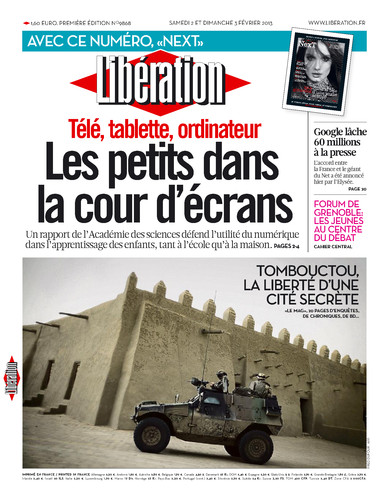
French and Malian forces entered Timbuktu on 28 February after Islamist and Tuareg militants fled from the city they had seized months before. French forces secured the airport, then the city itself. Reuters reported on the French and Malian drive into Timbuktu.

liberation-timbouctou

President François Hollande flew to Timbuktu to celebrate its liberation in an emotional visit.

hollandeintimbuktu

Less than a week after their dramatic arrival in Timbuktu, French troops are already preparing to transfer control over to Malian forces and to depart the city. Meanwhile there are signs of guerrilla fighting breaking out in some regions. The Washington Post reports on French plans to withdraw.

Strategists are considering how to secure the Malian government and establish stability throughout the nation. Libération offers analysis of Mali’s history of instability and weak state development. BBC analyzes potential French strategic approaches to dealing with Tuareg rebellion in northern Mali.

Posted in Civil Conflict, Civilians and Refugees in War, French History, History of Violence, Human Rights, Strategy and International Politics, Uncategorized, War, Culture, and Society | Leave a comment