Forensic Science and French History

CSI (Crime Scene Investigation) meets French history. DNA testing is being used to examine historical evidence in new ways. A recent study brings techniques of forensic science to examine the alleged remains of French King Henri IV.
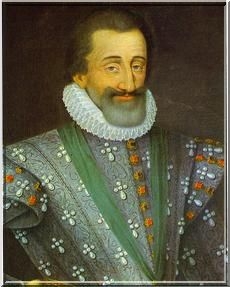
henriiv-portrait

Scientists studied an exhumed head and identified it as King Henri IV’s. They then compared DNA samples from the head with those from a handkerchief, supposedly soaked in the blood of King Louis XVI at his 1793 execution. The DNA from both samples shared traits that suggest that the samples are indeed related, according to the scientists.

Le Monde reports on this story in French, while the BBC provides a report in English.

The study’s results were published in an article in Forensic Science International.

Unfortunately, I will have to wait to evaluate the article, since my university’s library only gets access to this journal with a delay of several months.  This raises once again the issue of accessibility to academic research in the internet age.  For-profit database companies are strangling academic information diffusion by charging libraries exorbitant fees for subscriptions to their databases.

The online abstract from the article reads:

“A mummified head was identified in 2010 as belonging to Henri IV, King of France. A putative blood sample from the King Louis XVI preserved into a pyrographically decorated gourd was analyzed in 2011. Both kings are in a direct male-line descent, separated by seven generations. We have retrieved the hypervariable region 1 of the mitochondrial DNA as well as a partial Y-chromosome profile from Henri IV. Five STR loci match the alleles found in Louis XVI, while another locus shows an allele that is just one mutation step apart. Taking into consideration that the partial Y-chromosome profile is extremely rare in modern human databases, we concluded that both males could be paternally related. The likelihood ratio of the two samples belonging to males separated by seven generations (as opposed to unrelated males) was estimated as 246.3, with a 95% confidence interval between 44.2 and 9729. Historically speaking, this forensic DNA data would confirm the identity of the previous Louis XVI sample, and give another positive argument for the authenticity of the head of Henri IV.”

The usefulness of the research and evidence described in this abstract is unclear. It seems that the primary interest of these researchers is to prove the authenticity of the blood sample and the mummified head. If this is the goal, the research has little historical relevance and should be funded by the object’s owners.
 

Posted in Academic Publishing, Early Modern Europe, European History, European Wars of Religion, French History, French Revolution and Napoleon, French Wars of Religion, History of Medicine, History of Science, Noble Culture and History of Elites | Leave a comment

Sarkozy’s Maison de l’Histoire de France

The large-scale project to create a Maison de l’Histoire de France has been abandoned. Former French President Nicolas Sarkozy had proposed the cultural project and launched an initiative to create a new massive French historical museum. Sarkozy’s failed re-election bid and the Euro financial crisis both contributed to the recent decision of the government of François Hollande to abandon the Maison de l’Histoire de France project altogether.

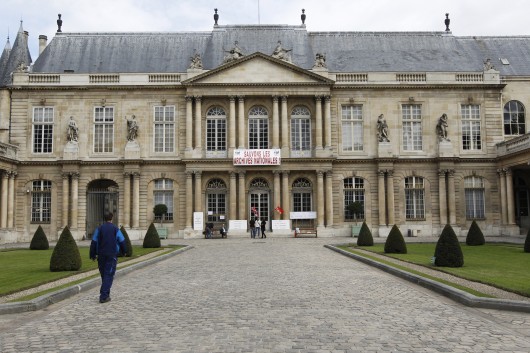
The Maison de l’Histoire de France was intended to regroup several existing museums, or parts of their collections, into a new museum that was to have been housed in the hôtel de Soubise, the current location of the Archives Nationales (AN). Archivists and staff from the AN organized a series of strikes against the Maison de l’Histoire de France during Sarkozy’s presidency.

archivesnationalesengreve

Many French historians and museologists complained that Sarkozy’s project had an overtly political agenda to present a right-wing vision of French history.

Le Monde reports on the end of the Maison de l’Histoire de France.

Posted in Uncategorized | Leave a comment

Notre Dame de Paris Celebrates 850th Anniversary

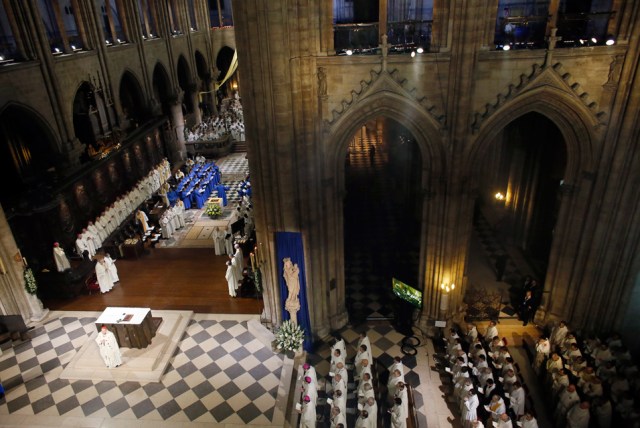
Église Notre Dame de Paris kicked off its 850th Anniversary celebration recently with a mass and procession. This is the first part of a year-long jubilee celebration of the construction of the church, which was begun in 1163 and continued into the fourteenth century.

NDP0024C

France 24 reports on the celebration in English.  Notre Dame cathedral has a website , entitled 850 ans de la cathédrale, on the jubilee celebrations which will continue throughout 2013.

notredame850

The Bibliothèque Mazarine at the Institut de France has an exhibition Les Livres de Notre-Dame, displaying books from the church.

Posted in Art History, Early Modern Europe, European History, French History, Paris History | Leave a comment

Reexamining the Thirty Years’ War

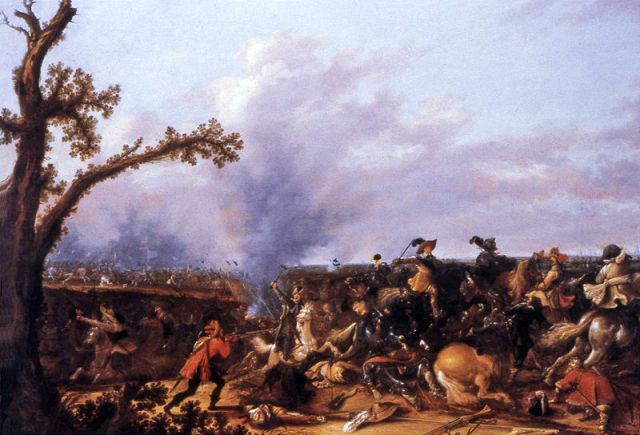
Professor Hervé Drévillon is presenting a public lecture in the series, Les Rendez-vous de l’Histoire : Faire campagne, de l’Antiquité à nos jours, sponsored by the École Militaire in Paris. Drévillon is the latest in a wave of historians to reexamine the prolonged violence of the Thirty Years’ War, a major conflict that devastated much of Germany and embroiled most European states in the mid-seventeenth century.

asselijn-lutzen

“Faire campagne pendant la guerre de Trente Ans”

Professeur Hervé Drévillon estprofesseur à l’Université Paris I et directeur du domaine “Histoire” à l’IRSEM

mardi 18 décembre 2012

Amphithéâtre Louis de 18h00 à 19h30
École Militaire, Paris

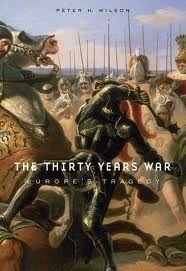
Historians interested in the European Wars of Religion may want to examine Hervé Drévillon’s books and articles, which treat aspects of seventeenth-century warfare and society. For those specifically intrigued by the Thirty Years’ War should read Peter Wilson’s The Thirty Years’ War: Europe’s Tragedy (2009).

wilson-thirtyyearswar-cover

Posted in Conferences, Early Modern Europe, European History, European Wars of Religion, History of Violence, War, Culture, and Society, Warfare in the Early Modern World | 1 Comment

Women as Academic Authors

Female professors are increasingly active in academic research at American universities. In some disciplines, women are approaching parity with male counterparts, but in many others a gender gap remains.

gender-key

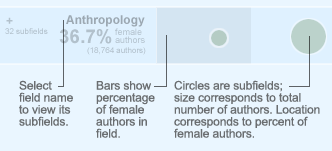
A new article in the Chronicle of Higher Education reports on the Eigenfactor Project’s analysis of the gender of academic authors, breaking down the percentages of male and female authors in a number of different fields and subfields. The data set used is constructed from JSTOR article database and organized by fields and chronological period.

The discipline that had the highest number of female authors in the period from 1991 to 2010 was Education, with women representing 46.6% of authors. The field of History had 30.8% female authors during the same period.

Women and gender scholars should examine these findings to assess the current state of the gender gap in the academic sphere.


Posted in Academic Publishing, Careers in History, Historiography and Social Theory, Human Rights, Humanities Education, Women and Gender History | Leave a comment

History of Violence Postdoctoral Fellowship

The Center for the History of Violence at the University of Newcastle in Australia is offering a postdoctoral fellowship in the History of Violence.

bostonmassacre

For a description of the position and application procedures see the posting on H-Net.


Posted in Grants and Fellowships, History of Violence, Religious Violence, War, Culture, and Society | Leave a comment

Women and War

Warfare is often assumed to be a purely masculine sphere of human activity. This gendered conception is a myth.

Women have historically been participants in diverse aspects of warfare: recruitment, training, mobilization, strategic formulation, military intelligence, war finance, logistical services, medical services, command, and even combat. Societies in every historical period have constructed different gender relations and gendered notions of warfare.

lynn-womenarmies

John A. Lynn’s Women, Armies, and Warfare in Early Modern Europe (Cambridge: Cambridge University Press, 2008) demonstrates that women played integral roles in the logistics and pillage economy of early modern armies. Lynn argues that women’s roles  were progressively limited by late seventeenth-century and eighteenth-century armies, but women still played various supporting roles for armies. The French Revolution and nationalism later created many more opportunities for women to participate directly in military organizations. As historian Lynn Hunt wrote in a blurb for Lynn’s book: “In an engaging work that combines military and social history, Lynn brings to life the indispensable role of women in early modern European armies and tracks down the reasons for a major shift in their place after 1650. We can never again imagine war as only men’s work.”

Individual women have at times cross-dressed to serve in armies, but groups of women have also acted openly as combatants in some armed forces. One of the most studied cases is the Israeli Defense Forces, where women have long served in combat roles.

During many civil wars, women have participated in combat roles not normally permitted in conventional inter-state wars. My own research shows that besieged women played an active role in siege combat defense: “‘Generous Amazons Came to the Breach’: Besieged Women in the French Wars of Religion,” Gender and History 16 (November 2004): 654-688. I am currently expanding this research into a book on gender and violence in the French Wars of Religion.

mackenzie-letwomenfight

Today, one of the most controversial issues relating to women and warfare is whether or not female soldiers should be permitted to serve in combat roles in national armies. A new article in Foreign Affairs argues that American female soldiers should be allowed to participate fully in combat operations. This article adds to a long-running debate in the United States, in both military and civilian spheres, about the place of women in the U.S. armed forces.

Posted in Civil Conflict, Current Research, Early Modern Europe, Early Modern World, European History, Gender and Warfare, History of Violence, Uncategorized, War, Culture, and Society, Warfare in the Early Modern World, Women and Gender History | Leave a comment

Interview with Hervé Drévillon

Historian Hervé Drévillon has launched a new Institut des Études sur la Guerre et la Paix (Institute for the Study of War and Peace) at Université de Paris I. Research centers and institutes at major universities are engines for original research and publication. This research institute, based in the Sorbonne building, includes an active graduate program with Master’s and Doctoral students.

drevillon-roisabsolus

Hervé Drévillon is the author of books on early modern European dueling, on Louis XIV’s army, on early modern France, and on the history of battle.

Histoire pour tous published an interview with Drévillon online.

I enjoyed presenting my book Warrior Pursuits: Noble Culture and Civil Conflict in Early Modern France (Baltimore, MD: Johns Hopkins University Press, 2010) at Drévillon’s seminar recently.  I was able to meet a number of graduate students who participate in the programs of the Institut des Études sur la Guerre et la Paix.

Historians of early modern war, culture, and society will be interested in Drévillon’s work and his new research institute.

Posted in Current Research, Early Modern Europe, Early Modern World, French History, History of Violence, Paris History, Strategy and International Politics, Uncategorized, War, Culture, and Society, Warfare in the Early Modern World | 1 Comment

Reenactment of Austerlitz

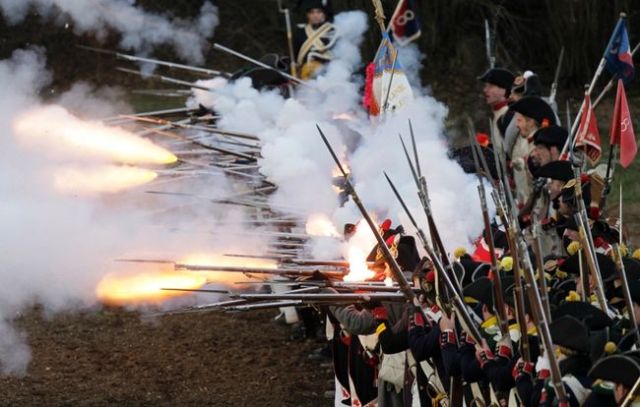
Austerlitz has been fought once again. The anniversary of the battle of Austerlitz was 2 December and historical reenactors once again took to the battlefield to commemorate one of the most celebrated victories of Napoleon.

austerlitz-reenactment

Emperor Napoleon’s Grand Armée fought an allied Austro-Russian army near the village of Austerlitz in Moravia (in the present-day Czech Republic) on 2 December 1805 during the War of the Third Coalition. French imperial forces had defeated an Austrian army at Ulm earlier in the year and then invaded Habsburg territories. But, the remaining Austrian forces fell back until they could link up with their Russian allies. With winter approaching, the Grand Armée was running out of time and supplies, but the Austro-Russian combined army continued to avoid battle.

On 1 December, Napoleon ordered his army to feign a retreat near Austerlitz in order to entice the Austro-Russians to advance.  This ruse worked, and the Austro-Russians attacked early on the morning of 2 December, hoping to surround the ostensibly retreating French army. Napoleon waited as most of the Austro-Russian army advanced in the fog toward the French right wing, then he launched a counter-attack up the Pratzen heights.  After intense fighting, the Grand Armée broke through the Russian Guard and routed the entire allied army.

Napoleon’s victory forced the Habsburgs to make peace and the Russians to retreat. Emperor Napoleon exploited his army’s victory through a massive propaganda campaign to solidify the support of his soldiers and the French public. The battle of Austerlitz and the campaign of 1805 showcased Napoleon’s military system at its most effective and has been studied by historians of war and society ever since.

For historical interpretations of Austerlitz and its significance, see the work of Gunther Rothenberg, Philip Dwyer, and Alan Forrest. For a purely narrative account of the battle, see David Chandler.

The Calgary Sun reports on the reenactment of the battle of Austerlitz. A website promotes the reenactment. Historical reenactments have become very popular activities for historical enthusiasts who like to dress in period clothing and simulate significant events and daily life.

Posted in Early Modern Europe, Empires and Imperialism, European History, French History, French Revolution and Napoleon, Uncategorized, War, Culture, and Society, Warfare in the Early Modern World | Leave a comment

NIU Huskies Heading to Orange Bowl

The Northern Illinois University Huskies football team has won the MAC conference championship and is heading to the Orange Bowl. This is the first time that a MAC conference member has been selected for a major post-season bowl game.

niu-football-orangebowl

The Chicago Tribune reports on the excitement of NIU students and alumni. NIU Today reports on the elated NIU fans on campus.

niu-orangebowlbound

The excitement about the MAC championship was tempered, however, by the news announced the following day that David Doeren, the winning head coach who led the Huskies to the MAC championship, is already leaving, having accepted a job at North Carolina State University. Doeren will not coach in the Orange Bowl game, but by Rod Carey, the offensive coordinator, now promoted to head coach. The NIU football team has suffered from the revolving door at the head coach position over the past decade. NIU Today reports on the coaching change.

I am missing the reactions of students on campus, since I am on research in France this semester.


Posted in Northern Illinois University, Uncategorized | Leave a comment