Napoleonland

Ready for a Napoleonic theme park?  Here comes Napoleonland….

Yves Jago, a French politician in the Parti Radical, is proposing a project to build a historical theme park to celebrate the life and legacy of Napoleon Bonaparte.  The theme park would include historical reenactments of political events, battles, army camps, and daily life during the French Revolutionary and Napoleonic period (1789-1815). The picture above is an artist’s rendering of Napoleonland, as shown in a story by The Guardian.

The Napoleonic period is popular in France and Europe, where a number of annual reenactments of Napoleonic battles draw thousands of participants and spectators. Napoleonland would aim to compete with the Parc Asterix and Puy du Fou theme parks in France.

Napoleon Bonaparte remains a polarizing figure in French and European history.  Napoleon is criticized for promoting militarism, dictatorship, surveillance, and endless warfare by the political left, but championed for providing leadership, national unity, law, and security by the political right. The project to create a theme park in his honor is likely to provoke significant political debate within France and perhaps across Europe.

NPR reports on the Napoleonland project, as does The Guardian.

Students in HIST 423 French Revolution and Napoleon at Northern Illinois University will be interested in this story.

Posted in European History, European Union, French History, French Revolution and Napoleon, History in the Media, War, Culture, and Society | 1 Comment

Wikipedia’s Useless Knowledge

Wikipedia has become the ubiquitous source of information for millions of users worldwide.  High school and university students rely on Wikipedia for basic information and evidence and for their own research and writing. Indeed, many students engage in cut-and-paste plagiarism, copying passages from Wikipedia’s seemingly infinite pages.

Wikipedia’s influence in modern life is stunning, as people increasingly rely on the website to broker data and facilitate information management in a period dizzying information overload.

What Wikipedia offers is utterly useless knowledge, however.

Critical readers are already intimately aware of the multiple layers of unreliability of Wikipedia: no authorship, unstable entries, changing arguments and conclusions, poor citations, outright vandalism, uninformed editorship, outdated methodologies, and utter lack of expertise. Wikipedia is set up to generate the greatest possible quantity of information at the expense of abandoning any qualitative measure of that information. As such, it contributes absolutely nothing to human knowledge.

A historian, Timothy Messer-Kruse, offers a telling critique of Wikipedia’s anti-intellectual editorial policies and amateur editorial practices at the Chronicle of Higher Education.


Posted in Digital Humanities, Education Policy, History of the Book, Humanities Education, Information Management | 1 Comment

Religious Change and Religious Violence

The dramatic growth of Christianity in the “global south” and in Asia has created religious tensions and contributed to conflicts in a number of nations, including Nigeria, Kenya, Pakistan, and China.

The Christian population of sub-Saharan Africa has ballooned from 9% to 63% over the past century, according to The Economist. There are now 2.2 billion adherents to Christianity across the globe.

The Economist reports on one side of the conflicts over the growth of Christianity, examining violence through the lens of persecution in an article (unsurprisingly) entitled “Christians and Lions.” The article highlights the recent attacks on Christians in Nigeria, the violence against Christians in Iraq, and the prosecutions of Christian converts in Iran and Pakistan. Unfortunately, the article argues that “there is a specific problem with Islam,” instead of seriously exploring the broader and comparative contexts of religious violence today. One-sided views of religious violence that portray conflicts as resulting from “persecution” are simplistic, ignoring the dynamics of religious changes. The Economist also treats religion as an additive rather than a fundamental aspect of culture, asserting that “Once religion is involved, any conflict becomes harder to solve.”

In the article, The Economist makes an explicit comparison to the European Wars of Religion of the sixteenth and seventeenth centuries: “Compared both with the wars of religion that once tore Christendom apart and with various modern intra-faith struggles, such as those within Islam, little blood is being spilt. But the brutality matters.” NIU students in HIST 414 European Wars of Religion, 1520-1660 will be interested in this story.

For a broader view on the global expansion of Christianity and religious conflict, see the Pew Forum on Faith and Conflict and the Pew Forum on Christianity and Conflict in Latin America.


Posted in Civil Conflict, European Wars of Religion, Globalization, Human Rights, Religious Violence | Leave a comment

Americans’ (Politicized) Ideas of Europe

Americans hold many preconceived notions about Europe and Europeans, often based on movies and tourism. During U.S. election cycles, American politicians frequently play on American stereotypes about Europe to score points against their rivals.

Martin Klingst, a German journalist based in the United States, comments on politicians’ portrayals of Europe in the Republican primaries.

The op-ed is published online by the Washington Post.

For deeper probing of American attitudes toward Europe and the history of American-European relations, see:

William L. Chew and Dominique Laurent, eds., National Stereotypes in Perspective: Americans in France, Frenchmen in America (Rodopi, 2001).

Daniel Sheldon Hamilton, Conflict and Cooperation in Transatlantic Relations (Washington, DC: Center for Transatlantic Relations, 2004).

Richard F. Kuisel, The French Way: How France Embraced and Rejected American Values and Power (Princeton, N.J.: Princeton University Press, 2011).

Richard F. Kuisel, Seducing the French: The Dilemma of Americanization (Berkeley and Los Angeles, CA: University of California Press, 1993).

Richard H. Pells, Not Like Us: How Europeans Have Loved, Hated, and Transformed American Culture Since World War II (New York: Basic Books/HarperCollins, 1997) [Paperback edition, Basic Books, 1998].

Frank Trommler and Elliott Shore, eds., The German-American Encounter: Conflict and Cooperation between Two Cultures, 1800-2000 (New York: Berghahn Books, 2001).

Posted in European History, European Union, Globalization, Political Culture | Leave a comment

Renaissance Art and Modern Banking

Italian Renaissance bankers arguably invented the concepts and tools of modern banking, including bills of exchange, letters of credit, deposit banking, branch banks, and double-entry bookkeeping.

A recent exhibition on Money and Beauty: Bankers, Botticelli and the Bonfire of the Vanities at Palazzo Strozzi in Florence displays links between Renaissance banking and art, hinting at connections between banking and and luxury goods today.

Palazzo Strozzi has a website for the exhibition, which includes a digital tour.  NPR’s Syvia Poggioli reports on the show. I was unable to see this exhibition myself, but hope that some of my Medici Archive Project colleagues will be able to review it soon.

NIU students in HIST 420 The Renaissance may be interested in this exhibition and the catalog.

Posted in Early Modern Europe, Early Modern World, European History, History in the Media, Noble Culture and History of Elites, Renaissance Art and History | Leave a comment

Playing Politics with History

Politicians frequently use historical references and analogies to support their political positions and policy programs. Sometimes legislative bodies act to interpret historical events, attempting to reshape the historical memory of controversial periods of the past.

Recently, French politicians have been again trying to court Armenian-French political backing by advocating a ban on denying the Armenian genocide. This is a subject that has been raised in France a number of times over the past decade, usually coinciding with anti-Turkish EU politics.

Meanwhile, German politicians are debating whether or not to allow the publication of portions of Adolf Hitler’s Mein Kampf in their country, even as they celebrate the 300th anniversary of Frederick the Great’s birth (see my recent post).

The New York Times reports on how European politicians are “playing politics with history.”

Posted in European History, European Union, French History, History in the Media, Human Rights, Political Culture | Leave a comment

Religion, Politics, and Money

Religion, politics, and money are often intertwined in curious ways. Religious and political alliances between Jewish Zionists and Christian Evangelicals are baffling to many people. My students frequently express confusion about intersections between Jewish and Protestant messianic and apocalyptic beliefs. Campaign donations in the Republican primary race are revealing some of these connections.

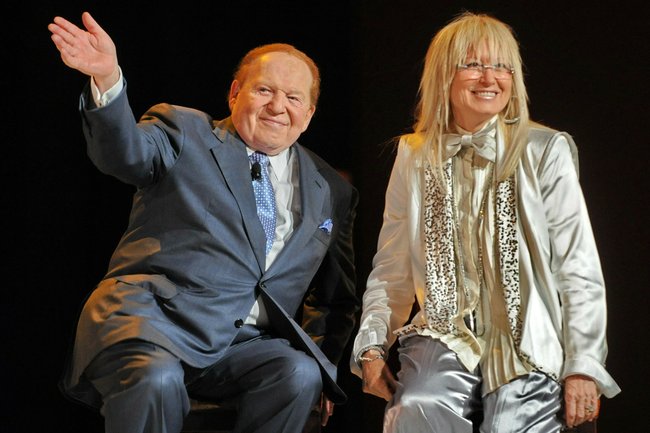
The New York Times reports today on Sheldon Adelson, “the man behind Gingrich’s money.”

The article provides in-depth coverage on Adelson’s donations, revealing how individual political donors can powerfully sway elections in the United States in order to advance their own particular vision of religious politics. Both Democratic and Republican donors can now legally donate millions of dollars to super PACs (political action committees) to publicize their personal agendas.

Political and religious activism have often overlapped in previous historical periods.  NIU students in HIST 414 European Wars of Religion and HIST 640 Religious Violence in Comparative Perspective, 1500 to Today should consider what, if anything, this modern case of religious politics suggests for our study of past intersections between religion, politics, and money.

Posted in European Wars of Religion, Political Culture, Religious Violence | Leave a comment

Movement for De-Baptism in France

A movement promoting de-baptism is growing in France, challenging the authority of the Catholic Church and presenting quandaries for historians who use baptismal records as sources.

A French man named René LeBouvier has sued the Catholic Church in order to have his name stricken from the baptismal register of the church where he was baptized as an infant. He has won a court ruling based on French human rights law, but the Catholic Church has appealed to a higher court.

NPR reports on the case. The article explains the religious and political issues involved in the case, but does not discuss the historical implications. Many historians use baptismal records as key sources for the social history of communities. If states can force churches to alter their baptismal records, the historical value of these documents may be compromised.

NIU students in HIST 414 European Wars of Religion and HIST 640 Religious Violence in Comparative Perspective will be interested in this story after reading about the baptism controversies of the sixteenth and early seventeenth centuries.

Posted in European History, European Union, European Wars of Religion, French History, French Wars of Religion, Human Rights, Religious Violence | Leave a comment

English Translations of the Iliad

Homer’s The Iliad has been translated and re-translated into English numerous times.  Willis G. Reiger, director of the University of Illinois Press, points out that “according to The Oxford Guide to Literature in English Translation, the Iliad is among the most translated works in English, and English has more versions than any other language.”

Reiger examines some of the notable translations of The Iliad, suggesting that modern notions of manliness may have something to do with the proliferation of translations of Homer’s classic in English.

Reiger’s piece is published in the Chronicle of Higher Education.

Posted in Civil Conflict, Empires and Imperialism, European History, History in the Media, History of the Book, Mediterranean World, Noble Culture and History of Elites, War, Culture, and Society, Women and Gender History | Leave a comment

Commemorating Frederick the Great

Germans are commemorating the 300th anniversary of the birth of Frederick II “the Great”, king of Prussia in the mid-eighteenth century.

Frederick the Great is known above all for his generalship in a series of wars against the Habsburgs over the control of Silesia and influence within the Holy Roman Empire. Under his command, the Prussian army enforced brutal discipline on its soldiers, but its infantry gained a reputation for military efficiency.

Frederick the Great’s legacy has been successively embraced by Prussian monarchists, German nationalists, and Nazi leaders. This has made the historical memory of Frederick the Great highly controversial within modern Germany and Europe.

Surprisingly, then, some Germans today are actively celebrating the 300th birthday of Frederick the Great. The New York Times reports on the commemorations in Potsdam, which included historical reenactors dressed in eighteenth-century costumes and uniforms.

Posted in Early Modern Europe, European History, History in the Media, War, Culture, and Society, Warfare in the Early Modern World | Leave a comment