Search for Meaning in a Post-Osama World

People around the world are now reacting to the news of the death of Osama bin Laden, which is being seen as a significant world historical event.

The military intelligence and special forces operations that led to bin Laden’s death are only beginning to be understood at this point, yet the search for the meaning of a post-Osama world has already begun.  Historians, political scientists, and journalists are attempting to gauge reactions and interpret the broader significance of bin Laden’s death.

One of the most impressive assessments of the possibilities of a post-Osama world that I have seen is Roger Cohen’s op-ed in the New York Times.

Historians can play an important role in contexualizing bin Laden’s death and understanding the broader historical patterns shaping this historical moment.  As historians weigh in on bin Laden’s death, I will update this post.

For my part, I hope that Osama bin Laden’s death provides closure for victims of the September 11 Attacks and offers opportunities to reevaluate the United States military’s role in Afghanistan, Pakistan, and Iraq.  Bin Laden’s death certainly does not eliminate Al Qaeda, religious violence, or global terrorism, but it does present possibilities to re-think how the United States responds to such threats.

Posted in Civil Conflict, Globalization, History of Violence, Religious Violence, Terrorism, War, Culture, and Society | Leave a comment

Osama bin Laden is Dead

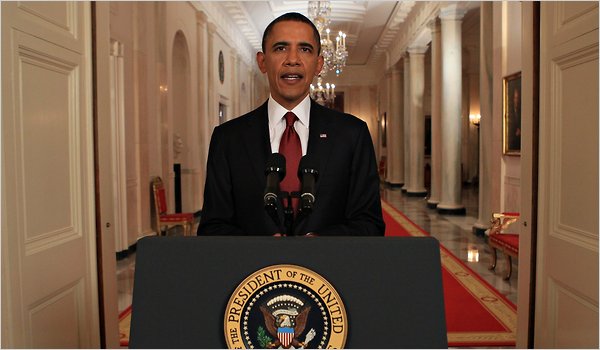
President Barack Obama announced a few minutes ago that U.S. forces have killed Osama bin Laden at a compound in Pakistan.

The video of President Obama’s speech is available at the Washington Post.  The full text of President Obama’s remarks are also available.

The New York Times reports on the President’s speech from the White House.  Details are still emerging on the nature of this special forces operation in Pakistan and reaction from around the world.

Posted in Civil Conflict, History of Violence, Religious Violence, War, Culture, and Society | Leave a comment

Merit Scholarships to Law School

Imagine winning a “full ride” scholarship to law school, potentially worth $100,000 or more.  Sounds great, right?  Be sure to read the fine print….

A report in the New York Times shows that many scholarships to law school are based on rigorous performance assessments, which are often calculated using curves.  Students who cannot maintain high grade point averages often lose their scholarships after the first year, leaving them the stark option of abandoning law school or going into massive debt in order to complete their degrees.

Many history majors and minors at Northern Illinois University and other universities plan to pursue law degrees.  Undergraduate students applying to law schools or graduate schools need to be aware of the rules for scholarships and to carefully consider how best to pursue higher degrees.

Thanks to my colleague Art Ward, who works closely with pre-law students at Northern Illinois University, for forwarding this article!

Posted in Education Policy, Humanities Education | Leave a comment

Historian Eric Foner Wins Pulitzer Prize

Historian Eric Foner has won a Pulitzer Prize for his The Fiery Trial: Abraham Lincoln and American Slavery (Norton, 2010).

The American Historical Association has a brief story about the prize on its website.

NIU students interested in the history of the American Civil War or comparative civil wars may want to check out this book.

Posted in Civil Conflict, War, Culture, and Society | Leave a comment

Women’s Access to Public Education

As discussion of education budgets for 2012 moves forward, historian Jill Lepore provides a poignant reminder of the importance of public education in the lives of women.

Jill Lepore’s op-ed, entitled “Poor Jane’s Almanac,” appears in the New York Times.

Posted in Education Policy, Humanities Education, Women and Gender History | Leave a comment

Highest Paid University Personnel at NIU

Who are the highest paid university personnel at Northern Illinois University?

The answer: the football coach is #1, the president comes in at #2.  Coaches, the athletic director, and non-academic administrators round out most of the rest of the top 15 earners at NIU.

The cost of these top 15 positions for the NIU budget: $2.7 million.  This is equivalent to 42 faculty positions at the assistant professor level!

The AAUP Faculty Salary Survey, republished by the Chronicle of Higher Education, lists the average salary of a Northern Illinois University  Assistant Professor as $64,300.  Simply divide the $2,700,000 spent on the top 15 positions by this average faculty salary to get the 42 faculty positions that could be weighed against those athletic and administrative personnel.

Read the full list and related story at the Northern Star online.

Professors will not be surprised at all by this list.  The number of non-academic administrators and the size of their salaries has continued to grow nationwide, bloating the cost of higher education. In contrast, faculty numbers and real salaries have remained flat over the past generation.  [See previous posts and numerous articles in the Chronicle of Higher Education for further information and data regarding these trends.]

Northern Illinois University students and faculty will want to consider personnel issues, as budget cuts continue throughout the Illinois’s higher educational system.

Posted in Education Policy, Humanities Education, Northern Illinois University | Leave a comment

A $10,000 BA Degree?

Can you imagine a student earning a BA degree for a mere $10,000?  That’s not $10,000 per year, but total cost for a 4-year BA or BS degree.

This is the latest proposal for educational “reform” by Texas Governor Rick Perry, whose Higher Education Commissioner Raymund Paredes endorsed the plan this week, claiming that “It’s entirely feasible. It’s something we are going to pursue aggressively.”

The plan apparently would involve the following elements:

  • online classes
  • e-textbooks
  • variable-length courses
  • limited electives
  • two-year study at community colleges before transfer into universities
  • paid internships for students

These stripped-down degrees would not replace existing degrees, but would targeted for low-income students.

Governor Perry and his educational staff claim that quality could be maintained while instituting the low-cost degrees.  Many faculty who have experience working with online classes and transfer students from community colleges would dispute this assertion.  Higher education administrators familiar with university budgets will also be skeptical of this educational “reform” done in the name of cost-cutting and “efficiencies.”  Online classes have proved inefficient and incredibly expensive to maintain.  Low-income students often lack computers, internet connections, and computer skills necessary to complete online classes.  Paid internships are already incredibly difficult for students to find, so increasing the number of students needing them will only make them more competitive.

I personally disagree with the corporate model of education that underpins Governor Perry’s proposal, but since that is the language of this “reform” plan, let’s bring in basic business realities: you get what you pay for.

A $10,000 degree simply could not offer the equivalent of a full bachelor’s degree.  The current average cost of a bachelor’s degree in Texas is $31,696, according to the Texas Higher Education Coordinating Board.  This is already a very low cost for a bachelor’s degree, compared with universities in other states (which is only made possible by the state’s petroleum based Permanent University Fund). A low-cost degree would necessarily deliver low-quality education.

Governor Perry’s plan is clearly not intended to save money, but to further strip public higher education.  The plan is instead geared toward shifting students into community colleges and for-profit “educational” institutions.

Texas, already near the bottom of U.S. public education at the K-12 level, may now be entering a race to the bottom of higher education, too.

The Austin American Statesman and the Chronicle of Higher Education both report on this story.

Students in Northern Illinois University’s Teacher Certification program will want to follow this developing story, since state-based educational reforms often influence other states’ policies.

Posted in Education Policy, Humanities Education | Leave a comment

Bob Lehrman on Faculty Unionization

Bob Lehrman, a former White House aide and an adjunct professor of communications at American University, wrote a thoughtful op-ed on faculty unionization in the Washington Post on Friday.

Lehrman calls himself a “hobbyist” adjunct, yet supports unionization efforts.  He argues that faculty unions could especially assist careerist adjuncts who are striving to obtain full-time employment.  Lehrman certainly makes some persuasive arguments for the advantages of collective bargaining in higher education in general.

However, Lehrman does not discuss how the proposed faculty union at American University would address the potentially competing interests of tenured faculty, tenure-track faculty, full-time instructors, part-time adjunct instructors, visiting professors, postdoctoral instructors, and graduate teaching assistants.  Nor does Lehrman discuss the gross disparities between the situations of faculty in different divisions and colleges of universities.  Professors in the Humanities and the Sciences, for example, are simply not compensated at the same level as professors of Law, Medicine, Business, or Engineering.

Realistic discussion of the differing statuses, situations, salaries, and responsibilities of all university faculty members is desperately needed in debates over collective bargaining.  If there is to be collective bargaining, which groups of teacher/researchers will constitute the collective?

The historical processes of the development of universities, the principles of academic freedom, the standards of scholarly performance, the concepts of faculty governance, and the demands of public education all create complexities in adopting unionization and/or professionalization models of collective representation in higher education.  These issues need to be discussed in the continuing debate on faculty unionization nationwide.

Graduate students and teacher certification students in the Department of History at Northern Illinois University will want to follow the continuing developments on faculty unionization and professionalization issues, since they will encounter these issues in their future teaching and research careers in secondary and higher education.

Posted in Academic Freedom, Education Policy, Humanities Education | 2 Comments

EU as the “Sick Man of Europe”

Is the European Union the “sick man of Europe”?

This formulation represents an intriguing twist on historical references to the Ottoman Empire as the “sick man of Europe.”

Eurozine has published a series of articles entitled “Europe Talks to Europe” and a public debate on the theme of the possible disintegration of the European Union, using the image of the “sick man of Europe.”

Eurozine introduces the public debate by describing the presentation of one of the speakers, Martin Simecka: “Introducing himself as an ‘expert on disintegration’, Slovak writer and journalist Martin Simecka recalled how shortly after 1989, seeing Slovak nationalists in Bratislava, he had the intimation that Czechoslovakia would collapse. Now he has the same forebodings about Europe. You can see this in the language with which Europe is being discussed, he said. When a declaredly Europhile outlet like EUobserver adopts Stalinist vocabulary to describe the institutions of the EU, you know the mood is bad (Simecka was referring to the use of the word ‘troika’ to denote the trio of the European Commission, the European Central Bank and the International Monetary Fund on their recent visit to Lisbon).”

Students in European and Mediterranean history courses, including HIST 423 French Revolution and Napoleon and HIST 458 Mediterranean World, 1450-1750, at Northern Illinois University may be interested in this issue.

Posted in Empires and Imperialism, European History, European Union, Mediterranean World | Leave a comment

Attending to Early Modern Women CFP

Call for Proposals

Attending to Early Modern Women: Remapping Routes and Spaces

June 21-June 23, 2012

Milwaukee, Wisconsin

Attending to Early Modern Women, which has been held seven times at the University of Maryland since 1990, is moving to the University of Wisconsin-Milwaukee, thanks to the generous support of the College of Letters and Science at UWM. The conference will retain its innovative format, using a workshop model for most of its sessions to promote dialogue, augmented by a plenary session on each of the four conference topics: communities, environments, exchanges, and pedagogies. It will be held at the UWM School of Continuing Education Conference Center in the heart of downtown Milwaukee, within easy walking distance of the lakeshore, the Milwaukee Art Museum, the Milwaukee Public Museum, and the Amtrak station.

Attendees will stay in the near-by and newly renovated Doubletree Hotel. The conference will run from Thursday June 21 through Saturday June 23, 2012, and attendees will also have the opportunity to participate in a special pre-conference seminar on Wednesday June 20 at the Center for Renaissance Studies at the Newberry Library in Chicago.

A detailed description of the conference and the call for proposals is now available at: www.atw2012.uwm.edu

Proposals for workshops that address the conference themes may now be submitted, to atw-12@uwm.edu. Deadline: August 31, 2011.

Please forward this call to colleagues and students who you think might be interested.

Posted in Conferences, Early Modern Europe, Early Modern World, Women and Gender History | Leave a comment