Among Friends and Rivals: Caravaggio in Rome

The Art Institute of Chicago just opened a new exhibition on Among Friends and Rivals: Caravaggio in Rome.

This art exhibition explores the theme of friendship in the Renaissance through the artworks of Michelangelo Merisi da Caravaggio and his contemporaries in the Papal States.
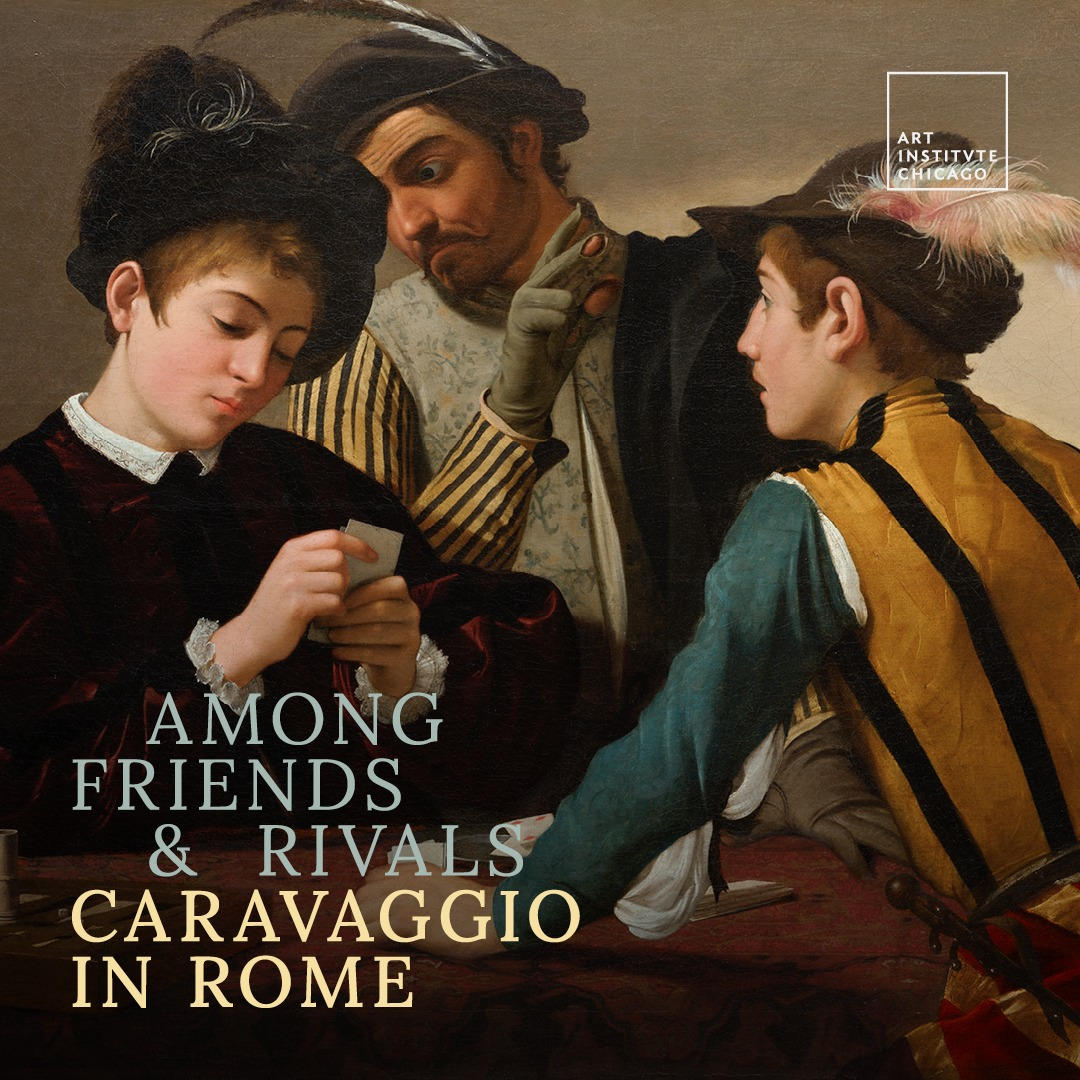
The Art Institute of Chicago introduces the exhibition: “Whether for his large dramatic canvases or his larger-than-life persona, the name Caravaggio evokes images of turmoil and violence, both sacred and profane. Born in Milan in 1571, Michelangelo Merisi da Caravaggio entered the robust Roman art scene around 1592 and, over the next 14 years, developed an original and captivating painting style that attracted eminent patrons and passionate followers, thrusting him into the public eye. The artist became equally known for his wild behavior; a street brawler, Caravaggio was familiar with the shady underworld of taverns and their clientele, whom he frequently depicted in his work.”

Students in HIST 420 The Renaissance at Northern Illinois University are encouraged to visit this exhibition and see Renaissance artworks in person!

I am also offering HIST 420 students an extra credit opportunity related to this exhibition. If you would like to earn 2 points of extra credit on your overall grade, visit the exhibition and then write up a 1-page response.

The Art Institute of Chicago website provides information on this exhibition.

Posted in Art History, Early Modern Europe, Early Modern World, European History, Italian History, Museums and Historical Memory, Renaissance Art and History | Leave a comment

Britannica Assistant Editor Position

Encylcopaedia Britannica is hiring a new Assistant Editor in Comparative Religion.

This position could be ideal for a historian of religion with a MA or Ph.D. in History.

Here is the job ad from Encyclopaedia Britannica:

Encyclopaedia Britannica is looking for a dynamic, knowledgeable, digital-first writer and editor who will be responsible for Britannica’s coverage of religion.

Britannica is singularly proud of its 254-year history as a publisher and disseminator of knowledge for students as well as lifelong learners. Our mission now is to reach learners where they live online and to engage with them in the multitude of ways people learn, including through visually driven storytelling.

Demonstrable subject matter expertise is essential for this role. The ideal candidate will also have the curiosity and enthusiasm to reach beyond their area of expertise, create content about topics that may not be immediately familiar, and be energized by sharing what they know and what they’ve learned with Britannica’s audience.

Being an editor at Britannica means working in a fast-paced, highly collaborative environment that values the trustworthiness of its content more than anything else, and the successful candidate will thrive in this setting. The successful candidate will also be committed to producing content that is clear, fair, accurate, and relevant.

ROLE: ASSISTANT/ASSOCIATE EDITOR – RELIGION

LOCATION: Chicagoland/Hybrid

RESPONSIBILITIES INCLUDE:

● Planning, in partnership with colleagues, contributors, and advisers, coverage of religion and faith as both an academic and sociological area of importance.

● Editing, writing, and commissioning articles that reflect current developments in these subject areas, as well as creating other types of content for Britannica.com.

● Collaborating with media editors and illustrators on the acquisition and production of images, videos, and other media.

SKILLS AND QUALIFICATIONS:

● Applicant should have significant writing and editing experience. Please include links to three appropriate writing samples with your application.

● Applicants should have an M.A. or Ph.D. in religious studies, theology, or a related subject; a bachelor’s degree with professional experience and broad contacts in a specific field of study will be considered a substitute.

Britannica strives to provide its users with trustworthy, verified information in a constantly changing world. We aspire to fulfill that mission with a diverse, multigenerational workforce with a variety of life experiences and points of view. All backgrounds and cultures are welcomed.

See the full job ad at LinkedIn.

Posted in Careers in History, Cultural History, Jobs and Positions, Reformation History, Religious History, Religious Politics, Religious Violence, World History | Leave a comment

RSA Professional Development Workshop

The Renaissance Society of America is sponsoring a professional development workshop on “Defining, Promoting, and Publishing Your Professional Agenda,” which will be held on 10 November from 1:00 to 2:30 pm.

This is an online workshop that is free, but you do need to register if you want to participate.

Here is the link:

https://www.rsa.org/events/EventDetails.aspx?id=1782963

Graduate students in History at Northern Illinois University may be interested in this professional development workshop.

Posted in Careers in History, Digital Humanities, Early Modern Europe, Early Modern World, European History, Graduate Work in History, Italian History, Mediterranean World, Renaissance Art and History, Writing Methods | Leave a comment

Roman Legions on Tik Tok

Men are apparently sharing their fascination with Roman history on Tik Tok, Instagram, and other online platforms.

“It’s been almost 2,000 years since the Roman Empire reached the historic peak of its power. But many men still contemplate it — quite a lot.”

According to the Washington Post, “A new social media trend prompting women to ask the men in their lives how often they think about ancient Rome reveals that it crosses the minds of many men on a weekly basis. Even daily. Or more — to the surprise and confusion of their loved ones.”

The Tik Tok trend in posting about Roman history seems to be closely associated with expressions of masculinity.

Hannah Cornwell, an ancient historian at Birmingham University, emphasizes that popular culture focuses on “an image of the Roman legion, the imperial eagle and that sort of military aspect — along with gladiators, which has a long association with masculinity and power,”

A Roman re-enactor called Gaius Flavius has a growing Instagram following:

Students in HIST 110 History of the Western World at Northern Illinois University will be interested in this report.

The Washington Post reports on Roman history on Tik Tok.

Posted in Ancient History, Cultural History, Digital Humanities, Empires and Imperialism, European History, History in the Media, Italian History, Museums and Historical Memory, Public History, War, Culture, and Society | Leave a comment

Pre-modern Whales and Whaling

Pre-modern whaling may have contributed significantly to the decline and extinction of some species of whales, according to new research on whale bones.

Olaus Magnus, Carta Marina…. (1539)

“Industrial-scale whaling in the 19th and 20th centuries nearly drove many whale species into extinction. Populations of some of the large marine mammals are just starting to recover after the kind of predation described in the novel “Moby-Dick,” while others face ongoing peril to their existence. But it turns out that whaling’s effects on where whales live go back much deeper into human history.”

The New York Times reports that “a new analysis of ancient whale bones, published Wednesday in the journal Royal Society Open Science, suggests that medieval European hunting may have played a role in some whales disappearing from northeast Atlantic waters long before Captain Ahab, Ishmael and the Pequod sought their great white whale.”

Students in my courses on HIST 420 The Renaissance, HIST 458 Mediterranean World, and HIST 640 Early Globalization may be interested in this new research that relates to maritime history, history of fishing, material culture, history of food, and social history.

The New York Times published an article on the new whale bone research.

Posted in Cartographic History, Cultural History, Early Modern Europe, Early Modern World, Environmental History, Food and Cuisine History, Globalization, Maritime History, Material Culture, Medieval History, Renaissance Art and History, Social History | Leave a comment

Medieval Naval Cannon Found

Maritime archaeologists have found a cannon that may be the oldest naval cannon ever located in Europe.

According to the University of Gothenburg, “an international research team led by maritime archaeologist Staffan von Arbin of the University of Gothenburg has studied what might be Europe’s oldest shipboard cannon. The cannon was found in the sea off Marstrand on the Swedish west coast and dates back to the 14th century.”

Researchers are currently analyzing the cannon. “The findings from the interdisciplinary study contribute new knowledge about the early development of artillery on land and at sea, but also bears witness to a troubled period for seafarers as well as coastal populations.”

University of Gothenburg reports on the finding.

Posted in Battlefield Archaeology, Early Modern Europe, Early Modern World, European History, History of Violence, Maritime History, Medieval History, War, Culture, and Society | Leave a comment

RSA Webinars

The Renaissance Society of America is offering several professional development webinars this fall.

Graduate students in Renaissance studies may be interested in these webinars.

Here is the information on these webinars:

Finding the Time to Write

Thursday, October 5, 2023

1:00 p.m. EDT (easily the convert the time zone)

Panelists will discuss the perpetual challenge of finding the time to write while also juggling heavy teaching, administrative, public facing, or other commitments.

Register and get more details here

Book Publishing

Thursday, November 16, 2023

1:00 p.m. EST (easily the convert the time zone)

Representatives from Amsterdam University Press and Boydell & Brewer will discuss the book publication process.

Register and get more details here

Posted in Academic Publishing, Early Modern Europe, Early Modern World, Graduate Work in History, Lectures and Seminars, Renaissance Art and History, Writing Methods | Leave a comment

Seeing Race Before Race

The Newberry Library in Chicago is preparing to open a new exhibition on Seeing Race Before Race, curated by the Center for Renaissance Studies in collaboration with the researchers associated with the RaceB4Race network.

The Newberry Library website provides an overview of the exhibition:

“Race is a powerful and challenging concept. When, where, and why did conceptions of race come into being? How might learning about its history help us better understand the complex role that race plays in our lives today?  

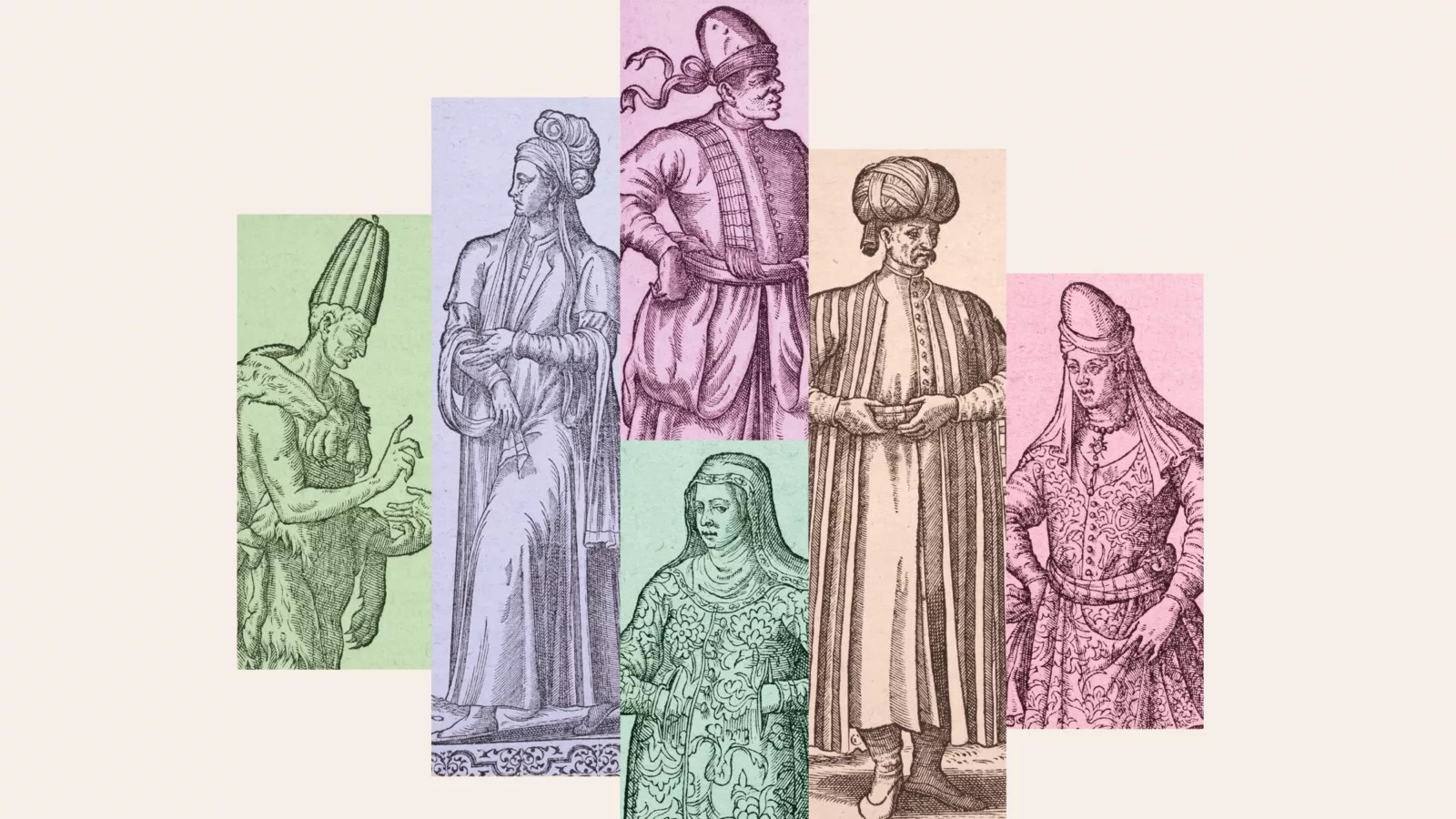
“Centuries before the term race came into popular use, people around the world used distinctions like language, dress, class, geography, and religion—in addition to traits like skin color or facial features—to categorize each other. Seeing Race Before Race explores these early expressions of race in medieval and early modern Europe between 1100 and 1800.  

Seeing Race Before Race is generously supported by the Carl & Marilynn Thoma Foundation, the Samuel H. Kress Foundation, and Pam and Doug Walter. 

“You can purchase a copy of the exhibition catalog, Seeing Race Before Race: Visual Culture and the Racial Matrix in the Premodern World, from the Newberry Bookshop.”

The Seeing Race Before Race exhibition webpage is available at Newberry Library website.

The Center for Renaissance Studies has additional information on the history of pre-modern race and racism.

The RaceB4Race research network organizes conferences, workshops, seminars, and other events on pre-modern race and racism.

Posted in Art History, Atlantic World, Cultural History, Early Modern Europe, Early Modern World, Globalization, History of Race and Racism, Medieval History, Mediterranean World, Renaissance Art and History, World History | Leave a comment

Modern and Contemporary France

My book review of Zemmour contre l’Histoire has been published in Modern and Contemporary France and is now available online.

Here is the table of contents for the latest issue of Modern and Contemporary France:

This interview:

And the following book reviews:

  • Brian Sandberg on Zemmour contre l’histoire, Tracts Gallimard no. 34 (2022)
  • Daniel A. Gordon on Brigitte Granville, What Ails France (2021)
  • Aurelie Toitot on Sara Hume, Regional Dress Between Tradition and Modernity (2022)
  • Helen Abbott on Nikolaj Lübecker, Twenty-first-century Symbolism, Verlaine, Baudelaire, Mallarmé (2022)
  • Héloïse Elisabeth Marie-Vincent Ghislaine Ducatteau on B. Martin, Zwischen Verklärung und Verführung: Die Frau in der französischen Plakatkunst des späten 19. Jahrhunderts (2016)
  • Elizabeth Benjamin on Kathryn Robson, I Suffer, Therefore I Am: Engaging with Empathy in Contemporary French Women’s Writing (2019)
  • Héloïse Elisabeth Marie-Vincent Ghislaine Ducatteau on D. Roster, Lou Koster. Komponieren in Luxemburg (2020)
  • Beth Kearney on Antonia Wimbush, Autofiction: a Female Francophone Aesthetic of Exile (2021)

Posted in Contemporary France, European History, European Studies, European Union, French History, Political Culture | Leave a comment

Historical Film Review of Oppenheimer

My good friend David Krugler, Professor of History at the University of Wisconsin at Platteville, has published an impressive historical film review of Oppenheimer, the new feature film by Christopher Nolan about J. Robert Oppenheimer, one of the key architects of the atomic bomb.

Krugler is a specialist of the history of the early Cold War and civil defense responses to the threat of nuclear attacks. He critiques the film’s depictions of the Manhattan Project, the Trinity Test, and the development of atomic weapons.

“The test scene is spectacular, but the sustained drama in Oppenheimer comes from its vivid, sensitive depiction of the life and travails of the bomb’s most vital architect. To adapt Kai Bird and Martin J. Sherwin’s Pulitzer Prize-winning biography of Oppenheimer, American Prometheus, Nolan makes a daring narrative choice. He centers the story around Oppenheimer’s 1954 closed hearing before a security board of the Atomic Energy Commission (AEC). Despite Oppenheimer’s undisputed accomplishments, his prior associations with communists (which were well-known in 1942, when General Leslie Groves, the military director of the Manhattan Project, recruited him) have made him a target of powerful anti-communists at the height of the Red Scare.”

The full historical film review of Oppenheimer is entitled “Bringing Fire from the Gods,” and is published online on Law and Liberty.

Posted in Arms Control, Civilians and Refugees in War, Historical Film, History in the Media, History of Science, History of Violence, Security Studies, Strategy and International Politics, War in Film, War, Culture, and Society, World History | Leave a comment